Log in
Sign up for FREE
arrow_back
Library

HB Unit 5 Exam 2020

star
star
star
star
star
Last updated over 5 years ago
30 questions
1
1
1
1
1
1
1
1
ELA 5.2B
1
1
1
1
1
1
1
1
1
1
1
1
1
1
1
1
1
4
4
6
6
5
Question 1
1.

Question 2
2.

Question 3
3.

Question 4
4.

Question 5
5.

Question 6
6.

Question 7
7.

Question 8
8.

Question 9
9.

Question 10
10.

Question 11
11.

Question 12
12.

Question 13
13.

Question 14
14.

Question 15
15.

Question 16
16.

Question 17
17.

Question 18
18.

Question 19
19.

Question 20
20.

Question 21
21.

Question 22
22.

Question 23
23.

Question 24
24.

Question 25
25.

Question 26
26.

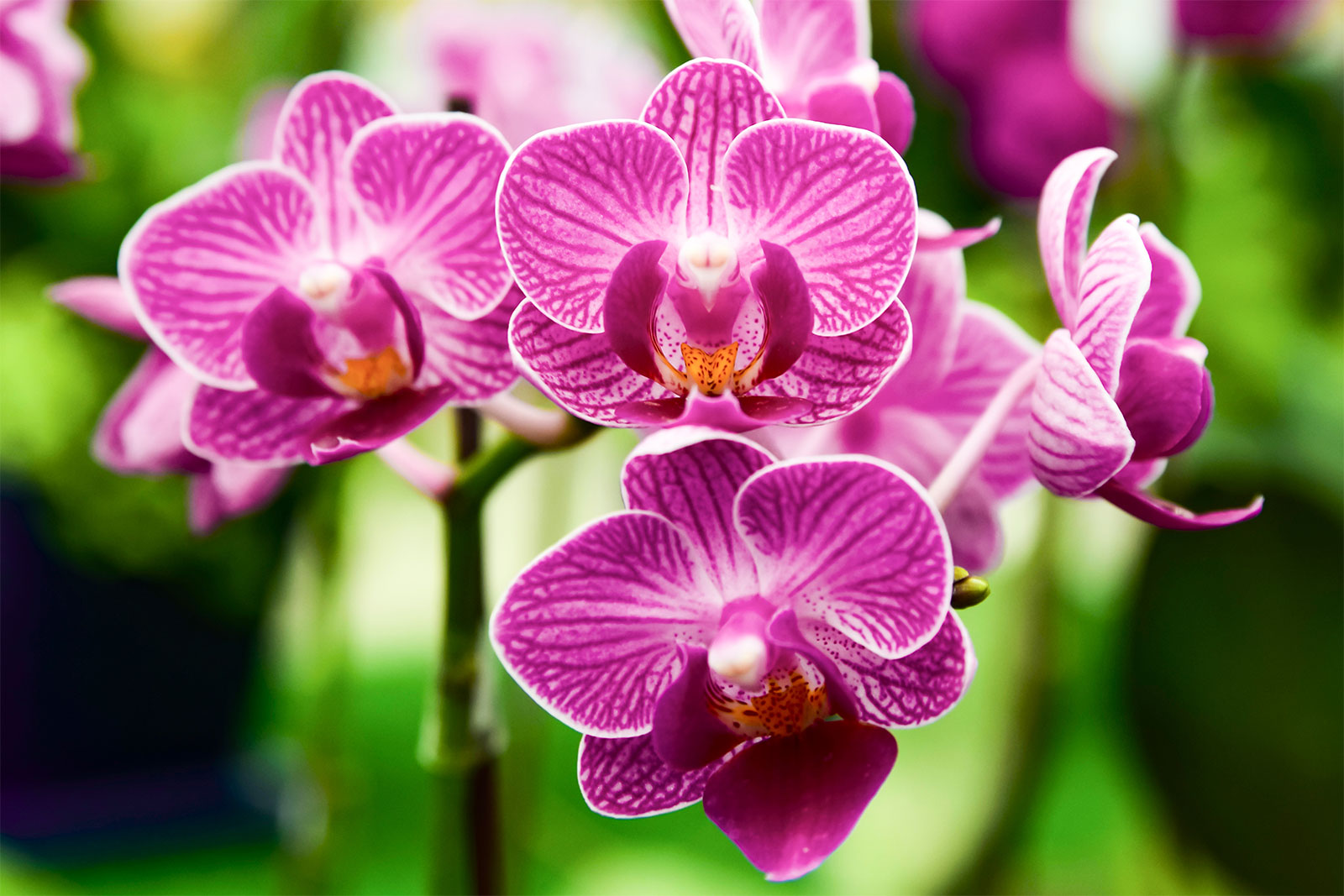
In your own words, describe why this flower shown here is seen as red. Use all appropriate vocabulary.

Question 27
27.

Describe one possible reason that you learned in class as to why there are such brilliant colors in the fall foliage. Be specific and use all appropriate vocabulary.

Question 28
28.

NADP Reductase is an important enzyme in photosynthesis. In your own words, describe
- WHERE it is
- WHAT it does
- what its SUBSTRATE and PRODUCTS would be

Question 29
29.

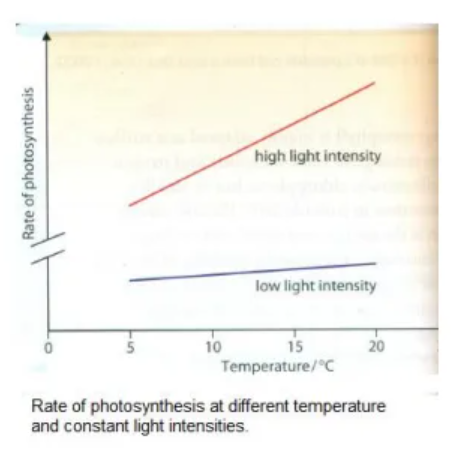
The rate of photosynthesis varies as factors such as temperature, light intensity and carbon dioxide levels change.
1. Explain why higher temperatures do not always translate into highest rates of oxygen production - 2 pts

2. The graph below represents the rate of photosynthesis as temperature increases, at both high light intensity and low light intensity. According to the data provided, within THIS temperature range shown here, which appears to have a more limiting effect on the rate of photosynthesis - light or temperature? EXPLAIN your answer using data/trends from the graph to justify your answer. - 4 pts

Question 30
30.

Some flowers self-pollinate, and some cross-pollinate. Define each. What is the benefit to the plant of cross-pollination?

Which of the following best describes how oxygen gas is produced during photosynthesis?
Oxygen gas is produced by Photosystem II, when water is split to extract H+ and electrons
Oxygen gas is produced by the fixation of carbon dioxide by rubisco during the Calvin Cycle
Oxygen gas is produced by the hydrolysis of ATP and NADPH during the Calvin Cycle
Oxygen gas is produced when G3P molecules are combined to make other organic molecules.
Which of the following statements best explains how the energy in a photon of light is stored in a molecule of the sugar G3P?
Light energy energizes electrons to make G3P, which provide energy to produce ATP and NADPH in the Calvin cycle.
Light energy directly provides energy to RuBP and CO2, which produce G3P in the Calvin cycle.
Light energy directly provides energy to ATP synthase, which produces ATP during the light reactions.
Light energy energizes electrons to make ATP and NADPH, which provide energy to produce G3P in the Calvin cycle.
Chemiosmosis in chloroplasts involves which of the following processes?
establishment of a proton gradient across the thylakoid membrane
formation of glucose from carbon dioxide
reduction of water to produce oxygen
diffusion of electrons through the thylakoid membrane
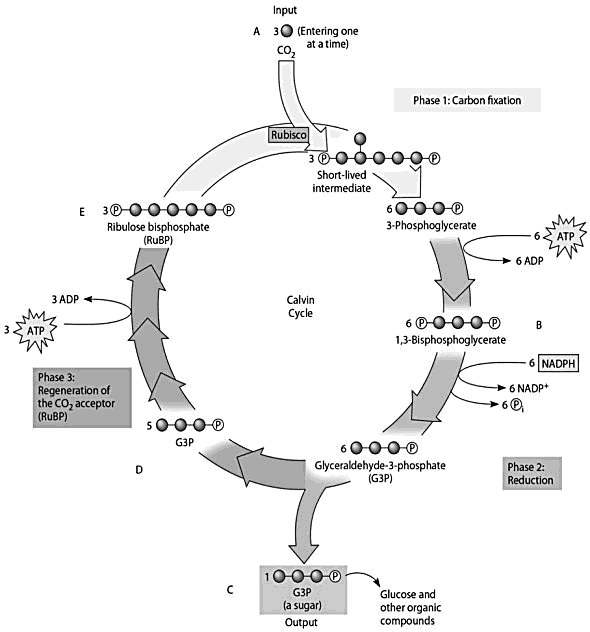
Use the figure and the compounds labeled A, B, C, D, and E to answer the following question.
Which best describes where the ATP for Phase 3 most likely comes from?
cyclic photophosphorylation
linear photophosphorylation
oxidative phosphorylation
glycolysis
What is the primary function of the Calvin cycle?
to produce simple sugars from carbon dioxide
to produce carbon dioxide for use in the light reactions of photosynthesis
to produce oxygen by oxidizing water
to regenerate ATP for use in the light reactions of photosynthesis
An early step in the process of carbon fixation combines three molecules of CO2 with three molecules of RuBP to produce three 6-carbon molecules, which are immediately converted to six 3-carbon molecules. These six molecules are phosphorylated and reduced to produce glyceraldehyde 3-phosphate (G3P). What additional events occur to complete the Calvin cycle?
release of one G3P to make sugars and regeneration of NADPH from NADP+
release of two G3P to make sugars and regeneration of ATP from ADP
release of one G3P to make sugars and regeneration of RuBP
release of one G3P to make sugars and regeneration of citrate
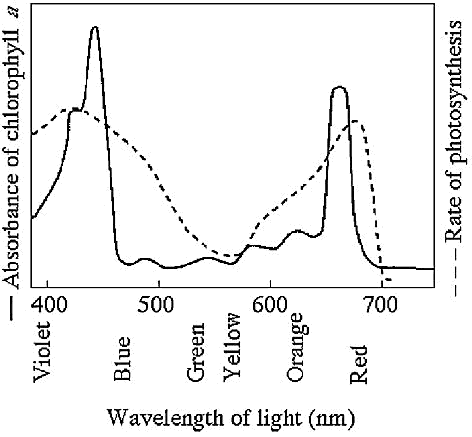
The figure shows the absorption spectrum for chlorophyll a and the action spectrum for photosynthesis. What colors of light are least effective would not be used for photosynthesis?
orange-red
yellow-orange
green-yellow
violet blue
Leo hikes in the woods. He finds a pine cone on the bike trail. What can Leo conclude about the type of plant that produced the cone?
It is a vascular plant
It is a bryophyte
It is a Pterophyte
It is an angiosperm
Which of the following is not a type of vascular plant?
gymnosperms
angiosperms
mosses
ferns
Bryophytes are_________________plant.
Flowering
Non-Vascular
Seeded
Vascular
What classification do these orquids belong to?
gymnosperm
angiosperm
fern
bryophytes
The visible spectrum is from just under 400 nm to just over 700 nm. What type of waves would have wavelengths longer than 700 nm?
infrared and ultraviolet
x rays and gamma waves
microwaves and infrared
radio and gamma waves
#8 is collectively known as ___________________________. It is where most of the photosynthetic activity takes place.
mesophyll
grana
cytoplasm
thylakoid
stomata
The role of the part labeled #1 is
to release water through epidermal cells
to capture light energy
to allow gas exchange
to prevent the release of water through the epidermal cells
to perform photosynthesis
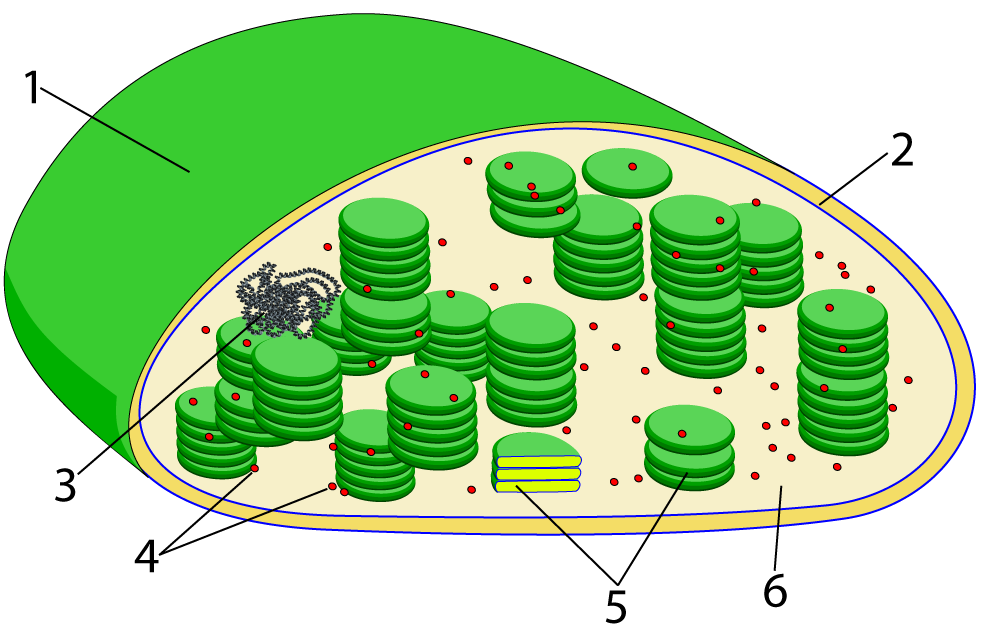
This is an image of a chloroplast. What is #6 pointing to?
grana stack
stroma
thylakoids
cytoplasm
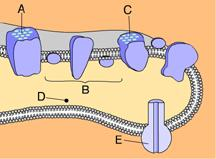
Above is an image of a thylakoid. A and C are the photosystems, as shown by the green pigments on their surface. E is where hydrogen ions DIFFUSE down their gradient. E is therefore the
NADP reductase
ATP synthase
Electon Transport Chain
Rubisco
When NADPH becomes NADP+, the energy released is provided to the molecules of the Calvin Cycle to power the reactions there. It would be most appropriate to say that
NADPH got reduced at the Calvin Ccyle
NADPH got oxidized at the Calvin Cycle
NADP+ got oxidized at the Calvin Cycle
NADP+ got reduced at the Calvin Cycle
What accurately describes the flow of the H+ from water?
water --> Calvin cycle --> photosystem II --> ATP synthase
water --> photosystem II --> photosystem I --> NADPH
water --> photosystem I --> photosystem II --> NADPH
water --> photosystem I --> NADPH --> photosystem II --> G3P
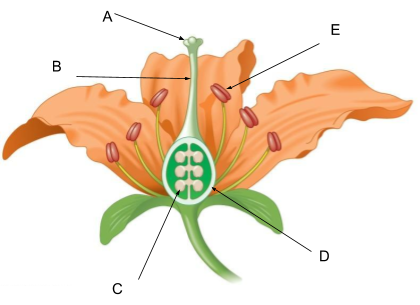
Which part would be considered a male part of the flower? Choose all that apply
A
B
C
D
E
In which part of the flower would you find a female gamete? Give the most specific answer.
A
B
C
D
E
Which part of the flower would eventually become a fruit?
A
B
C
D
E
The oxygen atoms that end up in G3P or other glucose derivitives came from which molecule?
RuBP
CO2
H2O
NADPH
Which statements best describes why plants perform both cyclic and noncyclic photophosporylation
Extra NADPH is needed, above the amounts creatd by the non-cyclic light dependent reactions
Extra ATP is needed, above the amounts created by non-cyclic light dependent reactions
Different types of plants perform the different reactions - some plants would perform cyclic, while others have evolved to perfom non-cyclic reactions.
The plant can choose which set of reactions to follow, based on environmental conditions like wind or drought.
In the vascular bundle of a plant you would find specialized ______ cells for water transport and specialized ________ cells for sugar transport.
phloem ; xylem
cuticle ; epidermal
mesophyll ; guard
xylem ; phloem
cuticle ; mesophyll
Photosynthesizes have evolved to have more than one type of pigment molecule. Why was this an advantage for?
It was not an advantage, it happened accidentally and does not provide an advantage.
Having accessory pigments increases the range of wavelengths and thus energy a plant can get from the suns’ radiation.
Since pigment molecules are broken down to harness their potential energy for the dark reactions of photosynthesis, the more pigment molecules the plant has the more sugar it can make.
This is a false statement, each type of organisms has one type of pigment molecule.
Chlorophyll is a very weak molecule that only absorbs green wavelengths, so plants require accessory pigments otherwise they would not be able to create enough food to survive.