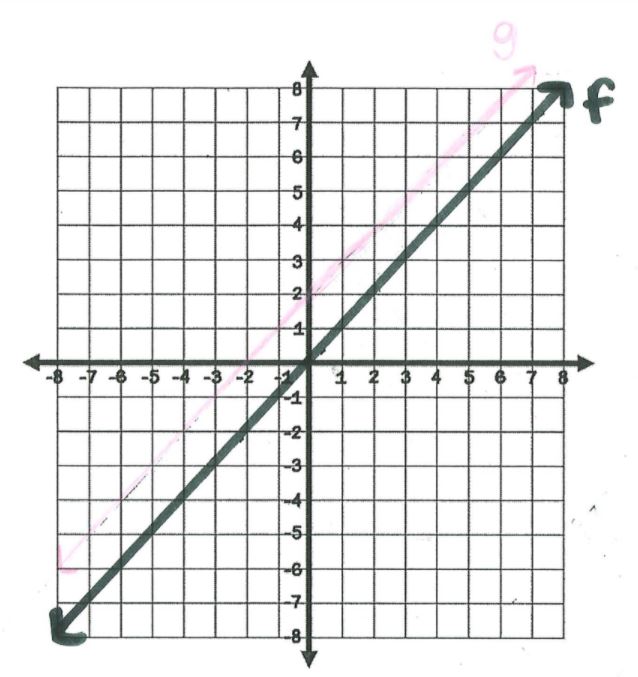
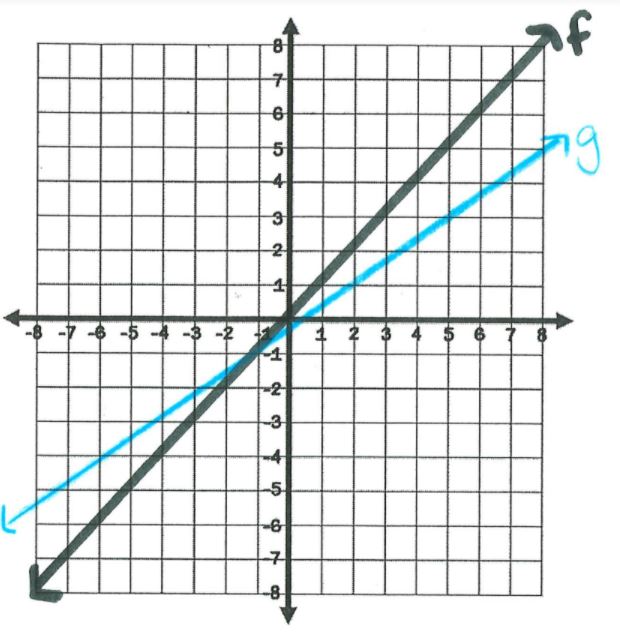
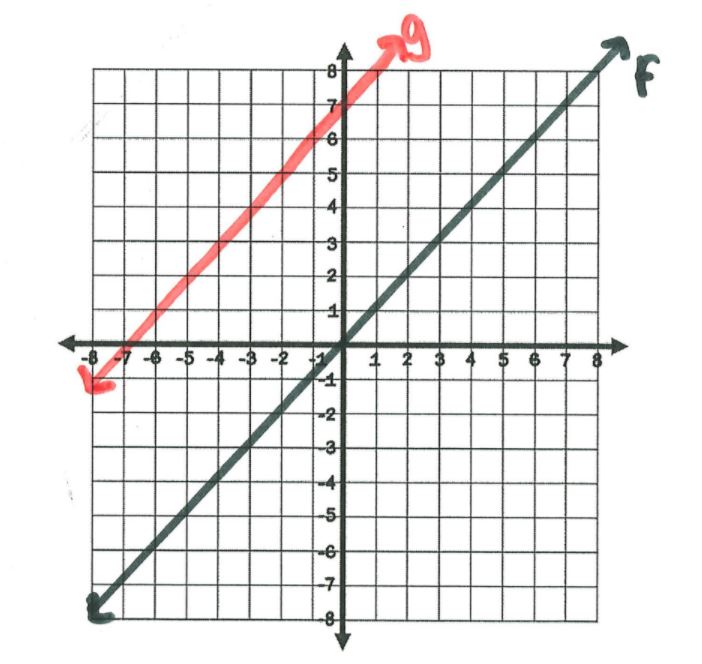
The graph of function g is the result of a transformation on the graph of f. Which equation shows this transformation?

The graph of function g is the result of a transformation on the graph of f. Which equation shows this transformation?
The graph of function g is the result of a transformation on the graph of f. Which equation shows this transformation?
The graph of function g is the result of a transformation on the graph of f. Which equation shows this transformation?
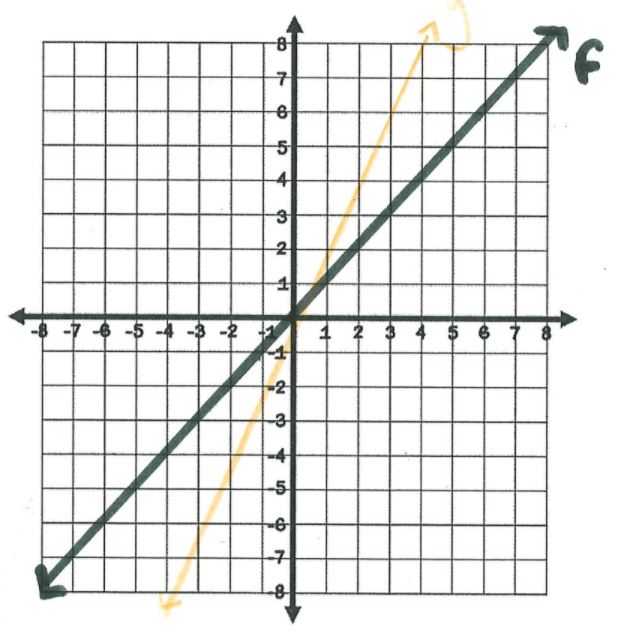
The graph of function g is the result of a transformation on the graph of f. Which equation shows this transformation?
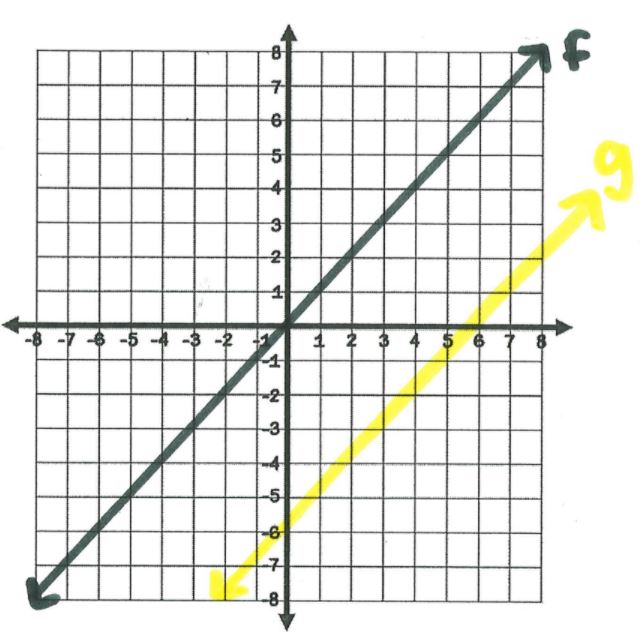
Which of the following could be the equation to represent the transformation from f(x) to g(x). Choose two.
| Draggable item | arrow_right_alt | Corresponding Item |
|---|---|---|
| arrow_right_alt | g(x)=2f(x) |
| arrow_right_alt | g(x)=f(x+5) |
| arrow_right_alt | g(x)= f(x) +2 |
| arrow_right_alt | g(x)= f(x-3) |
| Draggable item | arrow_right_alt | Corresponding Item |
|---|---|---|
| arrow_right_alt | |
| arrow_right_alt | |
| arrow_right_alt | |
| arrow_right_alt |
The steps below show how to write an equation in slope intercept form when given the points (3,7) and (5, 13). Put the steps in order.
slope is 3, y intercept is -2.
Write an equation in slope intercept from that passes through the points (2,9) and (4,13). Look at the question above for an example of the steps.
Which is equivalent to
Kobe solved the problem below and got -32. Diego solved the same problem and got 32. Who has the correct answer?
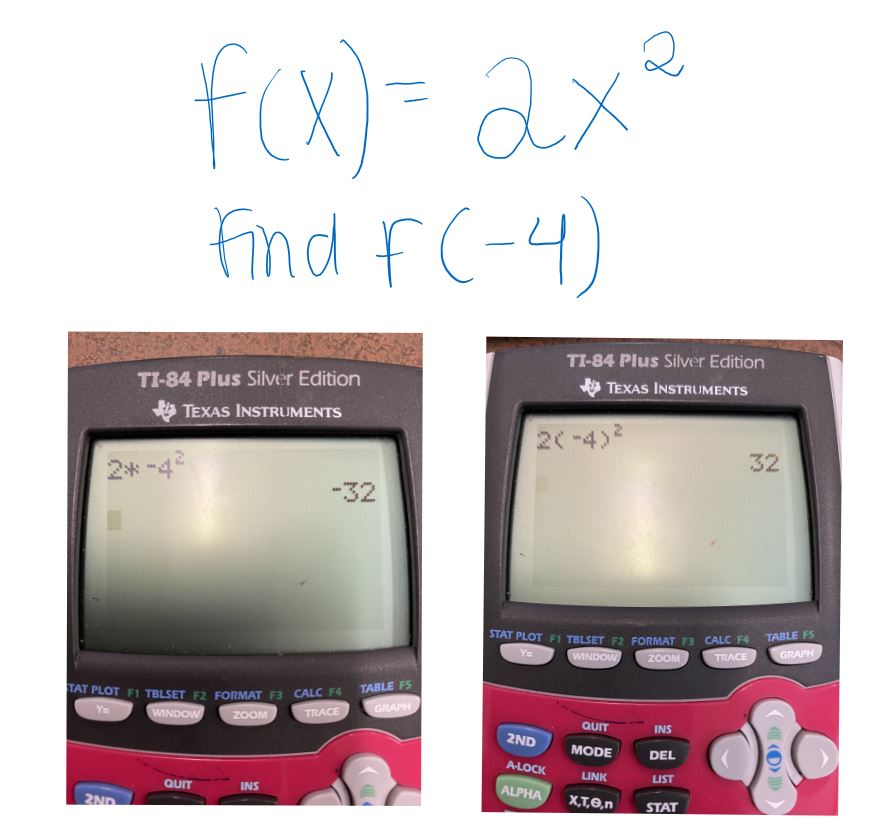
True or false, Kobe made a mistake because he forgot to put parenthesis around the negative 4.
| Draggable item | arrow_right_alt | Corresponding Item |
|---|---|---|
5x + 2x - 4 =7(x -4) | arrow_right_alt | one soltution |
3(x-9)= 2x + x - 27 | arrow_right_alt | no solution |
3x+12= 4(x+3) | arrow_right_alt | infinitely many solutions |