How to Survive a Zombie Attack
star
star
star
star
star
Last updated over 5 years ago
20 Nsɛmmisa
1
1
1
1
1
1
1
1
1
1
1
1
1

1
1
1
1
1
1
1
On June 30, 2035, a sleeper cell of zombies executed an evil plan 10 years in the making. Their objective: to "turn" the entire human race into evil zombies! Each zombie can turn 3 humans per day, but they are not sure how long it will take them to completely turn every human on the planet. Complete the table below to show how many total zombies there will be every day for the first 10 days of the attack. The original sleeper cell had only 5 members, but keep in mind that newly turned zombies also have the power (and the will!) to turn other humans.

Complete the table to show how many total zombies there will be every day for the first 10 days of the attack. The original sleeper cell had only 5 members.
What patterns of growth do you notice in the number of zombies turned each day as the days go by?
What would this data look like on a graph? Sketch a graph of the data for days 1-10.
From the table or graph:
A. How many zombies are turned on day 10?
From the table or graph:
B. What would you have to multiply this number by to get the number of zombies created on day 11?
From the table or graph:
C. How would the entire table table change if instead of starting with 5 zombies we only started with one zombie?
From the table or graph:
D. How long would it take now for the zombies to take over the world? Assume the population of the world is 6,976,000,000 and we started with 5 zombies.
Which one of the equations below would correctly model the number of zombies turned each day if you start with 5 zombies?
Explain how you know that was the equation that models this situation in #8.
What does the unknown variable, x, represent in the equation you chose from #8?
Write an equation to model the pattern if instead 12 zombies were in the sleeper cell initially and had the ability to run... so they can infect 6 people per day.
How long would it take the zombies to take over the world now? Assume the population of the world is 6,976,000,000.
If you were given the choice of between more initial zombies, but a slower growth rate or fewer initial zombies, but a greater growth rate, which would you pick and why?
Make a table showing how many zombies were cured after 10 rounds of administering the antidote (assume every remaining zombie is given the antidote in every round and no new zombies are created).
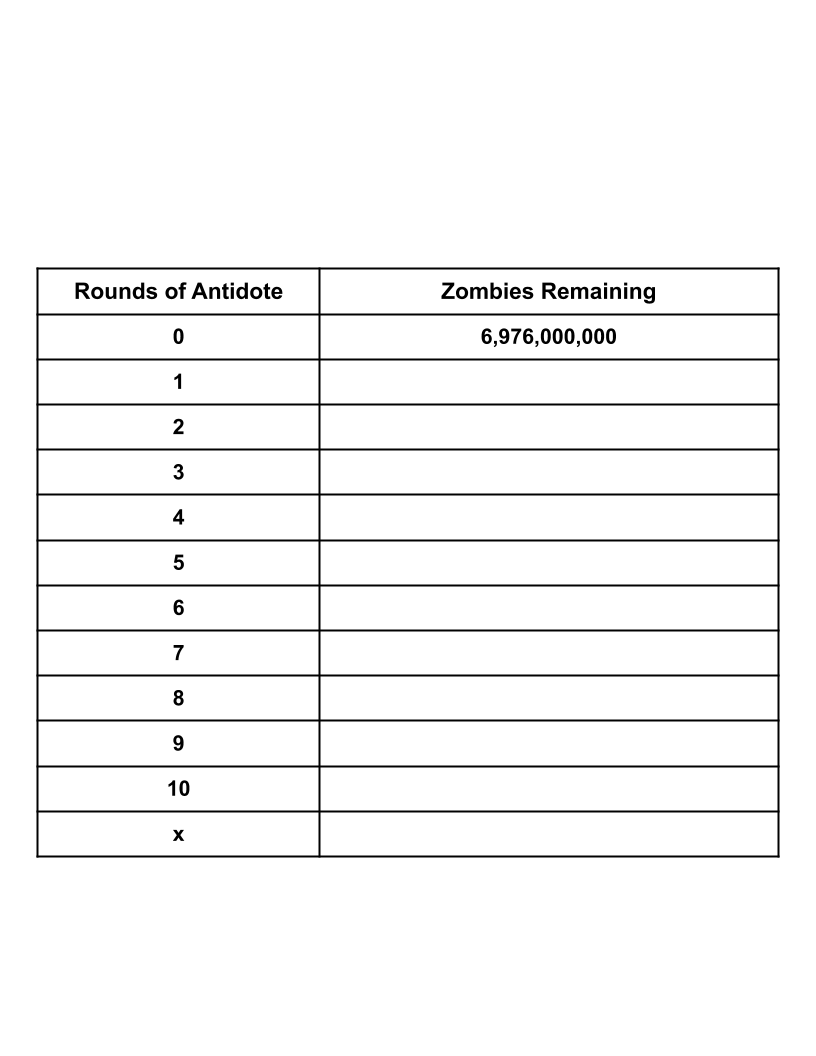
What patterns of "decay" do you notice in the cumulative number of zombies remaining after each round of the antidote's administration? (hint: If 15% of the zombies are cured, then how many remain?)
What would this data look like on a graph? Sketch a graph of the first 10 rounds of administration.
Write an equation to model the pattern in the data.
At this rate, how long will it take the scientists to completely turn all zombies back into humans? Can this ever really happen? Why or why not?
What similarities and differences do you notice in the equations developed for both the initial attack and the antidote phases?
What number in the equation impacts whether or not the initial value will increase or decrease over time? Which number in the equation tells us what the initial value is?