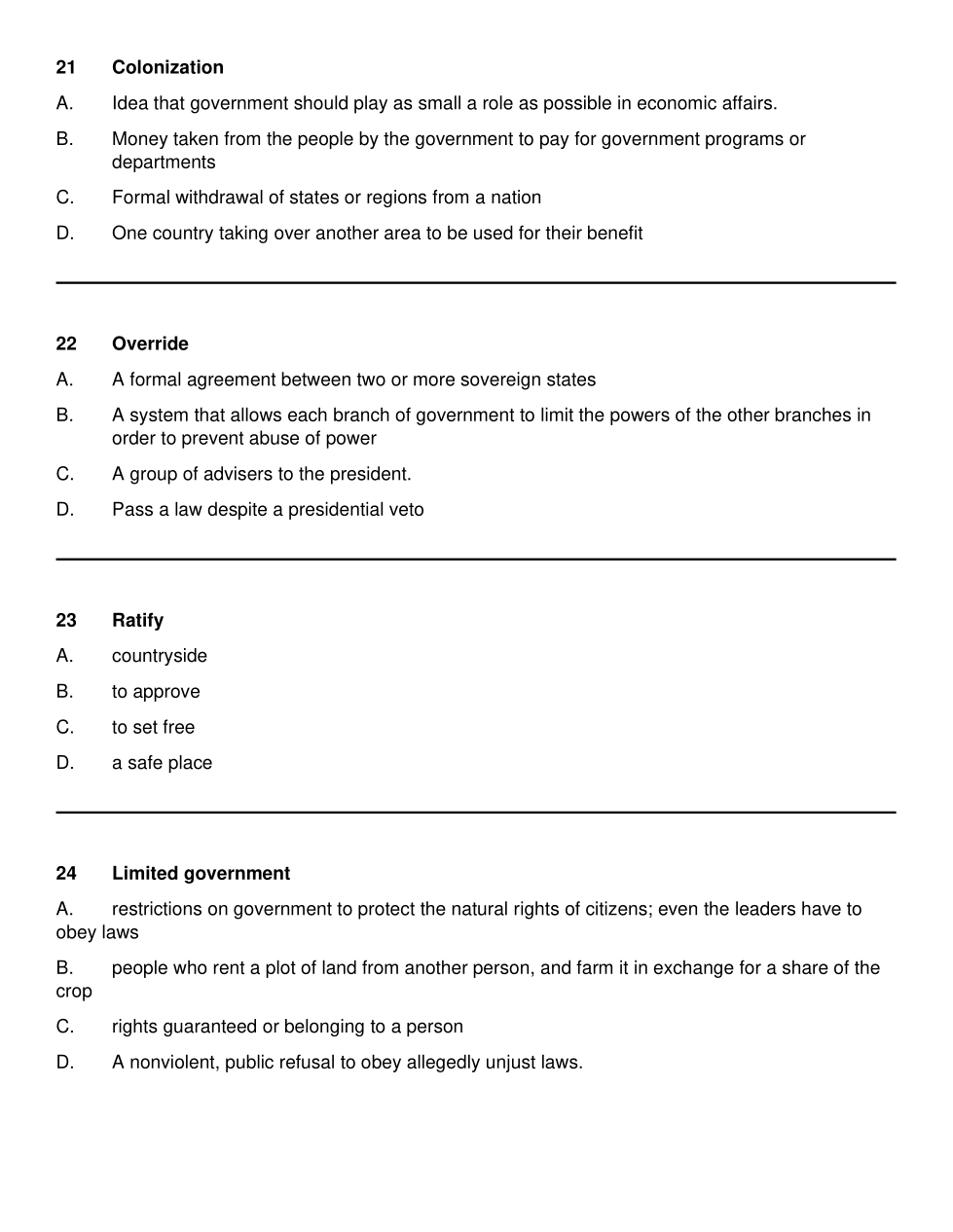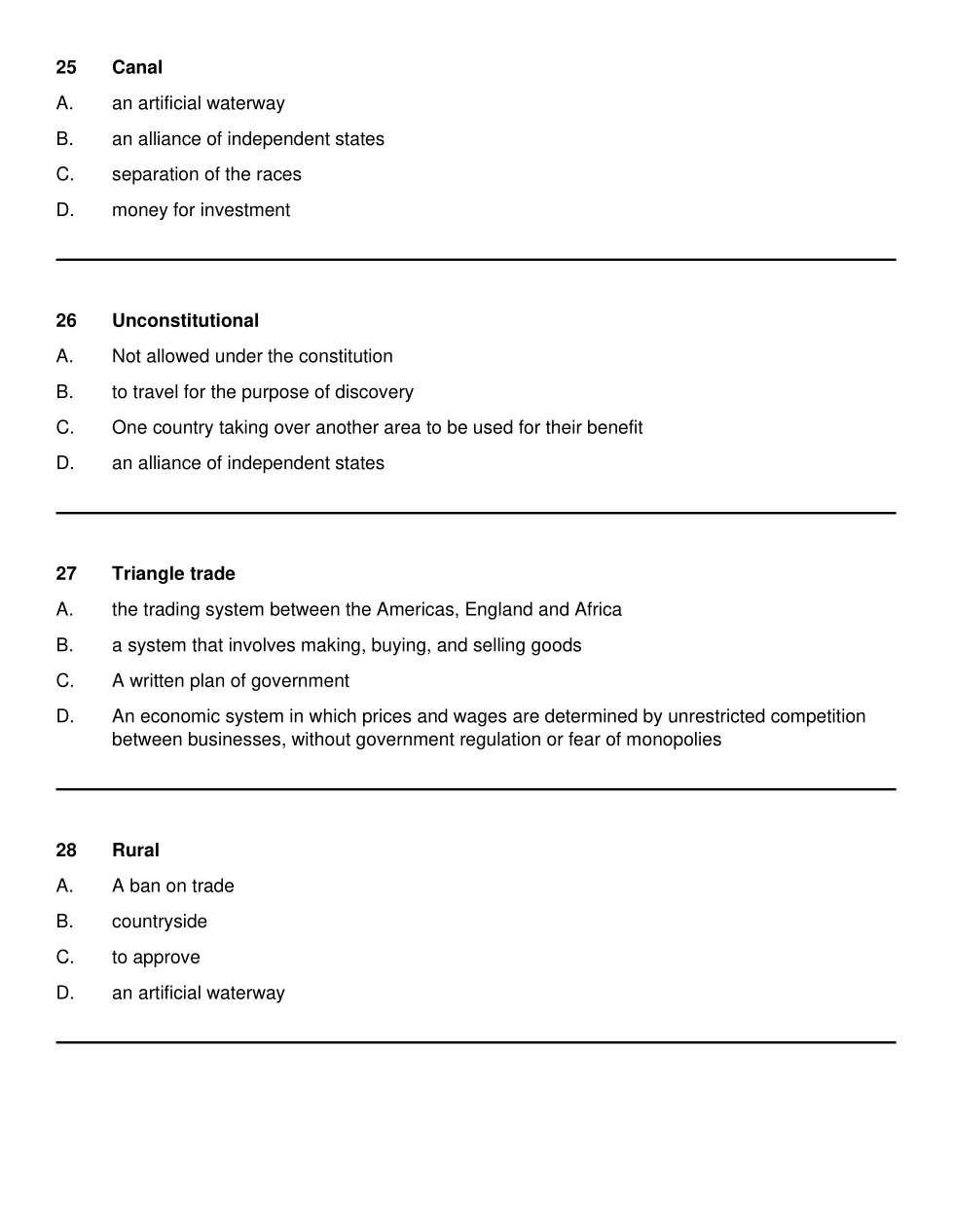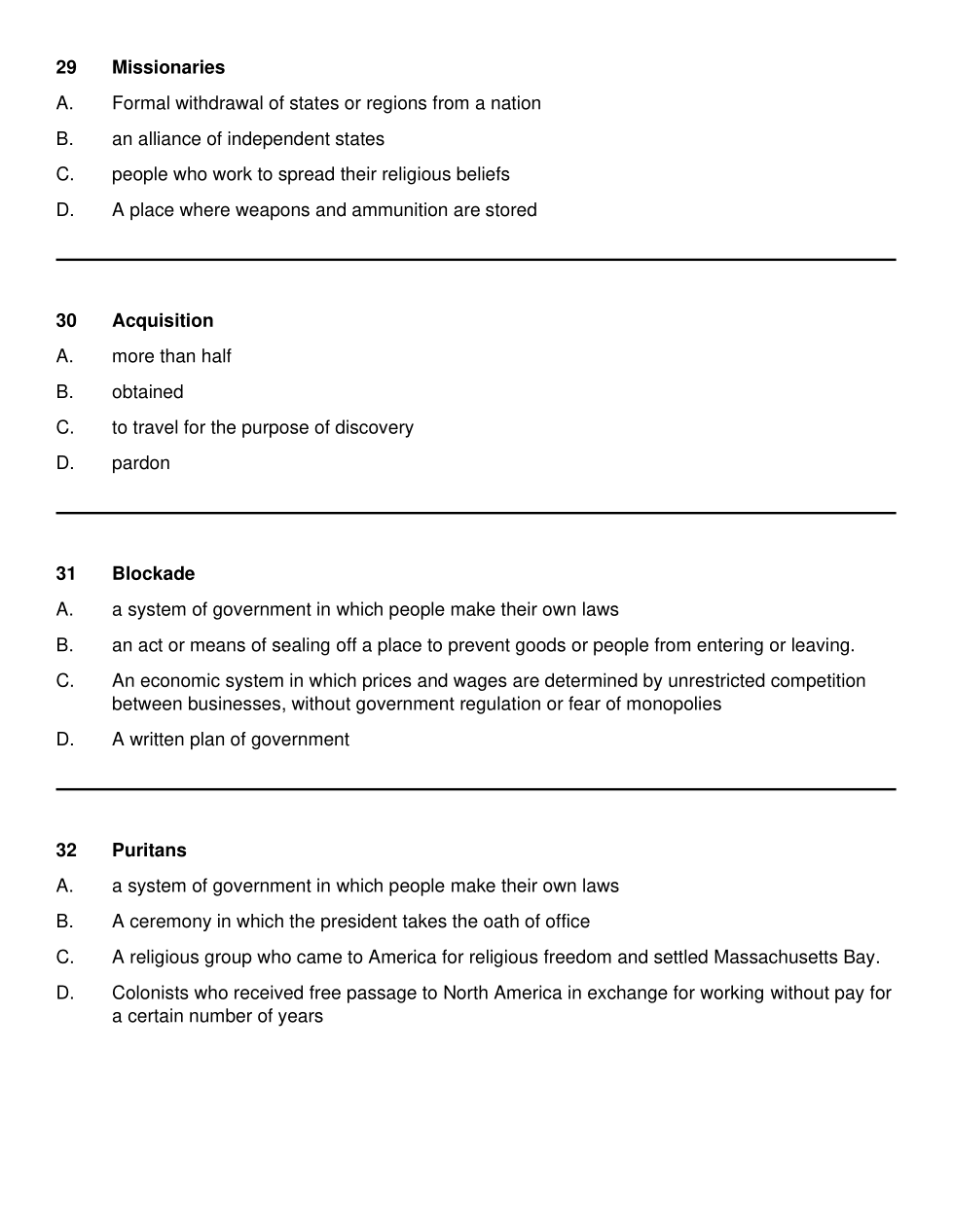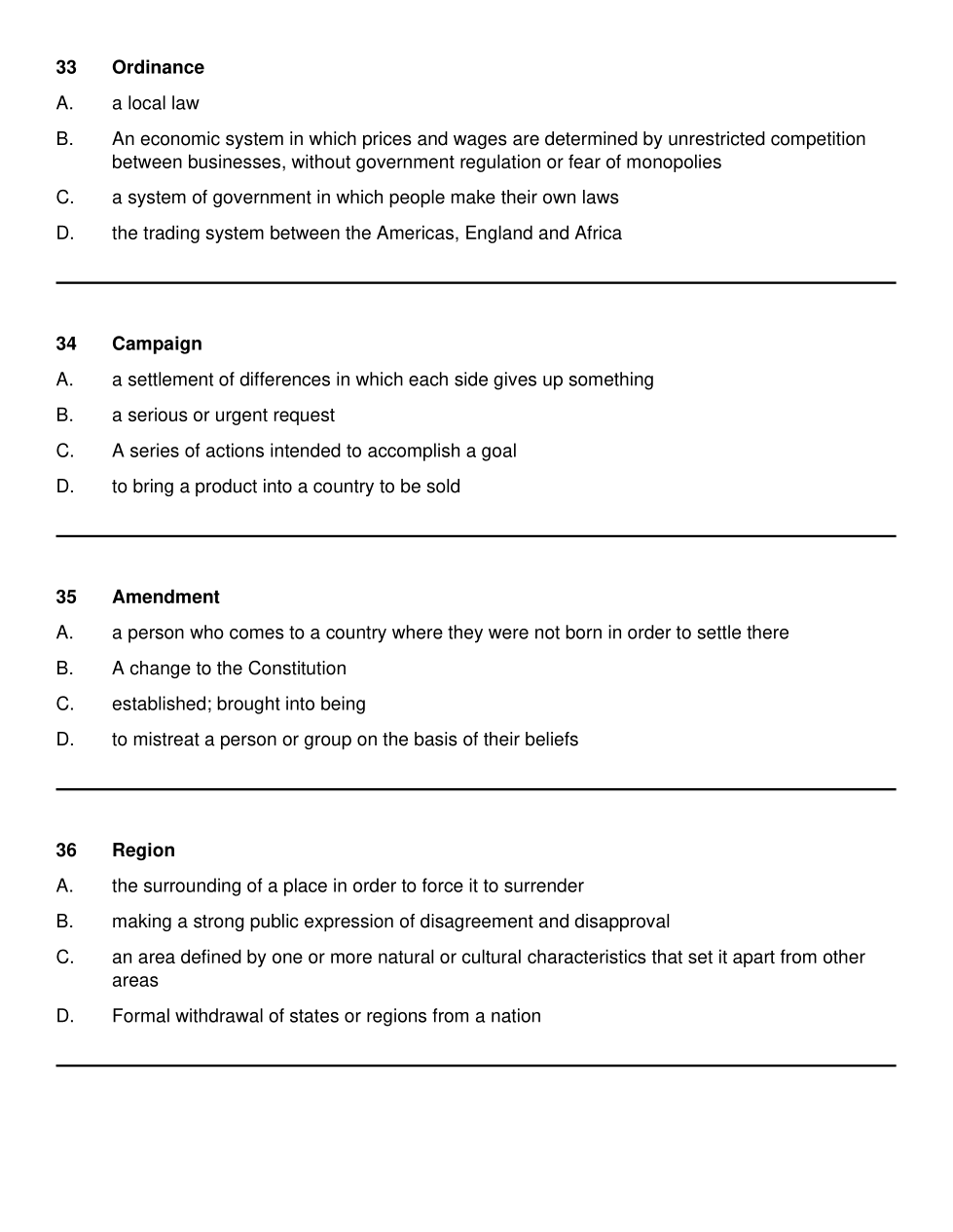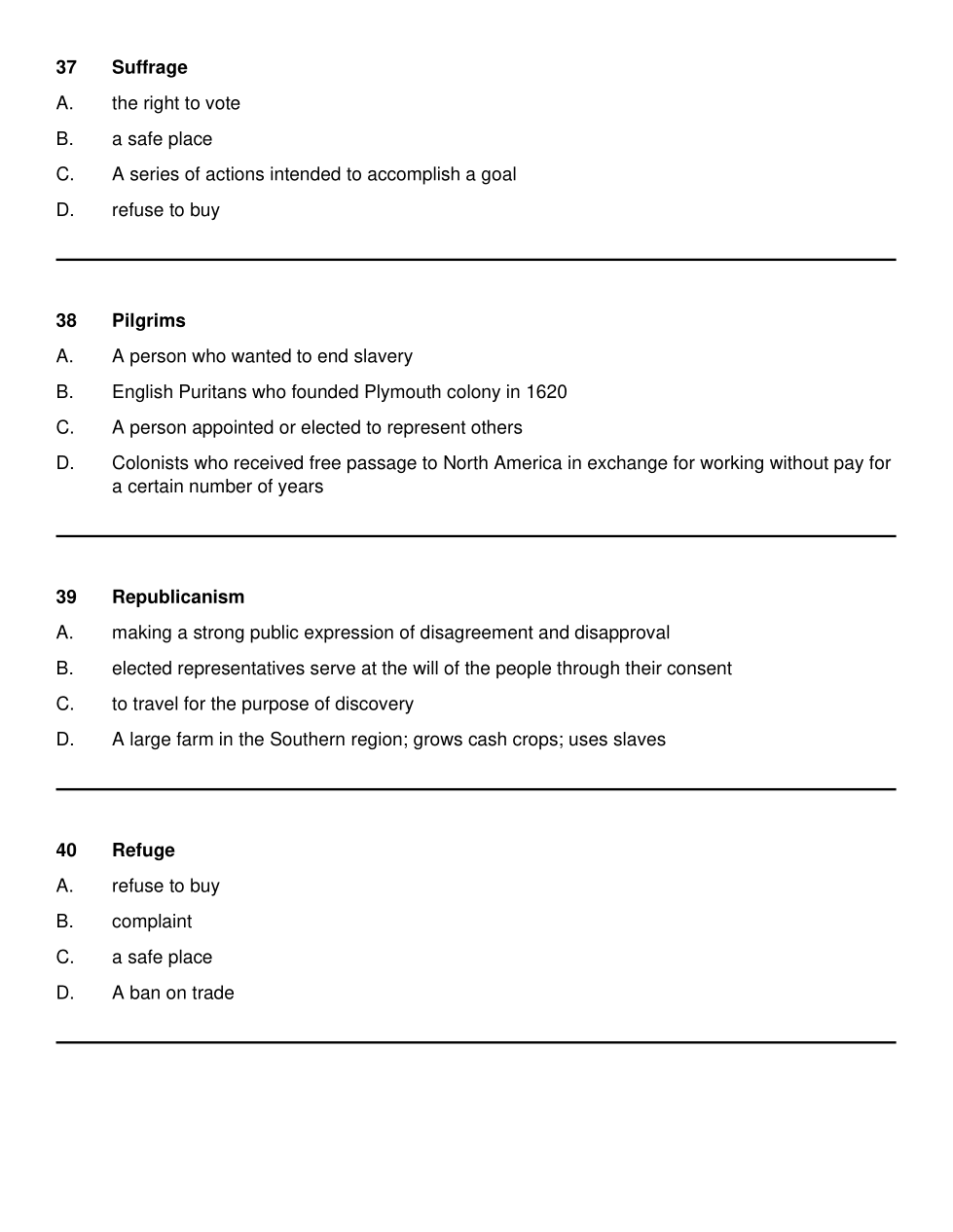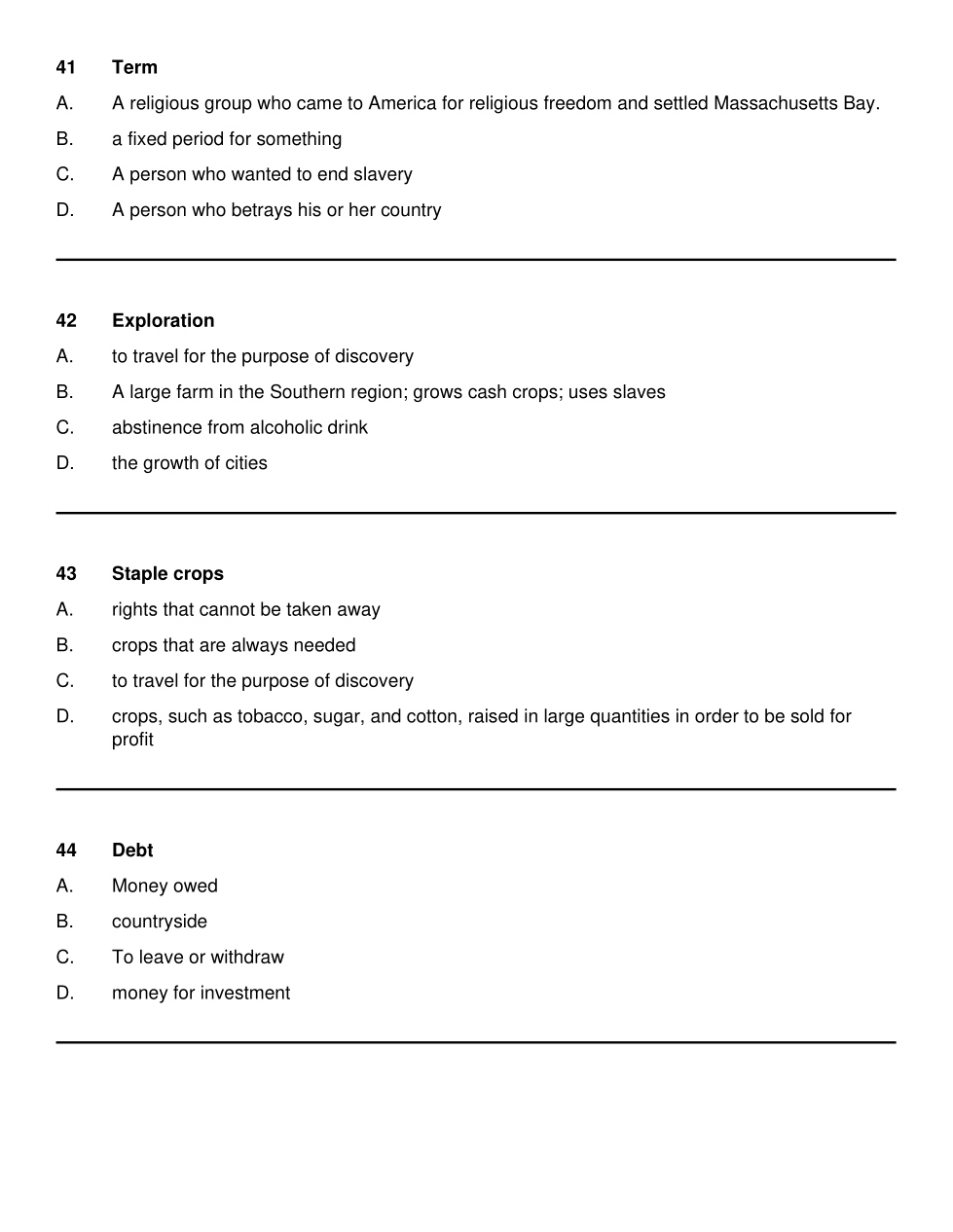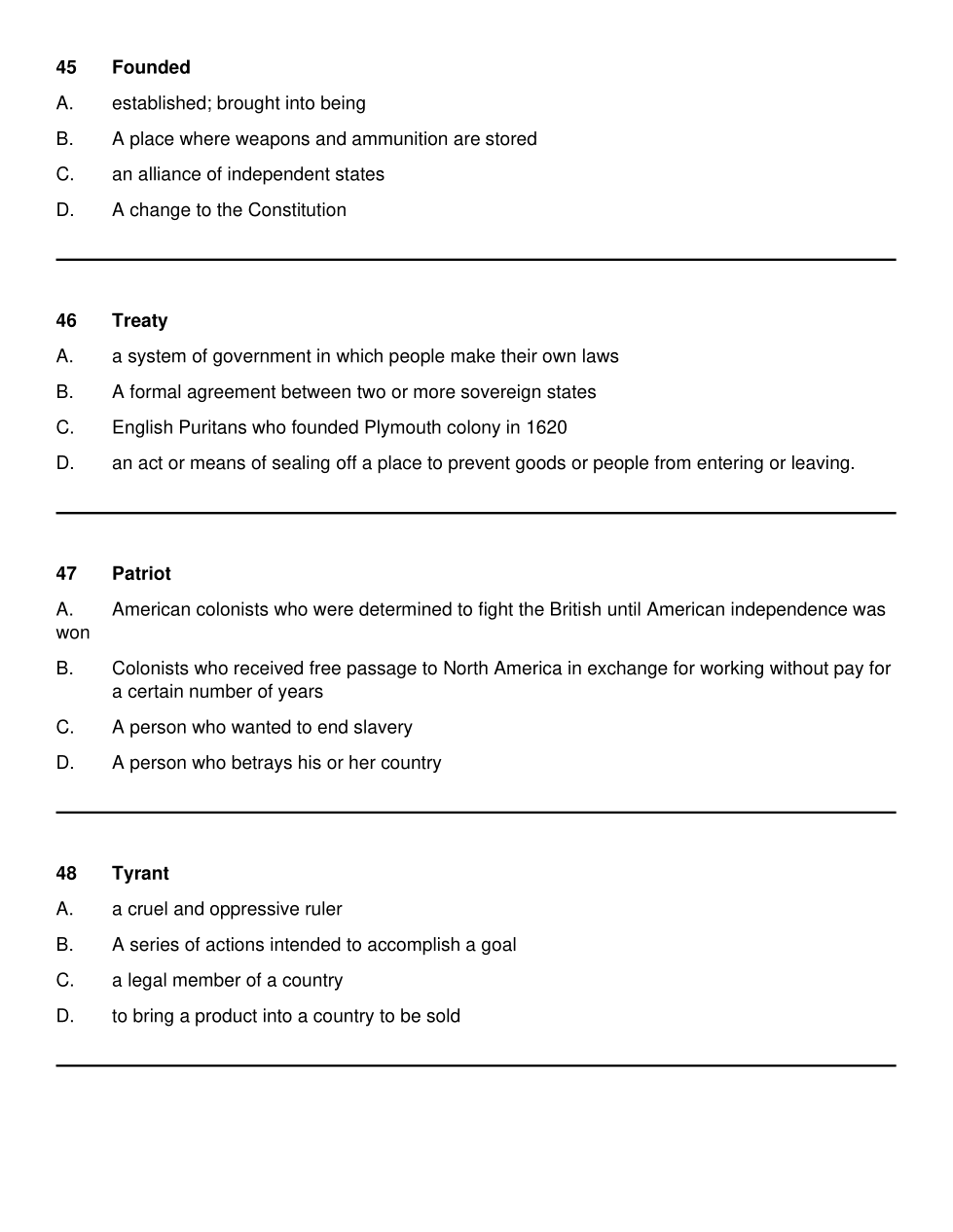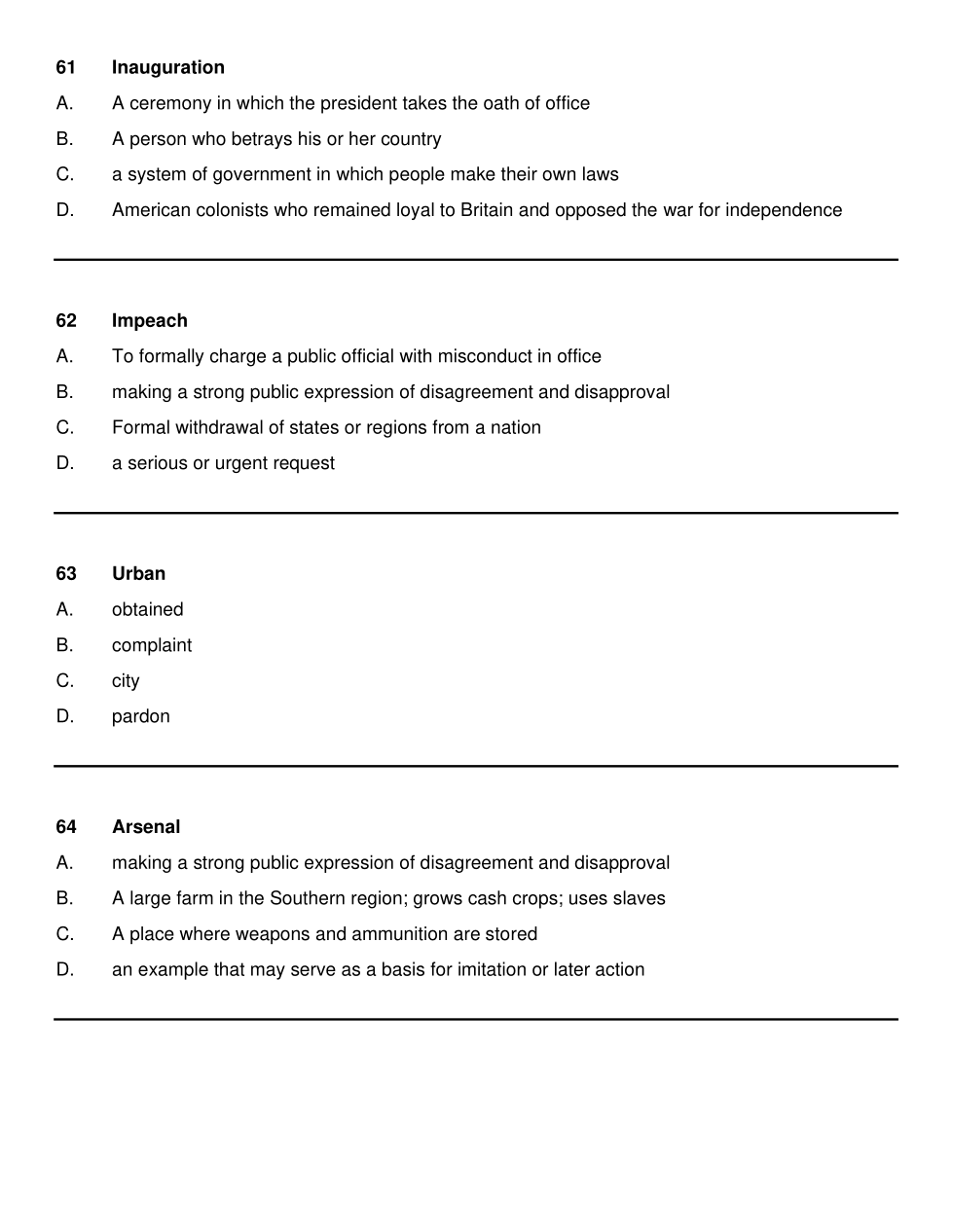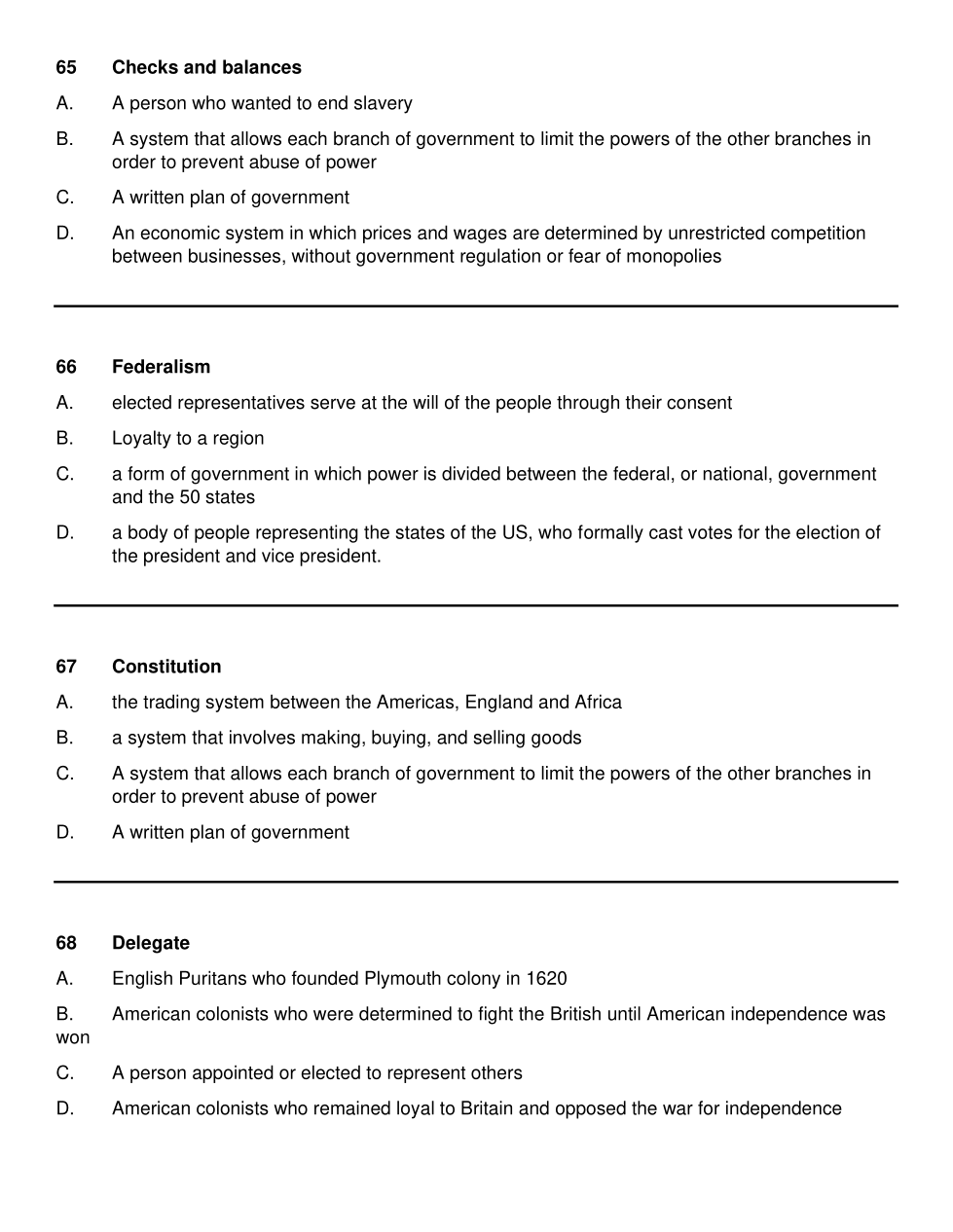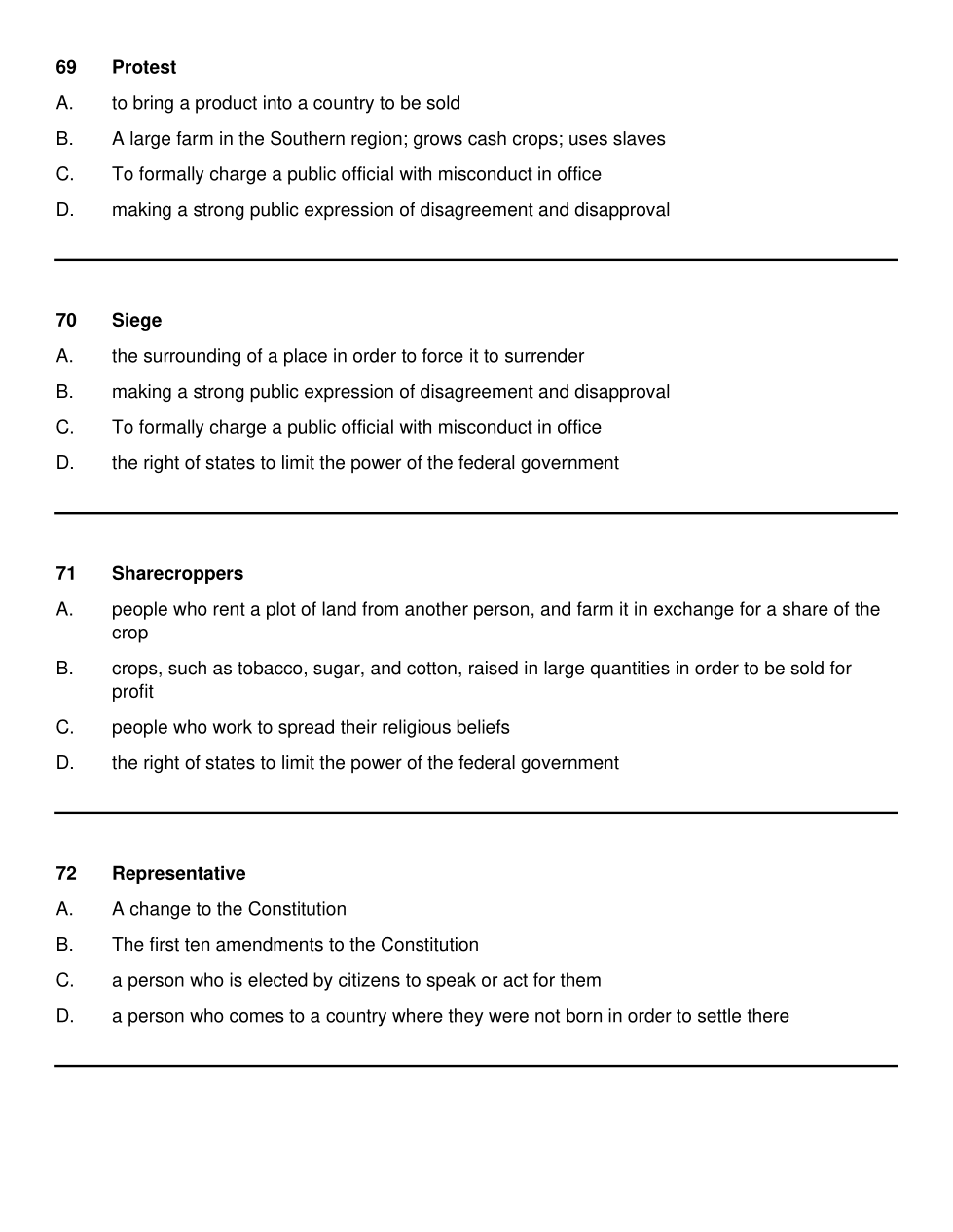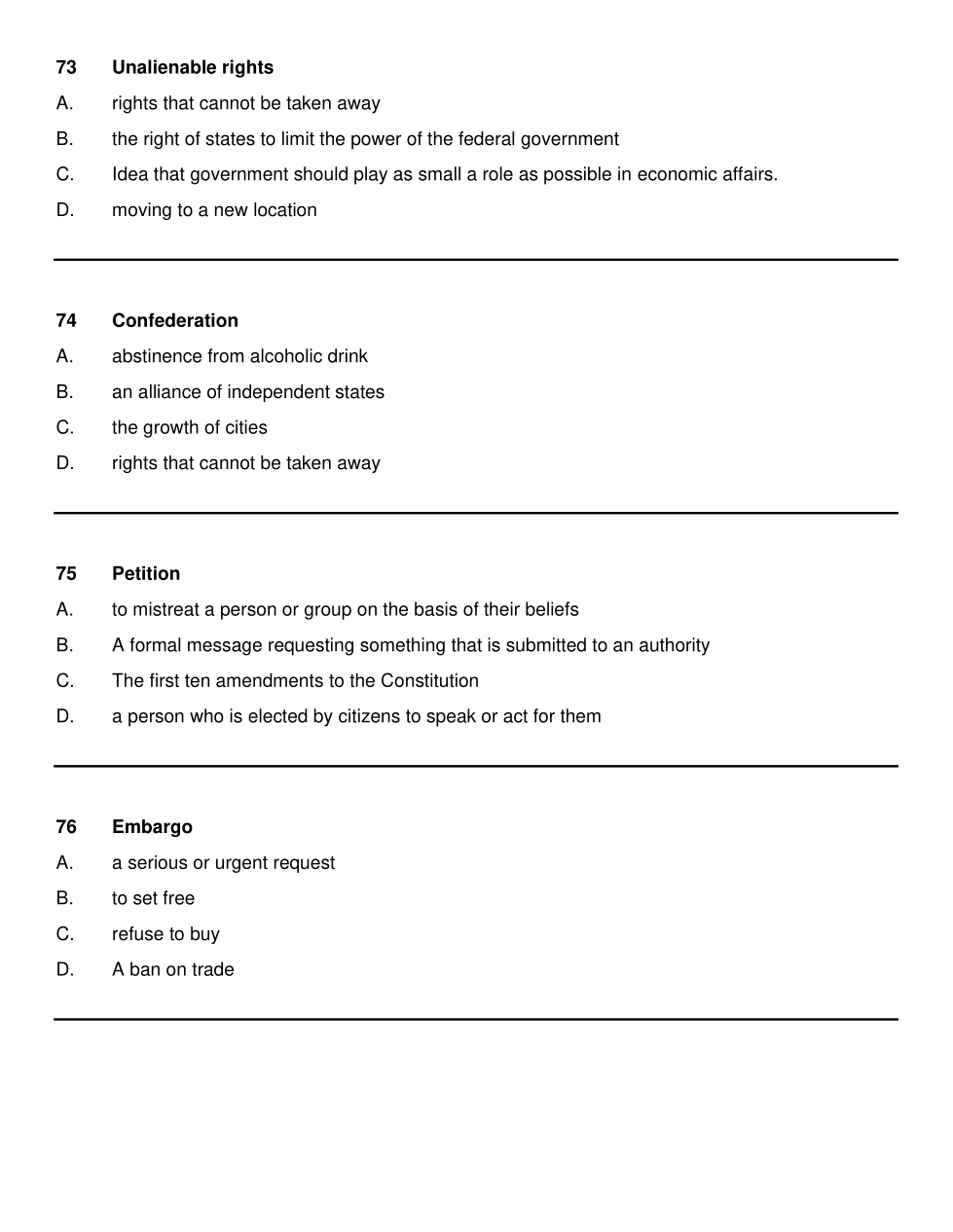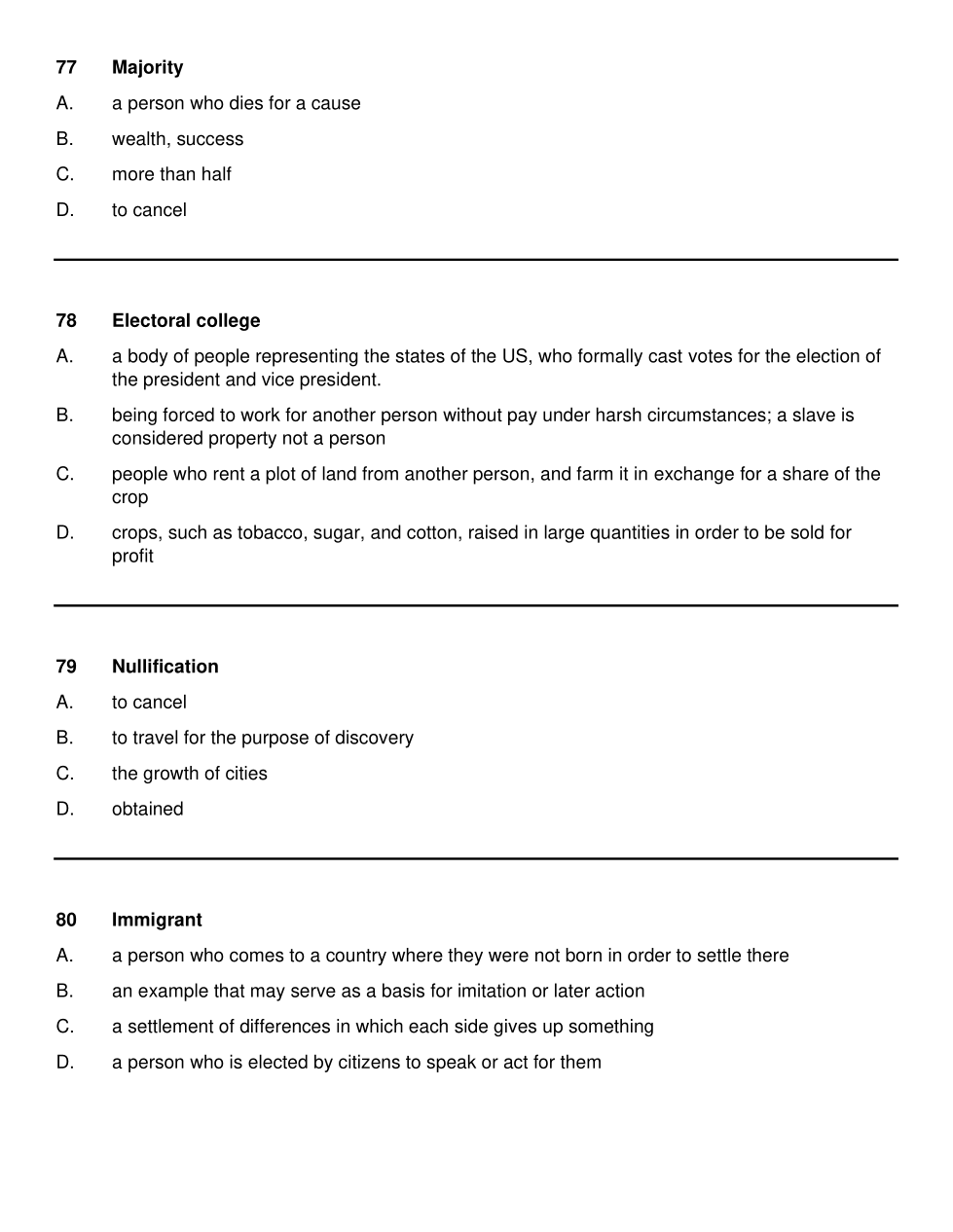
A. Ideas spread to influence public opinion for or against a cause.
B. people who work to spread their religious beliefs
C. One country taking over another area to be used for their benefit
D. Idea that government should play as small a role as possible in economic affairs.
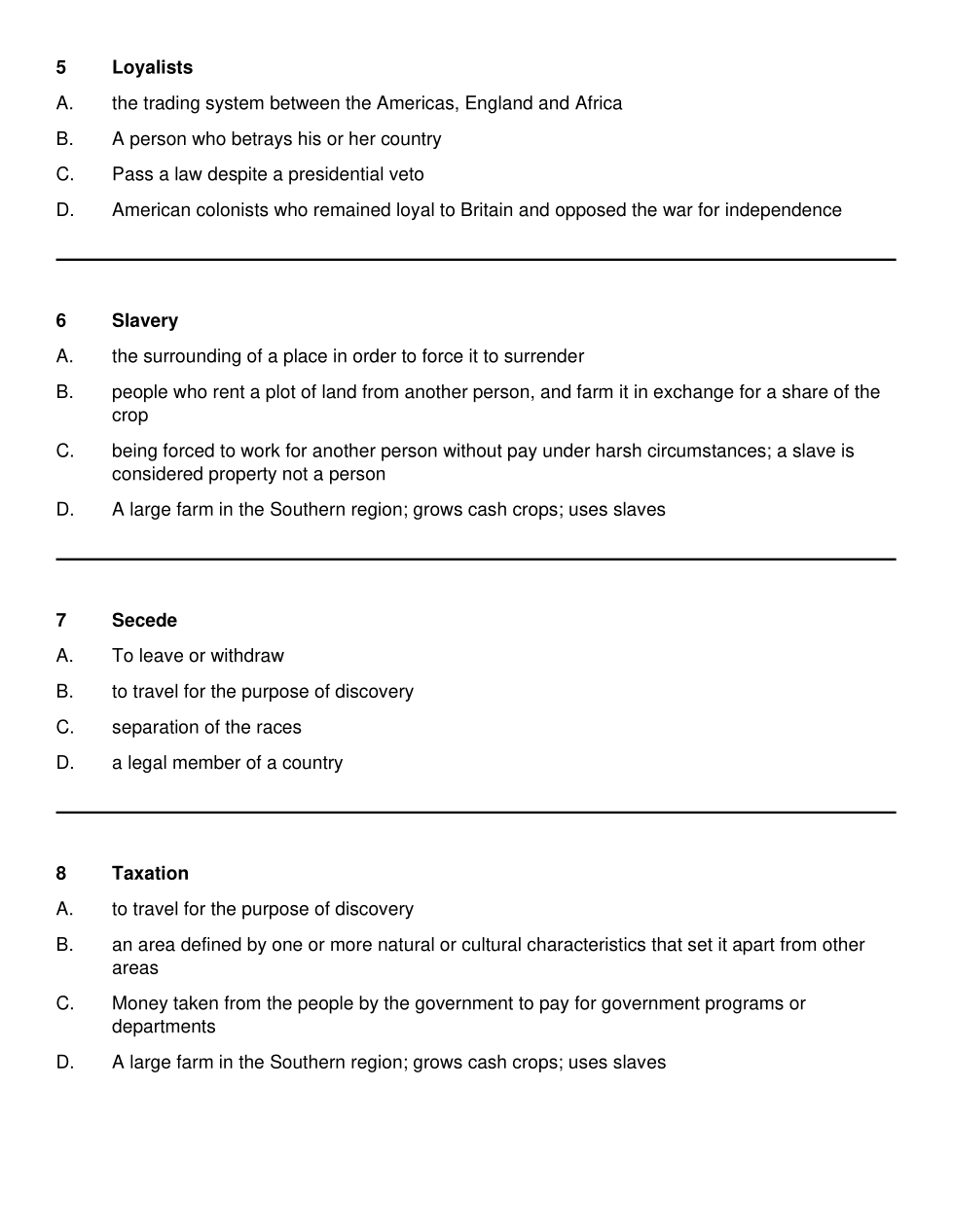
82 Boycott
A. the growth of cities
B. refuse to buy
C. A ban on trade
D. to set free
83 Traitor
A. Person who wanted to end slavery
B. A person who betrays his or her country
C. American colonists who were determined to fight the British until American independence was won
D. Pass a law despite a presidential veto
84 Immigration
A. separation of the races
B. to set free
C. moving to a new location
D. to cancel
85 Prosperity
A. wealth, success
B. A ban on trade
C. not using alcoholic drink
D. a safe place
86 Secession
A. Formal withdrawal of states or regions from a nation
B. To formally charge a public official with misconduct in office
C. A place where weapons and ammunition are stored
D. A large farm in the Southern region; grows cash crops; uses slaves
87 Nationalism
A. a system that involves making, buying, and selling goods
B. Pass a law despite a presidential veto
C. An economic system in which prices and wages are determined by unrestricted competition between businesses, without government regulation or fear of monopolies
D. Loyalty and devotion to a nation
88 Tariff
A. a serious or urgent request
B. an artificial waterway
C. to approve
D. A tax on imported goods
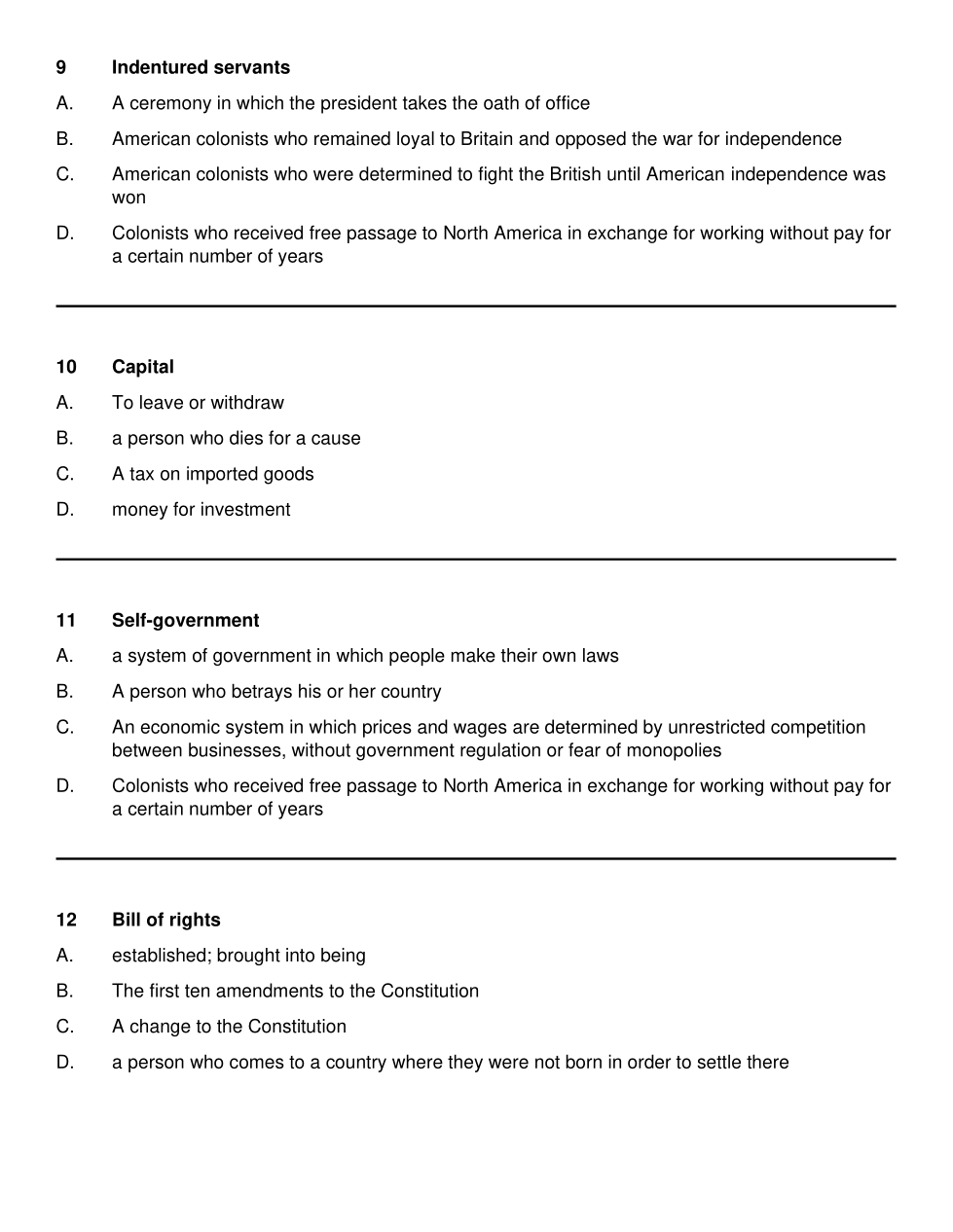
89 Urbanization
A. to cancel
B. the growth of cities
C. separation of the races
D. to set free
90 Abolitionist
A. A person who wanted to end slavery
B. Rule by the people
C. American colonists who remained loyal to Britain and opposed the war for independence
D. A ceremony in which the president takes the oath of office
91 Martyr
A. a legal member of a country
B. a person who dies for a cause
C. to bring a product into a country to be sold
D. A tax on imported goods
92 Separation of powers
A. a body of people representing the states of the US, who formally cast votes for the election of the president and vice president.
B. Money taken from the people by the government to pay for government programs or departments
C. restrictions on government to protect the natural rights of citizens; even the leaders have to obey laws
D. Constitutional division of powers among the legislative, executive, and judicial branches, with the legislative branch making law, the executive applying and enforcing the law, and the judiciary interpreting the law
93 Plantation
A. an example that may serve as a basis for imitation or later action
B. a settlement of differences in which each side gives up something
C. the right of states to limit the power of the federal government
D. A large farm in the Southern region; grows cash crops; uses slaves
94 Free market
A. A ceremony in which the president takes the oath of office
B. A system that allows each branch of government to limit the powers of the other branches in order to prevent abuse of power
C. the trading system between the Americas, England and Africa
D. An economic system in which prices and wages are determined by unrestricted competition between businesses, without government regulation or fear of monopolies
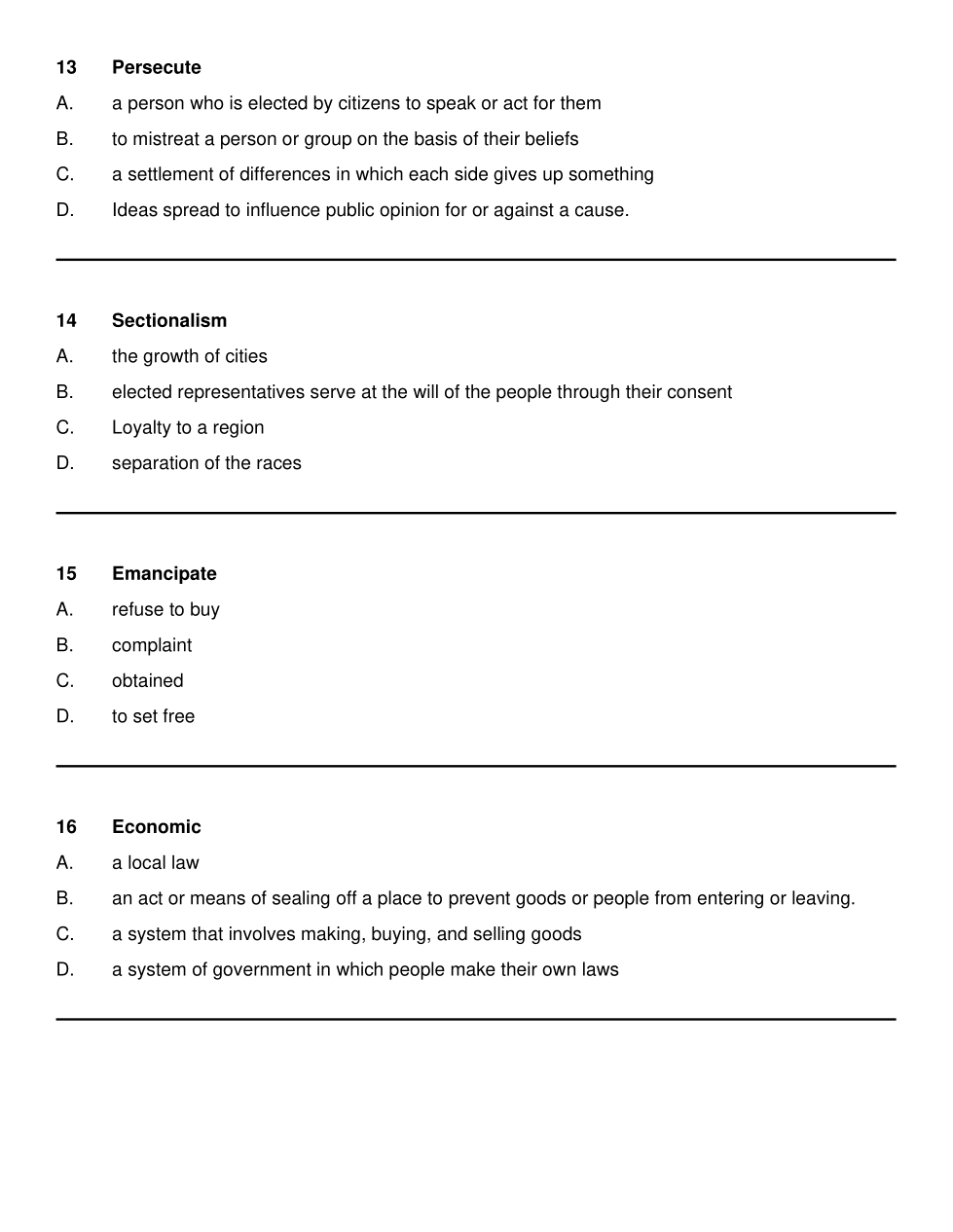
95 Sedition
A. to travel for the purpose of discover
B. send (goods or services) to another country for sale.
C. Money taken from the people by the government to pay for government programs or departments
D. rebellion or resistance against the government
Doctrine
A. a set of beliefs held by a church, political party, or other group.
B. a person who is elected by citizens to speak or act for them
C. to mistreat a person or group on the basis of their beliefs
D. A change to the Constitution
97 Corrupt
A. to set free
B. dishonest
C. obtained
D. complaint
98 Rebellion
A. a fight against a government
B. a fixed period for something
C. A written plan of government
D. A religious group who came to America for religious freedom and settled Massachusetts Bay.
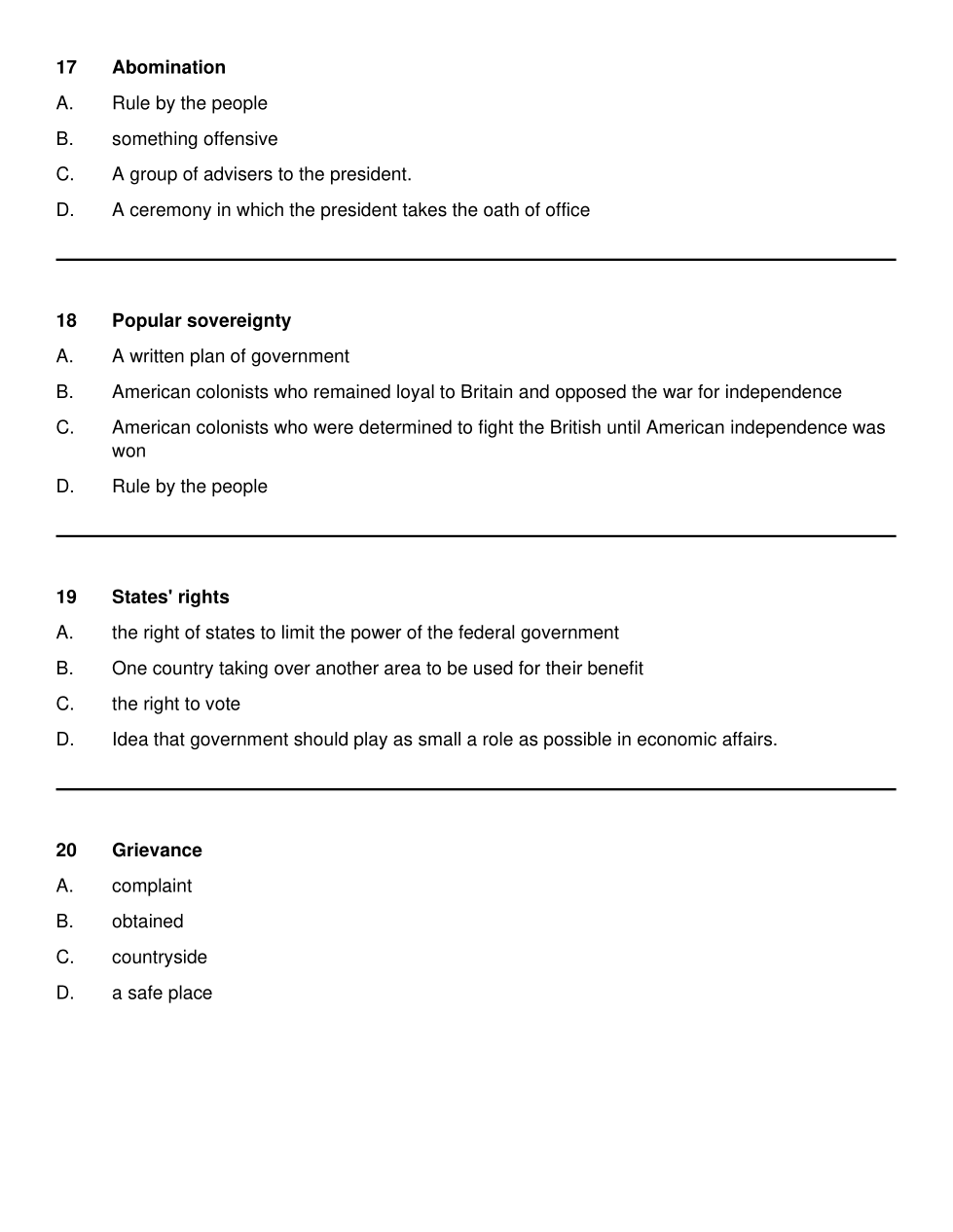
99 Proclamation
A. an official announcement
B. to mistreat a person or group on the basis of their beliefs
C. the growth of cities
D. a set of beliefs held by a church, political party, or other group.
100 Neutrality
A. to travel for the purpose of discovery
B. One country taking over another area to be used for their benefit
C. A refusal to take part in a war between other nations