3.5 Build an Atom Phet Simulation
star
star
star
star
star
Last updated almost 4 years ago
28 Nsɛmmisa
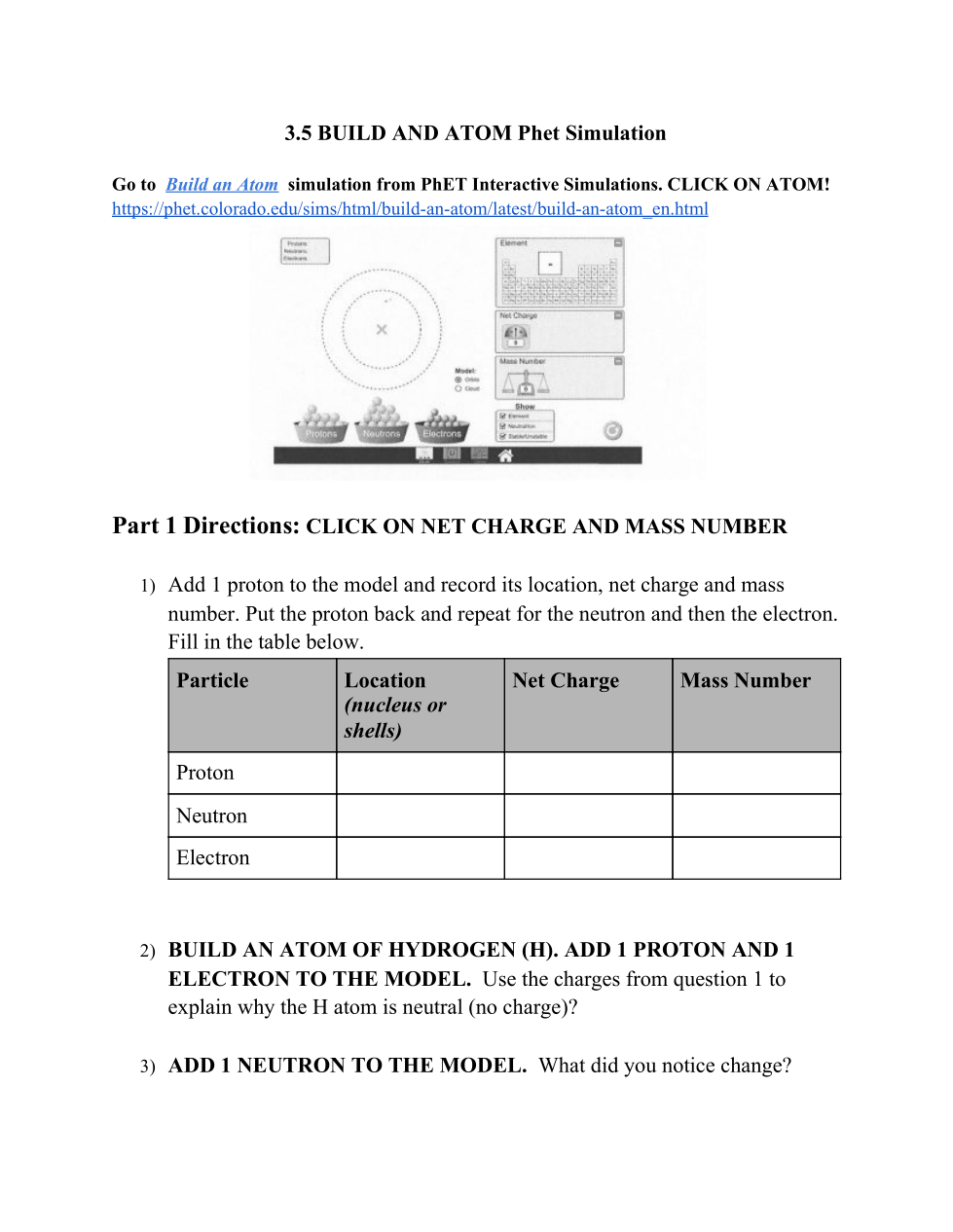
Fill out the Table- Number 1 is done for you
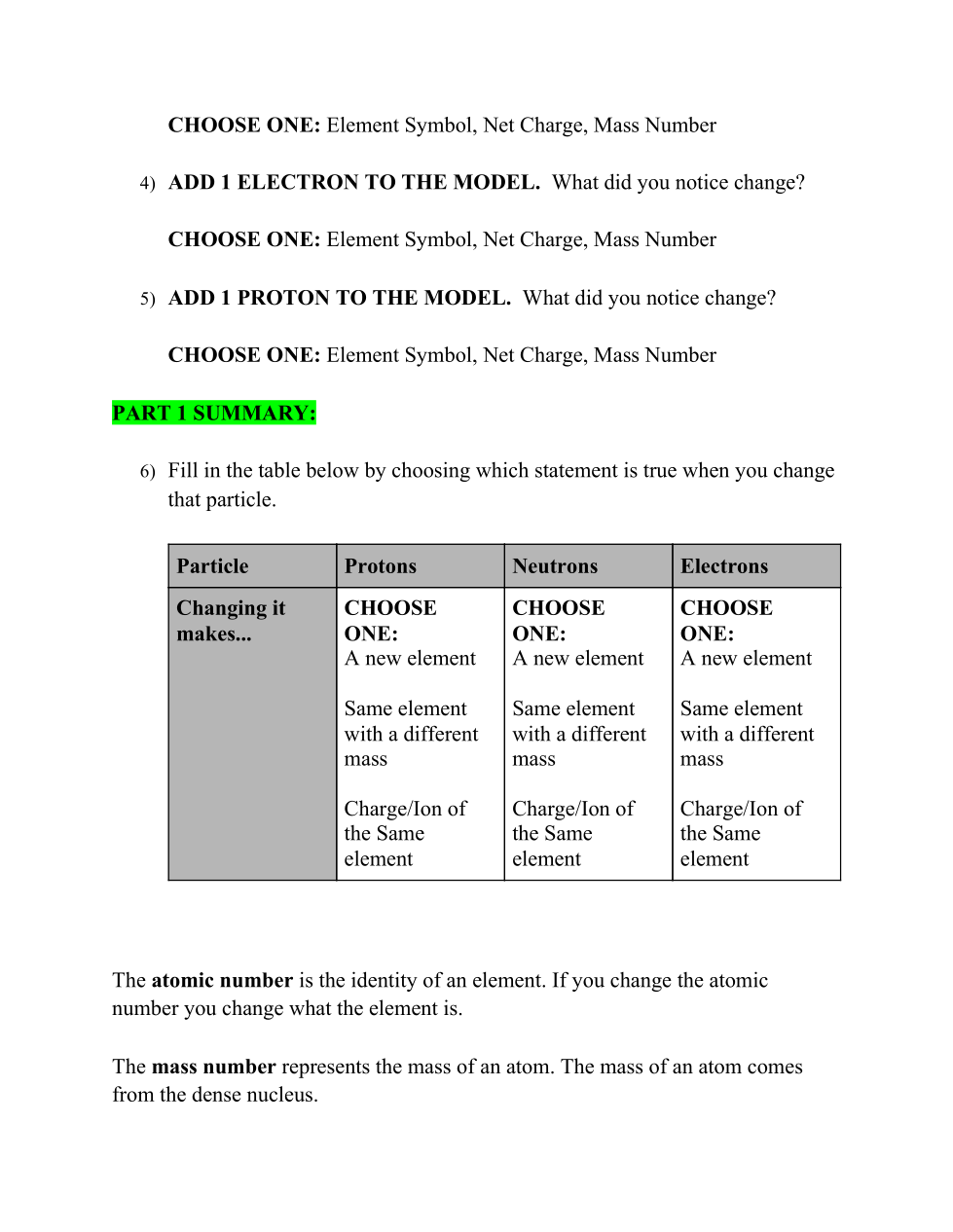
What changed when you added 1 more electron to the H atom model?

Move the choice to each category that makes the statement true
Protons
Electrons
Neutrons
Atomic Number is the number of __________.
Mass Number is the number of protons + _______________.
An ion (charge) forms when __________ are added or removed from the atom.
Click on Symbol icon at bottom of the page to help you fill out this chart
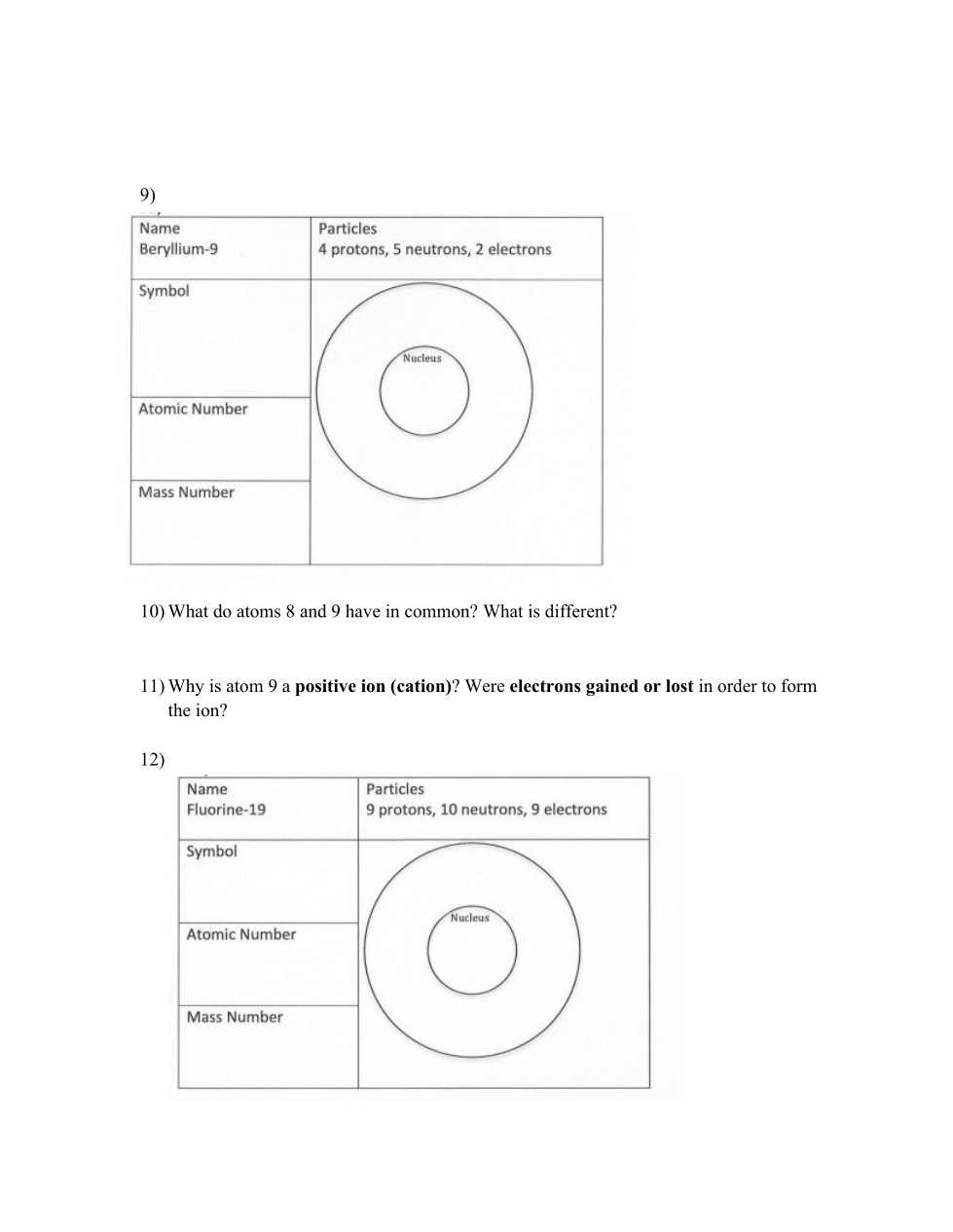
Draw or take a screen shot picture from phet simulation to answer.
Why is atom 9 a positive cation?Were electrons gained or lost in order to form the ion?

How would you build a negative ion (anion) for atom 12? Would you need to lose or gain electrons?
Draw or take a screen shot picture from phet simulation to answer
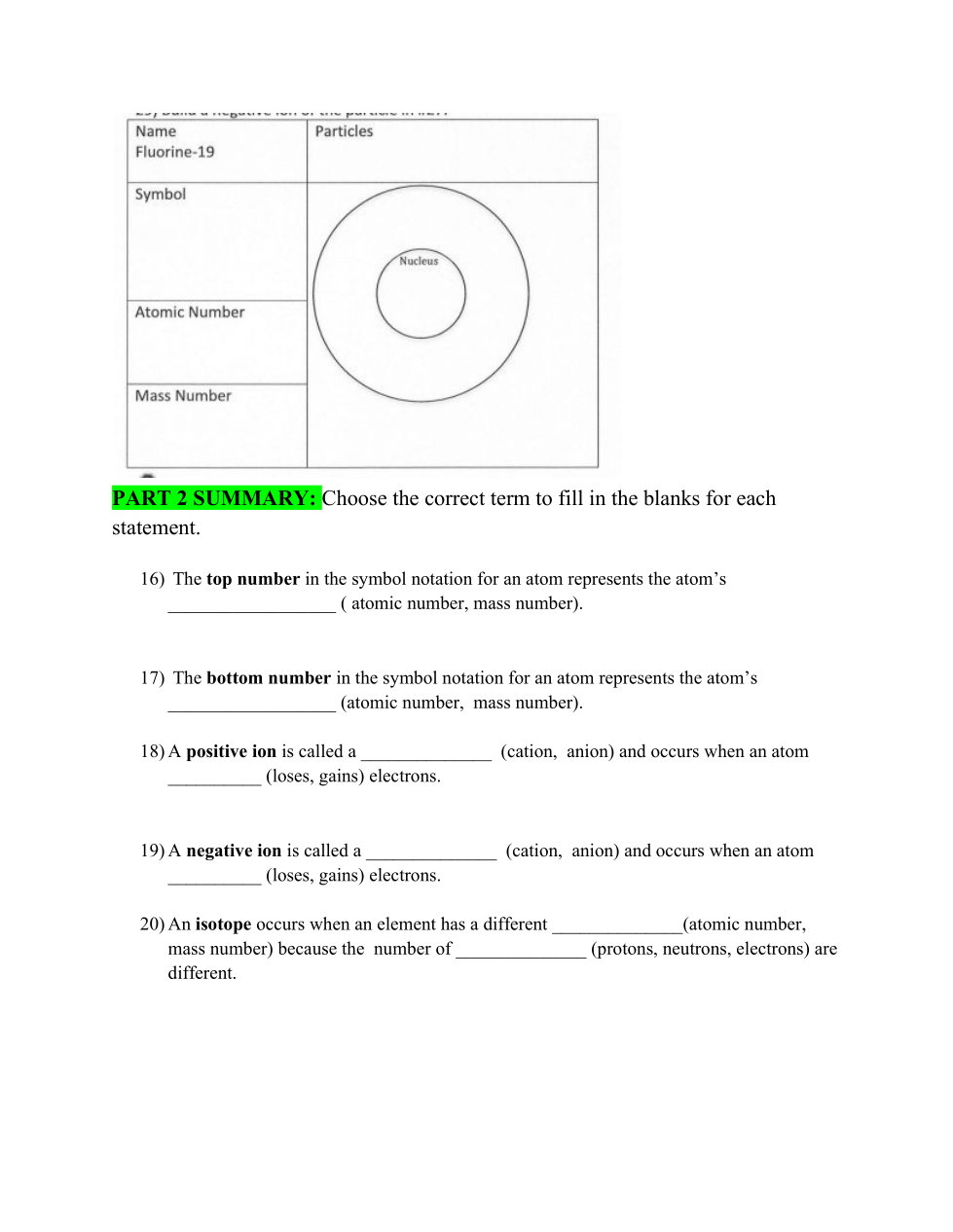
The TOP NUMBER in the symbol notation for an atom represents the atom's ________________
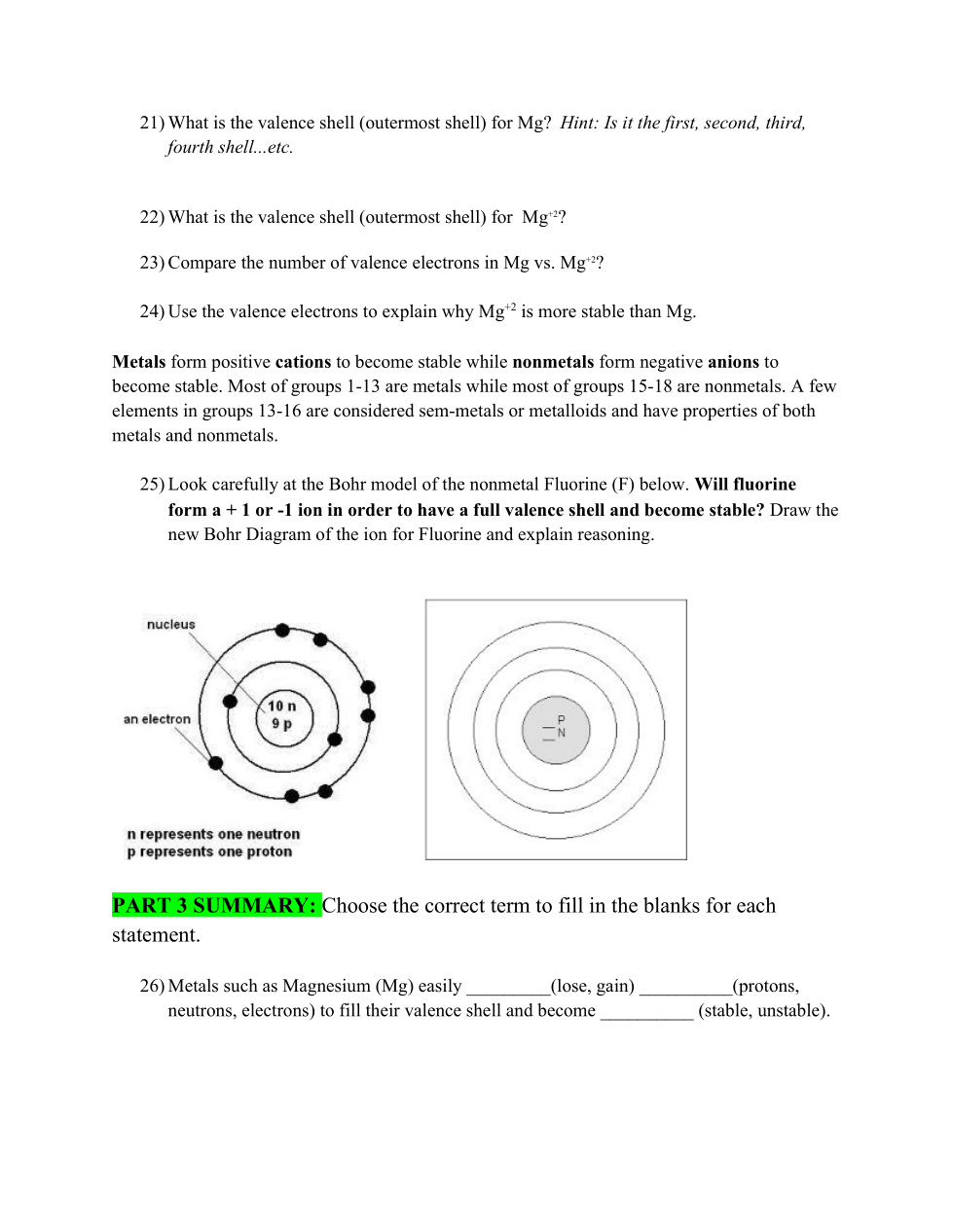
Draw or take a screen shot picture from phet simulation to answer
Noble gases such as Helium (He) and Argon (Ar) in group 18 on the periodic table do not form__________(ions, isotopes) because they have the maximum number of valence electrons and are _________ (stable, unstable) as a _________ (neutral, charged) atom. Choose the three correct terms to fill in blanks
Why is the H atom neutral (no charge)? Select all that are true
What changed when you added 1 neutron to the H atom model?
What changed when you added 1 more proton to the H atom model? (choose all that apply)
Changing each particle makes... (Move around the particles on the left column so that it matches what happens when that particle changes)
| Draggable item | arrow_right_alt | Corresponding Item |
|---|---|---|
Add/Remove Neutrons | arrow_right_alt | A new element forms |
Add/Remove Electrons | arrow_right_alt | Same element with a different mass |
Add/Remove Protons | arrow_right_alt | Forms a charge/ion of the same element |
Choose all that are true
Draw or take a screen shot picture from phet simulation to answer
Draw or take a screen shot picture from phet simulation to answer
The BOTTOM NUMBER in the symbol notation for an atom represents the atom's ________________
A POSITIVE ION is called a ____________________ (cation, ion) and occurs when an atom ______________ (loses, gains) electrons. Choose the two correct terms to fill in blanks
A NEGATIVE ION is called a ____________________ (cation, ion) and occurs when an atom ______________ (loses, gains) electrons. Choose the two correct terms to fill in blanks
An ISOTOPE occurs when an element has a different ____________ (atomic number, mass number) because the number of _______________ (protons, neutrons, electrons) are different. Choose the two correct terms to fill in blanks
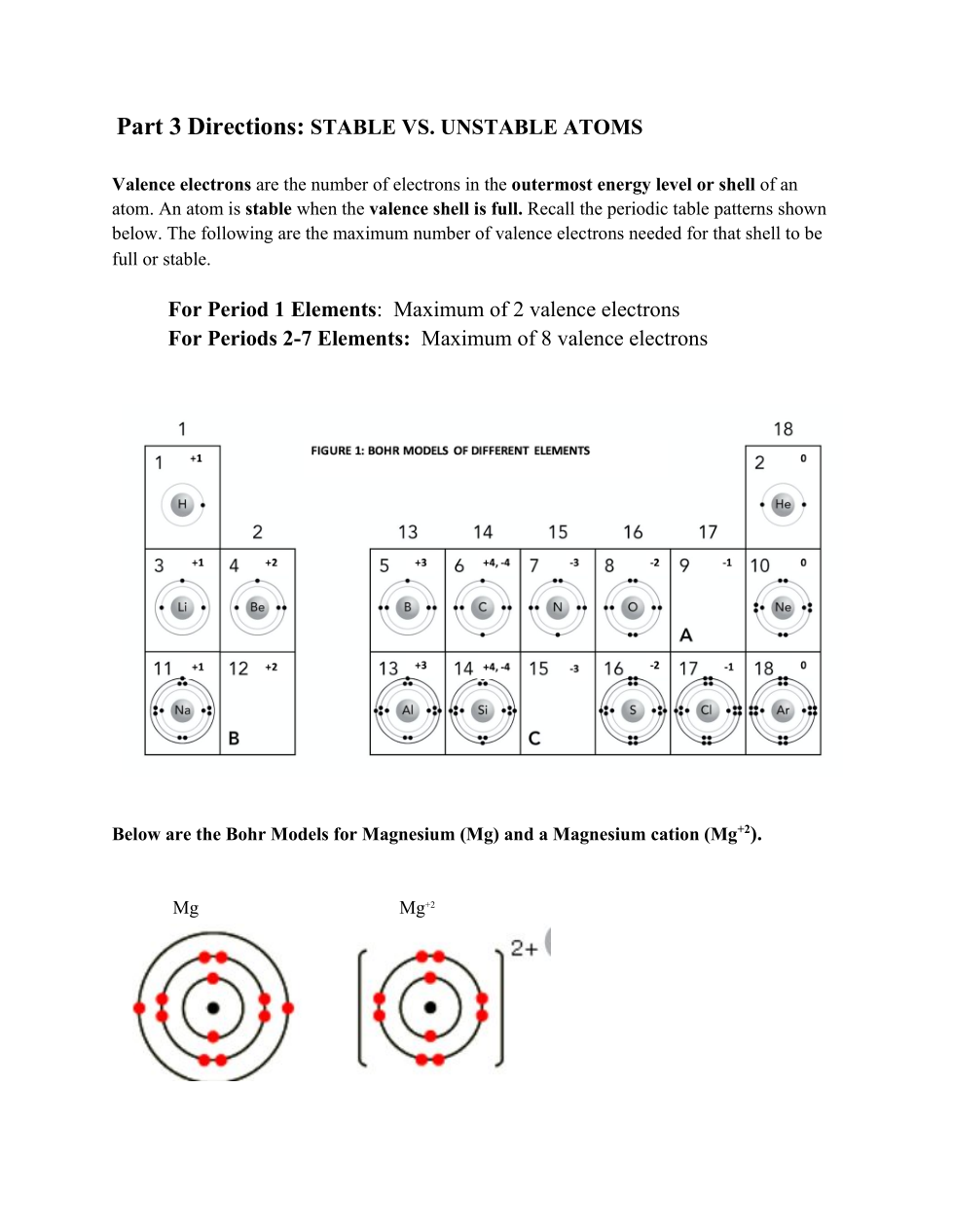
What is the valence shell (outermost shell) for Mg?
What is the valence shell (outermost shell) for Mg +2?
Compare the number of valence electrons in Mg vs. Mg+2. Choose all that are true.
Use the valence electrons to explain why Mg+2 is more stable than Mg.
Metals such as Magnesium (Mg) easily _________(lose, gain) __________(protons, neutrons, electrons) to fill their valence shell and become __________ (stable, unstable). Choose the three correct terms to fill in blanks
Nonmetals such as Fluorine (F) easily _________(lose, gain) __________(protons, neutrons, electrons) to fill their valence shell and become __________ (stable, unstable). Choose the three correct terms to fill in blanks