Objetos Directos (1)
star
star
star
star
star
Last updated over 5 years ago
18 Nsɛmmisa
Hyɛ no nsow a efi ɔkyerɛwfo no hɔ:
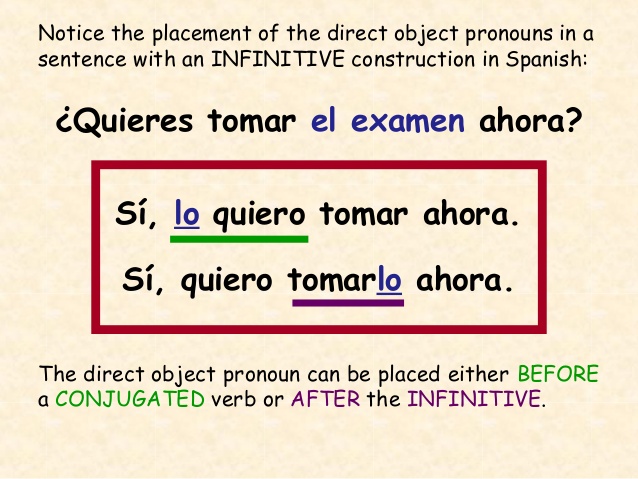
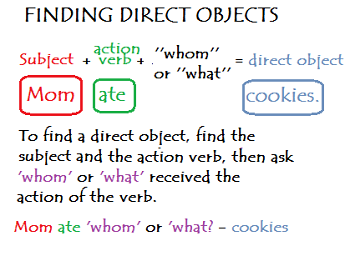
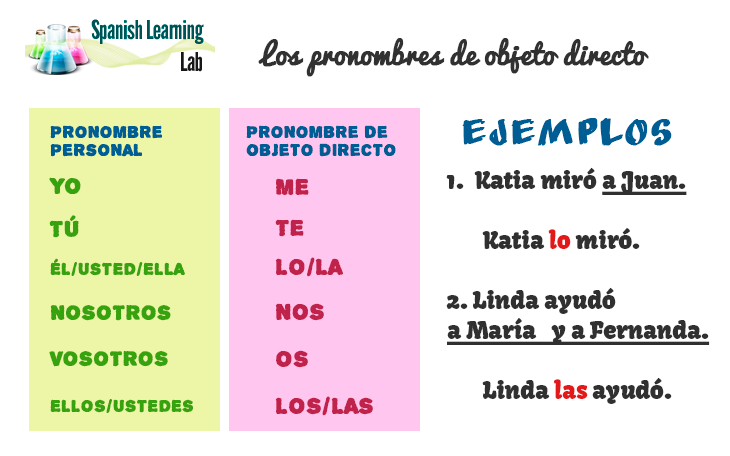
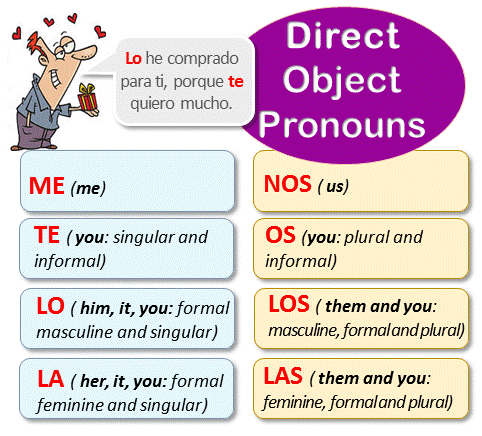
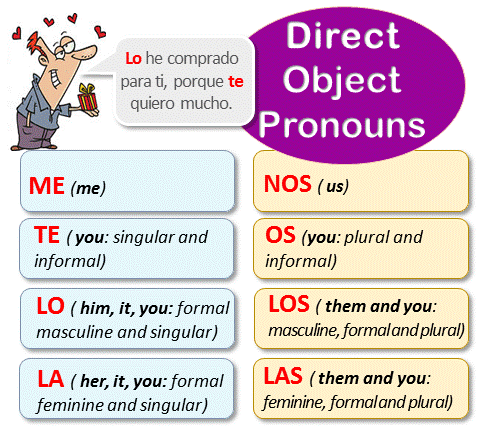
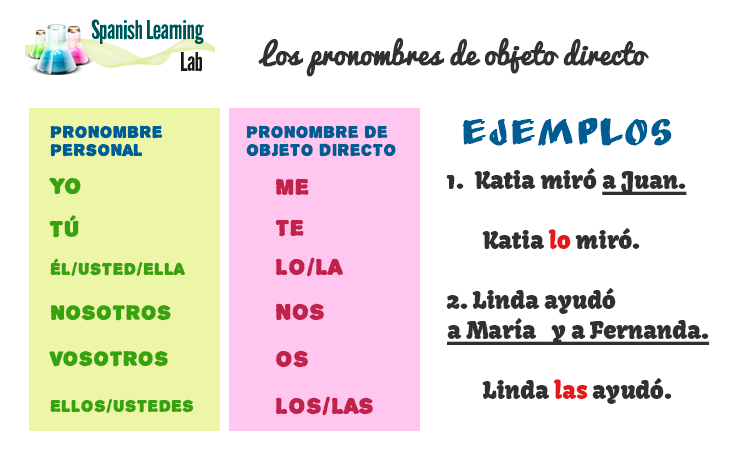
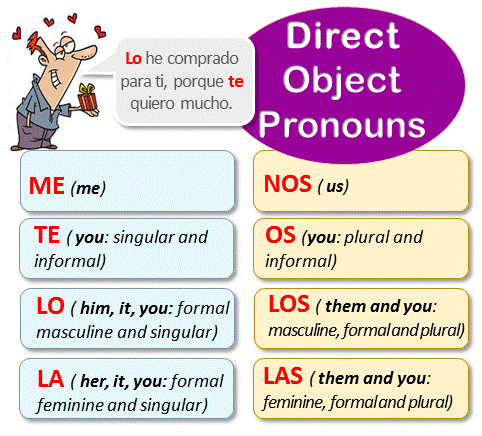
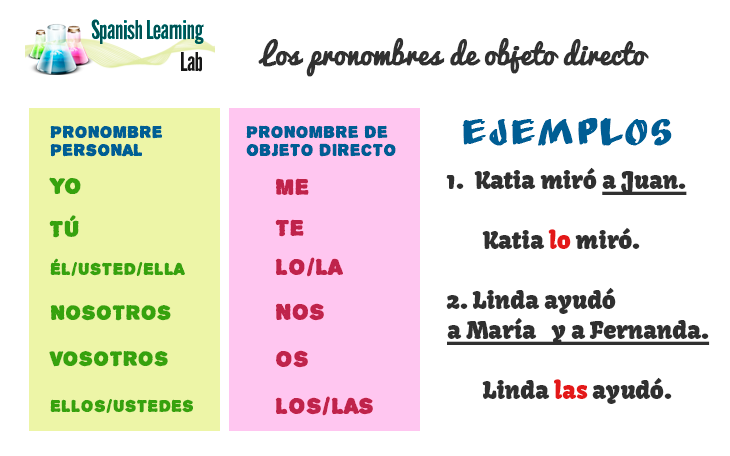
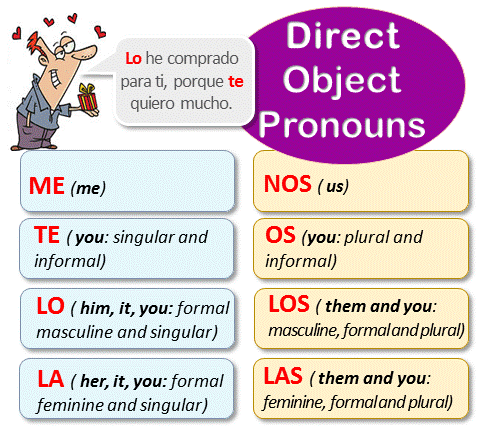
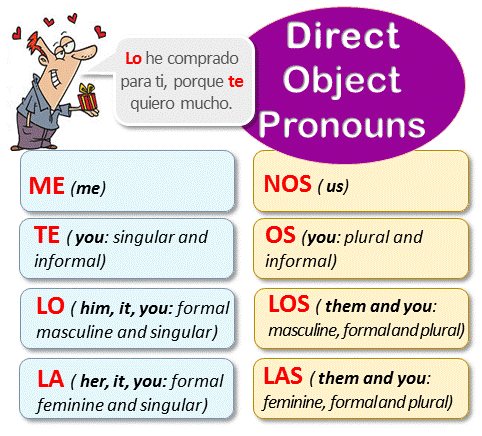
Direct Object Pronouns
1
1
1
1
1
1
1
1
1
1
1
1
1
1
1
1
1
1
Direct Object Pronouns
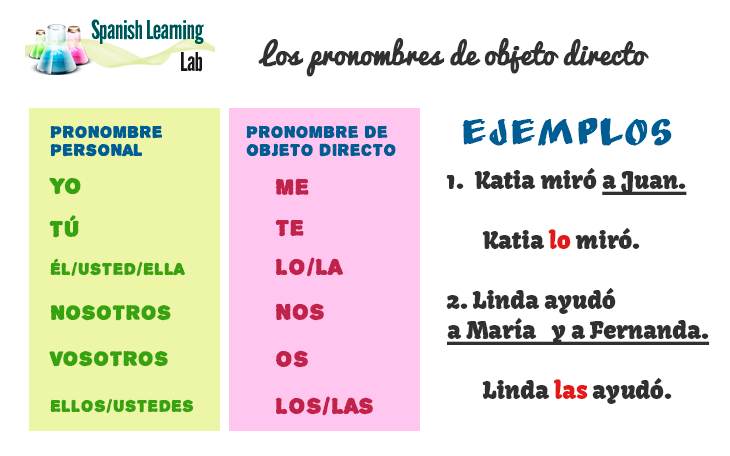
LOS PRONOMBRES
Empareja el complemento directo con su igual en inglés.
| Draggable item | arrow_right_alt | Corresponding Item |
|---|---|---|
os | arrow_right_alt | me |
los | arrow_right_alt | you |
las | arrow_right_alt | it, he |
te | arrow_right_alt | it, she |
la | arrow_right_alt | us |
nos | arrow_right_alt | y'all |
lo | arrow_right_alt | them (♂) |
me | arrow_right_alt | them (♀) |
LA SELECCIÓN
Identifica el pronombre para reemplazar (=to replace) el sustantivo.
el oropel largo de plata
los villancicos tradicionales
las luces navideñas
la estrella brillante
los duendes trabajadores
los ornamentos grandes
el niño travieso y mal educado
las galletas de azúcar
la lista de los deseos
el adorno antiguo
LO
LA
LOS
LAS
Escribe el DOP (=direct object pronoun) que reemplaza (=replaces) el sustantivo.
a mí
Escribe el DOP (=direct object pronoun) que reemplaza (=replaces) el sustantivo.
a él
Escribe el DOP (=direct object pronoun) que reemplaza (=replaces) el sustantivo.
a nosotros
Escribe el DOP (=direct object pronoun) que reemplaza (=replaces) el sustantivo.
las costumbres
Escribe el DOP (=direct object pronoun) que reemplaza (=replaces) el sustantivo.
los Reyes Magos
Escribe el DOP (=direct object pronoun) que reemplaza (=replaces) el sustantivo.
el pesebre
LA TRADUCCIÓN
Empareja la frase español con la inglesa.
| Draggable item | arrow_right_alt | Corresponding Item |
|---|---|---|
Lo escucho. | arrow_right_alt | I listen to it (canción, song). |
Os escucho. | arrow_right_alt | I listen to them (anuncios, commercials). |
Te escucho. | arrow_right_alt | I listen to it (pronóstico, forecast). |
Las escucho. | arrow_right_alt | I listen to you. |
La escucho. | arrow_right_alt | I listen to y'all (plural). |
Los escucho. | arrow_right_alt | I listen to them (historias, stories). |
LA COMPLETACIÓN
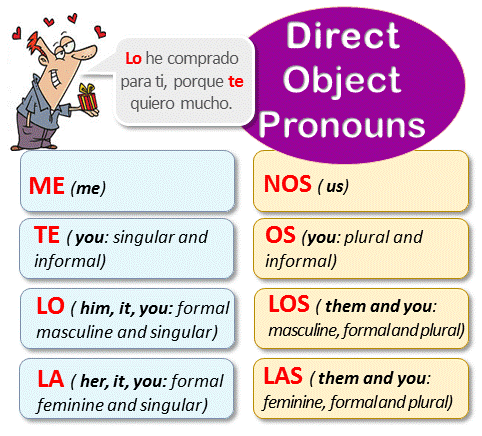
Empareja con el pronombre que completa la frase.
| Draggable item | arrow_right_alt | Corresponding Item |
|---|---|---|
Yo --- como (las galletas) en la cocina. | arrow_right_alt | lo |
Yo --- miro (a vosotros) cuando habláis. | arrow_right_alt | las |
Yo --- llamo (a ti) por teléfono. | arrow_right_alt | la |
Yo --- decoro (el abeto) con los adornos. | arrow_right_alt | los |
Yo --- envuelvo (los regalos) con el papel. | arrow_right_alt | te |
Yo --- pongo (la mesa) en el comedor. | arrow_right_alt | os |
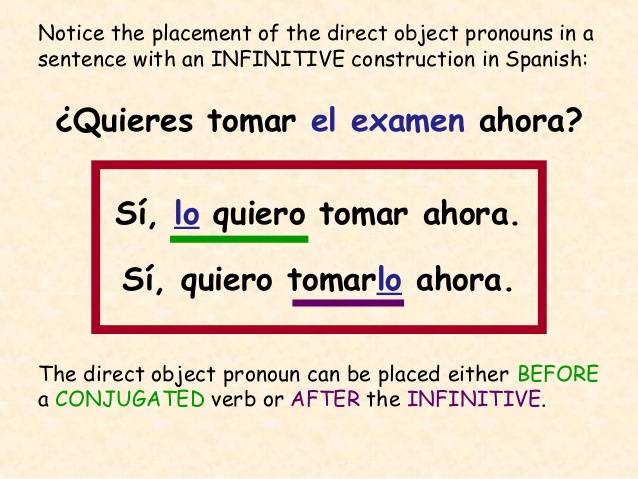
DOS MANERAS (TWO WAYS)
Empareja la frases equivalentes.
| Draggable item | arrow_right_alt | Corresponding Item |
|---|---|---|
Debes lavarla. | arrow_right_alt | Los debes lavar. |
Debes lavarlo. | arrow_right_alt | La debes lavar. |
Debes lavarlas. | arrow_right_alt | Lo debes lavar. |
Debes lavarlos. | arrow_right_alt | Las debes lavar. |
Escribe la frase completa en otra manera (write the COMPLETE sentence another way).
(Did you see above in the previous? You are writing it in the format of the other column).
Yo debo envolverlos.
Escribe la frase completa en otra manera (write the COMPLETE sentence another way).
(Did you see #11? You are writing it in the format of the other column).
Yo no quiero envolverlos.
Escribe la frase completa en otra manera (write the COMPLETE sentence another way).
(Did you see #11? You are writing it in the format of the other column).
Las voy a colgar.
Escribe la frase completa en otra manera (write the COMPLETE sentence another way).
(Did you see #11? You are writing it in the format of the other column).
Te necesito llamar.
Reemplaza el objeto directo con pronombre y escribe toda la frase.
Replace the direct object with a pronoun and give the whole sentence.
Decora el abeto.
Reemplaza el objeto directo con pronombre y escribe toda la frase.
Replace the direct object with a pronoun and give the whole sentence.
Llamamos a nuestra abuela.
Reemplaza el objeto directo con pronombre y escribe toda la frase.
Replace the direct object with a pronoun and give the whole sentence.
Necesitamos mandar las tarjetas.