Classifying & Counting Matter Quiz
star
star
star
star
star
Last updated about 1 year ago
38 Nsɛmmisa
Untitled Section
Ɛhia
1
Ɛhia
1
Ɛhia
1
Ɛhia
1
Ɛhia
1
Ɛhia
1
Ɛhia
1
Ɛhia
1
Ɛhia
1
Ɛhia
1
Ɛhia
1
0.5
1
1
1
1
1
1
1
1
1
1
1
1
1
1
1
1
1
1
Substances that are made up of only one type of atom OR of one type of compound (they are the same substance throughout).
The particles in this substance tend to group together with like particles (the same type of atom/compounds); making a substance that is NOT uniform in composition. This means that it is easy to see/distinguish that the substance is made up of multiple parts.
Made of 2 or more DIFFERENT types of atoms that ARE chemically bonded/combined in a fixed ratio and cannot be separated by physical means.
A substance entirely made up of only one type of atom
The parts of this type of substance are equally distributed (mixed up and spread out evenly) throughout, making a substance that appears to be completely uniform in composition (uniform = the same/one).
Two or more atoms (of the same OR different type) that are chemically bonded/combined.
When two or more (different) pure substances are physically (not chemically) combined and exist in the same space, it is called a ________.
The building blocks of matter. They are the smallest unit of an element that maintains the chemical properties of that element.
These types of substances are made up of more than one type of substance that CAN be separated or broken down by physical means (without breaking a chemical bond).
All pure substances can be broken down into simpler substances by physical means
All compounds are molecules but not all molecules are compounds.
What does the "3" in this chemical formula tell us? 3C12H22O11
Liquid Nitrogen
Ink
A Newspaper
Baking Soda (NaHCO3) is a example of a
What is the total number of atoms in this molecule of sucrose 3 C12H22O11 ?
TYPE ONLY THE NUMBER (NO WORDS) BELOW
Select "Edit Background". Then put a blue box around any/all of the coefficients and a pink box around any/all of the subscripts.
#18 - #21 INSTRUCTIONS
For each question below:
1. First, categorize each substance below as a pure substance or a mixture.
2. Then, further classify it as an element, compound, homogenous, or heterogenous mixture.
*You should have two options chosen for each substance listed (just like the table we completed in class)*
#22 - #25 The last three questions are based on the chemical formula for sucrose (a type of sugar)
3C12H22O11
In a chemical formula, such as 3C(H2O)4 , atoms inside the parentheses represent pre-existing molecule(s) of H2O that bonded with carbon.
In the chemical formula 3C(H2O)4 , the coefficient is 4
This is an example of a homogeneous mixture
What does the "3" tell us in this chemical formula?
Cake Batter (mixed up) is an example of a
Cake Batter is an example of a
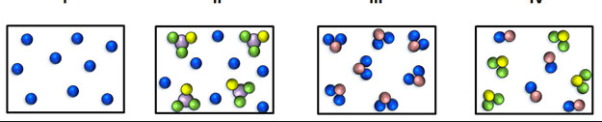
Which image below is an example of an element
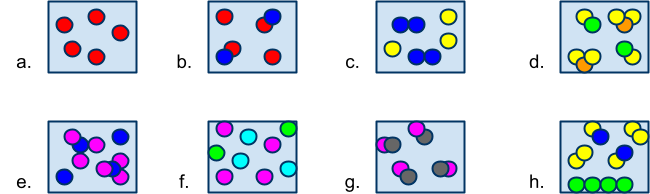
The picture for #15 is an example of _____
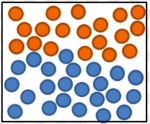
This picture is an example of a ______
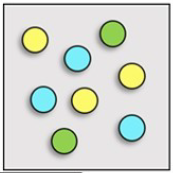
14.
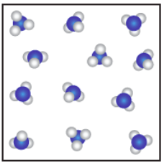
15.
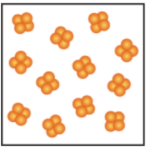
16.

In the chemical formula above, the coefficient is 4
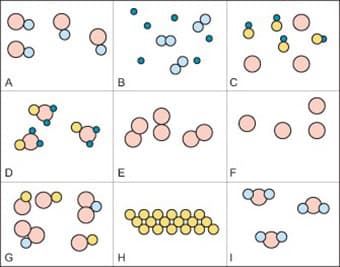
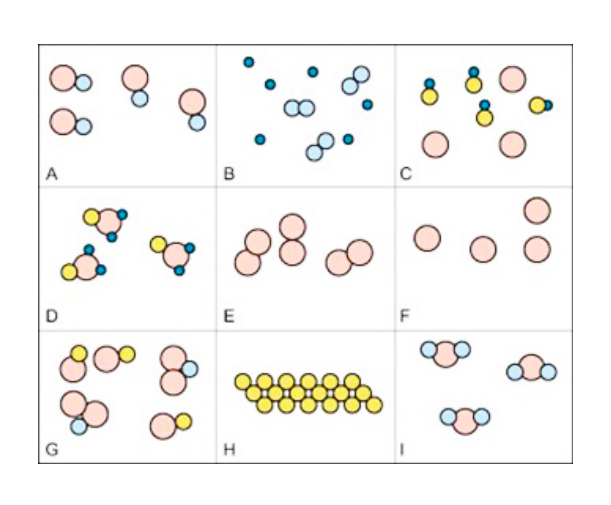
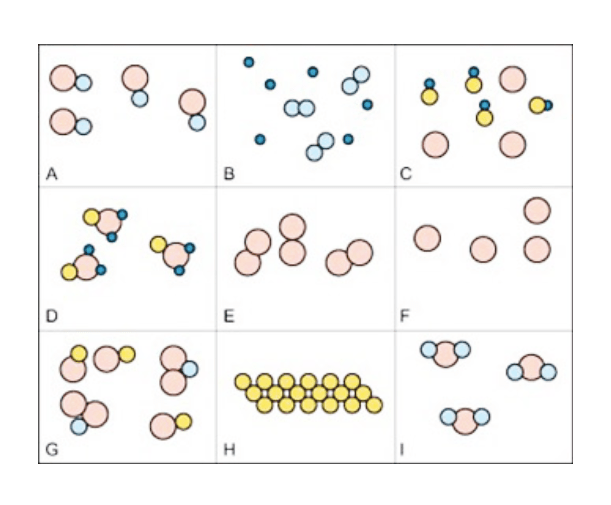
Select every letter representing a box on the left that is an example of an element
Select every letter representing a box on the left that is an example of a compound
Select every letter representing a box on the left that is an example of a mixture
The picture for #16 is an example of _____
The picture for #16 is an example of _____
The picture for #16 is an example of _____
The picture for #16 is an example of _____