2023 Test Cons. of Mass and Physical and Chem Change
star
star
star
star
star
Last updated over 3 years ago
20 Nsɛmmisa
Ɛhia
2
Ɛhia
2
Ɛhia
2
Ɛhia
2
Ɛhia
2
Ɛhia
2
Ɛhia
2
Ɛhia
2

Ɛhia
2
Ɛhia
2
2
2
2
2
2
Ɛhia
1
Ɛhia
1
Ɛhia
3
Ɛhia
3
Ɛhia
5
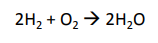
The arrow (yield sign) in a chemical equation represent what?
The compounds to the left of the arrow are called the...
The compounds to the right of the arrow are called the...
How many hydrogen atoms are in the reactant above?
How many oxygen atoms are in the reactant above?
How many oxygen atoms are in the product above?
How many hydrogen atoms are in the product above?
Is the chemical equation balanced or unbalanced?
In the picture above, the coefficent is represented what number?
In the picture above, the subscript is represented by the number...
The Law of Conservation of Matter states that:
Before a chemical reaction, the total mass of two reactants is measured to be 40 grams. After the reaction, what should be the total mass of the products?
What happens to the atoms in a chemical reaction?
Copper chloride and aluminum react to produce aluminum chloride and copper. Which of the following is the correctly balanced chemical equation for this reaction? (Hint: It's the only balanced equation)
Hydrogen and oxygen react to produce water. Which of the following is the correctly balanced chemical equation for this reaction?
Water heating and turning into steam is a ___________ change.
Iron rusting is a ___________ change.
Select all of the pictures that represent a chemical change.
Select all examples of chemical changes.
What are the 5 evidences of a chemical change? (CHOOSE FIVE)