Ch 5 Hair Analysis
star
star
star
star
star
Last updated over 5 years ago
10 Nsɛmmisa
Hyɛ no nsow a efi ɔkyerɛwfo no hɔ:
Forensic hair Analysis
1
1
1
1
1
1

1
5
1
1
Forensic hair Analysis
When being compared to a wooden pencil, which part of hair represents the lead?
The transitional or regressive stage that lasts a few weeks which hair growth slows is callws
The hair follicle is dormant and hairs are easily lost during which stage of the hair cycle?
We know hair is human if ...
Hair is helpful in solving old crimes because ...
The hair shaft is composed of what important protein?
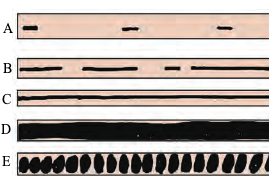
The medulla pattern in the above hair sample is
Using the image above, match the type of medulla pattern with the correct letter.
| Draggable item | arrow_right_alt | Corresponding Item |
|---|---|---|
Continuous Animal | arrow_right_alt | E |
Fragmentary | arrow_right_alt | D |
Continuous Human | arrow_right_alt | A |
stacked | arrow_right_alt | B |
Interrupted | arrow_right_alt | C |
Hair analysis may be used to determine all of the following except:
When collecting hairs from a suspect to compare to those found at a crime scene, how many hairs should be collected?