Log in
Sign up for FREE
arrow_back
Library

LNM Chapter 7: DĒ AMŌRE

star
star
star
star
star
Last updated over 3 years ago
60 questions
1
1
1
1
1
1
1
4
2
2
1
1
1
1
2
1
1
1
1
1
2
1
1
1
1
1
2
1
1
1
1
1
1
1
1
1
3
1
2
1
1
1
1
2
2
2
1
3
1
2
1
2
1
1
1
1
1
1
1
1
Question 1
1.

Identify the verb/s:

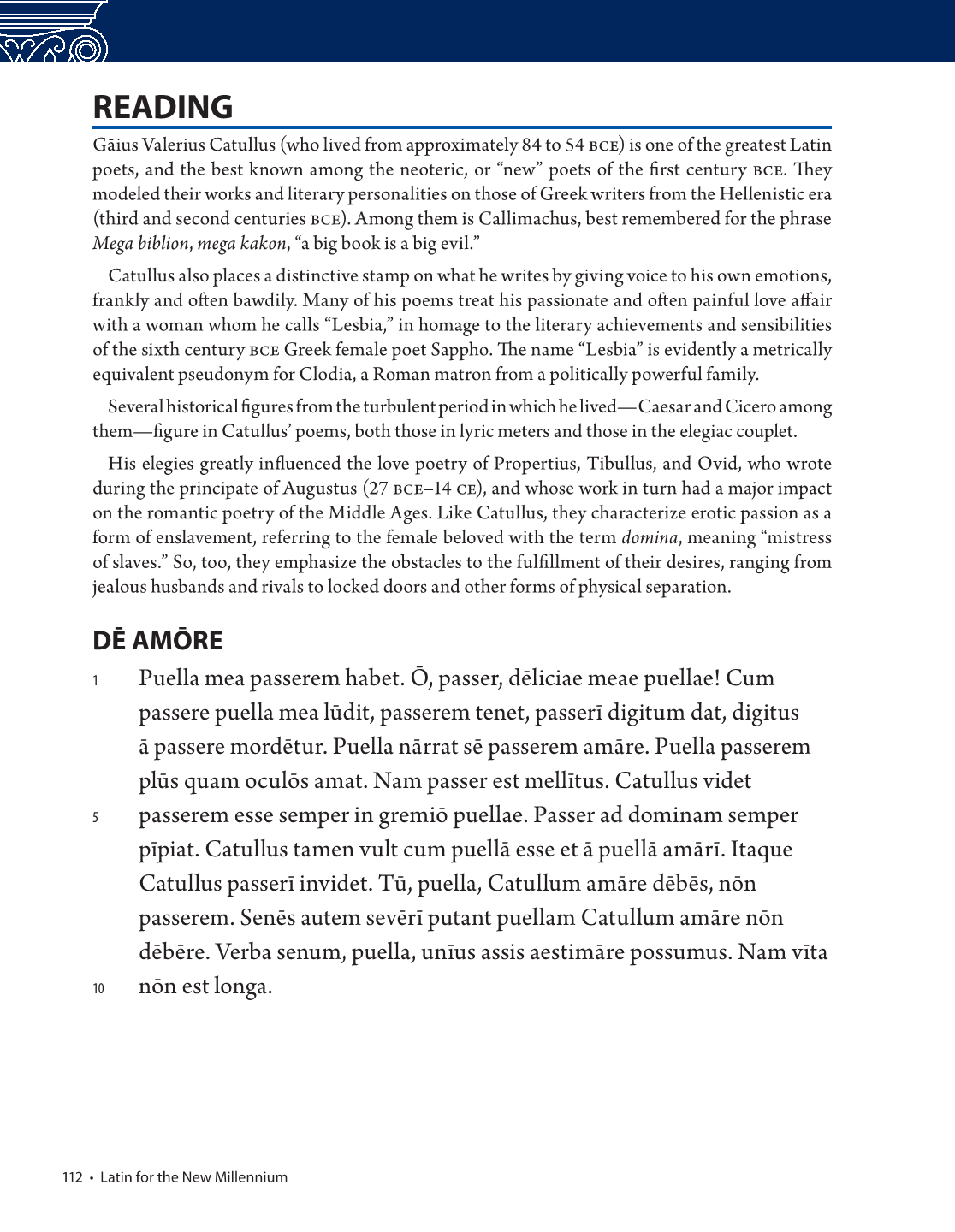
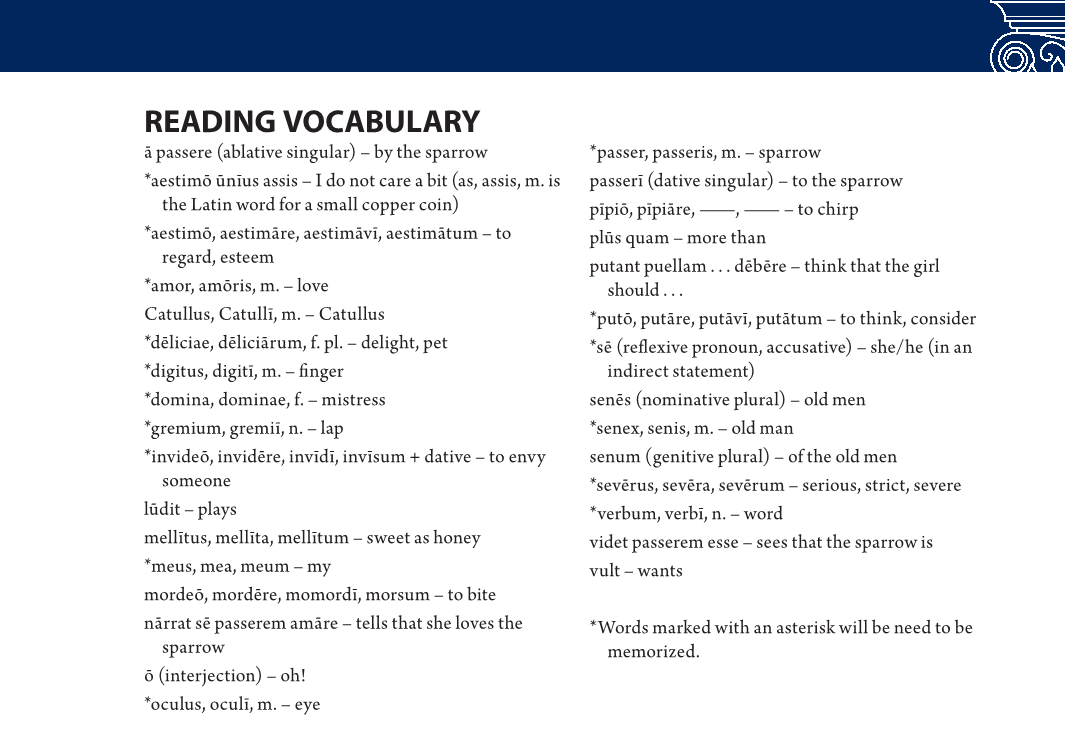
Puella mea passerem habet.
Question 2
2.

Identify the subject/s:

Puella mea passerem habet.
Question 3
3.

Translate: Puella mea passerem habet.

Question 4
4.

Identify the verb/s:

Ō, passer, dēliciae meae puellae!
Question 5
5.

What case and number is puellae?

Question 6
6.

In the sentence "Ō, passer, dēliciae meae puellae!", what case and number is passer?

Question 7
7.

Translate: Ō, passer, dēliciae meae puellae!

Question 8
8.

Identify the verb/s:

Cum passere puella mea lūdit, passerem tenet, passerī digitum dat, digitus ā passere mordētur.
Question 9
9.

Identify the subject/s (nominative case):

Cum passere puella mea lūdit, passerem tenet, passerī digitum dat, digitus ā passere mordētur.
Question 10
10.

Identify the direct objects (accusative case):

Cum passere puella mea lūdit, passerem tenet, passerī digitum dat, digitus ā passere mordētur.
Question 11
11.

Translate this phrase: Cum passere puella mea lūdit

Question 12
12.

Translate this phrase: passerem tenet

Question 13
13.

Translate this phrase: passerī digitum dat

Question 14
14.

Translate this phrase: digitus ā passere mordētur

Question 15
15.

Identify the verb/s:

Puella nārrat sē passerem amāre.
Question 16
16.

Identify the subject/s (nominative case):

Puella nārrat sē passerem amāre.
Question 17
17.

Identify the direct object/s (accusative case):

Puella nārrat sē passerem amāre.
Question 18
18.

Translate this sentence: Puella nārrat sē passerem amāre.

Question 19
19.

Identify the verb/s:

Puella passerem plūs quam oculōs amat.
Question 20
20.

Identify the subject/s (nominative case):

Puella passerem plūs quam oculōs amat.
Question 21
21.

Identify the direct object/s (accusative case):

Puella passerem plūs quam oculōs amat.
Question 22
22.

Translate the sentence: Puella passerem plūs quam oculōs amat.

Question 23
23.

Identify the verb/s:

Nam passer est mellītus.
Question 24
24.

Identify the subjects:

Nam passer est mellītus.
Question 25
25.

Identify the predicate nominative:

Nam passer est mellītus.
Question 26
26.

Translate the sentence: Nam passer est mellītus.

Question 27
27.

Identify the verb/s:

Catullus videt passerem esse semper in gremiō puellae.
Question 28
28.

Identify the subject/s (nominative case):

Catullus videt passerem esse semper in gremiō puellae.
Question 29
29.

Identify the direct object/s (accusative case):

Catullus videt passerem esse semper in gremiō puellae.
Question 30
30.

Identify the indirect objects/s (ablative case - hint: prepositional phrases usually use the ablative case):

Catullus videt passerem esse semper in gremiō puellae.
Question 31
31.

Identify the nouns in the genitive case:

Catullus videt passerem esse semper in gremiō puellae.
Question 32
32.

Translate: Catullus videt passerem esse semper in gremiō puellae.

Question 33
33.

Identify the verb/s:

Passer ad dominam semper pīpiat.
Question 34
34.

Identify the subject/s (nominative case):

Passer ad dominam semper pīpiat.
Question 35
35.

Identify the direct object/s (accusative case):

Passer ad dominam semper pīpiat.
Question 36
36.

Translate: Passer ad dominam semper pīpiat.

Question 37
37.

Identify the verb/s:

Catullus tamen vult cum puellā esse et ā puellā amārī.
Question 38
38.

Identify the subject/s (nominative case):

Catullus tamen vult cum puellā esse et ā puellā amārī.
Question 39
39.

Identify the indirect object/s (ablative case - hint: nouns in prepositional phrases are usually ablative):

Catullus tamen vult cum puellā esse et ā puellā amārī.
Question 40
40.

Translate: Catullus tamen vult cum puellā esse et ā puellā amārī.

Question 41
41.

Identify the verb/s:

Itaque Catullus passerī invidet.
Question 42
42.

Identify the subject/s (nominative case):

Itaque Catullus passerī invidet.
Question 43
43.

Translate the sentence: Itaque Catullus passerī invidet.

Question 44
44.

Identify the verb/s:

Tū, puella, Catullum amāre dēbēs, nōn passerem.
Question 45
45.

Identify the subject/s (nominative case):

Tū, puella, Catullum amāre dēbēs, nōn passerem.
Question 46
46.

Identify the direct object/s (accusative case):

Tū, puella, Catullum amāre dēbēs, nōn passerem.
Question 47
47.

Translate: Tū, puella, Catullum amāre dēbēs, nōn passerem.

Question 48
48.

Identify the verb/s:

Senēs autem sevērī putant puellam Catullum amāre nōn dēbēre.
Question 49
49.

Identify the subject/s (nominative case):

Senēs autem sevērī putant puellam Catullum amāre nōn dēbēre.
Question 50
50.

Identify the direct object/s (accusative case):

Senēs autem sevērī putant puellam Catullum amāre nōn dēbēre.
Question 51
51.

Translate: Senēs autem sevērī putant puellam Catullum amāre nōn dēbēre.

Question 52
52.

Identify the verb/s:

Verba senum, puella, unīus assis aestimāre possumus.
Question 53
53.

Identify the subject/s (nominative case):

Verba senum, puella, unīus assis aestimāre possumus.
Question 54
54.

Translate: Verba senum, puella, unīus assis aestimāre possumus.

Question 55
55.

Identify the verb/s:

Nam vīta nōn est longa.
Question 56
56.

Identify the subject/s:

Nam vīta nōn est longa.
Question 57
57.

Translate: Nam vīta nōn est longa.

Question 58
58.

How does the poet feel about the girl’s pet bird? Why?

Question 59
59.

Who is in the way of the poet’s and the girl’s love?

Question 60
60.

What is the poet’s reason for his impatience to enjoy love?