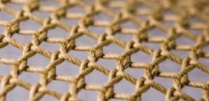
What type of weave pattern is pictured?

What type of weave pattern is pictured?
Fibers are used in forensic science to create a link between crime and ____________________.
Very small fibers are classified as __________ evidence.
color of hair
color
length of fibers
Point of origin
Location of suspects
Type of fiber
Possibility of violence
manufacturing machine
Fiber evaluation can show
Fiber evaluation cannot show
Which of these is an example of circumstantial evidence?
Why is it important to find multiple fibers?
_______________ transfer– victim to suspect or suspect to victim directly.
The most common type of regenerated fiber, which is derived from celulose and is mostly plant in origin, is rayon.
Synthetic polymer fibers, which all originate with petroleum products, are cellulose-based fibers.
Polyester has properties similar to nylon except it is easily broken down by light and concentrated acid.
A disadvantage of synthetic fibers is that they can deteriorate in bright sunlight and melt at a lower temperature than natural fibers.
Fibers are woven into textiles or fabrics.
Fibers that have been spun together are called:
The transfer of evidence such as a fiber from a source to a person, then to another person, is called:
Fiber evidence is gathered with:
Two methods that can analyze fibers without damaging them are:
Fibers are classified as either:
Natural plant fibers are produced by:
All plant fibers share the common polymer that is:
Until the nineteenth century, only plant or animal fibers were used to make clothing and textiles. Half the fibers produced today are synthetic. They are categorized as:
The number of threads that are packed together for any given amount of fabric is known as _________________________________.
The most common form of fiber transfer to be encountered at a crime scene is _______________ of a textile.
At times, most fibers recovered from a victim are found in the victim's ____________________.
Natural fibers come from animals, plants, and ________________ that are mined from the ground.
Using the fiber burn analysis key, if a fiber does not smell like hair and it ceases to burn then it is _________________.
Mohair is hair from __________ (animal).
Celenese is cellulose chemically combined with ______________.
_____________________ has surface scales, hollow or partial hollow core and fibers up to 3 inches long.
What type of weave pattern is pictured?
What type of weave pattern is pictured?
Essay: Write the answer to one essay question in the space provided below.
FCA’s 1. Write in complete sentences and paragraph form.
2. Use Chapter 4 terminology to answer questions(example: fabric, twill, etc...).
3. Provide inferences, other thoughts, or personal experiences in your answer whenever possible.
A) A fiber is found on the victim, explain why this evidence alone is not enough to convict a suspect.
B) Choose a weave pattern, explain how the pattern is created and strengths/weaknesses of the weave.