What don’t you know about the food you eat? For example, what dairy products are in the orange powder from boxed macaroni and cheese? What parts of the animal make up a hot dog? Can breakfast cereal really “support your child’s immunity?”
1 point
1
Question 2
2.
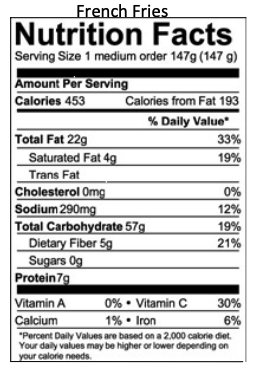
For the food label below answer the following questions:
What is this label telling you or not telling you?
Why is this label trustworthy or untrustworthy?
Does this label help answer any of the questions you had about what is in your food?
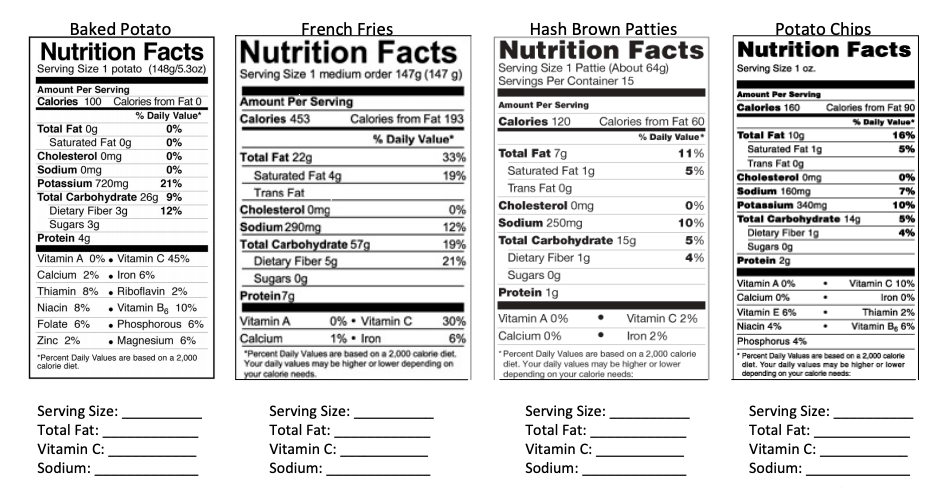
Some foods are very healthy in their natural form, but change when they are processed. An example of this is a potato. Potatoes are high in carbohydrate, fiber, and vitamin C. Not all foods made from potatoes are equal in nutrition, though.
This activity will help you see how processing affects the nutrition of potatoes.
Directions: Use the nutrition labels below to complete the information for each type of potato product. After you will use this information to answer questions 19-22.
1 point
1
Question 3
3.
1 point
1
Question 4
4.
1 point
1
Question 5
5.
1 point
1
Question 6
6.
1 point
1
Question 7
7.
1 point
1
Question 8
8.
1 point
1
Question 9
9.
1 point
1
Question 10
10.
1 point
1
Question 11
11.
1 point
1
Question 12
12.
1 point
1
Question 13
13.
1 point
1
Question 14
14.
1 point
1
Question 15
15.
1 point
1
Question 16
16.
1 point
1
Question 17
17.
1 point
1
Question 18
18.
1 point
1
Question 19
19.
Compare the total fat content of the different types of potato products. Rank them from lowest to highest.
1 point
1
Question 20
20.
Compare the Vitamin C content of the different types of potato products. Rank them from lowest to highest.
1 point
1
Question 21
21.
Compare the sodium content of the different types of potato products. Rank them from lowest to highest.
1 point
1
Question 22
22.
What happens to the Vitamin C in a potato when it is processed into other products?
1 point
1
Question 23
23.
Exit Ticket:
Why is food labeling important to me as a consumer? How does it affect me?