Twa kɔ nsɛm atitiriw so
Log in
Sign up for FREE
arrow_back
Laabri

Repatriation: Immigration From Mexico During the 1930s and 1940s cloned 12/14/2020

star
star
star
star
star
Last updated over 2 years ago
19 Nsɛmmisa

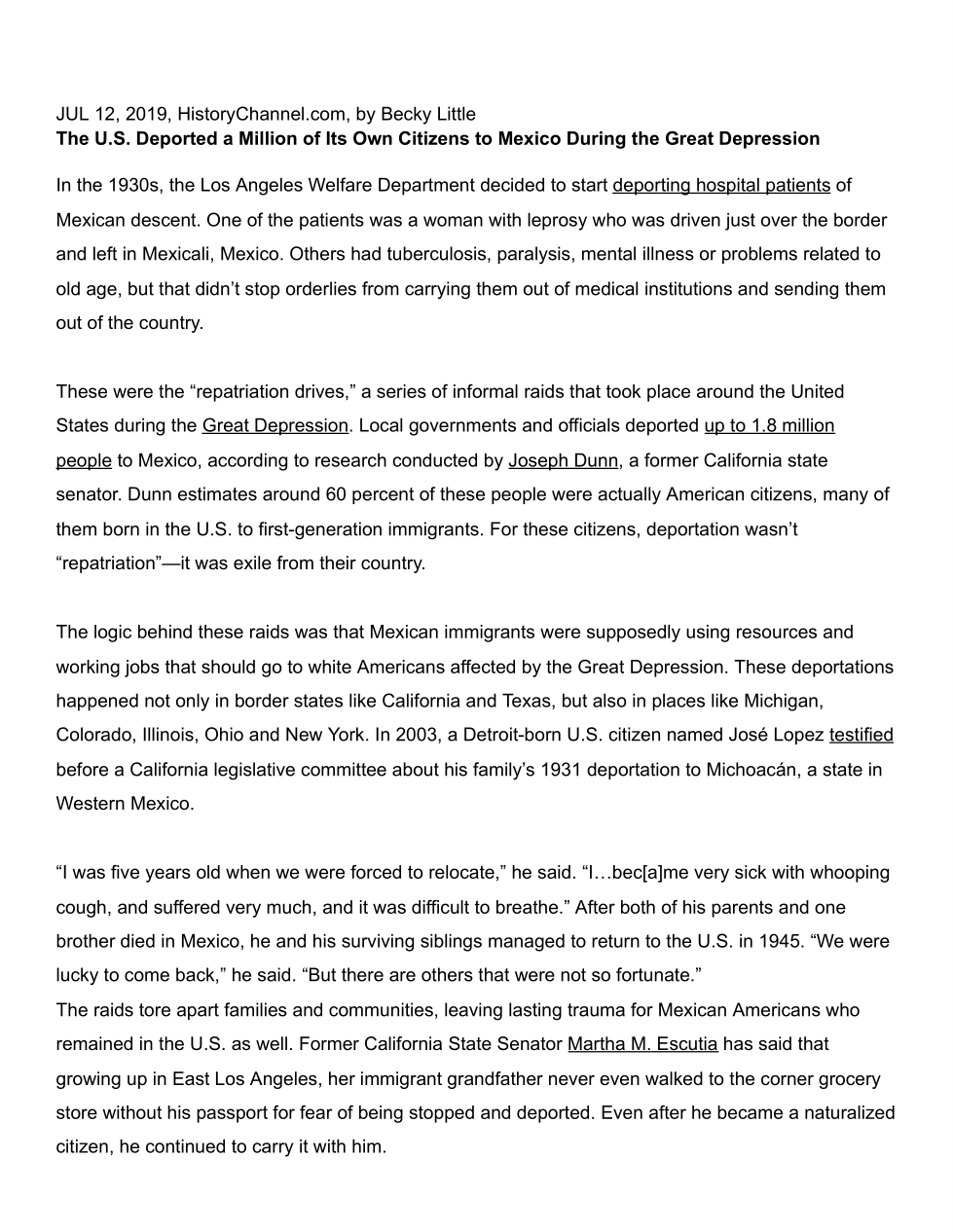
Part 1: Chart Analysis--Mexican Immigration to the United States

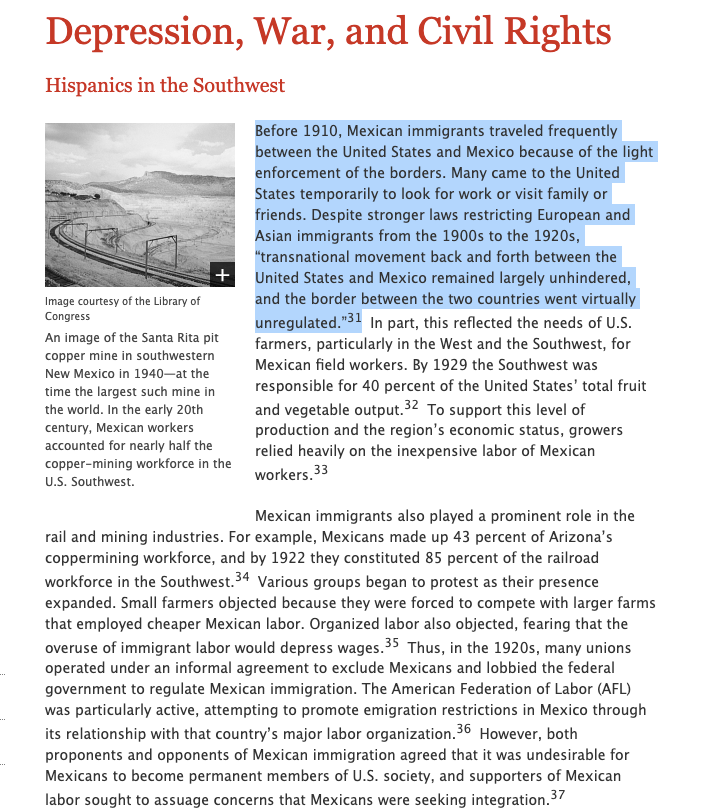
PART 2: Article on Mexican Immigration to the US in the 1920s

Read the following article excerpt from the US House of Representatives

Part 3--Video on the Great Depression

The US economy Crashed Starting in 1929. This had a profound effect on the US economy throughout the 1930s and set the stage for a dramatic change in US policy towards Mexican immigrants.

1
1
1
1
1
1
1

PART 5: ARTICLE ABOUT THE US 1930S "REPATRIATION" ACTIONS

Instructions: Read the following article. Answer the questions.

Key words

-Deport = to kick someone out or expel from a country

1
Asemmisa {{asɛmmisaAhyɛnsode}}
1.

Read the title of this graph. The Y axis shows the percentage of Mexico's population that migrates from Mexico to which country?

1
1
1
Asemmisa {{asɛmmisaAhyɛnsode}}
4.

What pull factors attracted Mexican immigrants to the United States in the 1920s?

1
Asemmisa {{asɛmmisaAhyɛnsode}}
5.

Who benefited from Mexican immigrants to the United States in the 1920s?

1
Asemmisa {{asɛmmisaAhyɛnsode}}
6.

Who opposed Mexican immigrants to the United States in the 1920s.

Asemmisa {{asɛmmisaAhyɛnsode}}
7.

What were some of the effects of the Great Depression on people and the economy?

Asemmisa {{asɛmmisaAhyɛnsode}}
8.

How do you predict the 1930s Great Depression affected Mexican immigrants who had come to the US during the 1920s.

PART 4: STORYCORPS PODCAST STORY "BILL LUNA AND RUBEN AGUILAR"

Listen to the following radio story about Ruban Aguilar, who was born in the US but forcibly deported to Mexico when he was 6 years old in 1933 as part of a largely forgotten Mexican repatriation program run by the American government during the Great Depression

Asemmisa {{asɛmmisaAhyɛnsode}}
9.

Describe what Ruben remembers about his experience when US authorities deported his family.

Asemmisa {{asɛmmisaAhyɛnsode}}
10.

True or False--Ruben only spoke English and was an American citizen.

Asemmisa {{asɛmmisaAhyɛnsode}}
11.

Why did the US government make Ruben come back to the US?

Asemmisa {{asɛmmisaAhyɛnsode}}
12.

When Ruben was coming back to the US in order to report to the Army, he had to use the bathroom. What did the sign on the outhouse (bathroom) say?

Asemmisa {{asɛmmisaAhyɛnsode}}
13.

Why is it important for people to learn about Ruben's story?

1
Asemmisa {{asɛmmisaAhyɛnsode}}
14.

Type 2 lines from this article that are surprising, shocking, enraging, or that provide information you never knew about before? Explain your thoughts about those lines.

1
1
Asemmisa {{asɛmmisaAhyɛnsode}}
16.

Describe how these 1930s deportations affected the people who were kicked out of the country.

1
Asemmisa {{asɛmmisaAhyɛnsode}}
17.

What Constitutional amendment do you think deporting US citizens who were born here violates?

1
Asemmisa {{asɛmmisaAhyɛnsode}}
18.

Why would it be important for citizens to know about this story?

1
Asemmisa {{asɛmmisaAhyɛnsode}}
19.

Is a formal apology enough for the families of the 400,000 Mexican Americans who were deported just because of their last name during the 1930s? What else should be done? Explain using evidence from the article.

Asemmisa {{asɛmmisaAhyɛnsode}}
2.

From 1900 to 1930, what is happening to the percentage of Mexicans emigrating to the United States from Mexico?

Asemmisa {{asɛmmisaAhyɛnsode}}
3.

What is happening to the percentage of Mexican emigrants to the United States during the 1930s?

Asemmisa {{asɛmmisaAhyɛnsode}}
15.

What best describes the fact that up to 60% of the 1.8 million deportations to Mexico during the 1930s were American citizens?