Sci. 7 Plants: Section 1.0 Quiz
star
star
star
star
star
Last updated 6 months ago
32 Nsɛmmisa
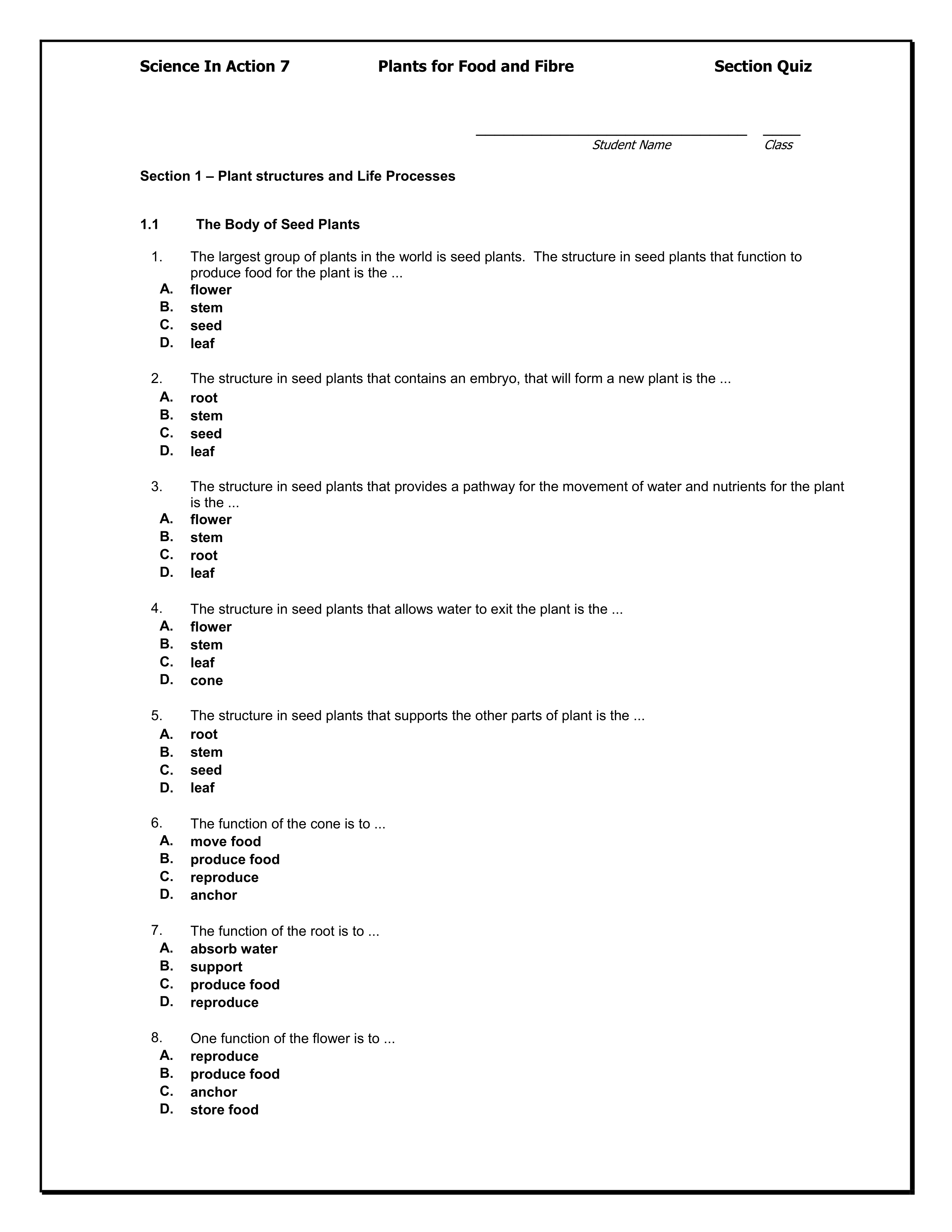
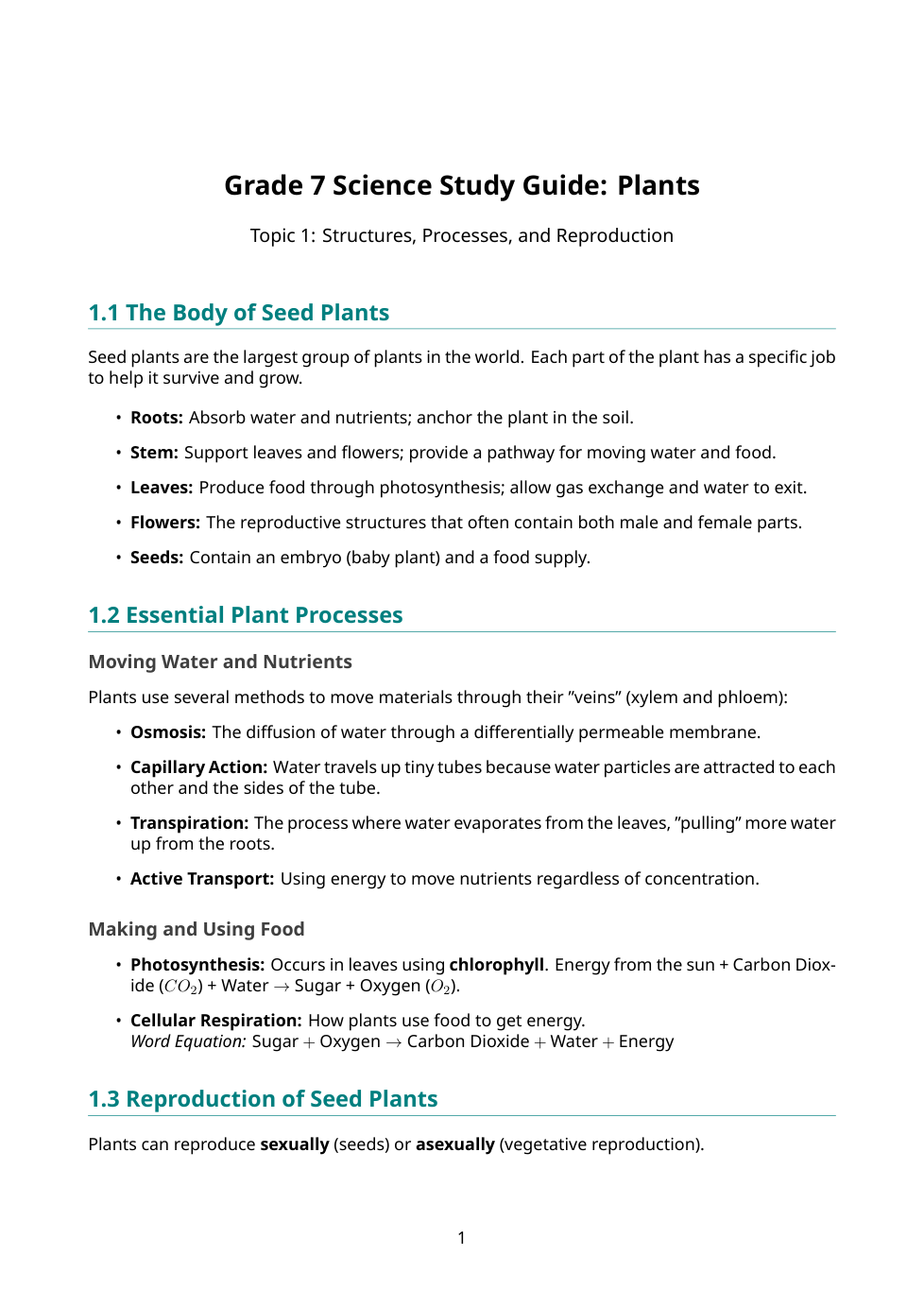
The largest group of plants in the world is seed plants. The structure in seed plants that function to produce food for the plant is the ...
The structure in seed plants that contains an embryo, that will form a new plant is the ...
The structure in seed plants that provides a pathway for the movement of water and nutrients for the plant
is the ...
The structure in seed plants that allows water to exit the plant is the ...
The structure in seed plants that supports the other parts of plant is the ...
The function of the cone is to ...
The function of the root is to ...
One function of the flower is to ...
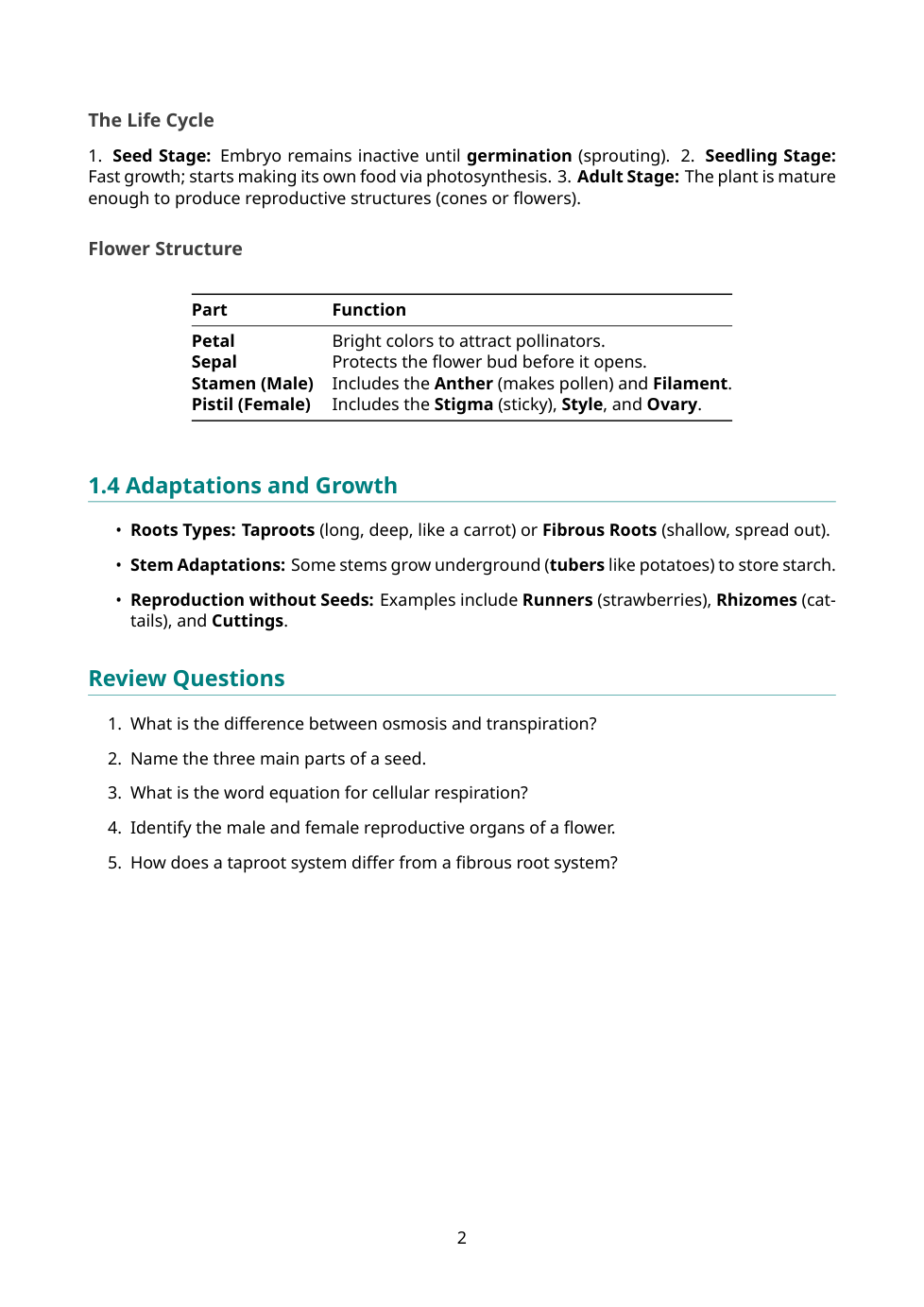
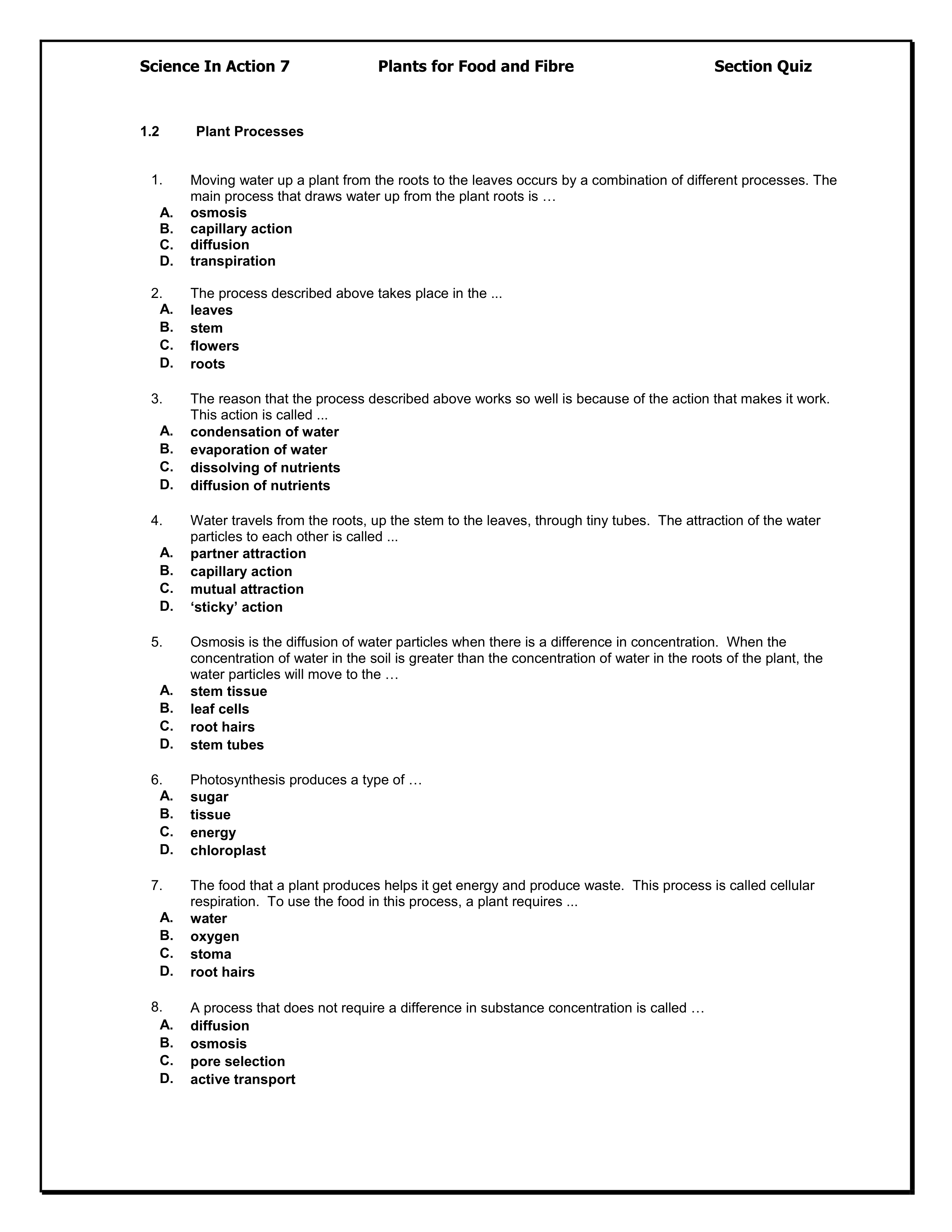
Moving water up a plant from the roots to the leaves occurs by a combination of different processes. The main process that draws water up from the plant roots is ...
The process described above takes place in the ...
The reason that the process described above works so well is because of the action that makes it work. This action is called ...
Water travels from the roots, up the stem to the leaves, through tiny tubes. The attraction of the water particles to each other is called ...
Osmosis is the diffusion of water particles when there is a difference in concentration. When the concentration of water in the soil is greater than the concentration of water in the roots of the plant, the water particles will move to the ...
Photosynthesis produces a type of ...
The food that a plant produces helps it get energy and produce waste. This process is called cellular respiration. To use the food in this process, a plant requires ...
A process that does not require a difference in substance concentration is called ...
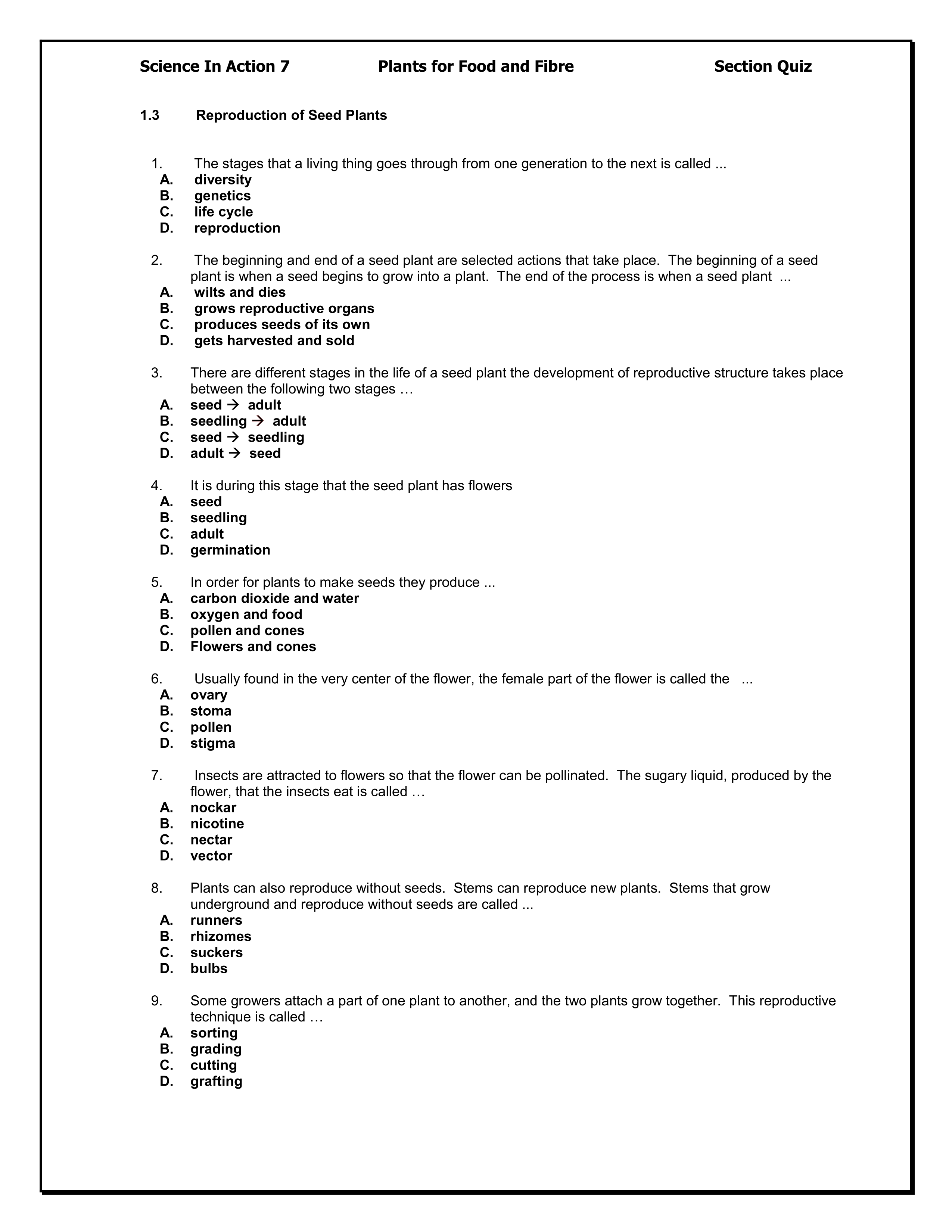
The stages that a living thing goes through from one generation to the next is called ...
The beginning and end of a seed plant are selected actions that take place. The beginning of a seed plant is when a seed begins to grow into a plant. The end of the process is when a seed plant ...
There are different stages in the life of a seed plant the development of reproductive structure takes place
between the following two stages ...
It is during this stage that the seed plant has flowers
In order for plants to make seeds they produce ...
Usually found in the very center of the flower, the female part of the flower is called the ...
Insects are attracted to flowers so that the flower can be pollinated. The sugary liquid, produced by the flower, that the insects eat is called ...
Plants can also reproduce without seeds. Stems can reproduce new plants. Stems that grow underground and reproduce without seeds are called ...
Some growers attach a part of one plant to another, and the two plants grow together. This reproductive technique is called ...
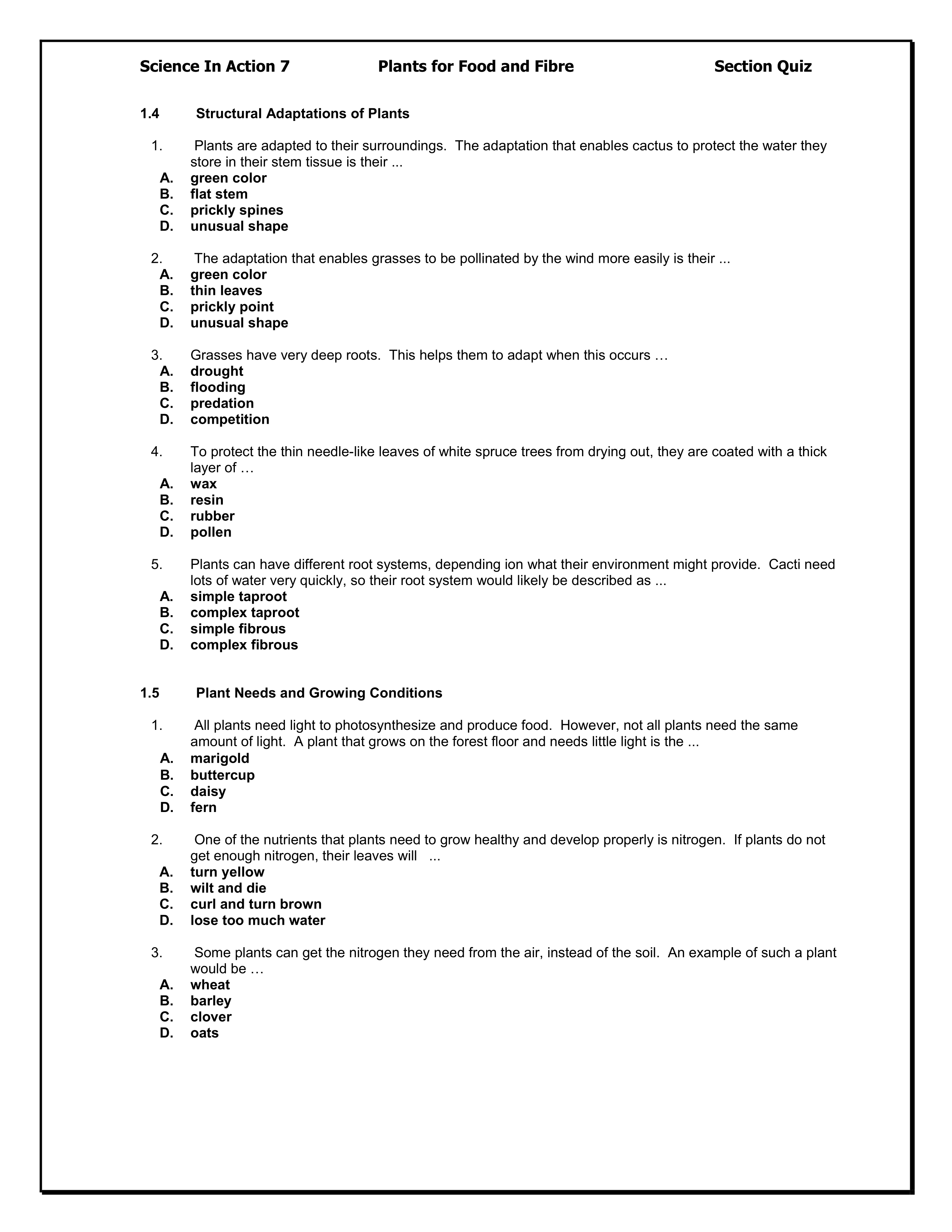
Plants are adapted to their surroundings. The adaptation that enables cactus to protect the water they store in their stem tissue is their ...
The adaptation that enables grasses to be pollinated by the wind more easily is their ...
Grasses have very deep roots. This helps them to adapt when this occurs ...
To protect the thin needle-like leaves of white spruce trees from drying out, they are coated with a thick layer of ...
Plants can have different root systems, depending ion what their environment might provide. Cacti need lots of water very quickly, so their root system would likely be described as ...
All plants need light to photosynthesize and produce food. However, not all plants need the same amount of light. A plant that grows on the forest floor and needs little light is the ...
One of the nutrients that plants need to grow healthy and develop properly is nitrogen. If plants do not get enough nitrogen, their leaves will ...