Storm windows were used in the past to prevent heat from leaving the inside of the house in the winter. They weren’t very efficient, because the space between the two panes of glass allowed convection current to take heat out even more. The new energy efficient windows prevent this from happening by preventing convection from happening. Krypton gas fills the space between the panes of glass because it is a ...
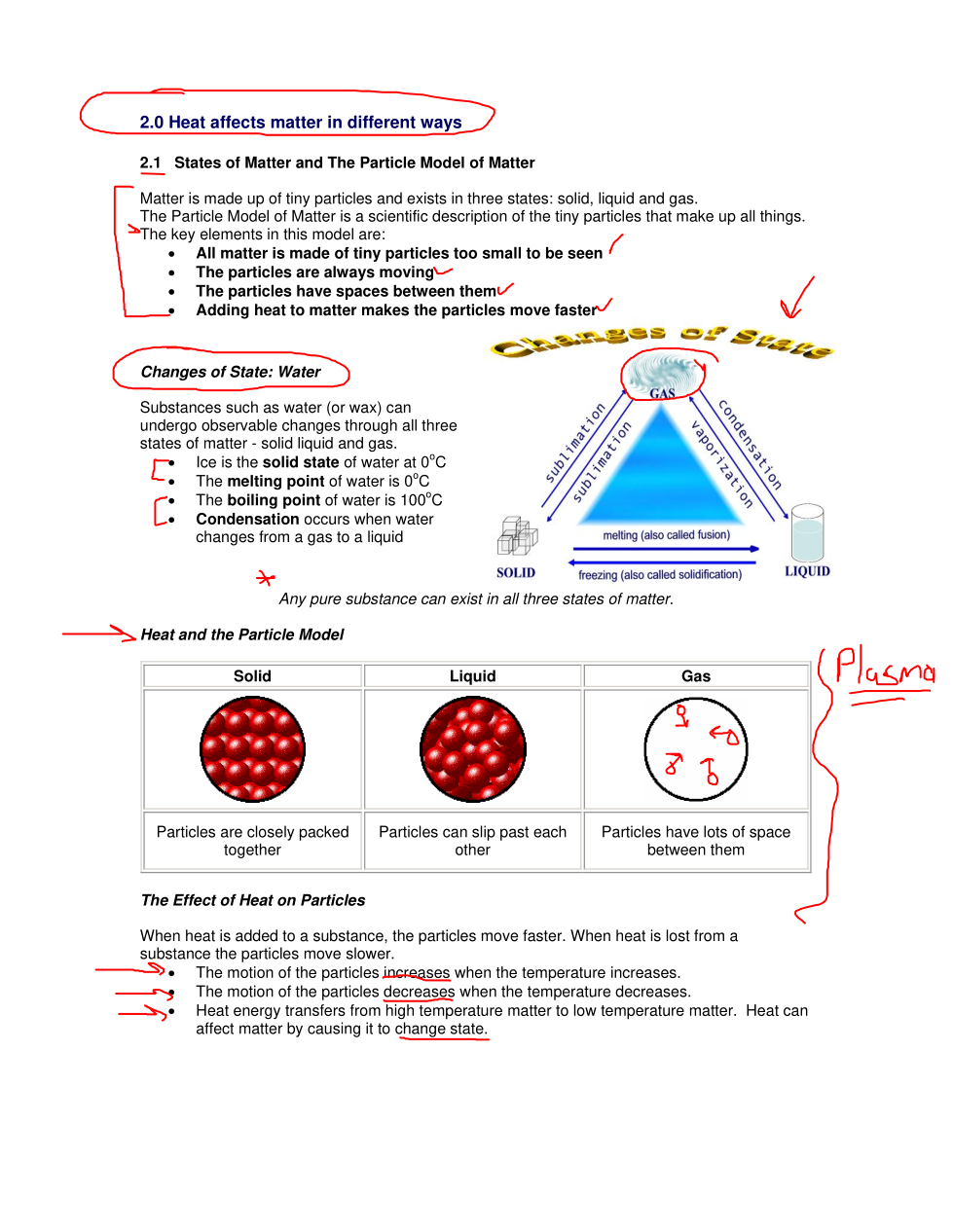
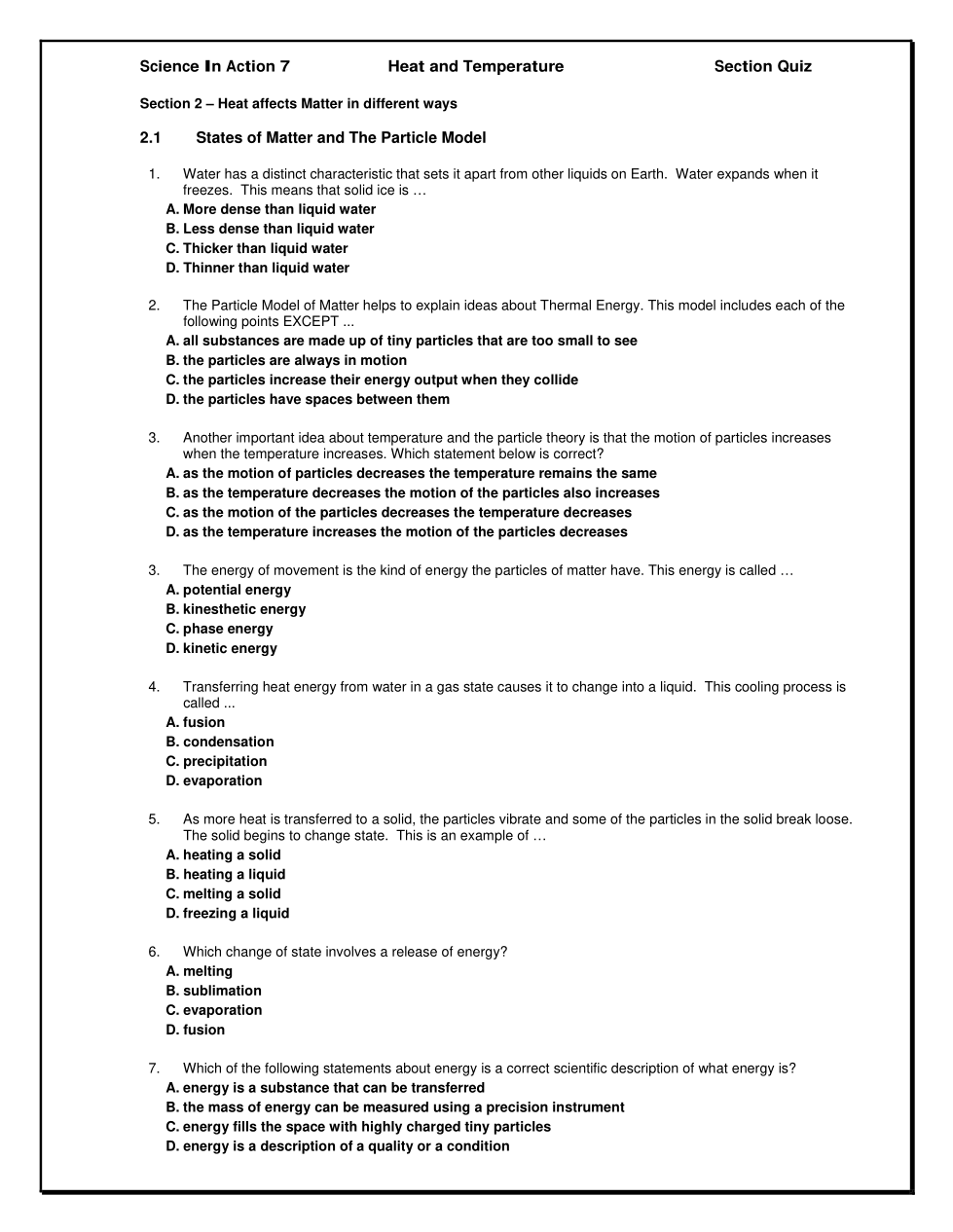
Water has a distinct characteristic that sets it apart from other liquids on Earth. Water expands when it
freezes. This means that solid ice is ...
The Particle Model of Matter helps to explain ideas about Thermal Energy. This model includes each of the
following points EXCEPT ...
Another important idea about temperature and the particle theory is that the motion of particles increases
when the temperature increases. Which statement below is correct?
The energy of movement is the kind of energy the particles of matter have. This energy is called ...
Transferring heat energy from water in a gas state causes it to change into a liquid. This cooling process is
called ...
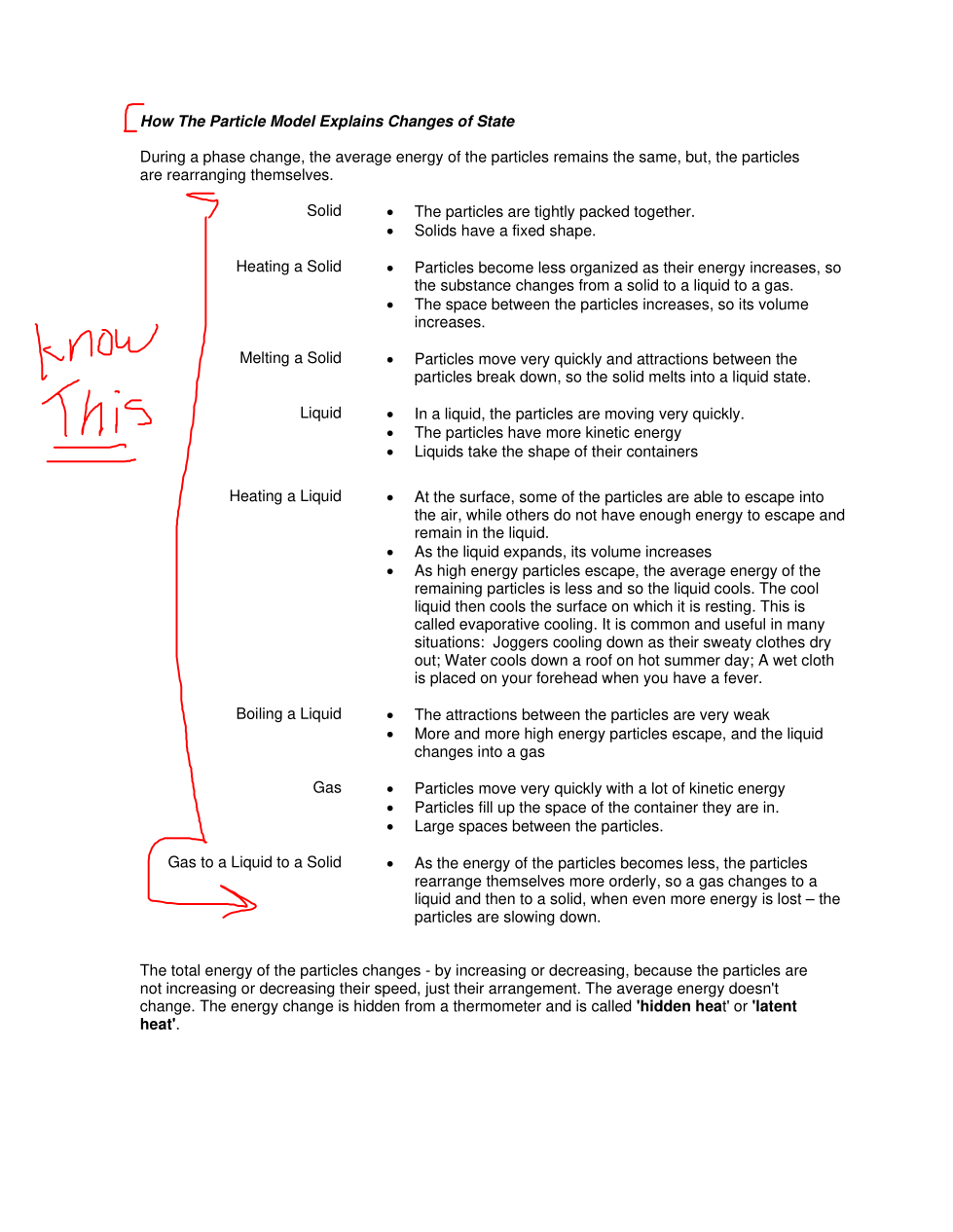
As more heat is transferred to a solid, the particles vibrate and some of the particles in the solid break loose.
The solid begins to change state. This is an example of ...
Which change of state involves a release of energy?
Which of the following statements about energy is a correct scientific description of what energy is?
Certain materials are found naturally in the environment. Chlorine is found most often in the gas state. To change it to a liquid, this would have to be done ...
During a change of state, the temperature remains the same, so the particles have ...
When heat is added to or removed from moving particles it changes their ...
Absolute zero is a temperature on the Kelvin scale. Although no one has ever been able to cool anything down to absolute zero, scientist know that it is ...
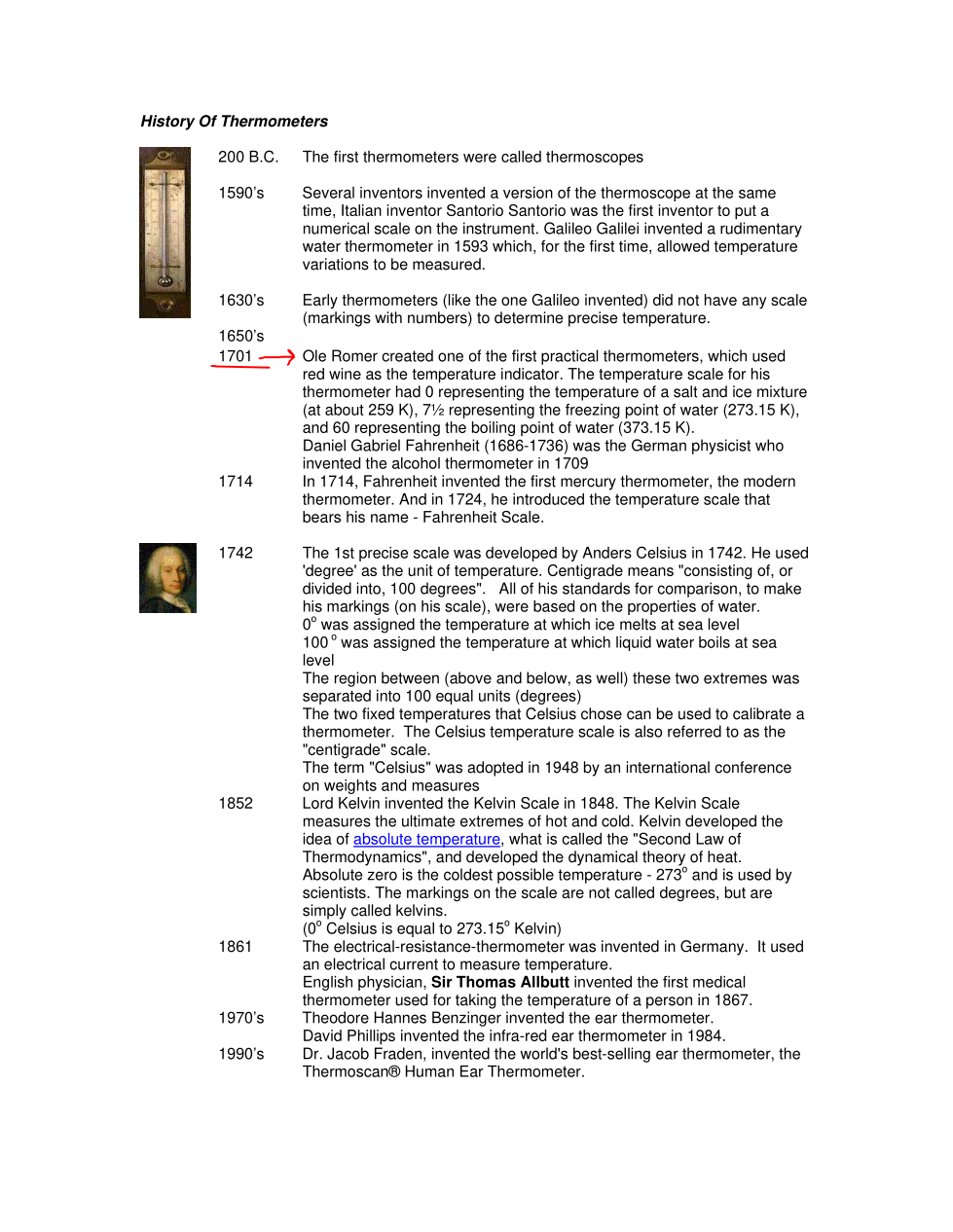
A device, used to show the expansion of air when there was an increase in temperature, was used as early as 200 B.C. This device is now generally known as a ...
The thermal energy of a substance is the ...
The temperature of a substance is the ...
Which of the following energy transfers would be correct?
Galileo Galilei, an Italian scientist, invented the first device for measuring temperature in the 1590s. But it wasn’t until the 1700s that an accurate way to measure temperature was developed by a German physicist.
The scale that he created on his thermometer is still used in many countries, including the United States. It is called the ...
One of the most sensitive substances to heat was used in early thermometers, until it was found that it was highly toxic. This substance is ...
Because your senses can easily be fooled, thermometers were developed, because they are more reliable.
The earliest thermometers contained a glass bottle with a long glass tube for the liquid to rise and fall. An
important part was missing though. It was the ...
Estimating temperature, without using a thermal sensing device, is something that we do automatically.
Touching something to see how hot or cold it is represents one technique that we use. Another is to ...
When air is heated inside a balloon, the air makes the balloon rise. This happens because – compared to the
air outside the balloon, the heated air is ...
When a substance is heated the particles gain energy and spread out, creating more volume (spaces between the particles). So what about the mass of the substance? What happens to the mass of a substance
when it is heated?
Solids made of different metals were all heated to 100C to determine how their volume and length would be
affected. Which statement describes the most likely outcome of this experiment?
Some students performed an experiment testing the affect of heat on different solids. Which of the following
variables would have been the manipulated variable.
When thermal energy is added to a solid the volume of the solid will change. Steel beams bending or even
breaking in a bridge, because of an extreme change in temperature are a result of thermal...
Students set up an experiment to determine if a gas expands when heated. The experiment didn't
work because the students were missing an important element to get the results they predicted.
Which of the following variables is necessary to perform an experiment such as this?
A balloon filled with helium was put into a freezer to determine what the effect the lowering of the temperature
would have on a gas. The responding variable in this experiment was the ...
A certain type of thermal energy transfer moves the energy by direct collisions, particle-to-particle. This type
of thermal energy transfer is called ...
Special thermal protection tiles cover the underside of the space shuttles. As the shuttles reenter the Earth’s
atmosphere these tiles can withstand 1400C of heat caused by friction in the atmosphere. The material that these tiles are made of is ...
One of the key characteristics of conduction is that heat transfers in only one direction – from areas of ...
Students did an experiment with four pieces of metal with a slab of butter placed on the end of each. They placed them in a beaker of hot water and timed how long it took for the butter to melt enough to slide down the metal and enter the water. Each metal showed a different time. The fastest time was recorded on the copper metal. Which of the following variables is the responding variable?
Materials that allow an easy transfer of heat are called ...
Plastic, cork and wood are materials that do not allow an easy transfer of heat. They reduce the amount of
heat that can transfer from a hot object to a colder object. They are called ...
In a liquid the particles are moving quickly. When heat is added they have more energy, but this energy is transferred from particle to particle in a different way than in a solid. The reason for this is because of the ...
The transfer of heat energy in a fluid is different than what happens in a solid. The heated particles become less dense and so they rise, with the colder, denser particles rushing in to take their place. This type of thermal energy transfer creates a ...
In a hot tub, your body gains thermal energy from the hot water. This thermal energy is then transferred
throughout the inside of your body by each of your living cells. It can be dangerous to stay in the tub for a
long period of time, because your ...
Energy systems have five things in common - input energy, energy transfer, output energy, waste energy
and ...
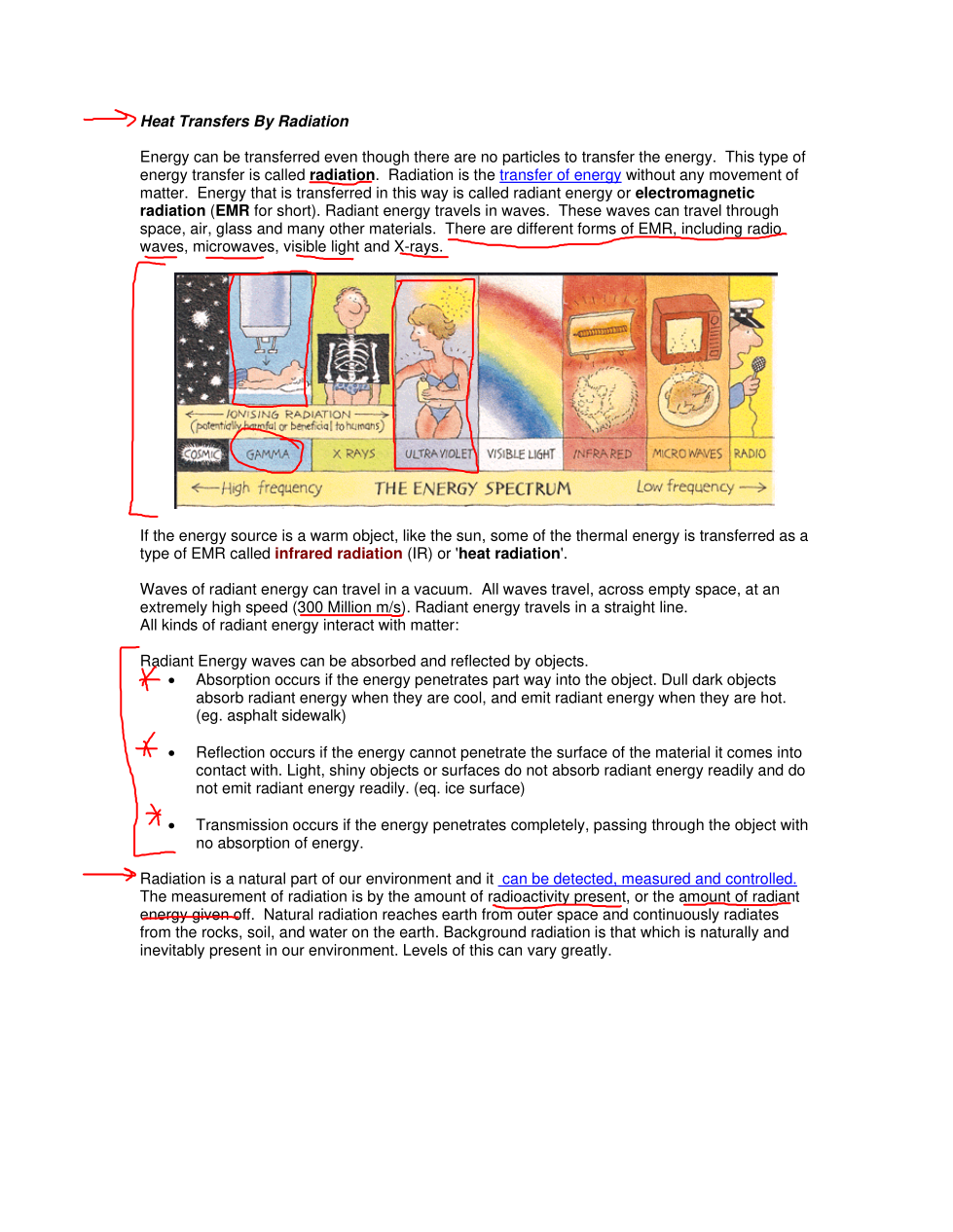
Radiation is the transfer of energy without any movement of matter. This type of energy transfer is called ...