Gr. 7- Planet Earth: Section 2.0 Quiz
star
star
star
star
star
Last updated over 5 years ago
18 Nsɛmmisa
1
1
1
1
1
1
1
1
1
1
1
1
1
1
1
1
1
1
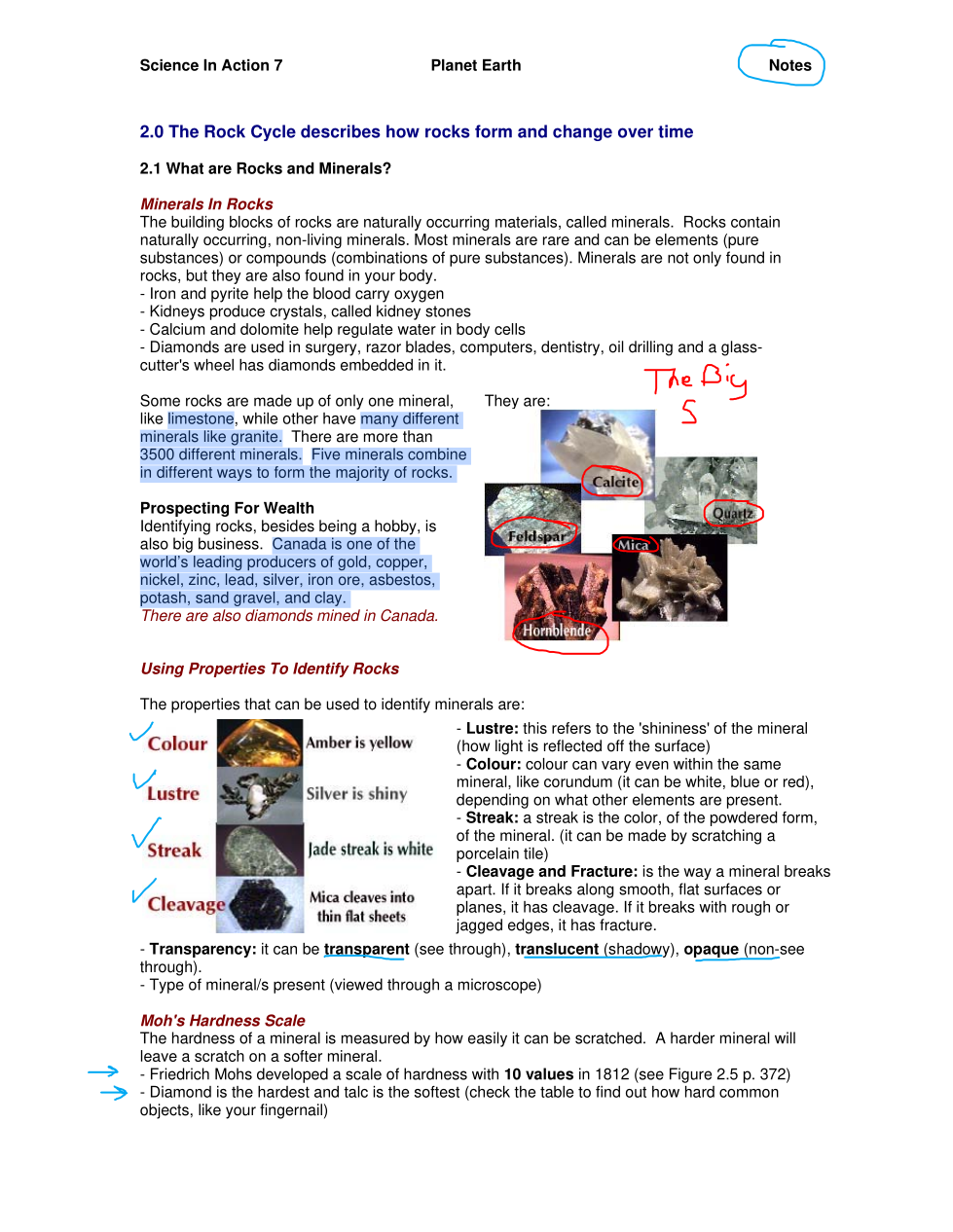
The building blocks of rocks are naturally occurring solid materials called ...
Specific patterns such as cubic, tetragonal, hexagonal, orthohombic, monoclinic and triclinic describe how minerals line up in a regular pattern creating smooth surfaces and sharp edges, making systems of ...
Minerals can be identified by certain clues. The clue that identifies the color of the powdered form of the mineral left behind when it is rubbed against a rough surface is called its ...
The way a mineral reflects light describes its ...
The relative hardness of a mineral is measured with a scale. The scale is used to help identify different
minerals, because each mineral will scratch all the minerals with a lower scale ranking than its own.
Named after a German scientist, the scale is called...
On the scale of hardness, this mineral is the softest and can be scratched with a soft pencil point ...
There are over 500 mines and quarries scattered across Canada, with mining operations taking place in
every province and territory. Canada is the world’s largest exporter of minerals. The Ekati mine in Lac de
Gras, Northwest Territories began operations in 1998. It was the first mine in Canada to recover this
mineral ...
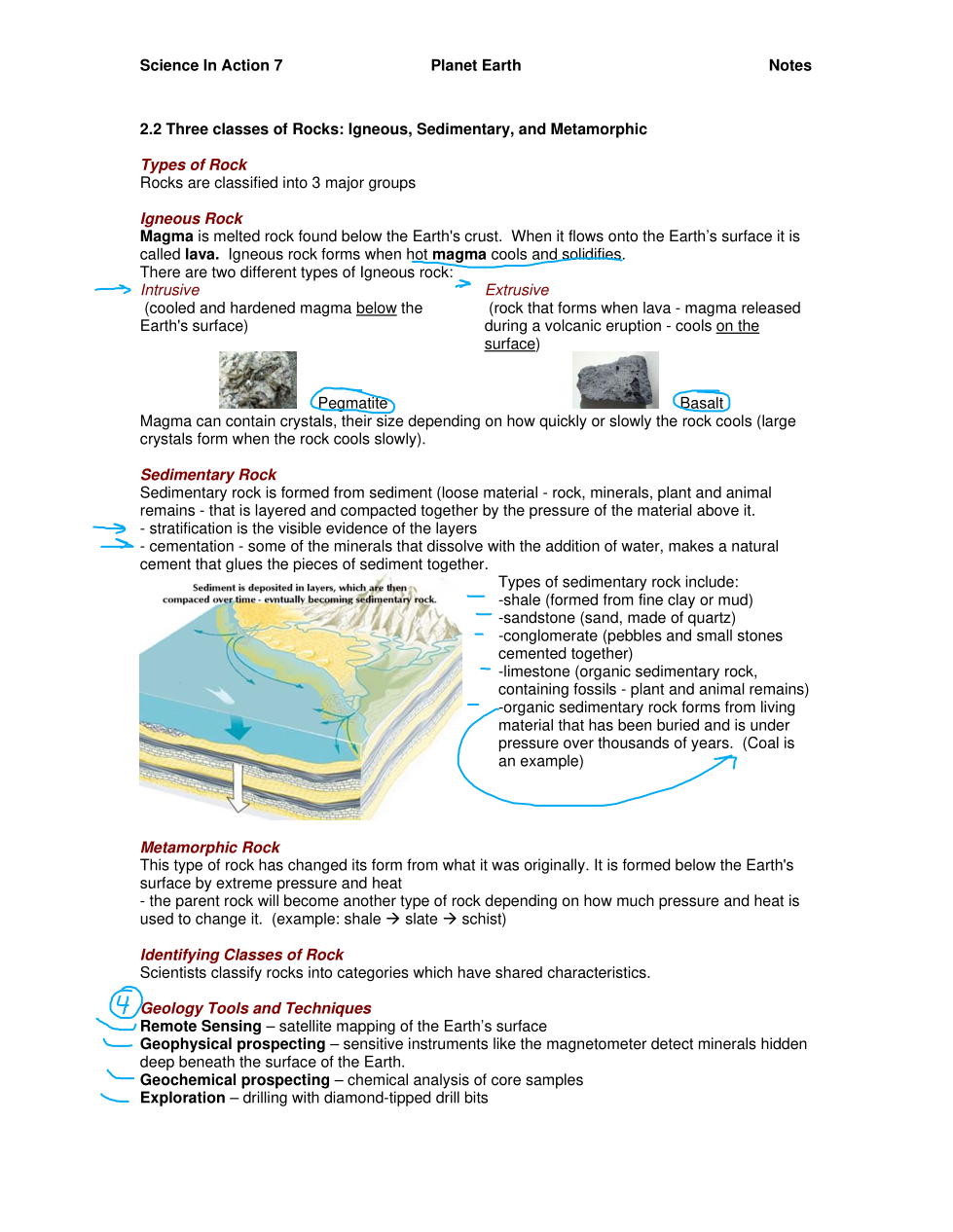
Igneous rock, can be intrusive rock and extrusive rock. These rocks are all formed from ...
Igneous rock can be classified by how it is formed. If it has formed beneath the surface, cooling slowly, it
has larger grains and is called ...
Allison and Rachel were investigating the banks of the river and discovered a large section had been
eroded away. They could see layers of different soil types. These visible layers are called ...
Soil that has organic, living material, gets covered over and each layer puts pressure on the organic
debris – compressing it into peat, lignite, bituminous and anthracite. The hardest type of coal ...
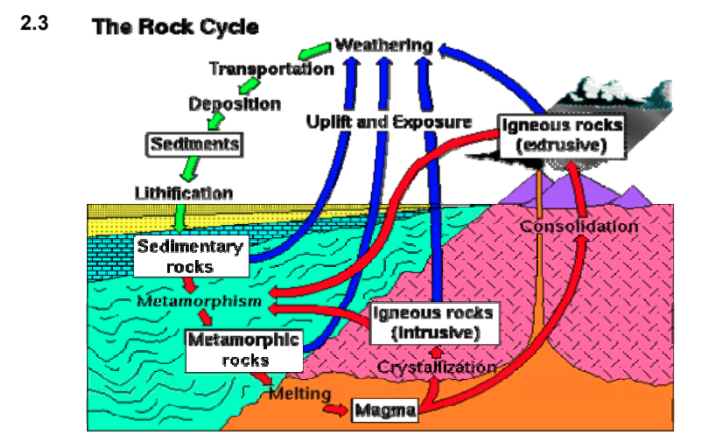
Metamorphic rock is rock that has changed form. It is usually formed ...
Shale changes to slate and then changes to schist. To change these rocks into other types requires ...
Geologists identify mineral ores locations, which are hidden below the surface of the Earth, using different tools and technologies. Using sensitive instruments, such as a magnetometer, geologists are using this technique ...
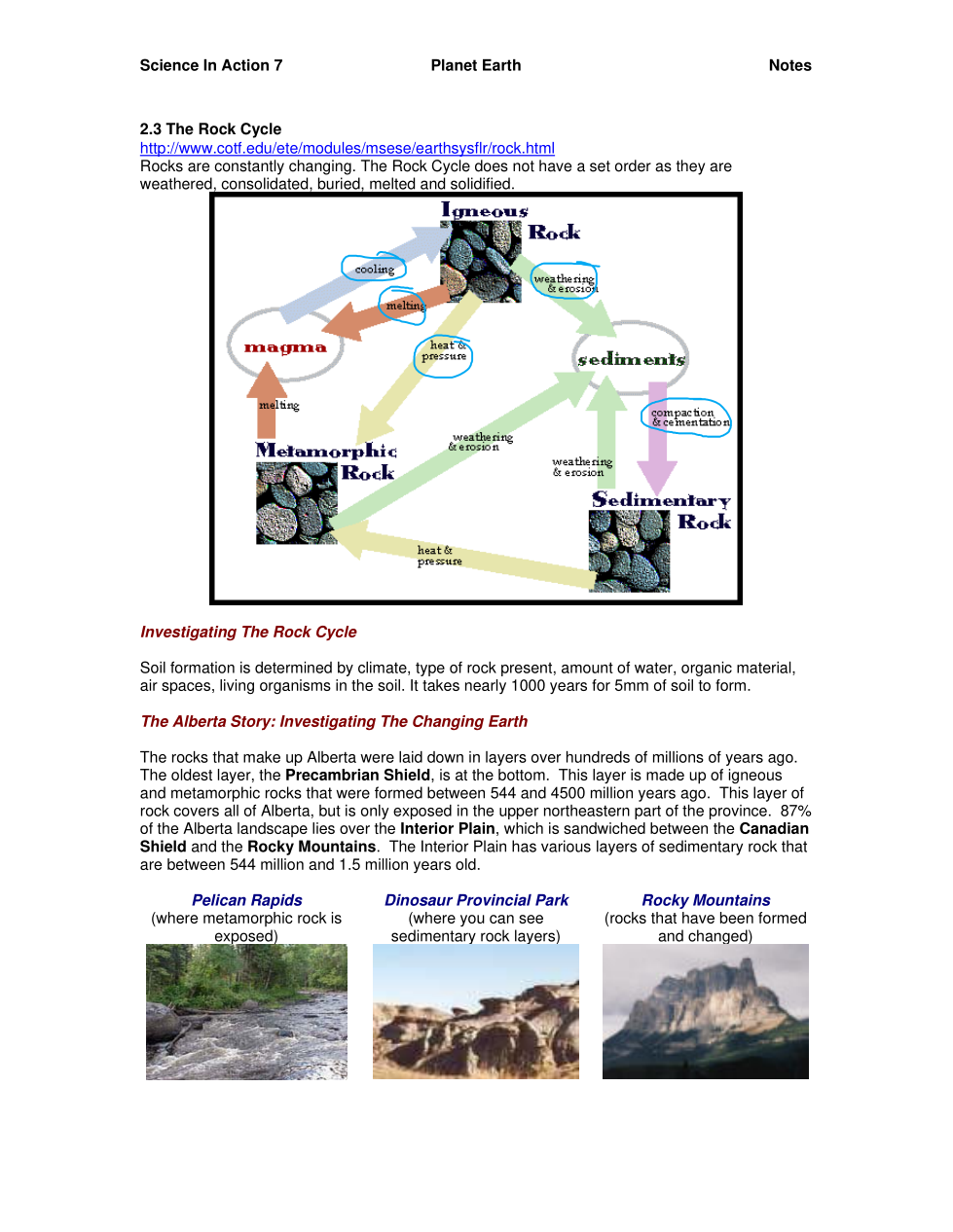
The formation of different types of rocks is described in the Rock Cycle. An important feature of this cycle is that it ...
The rocks and minerals that cover the first 50 meters or so of the Earth’s surface include sand, gravel,
stones, and boulders. This material is called ...
Pelican rapids in the northeastern part of Alberta reveal rocks that are from the oldest rock layer
(hundreds of millions of years) that make up Alberta. Most of these types of rocks are hidden beneath the surface in Alberta, however, they are revealed in Pelican Rapids ...
You will likely find dramatic examples of these types of rocks in The Badlands of Dinosaur Provincial
Park, around Drumheller. The erosion and exposure of this type of rock took many years to complete.
