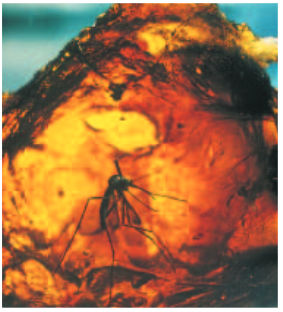
The preserved remains (even the soft parts) of a plant or animal can likely be found in ...
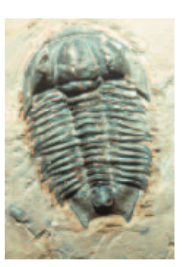
Trilobites are one of the most famous groups of fossils. They are now extinct. They lived in ...
Scientists who study early life forms by interpreting animal and plant fossils are called ...
When an organism is buried under many layers of sediment, pressure and heat build up, leaving a thin
film of carbon residue on the rock surfaces. This residue forms the outline of the organism and is called ...
When an organism falls into soft sediment, like mud, its hard parts dissolve leaving a cavity called a ...
There is more than one way for living organisms to become fossilized. A cavity or track that was left
behind by a living organism – providing evidence that it existed, is a type of fossil called a ...
The process that takes thousands of years and can only happen under certain conditions is called
fossilization. The most common fossils found are ...
Over time layers upon layers of sediment build up , providing important information about the past.
These layers called strata revel certain fossils that lived in certain time periods. These fossils are known
as ...
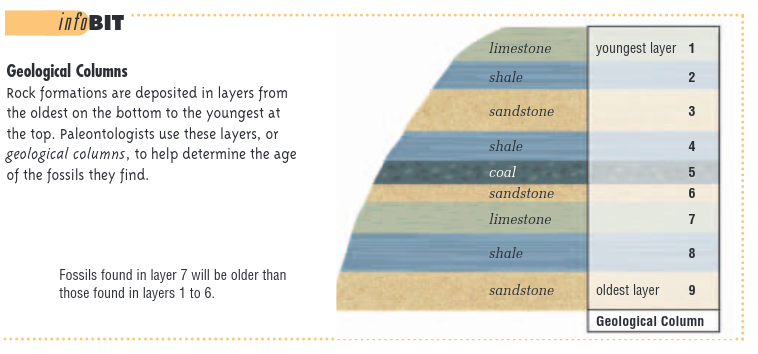
Geological columns are formations in sedimentary rock that help scientists to determine the age of the
fossils they find. Fossils found in column 7 will be ...
Scientists have found organisms intact in this type of fossil and have even been able to extract DNA from the organism, with limited success ...
Layers of sedimentary rock stay in their original position, with the newest layers on the top and the older layers on the bottom. These layers of rock are called ...
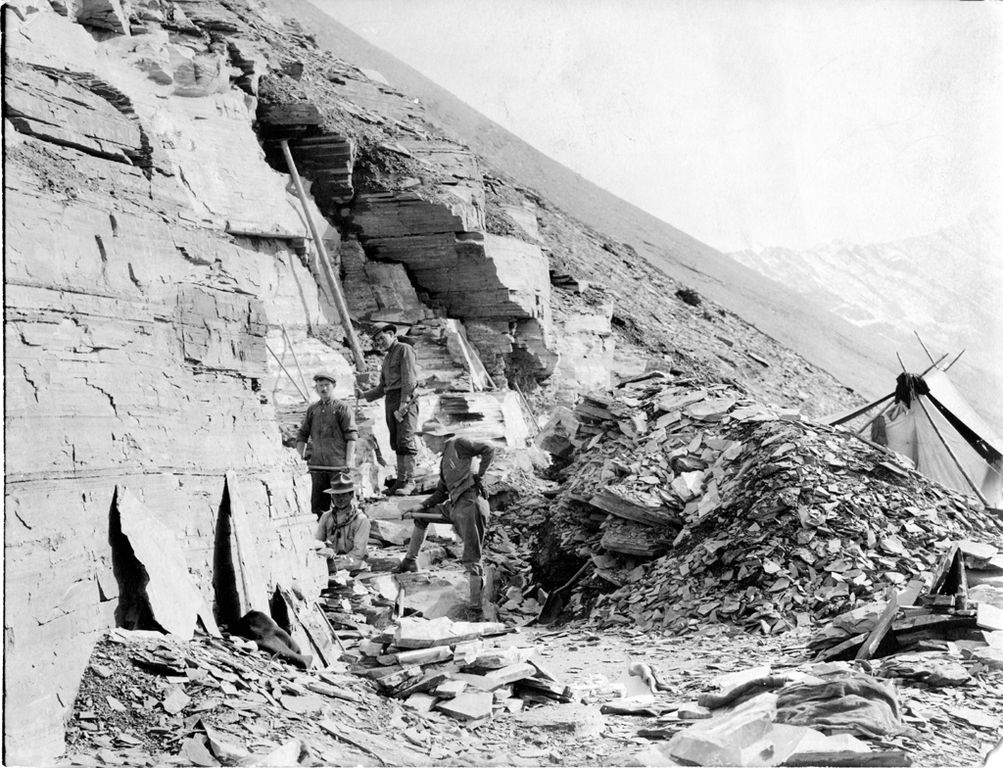
The preserved remains of many soft tissue species have been located in the Burgess Shale Fossil Beds,
located in Yoho National Park, British Columbia. These fossils are usually the remains of ...
An important dinosaur discovery by Joseph Tyrell sparked interest in the Badlands of Drumheller. The
Royal Tyrell Museum of Paleontology was built for the 70-million-year-old dinosaur skull he named ...

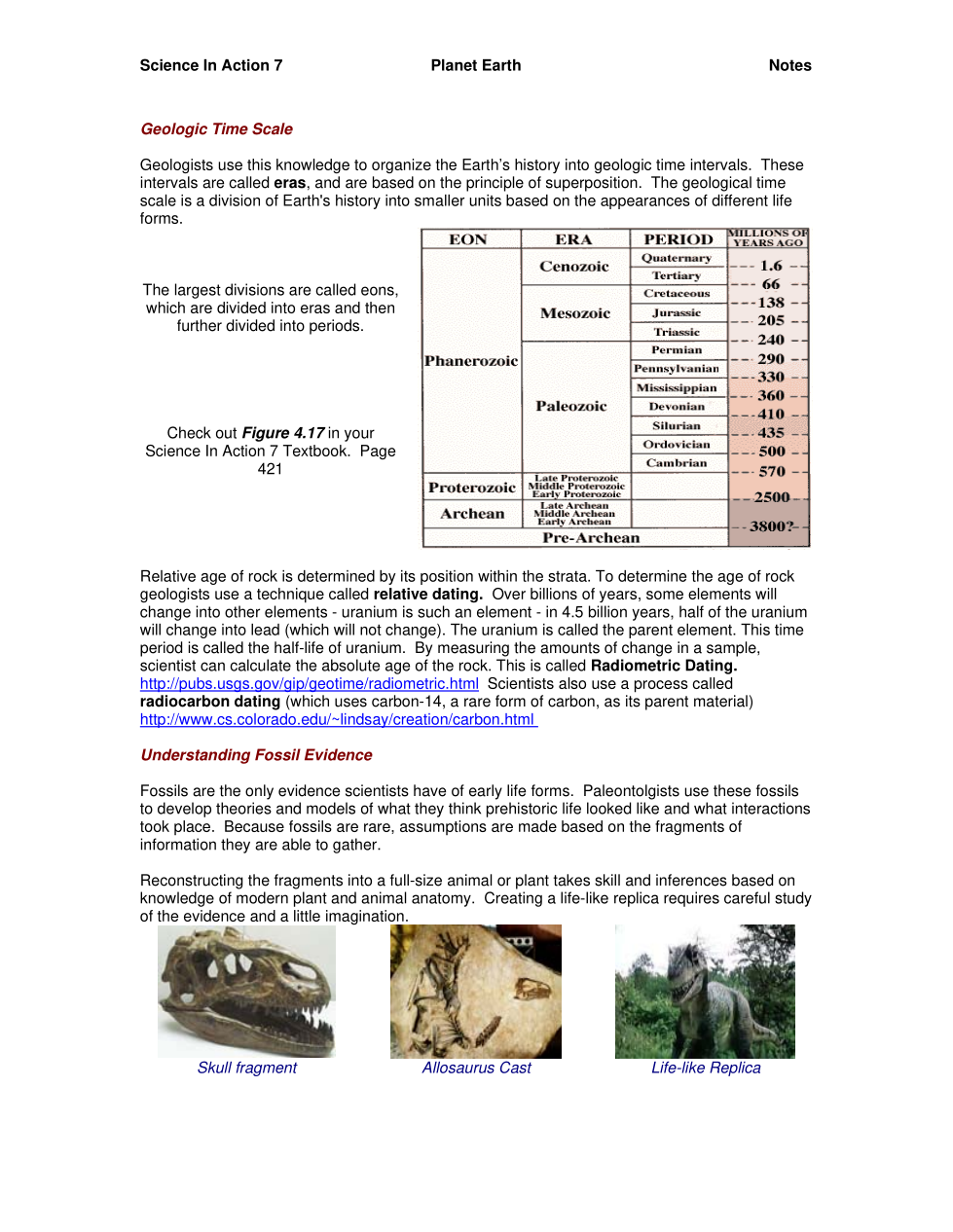
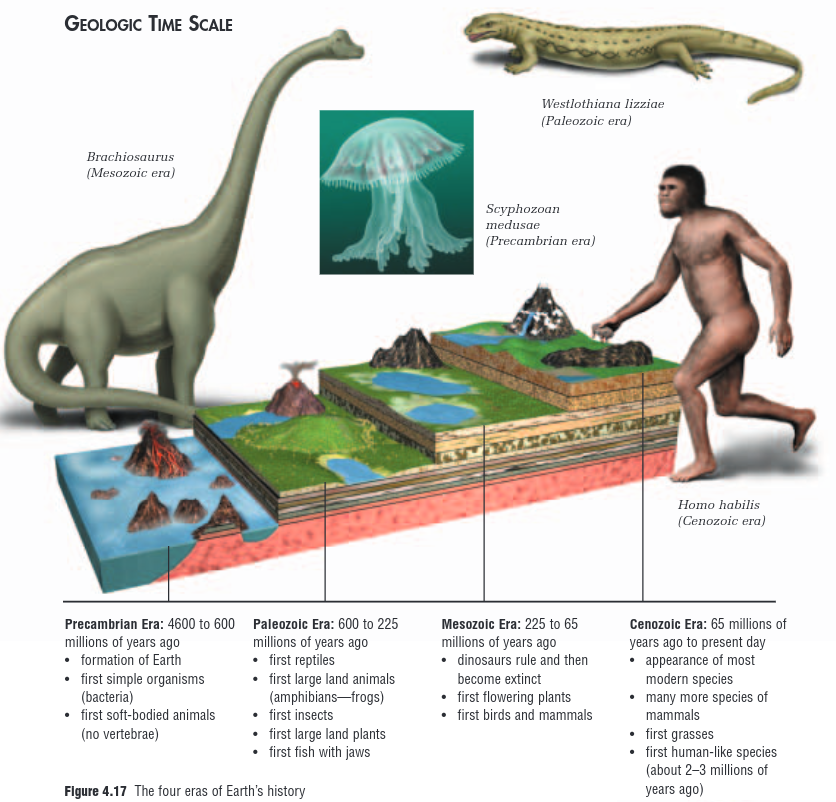
The general time periods that organize the history of the Earth are called ...
In the Geologic Time Scale, dinosaurs ruled the land and then became extinct during this era.
Scientists have inferred that there might be some relationship between dinosaurs and birds from some of the Archaeopteryx fossils because they discovered a few impressions of: