How the Modern Immigration System Works

Last updated almost 2 years ago
30 questions
Hi All. Today's immigration system to the United States is VAST and COMPLICATED. It is, partly by design, difficult for people to explain, and farm more difficult for people to actually navigate and achieve citizenship.

This asyncronous assignment is meant to help you...
(1) understand key trends and concepts in American immigration since 1965.
(2) empathisize with people who are currently trying to navigate that system. When people angry at the current system tell folks trying to navigate it to "just get in line," what does that actually mean?
(3) have conversations about how the immigration system could be reformed, if we are brave enough to do it.
Part I: The Big Trends.
Since World War II, the US immigration system has opened up to more people. With the Immigration & Naturalization Act of 1965 especially, more people, and from different parts of the world, have been allowed to enter the United States.
1

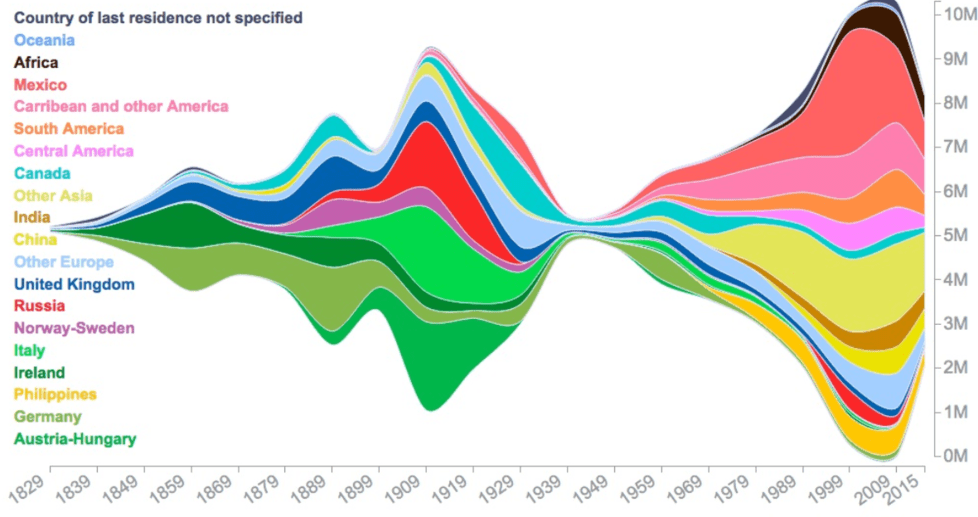
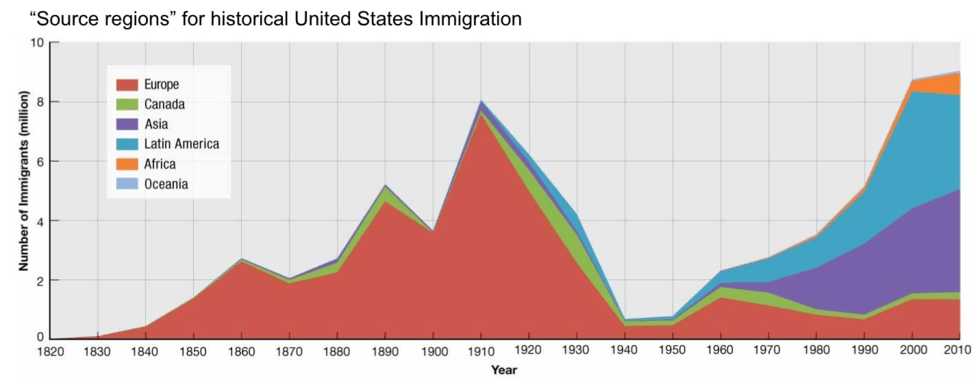
This is a timeline of historical immigration to the US. Find the year 1830. Good! Now identify the majority of people who came to the US between 1830, and 1960. How does the graph identify them (who is orange?)?

1

What happened to migration between 1910 and 1940?

1
1

If you didn't answer above, answer here: What are TWO ways migration CHANGES after 1965? What does the inclining line mean? The changing colors?

1

What is a place where migration to the United States has actually decreased since 2000?

1

Ok, this is that same timeline, zoomed in. From what you can see, what do you think the 1965 Immigration and Nationality Act accomplished?

1

What statement appears most true?

1

Since the Great Recession of 2010, what has happened to immigration to the United States?

1

Do you have any connection -- any adults that you know, any friends that you have -- that are represented in the immigration graphic here? Which one?

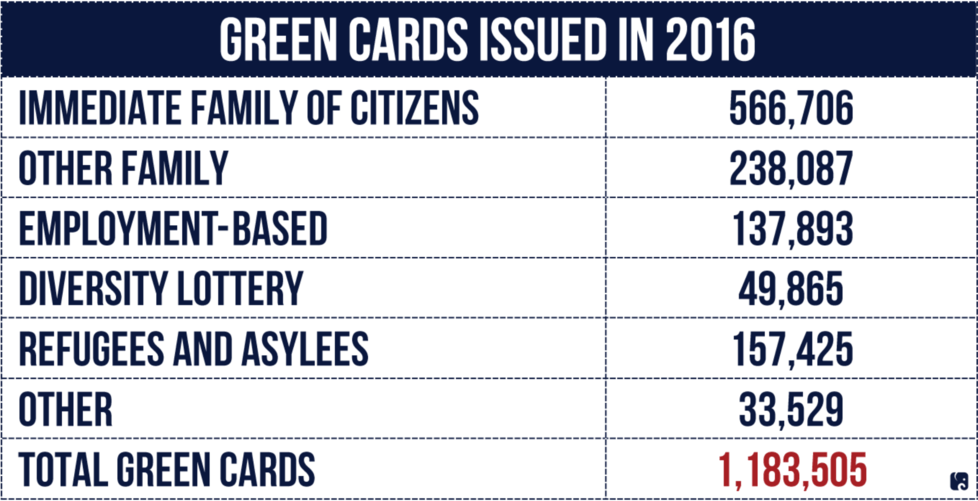
The above charts show where immigration is coming from. Below is a 2016 list of
"Green Cards" are documents that people coming to the United States need to get in order to stay permanently. This is the breakdown of who received them in 2016.
1

Who receives about half of all green cards? The largest group?

566,706 immediate family members of citizens received green cards in 2016. This includes spouses and children (minors). There is no limit on these applications. A further 238,087 more distantly related family (parents, siblings, aunties, cousins, etc) received green cards through a lottery system/line, but this number is capped.

Together, those family members make up the majority of people who receive permission for permanant residence in the United States. The system was designed to favor "family reunification," to keep families together, and permit them to settle in the United States. Because one family member often is often followed by another, and then another, this system is known as "chain migration."
Chain migration allows families to settle together in the US. Over the long term, those families have often grouped together in neighborhood communities called "ethnic enclaves." One example of an ethnic enclave is the Vietnamese community along 82nd street in our neighborhood.
1

Who receives the most green cards in the US immigration system?

1
1

If you didn't answer above in using your mic, type in a response here.

1

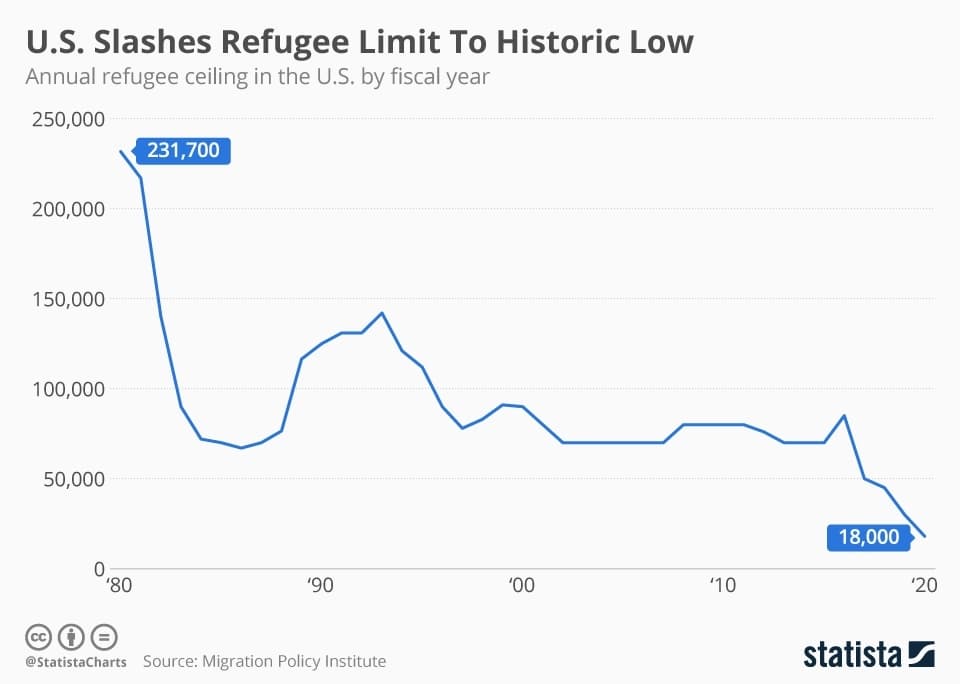
Refugees are people forced to leave their country due to violence. Since World War II the US has "resettled" more refugees than any other country (although that is not the same thing as hosting refugees. Other countries host millions, while the US resettles thousands).

What can you say about the US refugee limit from 1980 to 2020?

Ok. That's it for trends. Now how does it actually work? Let's watch a video. Have you heard about the "Try Guys"?
Watch ONLY the first minute (or else it might begin to feel long).
1

About how many people did the United States "let in" per year in the last decade? (~0:40)

Below is the same video! Now watch from minute 1:01 to 11:15.
1

Could you have answered all of the questions correctly on the Citizenship Tet? (0:42-2:10)

1

How long do you have to live in the US with a Green Card, which allows permanent residency, before applying for citizenship (~2:10) ?

1

What are "push factors" that both the actual immigrants from Iran and Mexico talk about? (2:40-3:18)

1

Visas are paperwork that give you permission to enter and TEMPORARILY stay in the US. To get a work visa, you have to prove that... (~6:35)

1

When is it really hard to get a Green Card? (~8:18)

1

If you are a sibling of a US citizen, you can enter the line / lottery for distant family. What is a regular "wait time" for a distant relative to get a Visa for entrance to the US? (~8:40)

1

After going to school in the US on a student visa, you have 90 days to find a job that... (~9:45)

1

Even if you get the job within your field, to get a green card... (minute 10:19)

1

The immigration lawyer talks about how the US Government does not want to give visas or green cards to people without college degrees, yet US employers have hired an estimated 8 million undocumented workers in service & construction industries that don't require degrees (11:15-11:40). He then repeats what he hears people telling those undocumented workers: "get in line and get your citizenship legally." What is wrong with that approach?

1

ABout how much money do Green Card fees alone cost? (not including lawyers). Minute ~12:10 in the video.

1

What is a way that the Trump Administration limited immigration? (12:26)

1
1

When did a path to citizenship formally open up for all non-white immigrants? (13:28)

1
1

If you don't want to verbally give an answer above, you can type here.

What are the challenges to immigrating to the US that you learned about? What makes the process take so long? What is the problem with telling people, "just get in line"?