
1
What is the function of these structures?
What is the function of these structures?
1
1
1
evidence of evolution
What is the function of these structures?
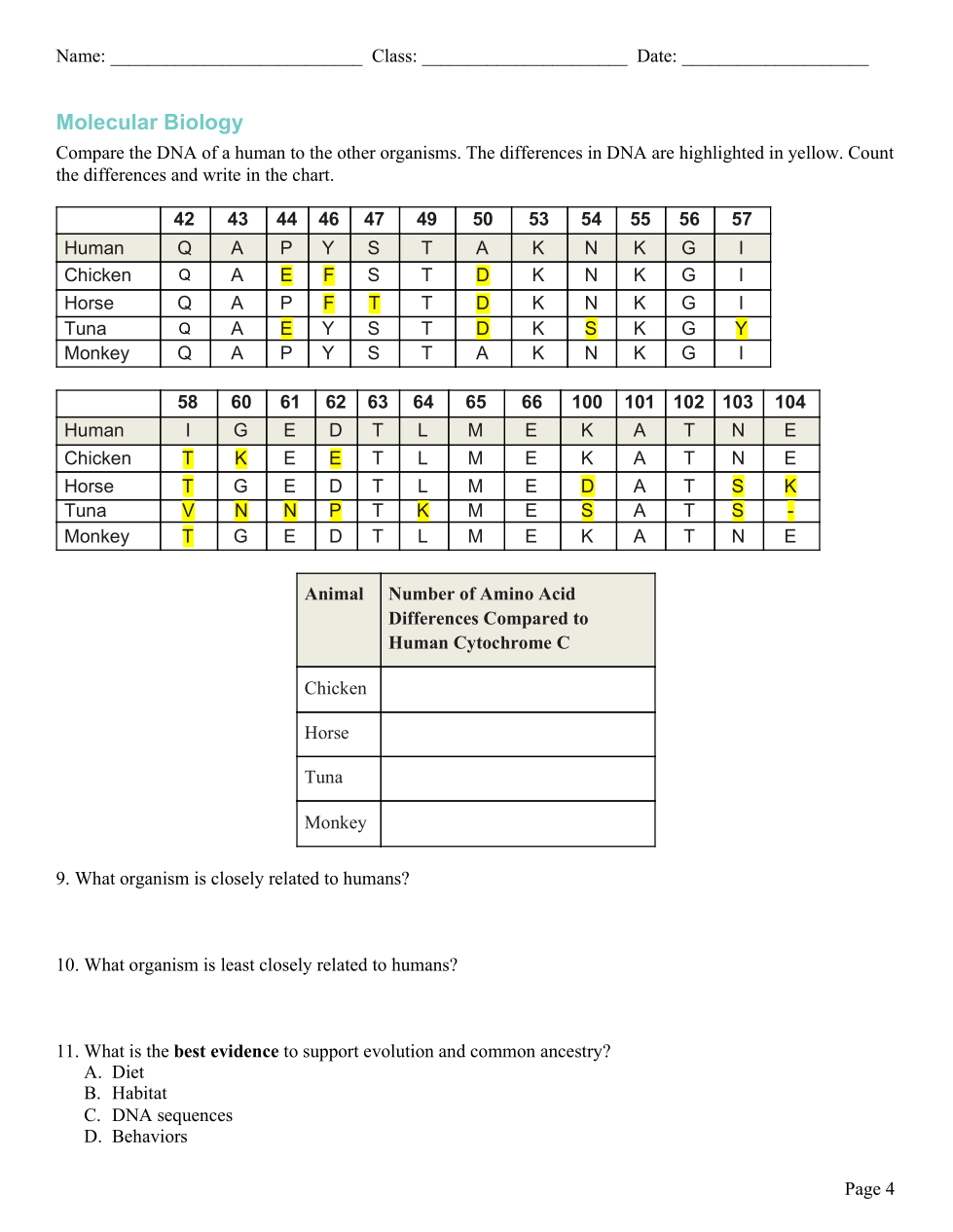
How many differences are there between the human and the chicken (count the number of highlighted sequences. count both rows)
Click on all the structural differences between butterfly and bird wings
Do analogous structures show common ancestry?
Why might cave fish have evolved without eyesight?
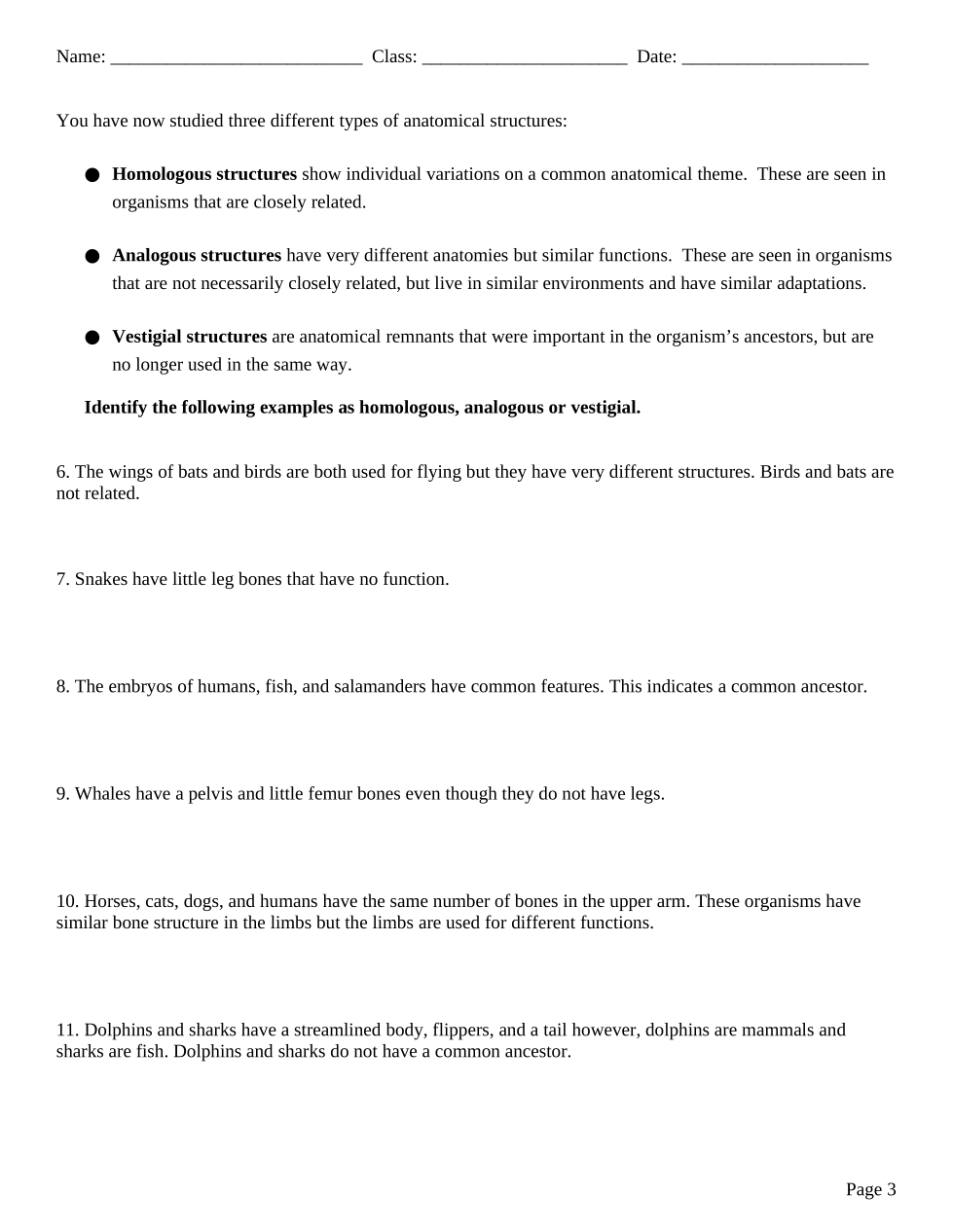
The wings of bats and birds are both used for flight but have different structures. Birds and bats are not related
Snakes have little leg bones that have no function
The embroys of humans, fish, and salamanders have common features. This indicates a common ancestor.
Whales have a pelvis and little femur bones even though they do not have legs.
Horses, cats, dogs, and humans have the same number of bones in the upper arm. These organisms have similar bone structure in the limbs but are used for different functions. This indicates a common ancestor.
Dolphins and sharks have a streamlined body, flippers, and a tail however, dolphins are mammals and sharks are fish. Dolphins and sharks do not have a common ancestor.
How many differences are there between the human and the horse (count the number of highlighted sequences)
How many differences are there between the human and the tuna (count the number of highlighted sequences)
How many differences are there between the human and the monkey (count the number of highlighted sequences)
What organism is closely related to humans?
What organism is least closely related to humans?
What is the BEST evidence to support evolution and common ancestory?