Does the following shape have line symmetry? If so, state how many lines of symmetry there are. If not, state none.
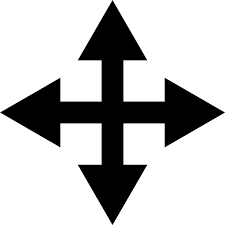
Does the following shape have line symmetry? If so, state how many lines of symmetry there are. If not, state none.
Use the following translation rule to find the coordinates of the image of P(1, -5):
Use the following translation rule to find the coordinates of the image of P(1, -5):
Use the following reflection rule to find the coordinates of the image of P(1, -5):
Use the following reflection rule to find the coordinates of the image of P(1, -5):
Use the following composition of transformations to find the coordinates of the image of P(1, -5):
Use the following composition of transformations to find the coordinates of the image of P(1, -5):
Does the following shape have line symmetry? If so, state how many lines of symmetry there are. If not, state none.
Does the following shape have line symmetry? If so, state how many lines of symmetry there are. If not, state none.

Does the following shape have line symmetry? If so, state how many lines of symmetry there are. If not, state none.

Reflections are a congruence transformation that flip a shape over a mirror line.
An oval has infinitly many lines of symmetry.
The translation rule for moving a shape right 1 and down 7 is (x, y) → (x +1, y - 7).