1
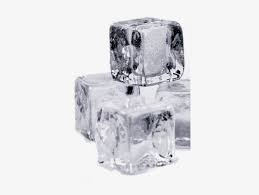
What phase is an ice cube?
What phase is an ice cube?
1
What do the molecules in an ice cube look like?
What do the molecules in an ice cube look like?
What phase is an ice cube?
What do the molecules in an ice cube look like?
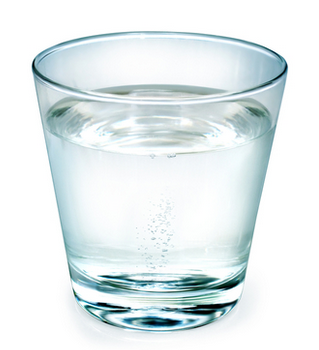
What phase is water?
What do the molecules in a water look like?
How did the molecules move from water (liquid) to ice (solid)?
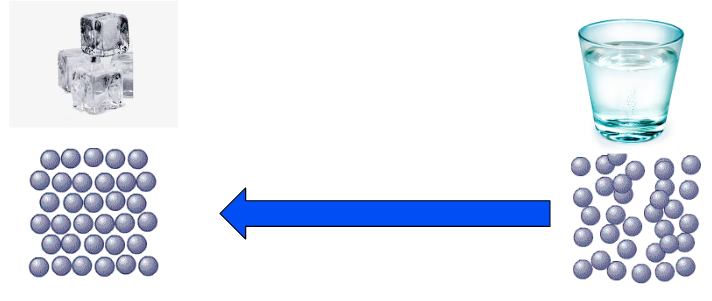
How did the molecules in the gatorade change as they solidified? (2 pts)
A) The molecules started moving faster and got farther apart
B) The molecules started moving slower and got closer together
C) The molecules changed from liquid molecules to solid molecules
D) The molecules got bigger and stopped moving.
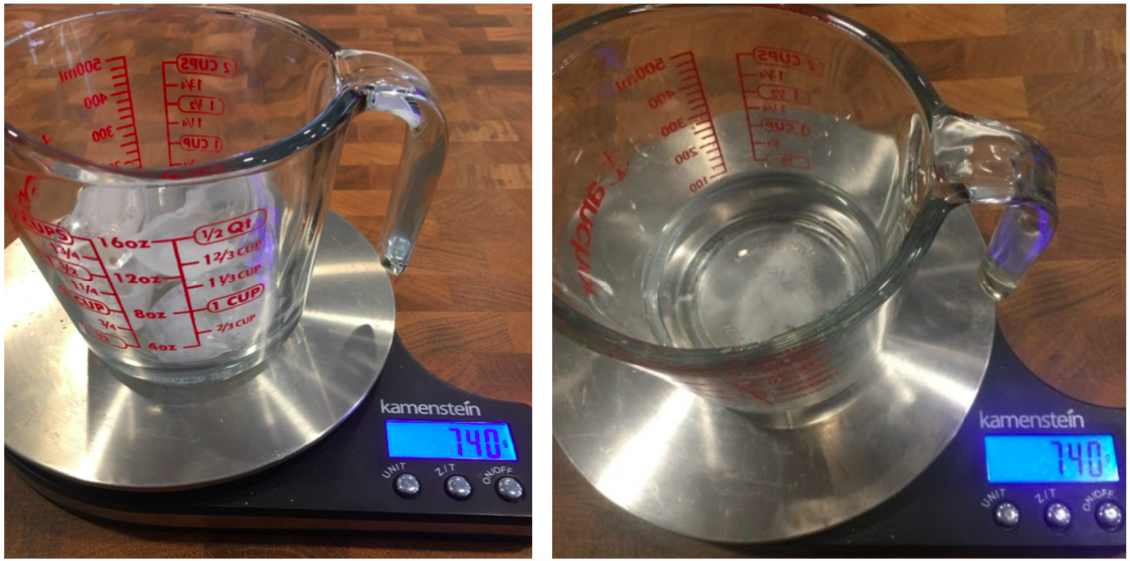
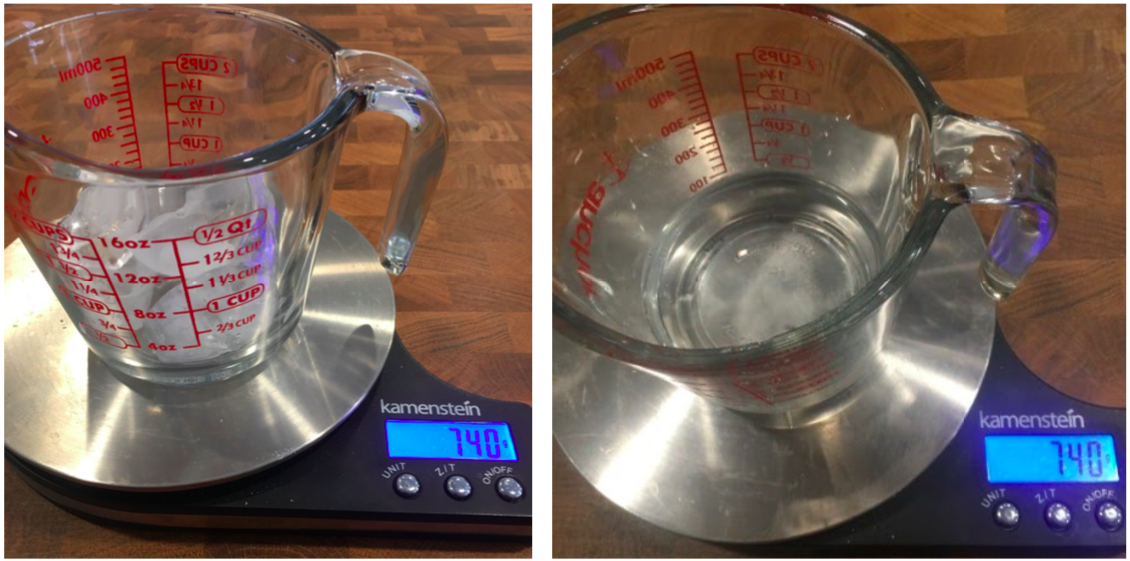
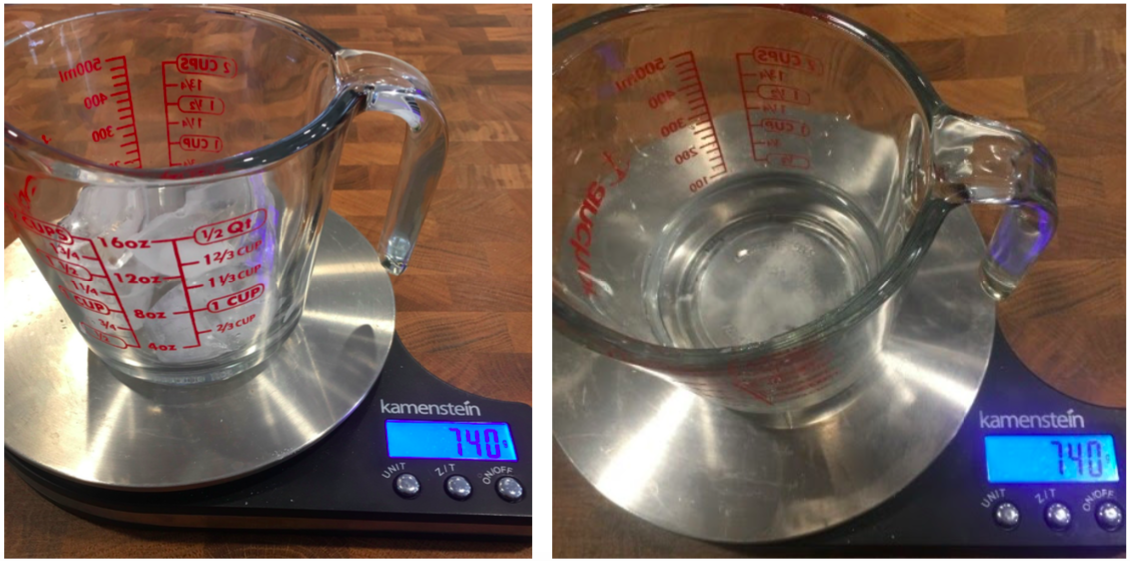
Ice was put in a measuring cup and a scale was used to find the mass. Answer the questions using the before and after photos below.
What’s the mass (weight) when the ice is solid? _________________ grams Type number only!
What’s the mass (weight) when the ice has melted into liquid water? _________________ grams Type number only!
How does this experiment support our key concept about the conservation of matter (matter is not created or destroyed)? What happened to the atoms in the ice?
Kevin buys a new bottle of gatorade from the store. He takes it home and weighs it. The bottle weighs 450 grams. Then Kevin puts the water bottle in the freezer until it solidifies. He takes it out and weighs it again.
How much would you expect the gatorade bottle to weigh after it solidified? (2 pts)
A) Less than 450 grams
B) Exactly 450 grams
C) More than 450 grams
D) It depends on how much gatorade was in the bottle
Which statement best describes how the Gatorade is different after it solidified? (2 pts)
A) It is a liquid.
B) It weighs more.
C) It stays in one shape.
D) It takes up less space.
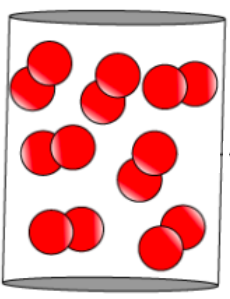
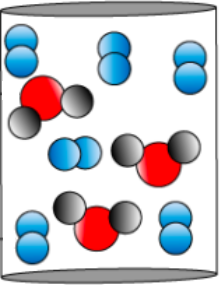
Is this a substance or a mixture
Is this a substance or a mixture
Gatorade is a mixture of water, sugar, and food coloring. Which of these models could be a model of the particles in gatorade? (2 pts)

Which of the following objects are on a nanoscale, and cannot be viewed with the human eye? Select ALL that apply. (2 pts)
A) A grain of salt
B) An atom
C) A strand of hair
D) A molecule of water
Which of the following statements are true? Select ALL that apply. (2 pts)
A) When a solid “disappears” into a liquid, it has actually dissolved.
B) All solids will dissolve when mixed with a liquid.
C) When solids dissolve into a liquid their molecules disappear.
D) Stirring a mixture of a solid and a liquid helps the solid dissolve.
Keisha and her younger sister are helping their mom to make dinner. Keisha’s mom asks her to get the flour so that she can make gravy. When Keisha looks in the cabinet, she sees two clear containers with white powders. Her mom says one is baking soda and one is flour, but they aren’t labeled. She needs to figure out which one is flour.
Keisha remembers an experiment she did in her science class about identifying different powders. She gets her science notebook, and turns to her data:
Jaivin mixes 5 pounds of white paint and 4 pounds of red paint. How much would the pink paint he makes weigh? _________________ pounds Type number only!
Keisha decides to mix both of the unlabeled powders into water and observe what happens. She puts 10 grams of each powder into two different cups. Each cup contains 100 grams of water. She stirs each mixture for 60 seconds.
How much would you expect each mixture of water and powder to weigh? (2 pts)
A) 90 grams
B) 100 grams
C) 110 grams
D) 170 grams
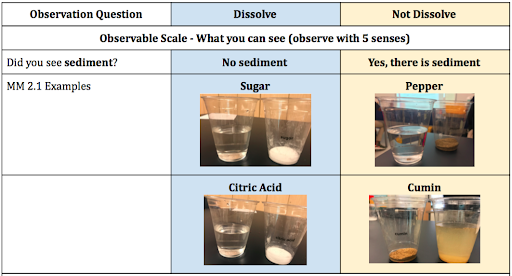
Use this data table as evidence to answer
What to do you notice about the color of both powders? They are ___________
Can you tell which powder is flour or baking soda if the are the same color?
What to do you notice about the particle appearance of both powders? They are ___________
Can you tell which powder is flour or baking soda if they are the same particle appearance?
What to do you notice about the solubility (it dissolves) of both powders? They are ___________
Can you tell which power is flour or baking soda if by checking if they are soluble (dissolves in water?
Explain your answer for Question 25
When Keisha mixed each powder with water, she got the following results:

When Keisha mixed each powder with water, she got the following results:
Is Powder A soluble or not soluble?
After Keisha mixed Powder A with water, her little sister said, “Wow! The powder just disappeared! It’s totally gone!” Which statement would best explain what really happened to the powder? (2 pts)
A) Powder A reacts with water to make a brand new substance.
B) Powder A broke down into smaller and smaller particles until it did disappear completely from the water.
C) Powder A breaks down into smaller particles that are mixed evenly throughout the water.
D) Powder A molecules changes to a colorless solid when it becomes wet.
Why is the baking soda soluble in water and the flour is not? (2 pts)
A) The baking soda particles are smaller than the flour particles, so they fit between the water better.
B) The baking soda molecules are attracted to the water molecules, and the flour molecules are not.
C) Keisha probably mixed the baking soda for a longer time than she mixed the flour.
D) Keisha probably used more flour and less baking soda in her experiment.
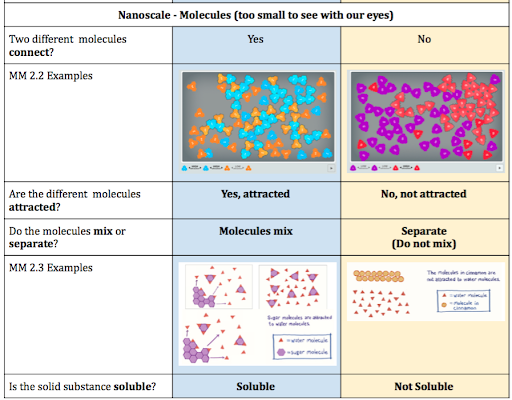
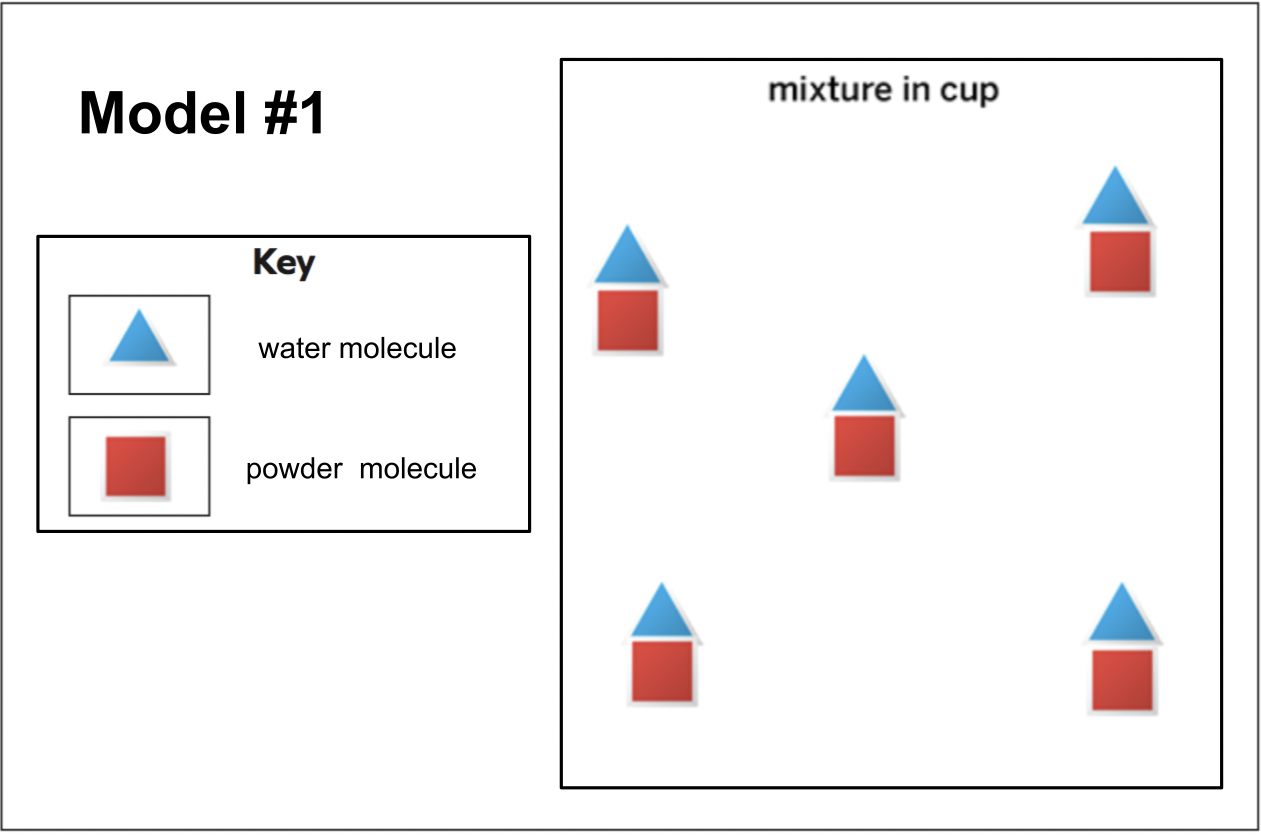
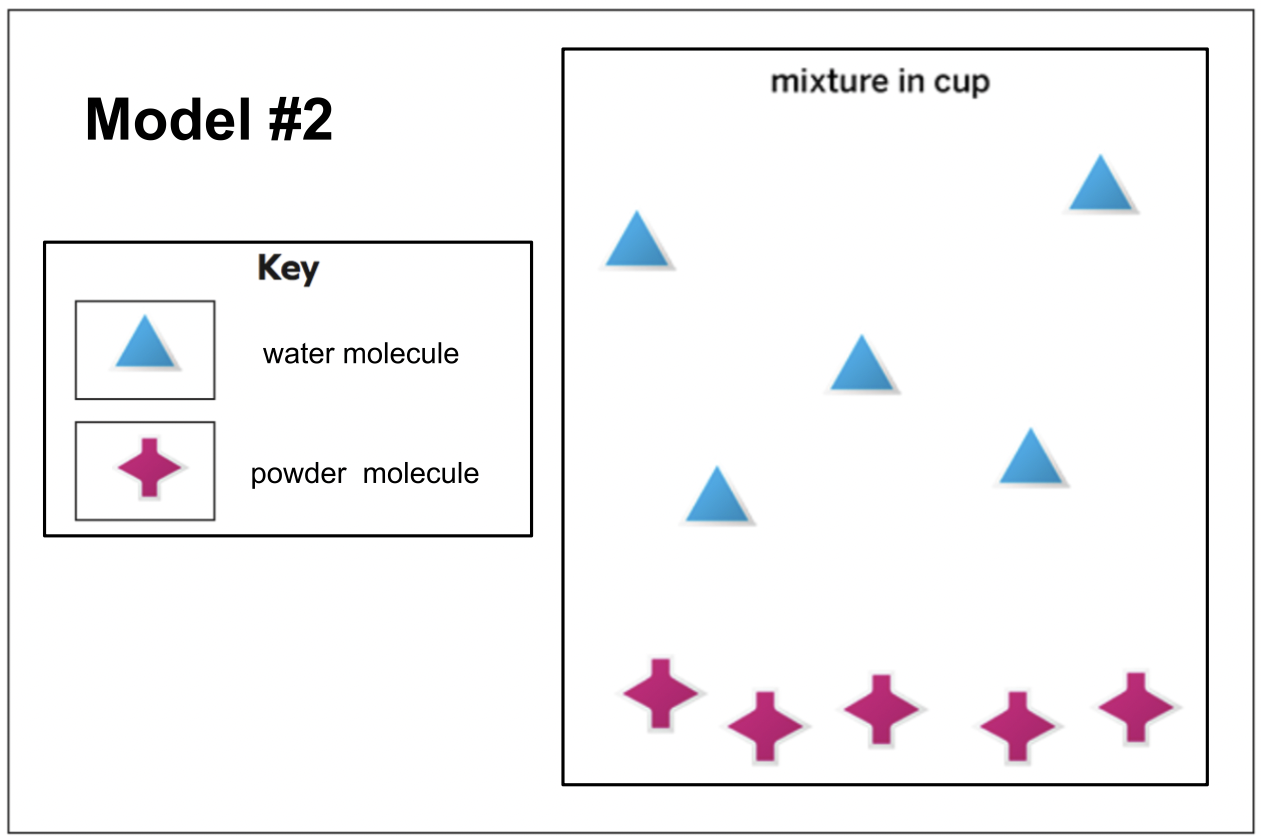
Use these models as evidence to answer Question 12

What is Model 1, baking soda or flour?
Sentence starters:
Claim: Model 1 is ___________
Evidence: In Model 1 it shows _________________
Reasoning (Explanation): This means _________________
What is Model 2, baking soda or flour?
Sentence starters:
Claim: Model 2 is ___________
Evidence: In Model 2 it shows _________________
Reasoning (Explanation): This means _________________
Sandwich Model
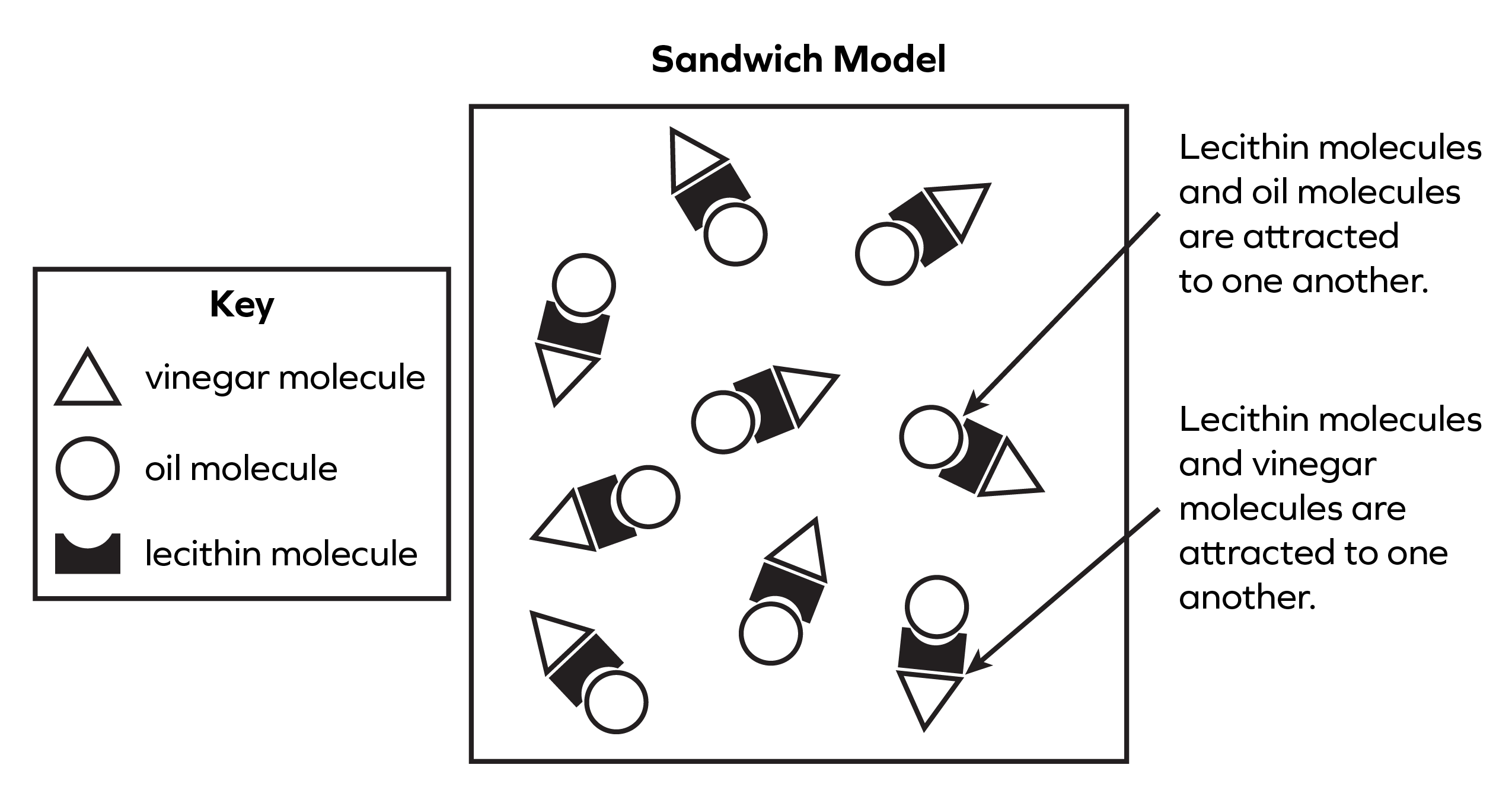
Is the emulsifier attracted to both liquids?
Are both liquids attracted to each other?
Surrounding Model
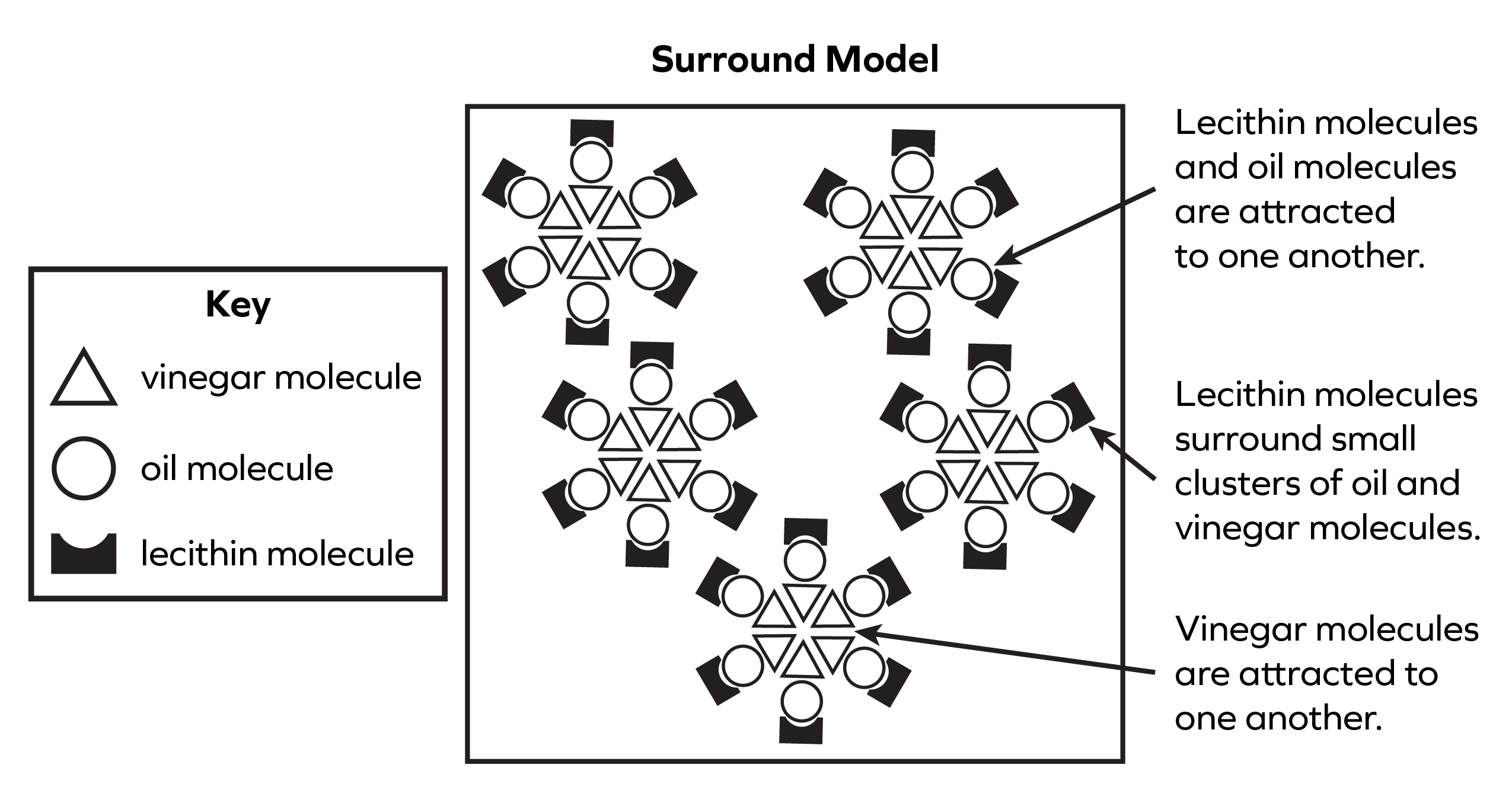
Is the emulsifier attracted to both liquids?
Are both liquids attracted to each other?
Use the information in this box to answer questions 13-14:
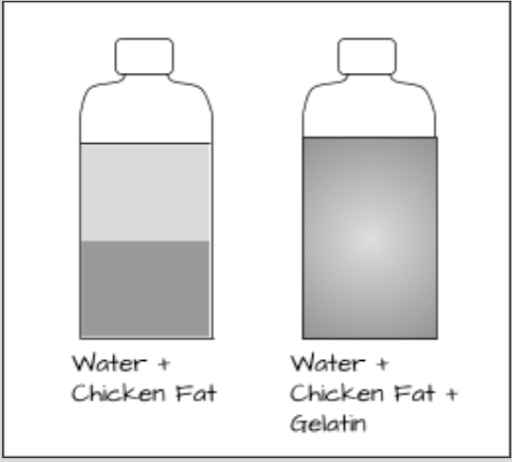
After figuring out which powder is flour, Keisha’s mom makes gravy. Keisha notices that two of the ingredients her mom uses are water and chicken fat. When the water and chicken fat are mixed together, the mixture separates into layers. When Keisha’s mom adds gelatin to the mixture and stirs, the gravy stays mixed.
Keisha draws a diagram of the mixture before and after adding the gelatin in her notebook.
Which of the following statements about the water, fat and gelatin molecules are true? Select ALL that apply. (2 pts)
A) Water molecules are attracted to other water molecules
B) Fat molecules are attracted to other fat molecules
C) Water molecules are attracted to fat molecules
D) Water molecules are attracted to gelatin molecules
E) Fat molecules are attracted to gelatin molecules
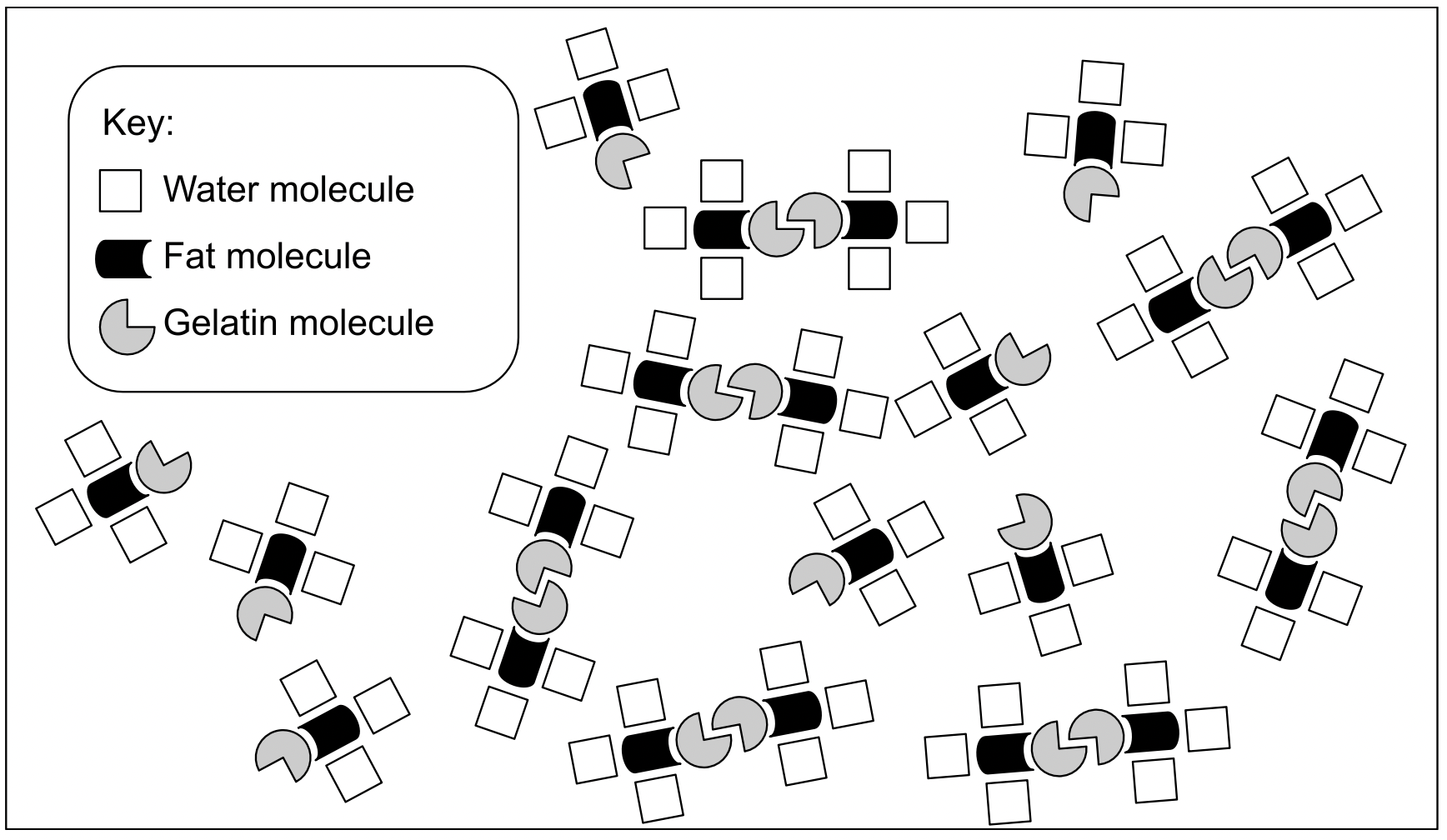
Use the model below to answer Question 14

Keisha’s sister drew a model of the water, fat and gelatin molecules in the gravy. Is her model accurate? If not, why not? (2 pts)
A) It is accurate because it shows the water and fat molecules attracted to the gelatin molecule.
B) It is not accurate because it shows water and fat molecules attracted to each other.
C) It is not accurate because it shows gelatin molecules attracted to each other.
D) It is not accurate because it shows the molecules mixed instead of separated.
Is Powder B soluble or not soluble?
What is powder A?
What is powder B?
Is this emulsifier model correct?
Is this emulsifier model correct?