Algebra 2 7-0 Get Ready for Chapter 7
star
star
star
star
star
Last updated almost 4 years ago
14 Nsɛmmisa

2
2
2
2
2
2
10
11
5
5
10

10
10
10
Evaluating Expressions (Lesson 1-3)
Evaluate the expression
Enter only a number.
Evaluating Expressions (Lesson 1-3)
Evaluate the expression
Enter only a number.
Evaluating Expressions (Lesson 1-3)
Evaluate the expression
Enter only a number in simplified fraction or decimal form.
Evaluating Expressions (Lesson 1-3)
Evaluate the expression
Enter only a number.
Evaluating Expressions (Lesson 1-3)
Evaluate the expression
Enter only a simplified fraction.
Evaluating Expressions (Lesson 1-3)
Evaluate the expression
Enter only a simplified fraction.
Using Linear Models (Lesson 2-5)
Use the data set below to construct a scatter plot at desmos.com (remember to add a table).
Use Desmos' linear regression notation, y1~ax1+b, to graph a line that models the data.
Use Desmos' quadratic regression notation, y1~ax1^2+bx1+c, to graph a parabola that models the data.
Notice which model is a better fit. Consider each correlation coefficient.
Zoom and pan your graph to establish an appropriate viewing window.
Take a screenshot of your graph that includes the scatter plot and both models.
Upload or paste it to the Formative canvas.
{
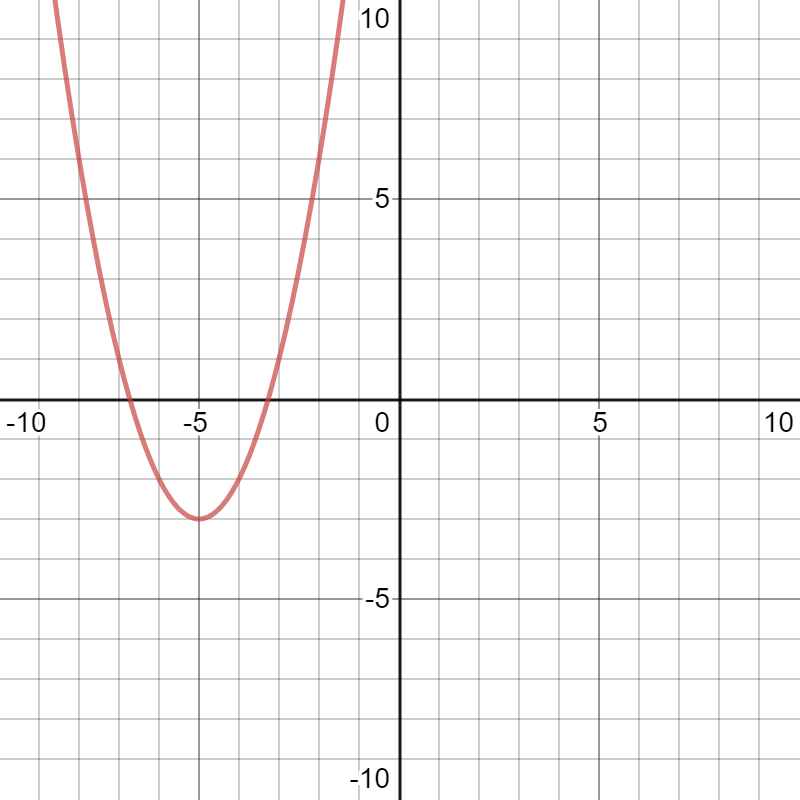
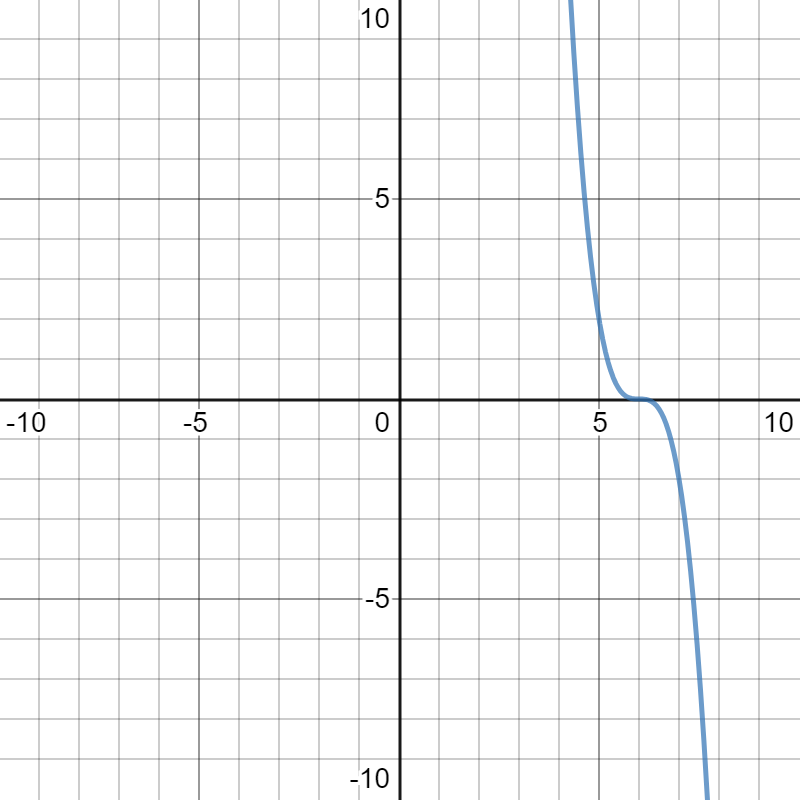
Graphing Transformations (Lessons 4-1 and 5-9)
For each equation on the right, use the appropriate items from the left to identify its...
parent function
transformations of the parent function
graph
You may need to zoom out to see all of the items. You can also place each item from the left column by selecting it (click it) then selecting (clicking on) the category for it.
Parent function:
Parent function:
Parent function:
Translate down 3
Translate down 6
Translate left 5
Translate right 6
Stretch vertically by a factor of 2
Reflect across the x-axis
Simplifying Rational Exponents (Lesson 6-4)
Simplify the expression below. Enter only the simplified expression in the response field.
Simplifying Rational Exponents (Lesson 6-4)
Simplify the expression below. Enter only the simplified expression in the response field.
Finding Inverses (Lesson 6-7)
1. Find the inverse of the function below.
2. Show all of your work on the canvas.
You may complete your work on paper or on a whiteboard and upload a clear picture of it to the canvas.
3. Select the inverse from the choices.
In advertising, the decay factor describes how an advertisement loses its effectiveness over time.
In math, would you expect a decay factor to increase or decrease the value of y as x increases? Explain.
There are many different kinds of growth patterns. Patterns that increase by a constant rate are linear. Patterns that grow exponentially increase by an ever-increasing rate.
If your allowance doubles each week, does that represent linear growth or exponential growth? Explain.
The word asymptote comes from a Greek word meaning "not falling together."

Based on this information, when looking at the end behavior of a function, do you expect the graph to intersect its asymptote? Explain.