Log in
Sign up for FREE
arrow_back
Library

Monday 11/27 - Conservation of Matter

star
star
star
star
star
Last updated 5 months ago
13 questions
Do Now
Physical and Chemical Changes
1
1
Physical Changes
1
Experiment #2 - Ice Cubes Melting

Conservation of Matter

Objective: KWBAT explain how the amount of matter stays constant in a system even when there are changes in state of matter.
1
1

Physical and Chemical Changes

MASS is the amount of matter in an object or substance. Today, we will measure mass in grams (g).

A physical change is a change in size, shape, or state of matter that does NOT create a new substance.

A chemical change is a change that occurs to matter and a new substance is created.
Question 3
3.

Question 4
4.

Our Investigation Question:


When matter goes through physical changes, does the mass, or weight of the matter change? Are atoms in the matter created and destroyed, or do they stay the same?

Today you are going to gather evidence to create your own conclusion about this question!
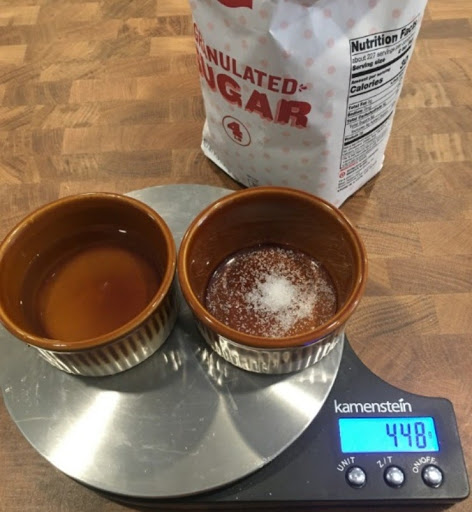
EXPERIMENT #1 - Dissolving Sugar in Water

Sugar and water were put on a scale separately to find the total mass.

1
1
1
1
1
Question 10
10.

Jaivin mixes 5 pounds of white paint and 4 pounds of red paint. How much would the pink paint he makes weigh? _________________ pounds

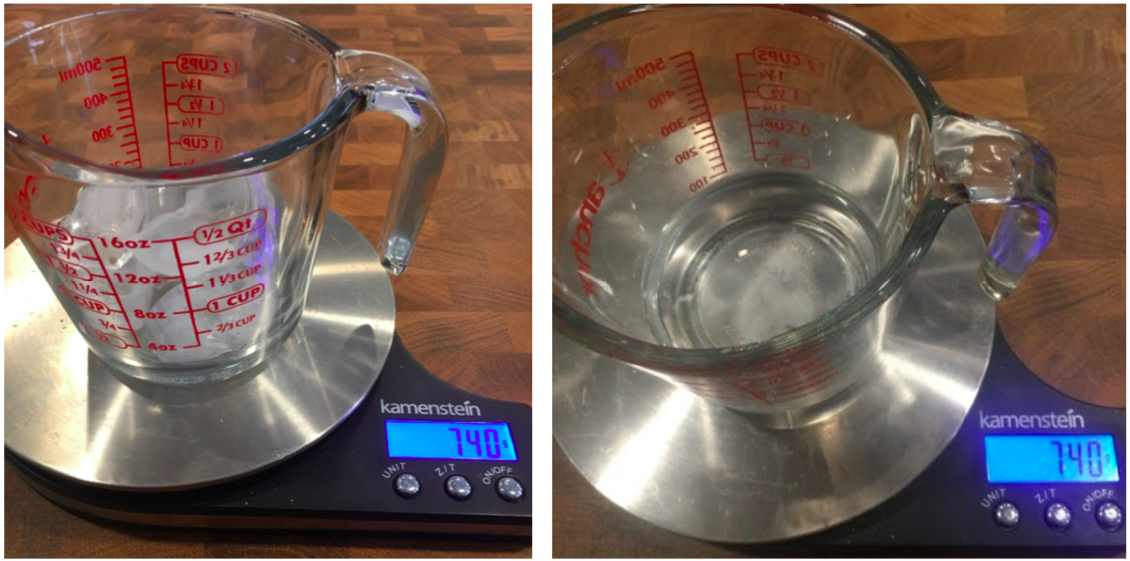
Ice was put in a measuring cup and a scale was used to find the mass. Answer the questions using the before and after photos below.

1
1
1
Question 1
1.

Question 2
2.

Does this image show a physical or a chemical change?
A) Physical change - change that does not create a new substance (same substance)
B) Chemical change - change that creates a new substance
Does this image show a physical or a chemical change?
A) Physical change - change that does not create a new substance (same substance)
B) Chemical change - change that creates a new substance
Question 5
5.

What’s the total mass (of the sugar, water, and the containers) when the sugar and water are separate?

__________ grams.

Question 6
6.

Question 7
7.

Based on the video, what’s the total mass (of the sugar, water, and the containers) after the sugar was dissolved (mixed) in the water?

__________ grams

Question 8
8.

Question 9
9.

Question 11
11.

What’s the mass (weight) when the ice is solid? _______ grams

Question 12
12.

What’s the mass (weight) when the ice has melted into liquid water? _______ grams

Question 13
13.

How does this experiment support our key concept about the conservation of matter (matter is not created or destroyed)?

What happened to the amount of atoms in the ice?

The amount of atoms in the ice ___________

When solid water (ice) melts and becomes liquid water - what is happening to the molecules of the water?
A) The molecules in the liquid water move faster than the molecules in the solid ice.
B) The molecules in the liquid water move slower than the molecules in the solid ice.
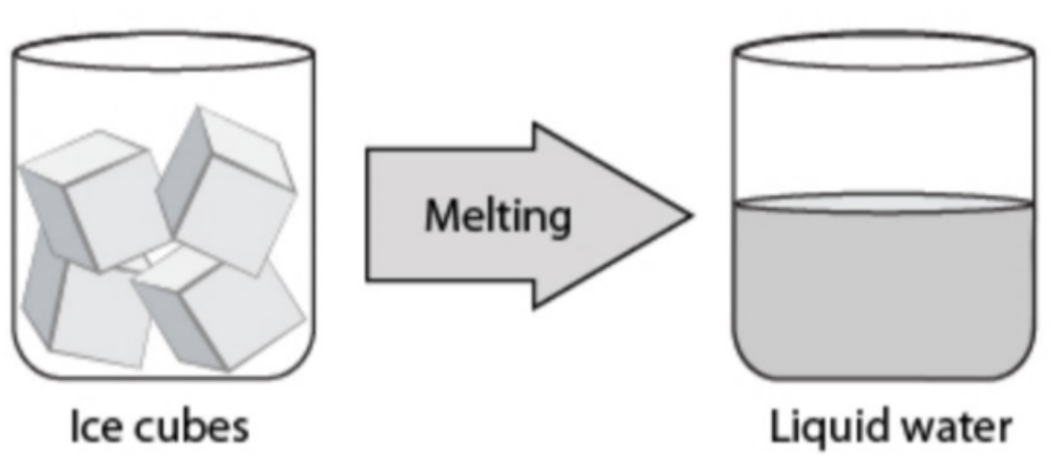
The diagram above shows ice cubes before and after they melt. Which answer is most likely to be true?
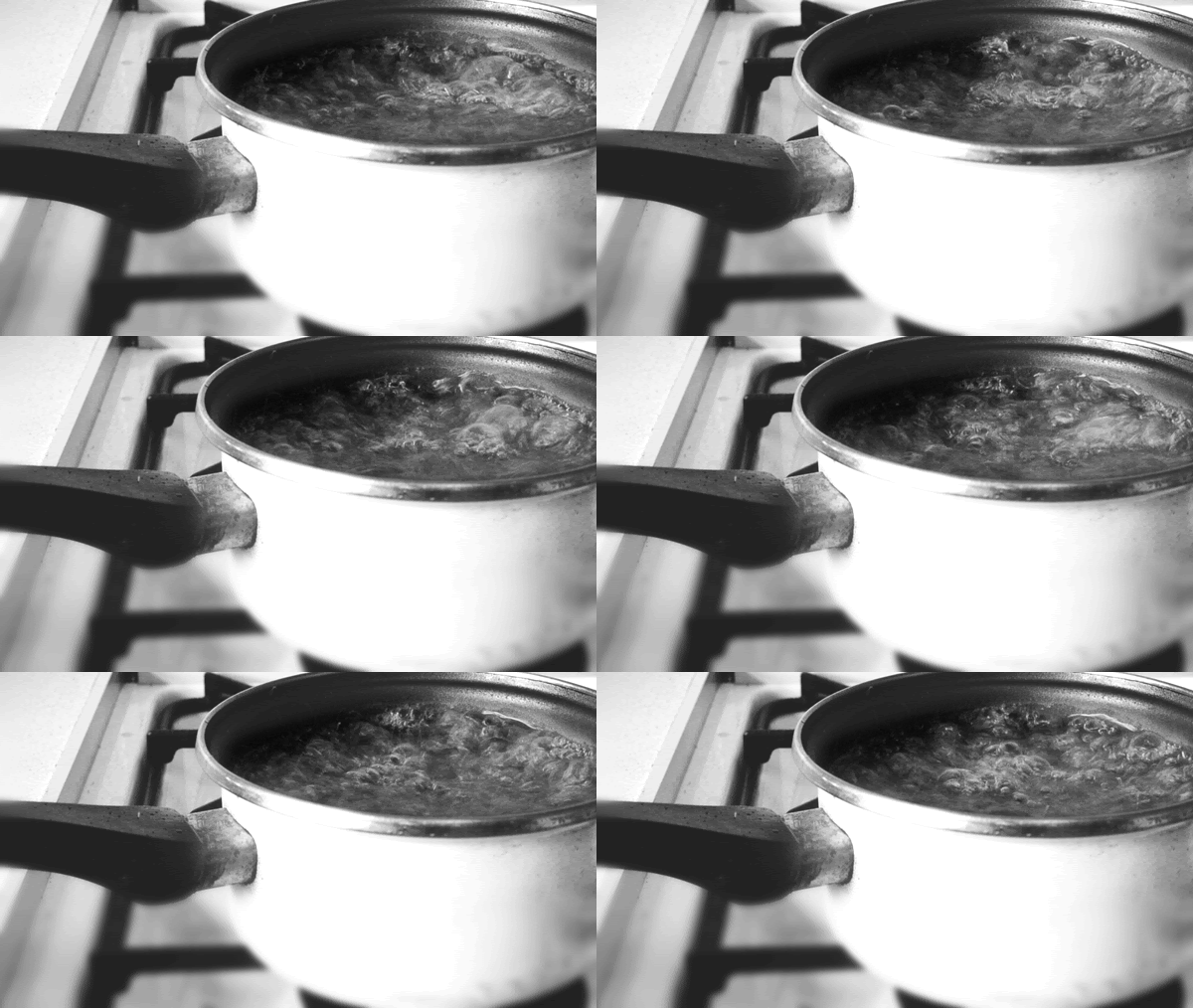
A) The weight of the ice cubes before they melt is the SAME as the weight of the liquid water.
B) The weight of the ice cubes before they melt is DIFFERENT from the weight of the liquid water.
Predict what will happen to the mass after the sugar is dissolved in the water - will it increase, decrease or stay the same?
A) Mass (weight) will increase (go up)
B) Mass (weight) will decrease (go down)
C) Mass (weight) will stay the same
Did the mass, or weight of the matter (sugar + water + containers) change?
A) Yes, the mass / weight changed when the sugar dissolved in the water.
B) No, the mass / weight did not change (stayed the same) when the sugar dissolved in the water.
Are atoms in the matter (sugar + water + containers) created (more matter) and destroyed (less matter), or do they stay the same when the sugar dissolved in water?
A) Atoms were created (more matter)
B) Atoms were not created or destroyed (stayed the same)
C) Atoms were destroyed (less matter)