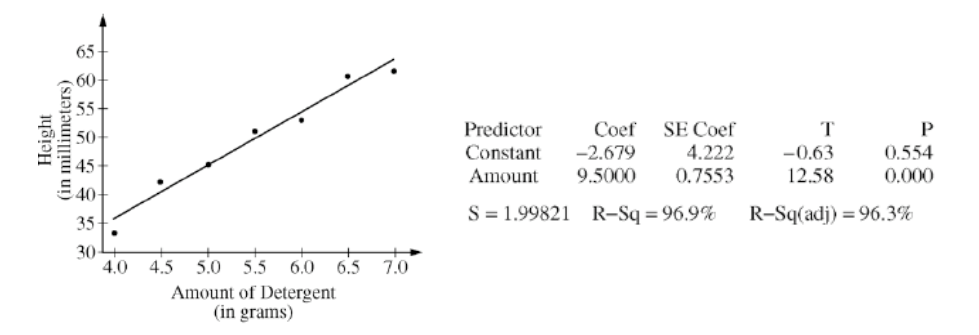
A manufacturer of dish detergent believes the height of soapsuds in the dishpan depends on the amount of detergent used.
A study of the suds’ heights for a new dish detergent was conducted.
Seven pans of water were prepared. All pans were of the same size and type and contained the same amount of water. The temperature of the water was the same for each pan.
An amount of dish detergent was assigned at random to each pan, and that amount of detergent was added to the pan. Then the water in the dishpan was agitated for a set amount of time, and the height of the resulting suds was measured.
A plot of the data and the computer output from fitting a least squares regression line to the data are shown below.
4 points
4
Question 1
1.
Observe the scatterplot above.
Identify the variables being compared and their role as explanatory or response variable by matching them correctly:
Agitation time.
Water temperature.
Suds height.
Amount of detergent.
Explanatory Variable:
Response Variable:
4 points
4
Question 2
2.
Observe the scatterplot above closely, compare the data points to the LSRL.
Which point had the smallest residual?
4 points
4
Question 3
3.
Write the equation of the fitted regression line.
Use 'height' and 'detergent' for the variables.
No spaces.
Round values to three places past the decimal.
Be sure to use -hat to identify the variable that is being predicted.
Use the format: y=a+bx
4 points
4
Question 4
4.
Use the equation you created in #3 to predict the suds height for 5.75 grams of detergent.
Round your answer to three places past the decimal.
4 points
4
Question 5
5.
Note that s = 1.99821 in the computer output.
Interpret this value in the context of the study, what does it mean?
I will be grading this question as you work.
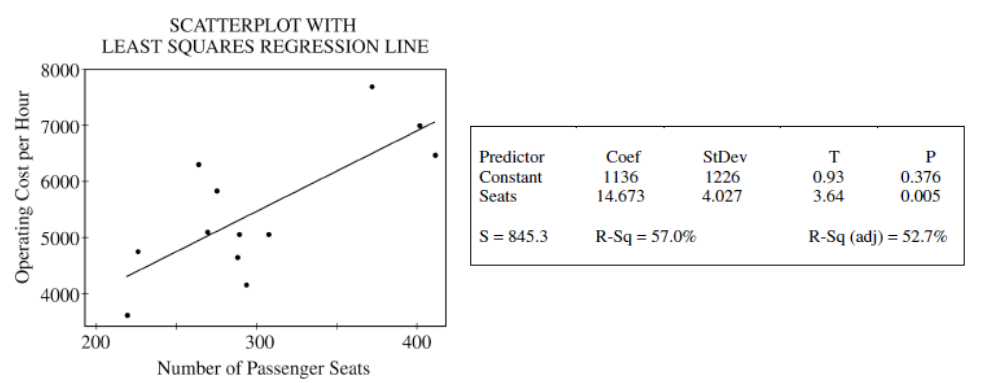
Commercial airlines need to know the operating cost per hour of flight for each plane in their fleet.
In a study of the relationship between operating cost per hour and number of passenger seats, investigators computed the regression of operating cost per hour on the number of passenger seats.
The 12 sample aircraft used in the study included planes with as few as 216 passenger seats and planes with as many as 410 passenger seats. Operating cost per hour ranged between $3,600 and $7,800.
Some computer output from a regression analysis of these data is shown below.
Use the information above to answer the following questions:
4 points
4
Question 6
6.
Observe the scatterplot above.
Identify the variables being compared and their role as explanatory or response variable by matching them correctly:
Small aircraft.
Number of passenger seats.
Large aircraft.
Operating cost per hour.
Explanatory Variable:
Response Variable:
4 points
4
Question 7
7.
If the outlier in the scatterplot at x=370 seats were removed, describe the effects it would have on the numbers we have been working with:
S (std dev of residuals)
Coefficient of determination
Value would increase
Value would decrease
5 points
5
Question 8
8.
Using the computer output above, match the numbers with their descriptions below.
Draggable item
arrow_right_alt
Corresponding Item
4.027
arrow_right_alt
Correlation coefficient
0.7549
arrow_right_alt
y-intercept, __________ dollars in operating costs.
14.673
arrow_right_alt
slope, ________ units y per unit x.
57.0%
arrow_right_alt
Std Dev of residuals
1136
arrow_right_alt
Coefficient of Determination
845.3
arrow_right_alt
4 points
4
Question 9
9.
Interpret the slope and the intercept in context.
Select the correct responses below:
4 points
4
Question 10
10.
Use the information from #7 to create a regression equation for predicting the operating cost of different aircrafts based on the number of seats.
Use 'cost' and 'seats' for the variables.
Round the numbers to three places past the decimal.
No spaces.
Use -hat to show the variable that is being predicted.
Use the format: y=a+bx
4 points
4
Question 11
11.
Use your equation to predict the operating cost for an airplane with 365 passenger seats.
Round your answer to 2 places past the decimal since this is money.
Use units ($)
4 points
4
Question 12
12.
If the operating cost of the aircraft above were actually $6,885.36, calculate the residual.
6 points
6
Question 13
13.
What is the value of the correlation coefficient for operating cost per hour and number of passenger seats in the plane?
Interpret this correlation.
Select all three correct answers below.
6 points
6
Question 14
14.
Did you know that: 'The world's largest commercial passenger aircraft is the Airbus 380 (A380) which has a maximum capacity of 853 seats.'
Can we use our regression equation to predict the operating costs of this aircraft?
Why or why not?
What kind of prediction is this called?
Select all three correct answers below.
4 points
4
Question 15
15.
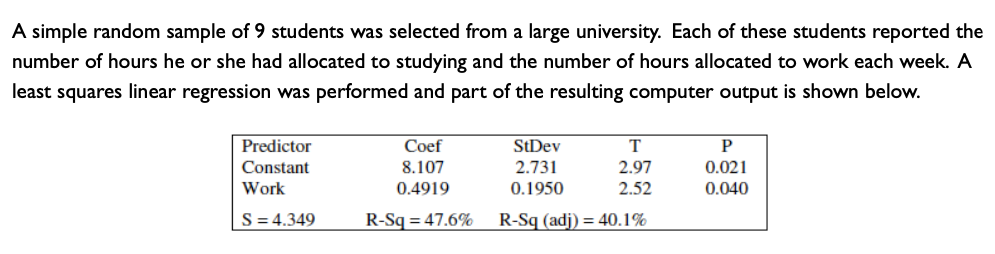
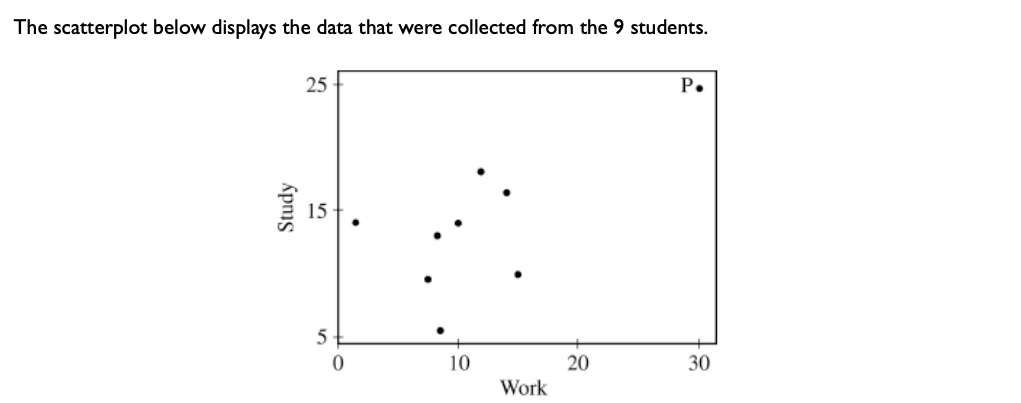
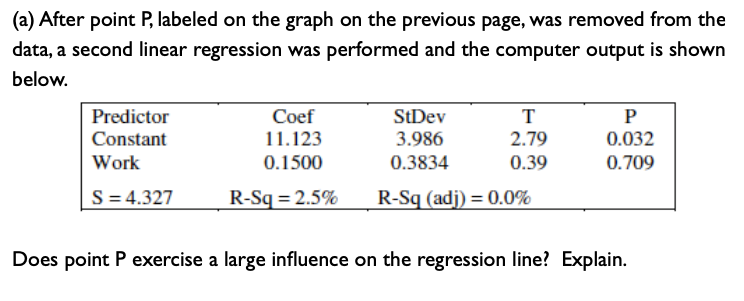
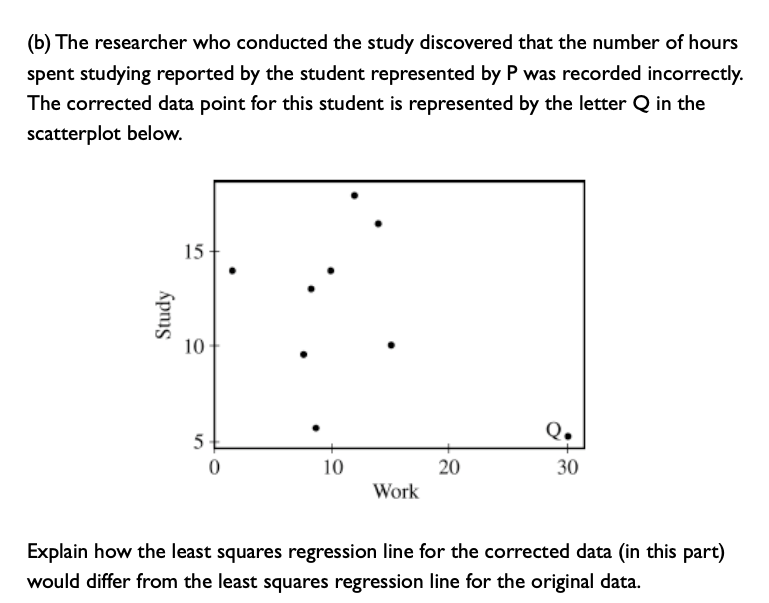
Point P would be considered a high leverage point becuase its predictor x-value is far from the main group of data.
Remember to compare the slope, intercept, S and coefficient of determination before and after the regression is performed.
In your answer tell:
- did point P exercise a large influence on the regression line?
-which value(s) changed the most and support your answer.
I will grade this question.
4 points
4
Question 16
16.
Include information on how the slope would change by switching point P to Q.
Include information on how the y-intercept would change by switching point P to Q.