2. Transverse and longitudinal
star
star
star
star
star
Last updated over 5 years ago
51 Nsɛmmisa
1
1
1
1
1
1
1
1
1
1
1
1
1
1
1
1
1
1
1
1
1
1
1
1
1
1
1
1
1
1
1
1
1
1
1
1
1
1
1
1
1
1
What two things does the law of conservation of energy state cannot happen to energy? (2)
State the stored energy in an object that is held high up in the air. (1)
State the energy stored in a moving object. (1)
Define dependent variable.
The variable we ___________ (1)
Convert 35cm into mm. (1)
Challenge: Describe the energy transfer that takes place when a ball is dropped from 1m and falls to the ground
When the ball is dropped, the __________________ energy store.......
Which quantity tells us the number of waves produced per second?
What quantity tells us the distance between two corresponding waves, measured in metres (m)?
Which quantity is the the maximum distance from the resting point to the top of the wave?
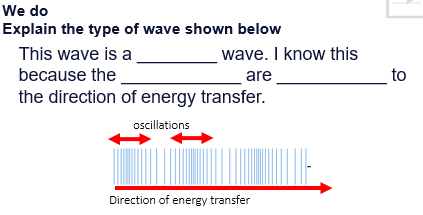
What type of wave is this?

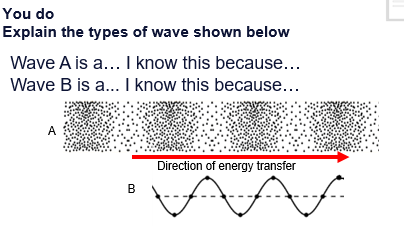
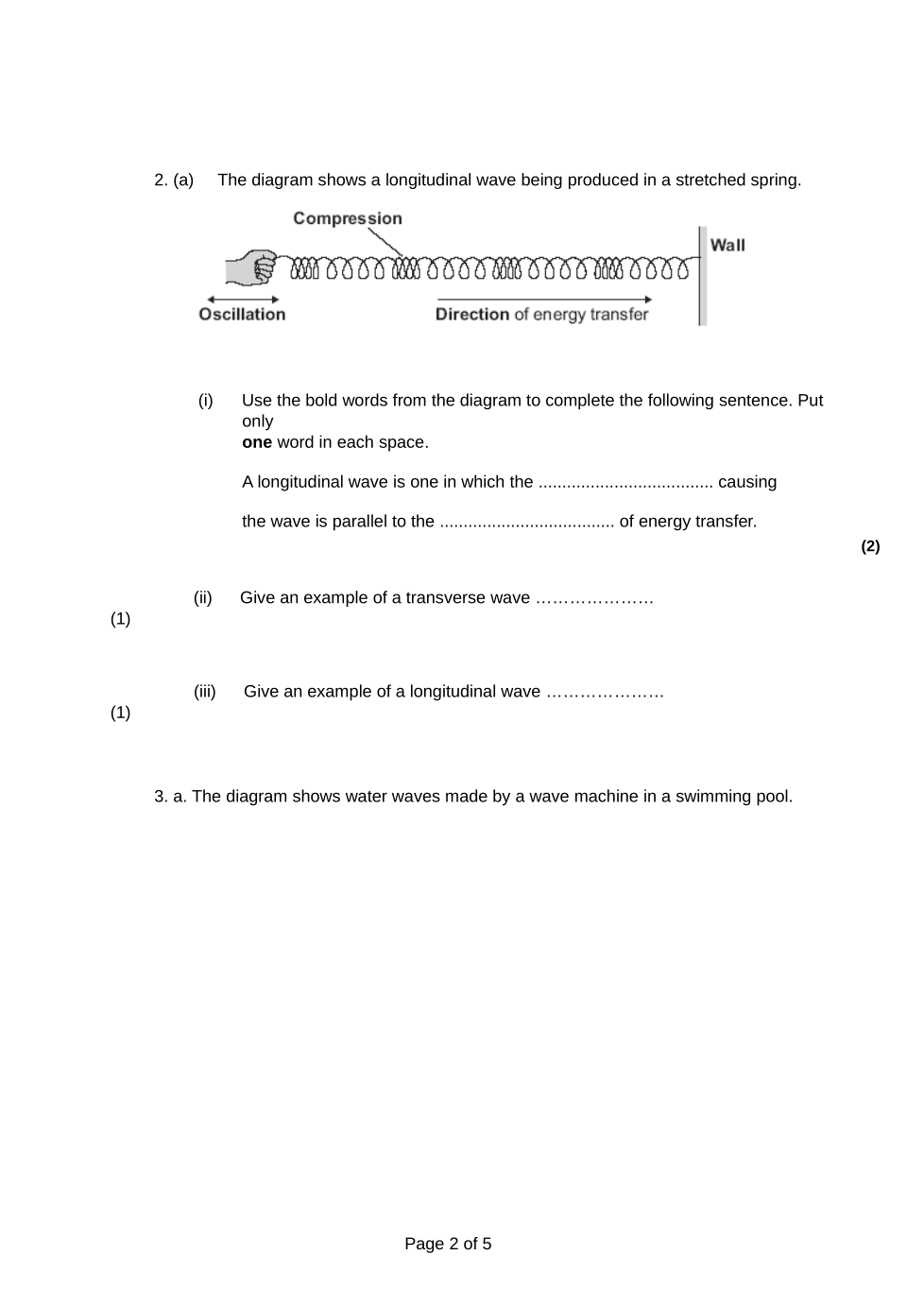
In which type of wave do the oscillations move in parallel to the direction of energy transfer?
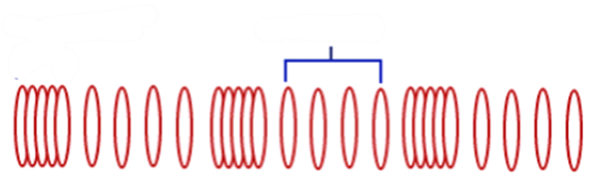
What is this part (in blue) of the longitudinal wave called
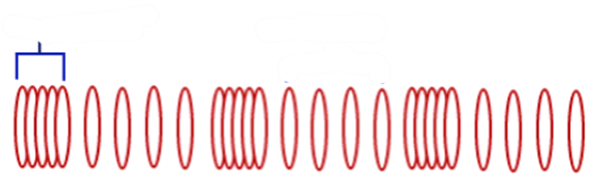
What is this part (in blue) of the longitudinal wave called
Key Knowledge
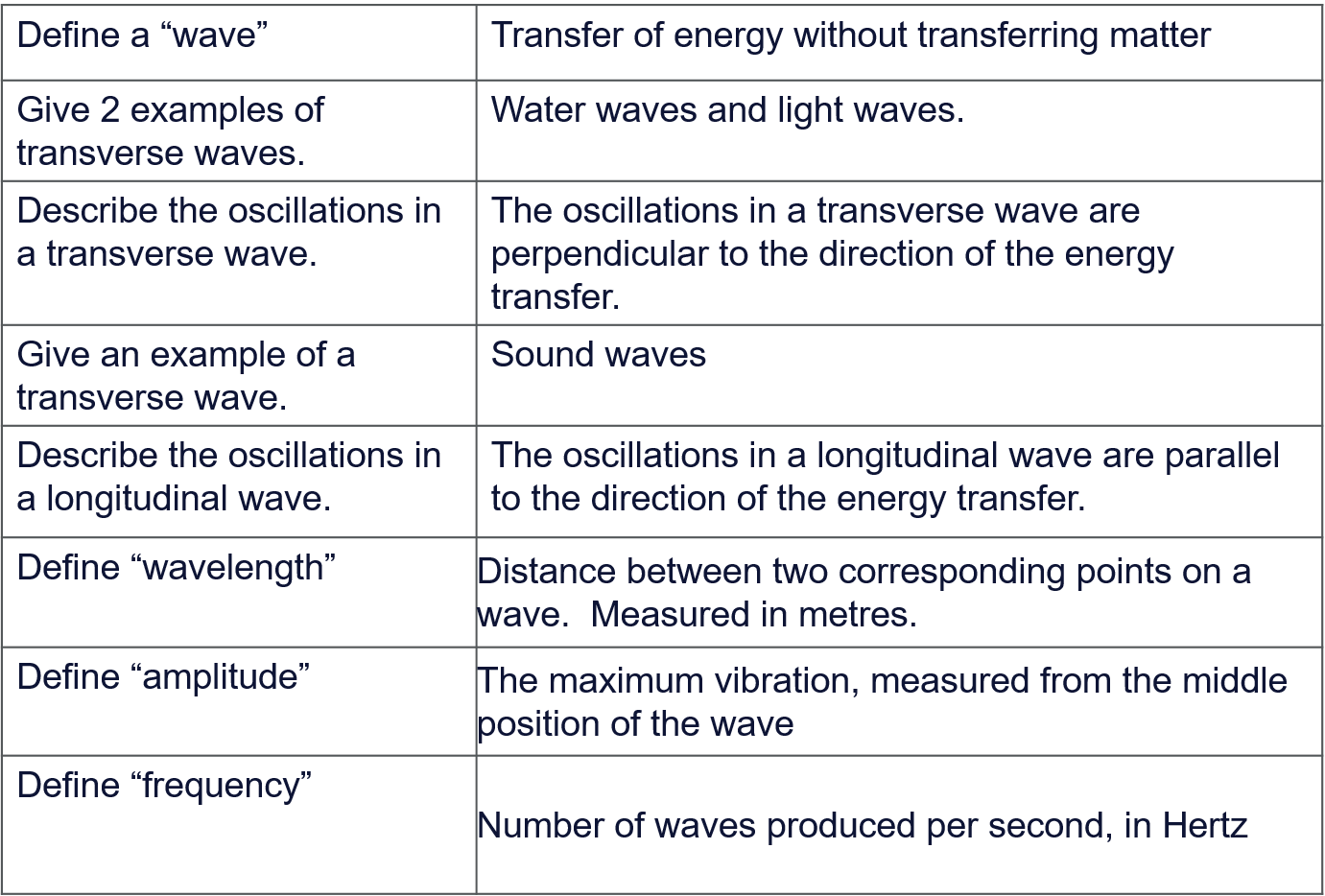
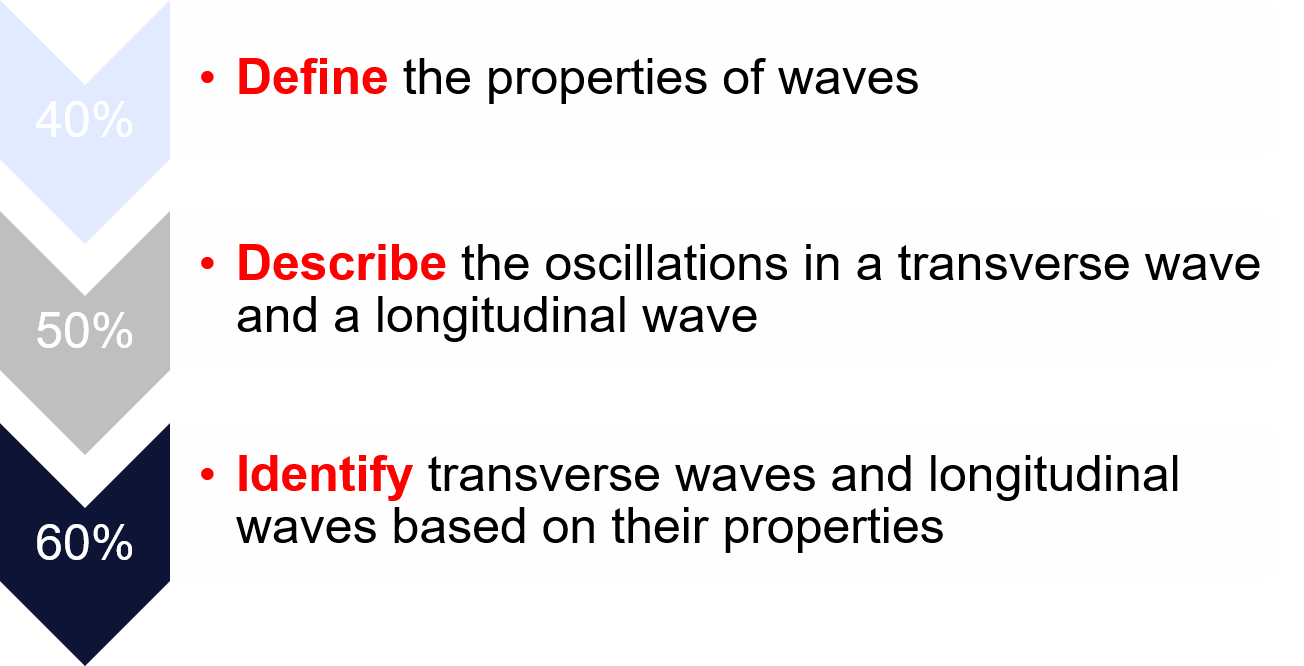
Define a “wave”
Give 2 examples of transverse waves.
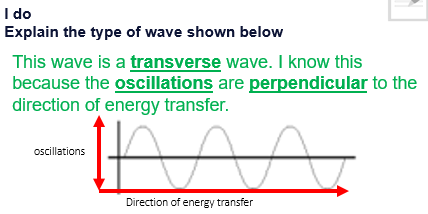
Describe the oscillations in atransverse wave.
Give an exampleof a transverse wave.
Describe the oscillations in alongitudinal wave.
Define “wavelength”
Define “amplitude”
Define “frequency”
Define a “wave”
Give 2 examples of transverse waves.
Describe the oscillations in atransverse wave.
Give an exampleof a transverse wave.
Describe the oscillations in alongitudinal wave.
Define “wavelength”
Define “amplitude”
Define “frequency”
Which of these examples are of a longitudinal wave.
In longitudinal waves, the oscillations are ___________to the direction of energy
Which two are examples of transverse waves
In transverse waves the oscillations are _____________ to the direction of energy
Frequence is the......
Define wavelength
Copy and complete the example below
Copy and complete the sentences below to answer the question in bold
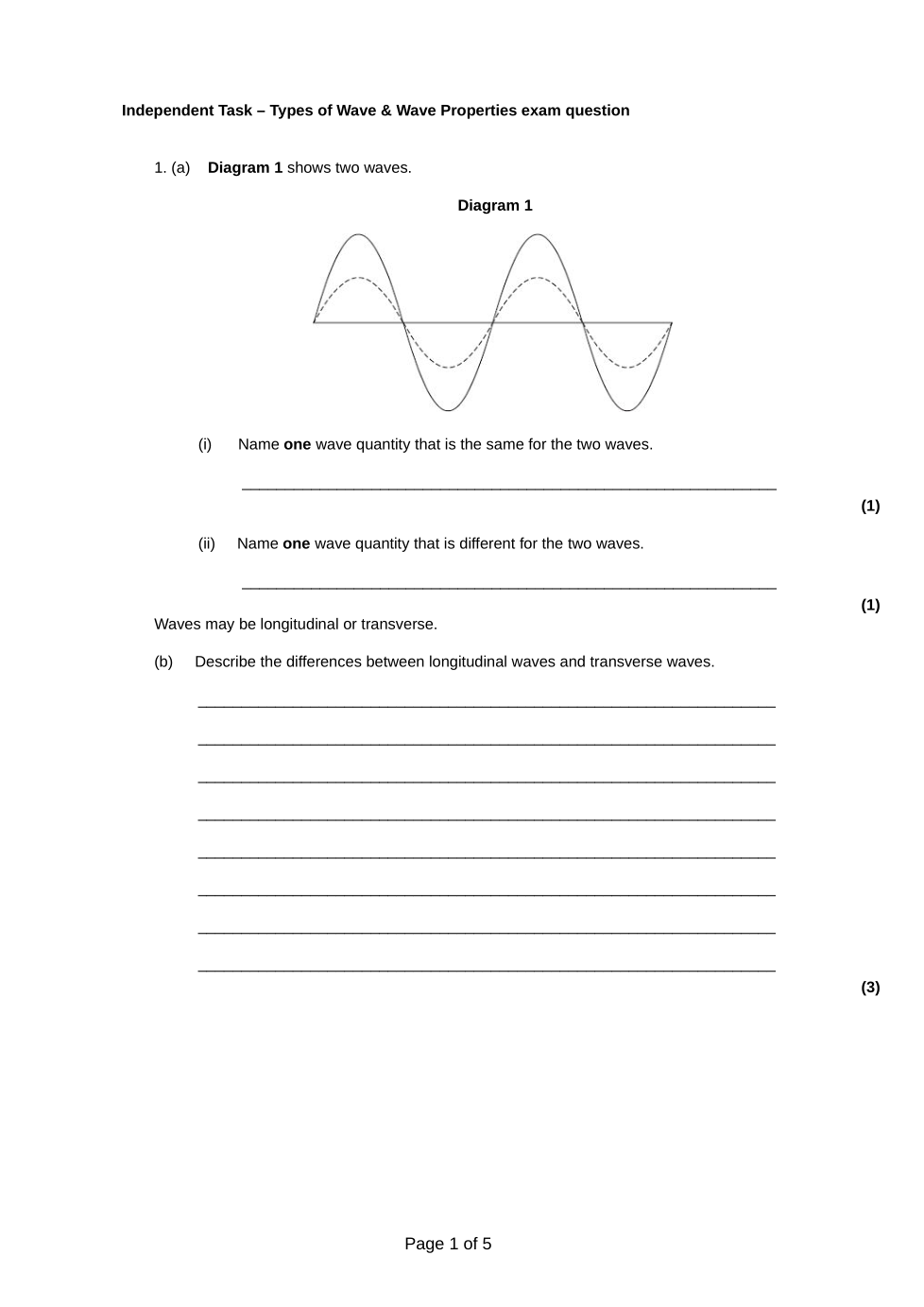
Copy and complete:
The oscillation / vibration causing the wave for a longitudinal wave is____________ to the direction of __________ transfer.
But for a transverse wave the oscillation / vibration is _________________ to the direction of ____________ transfer
Copy and complete
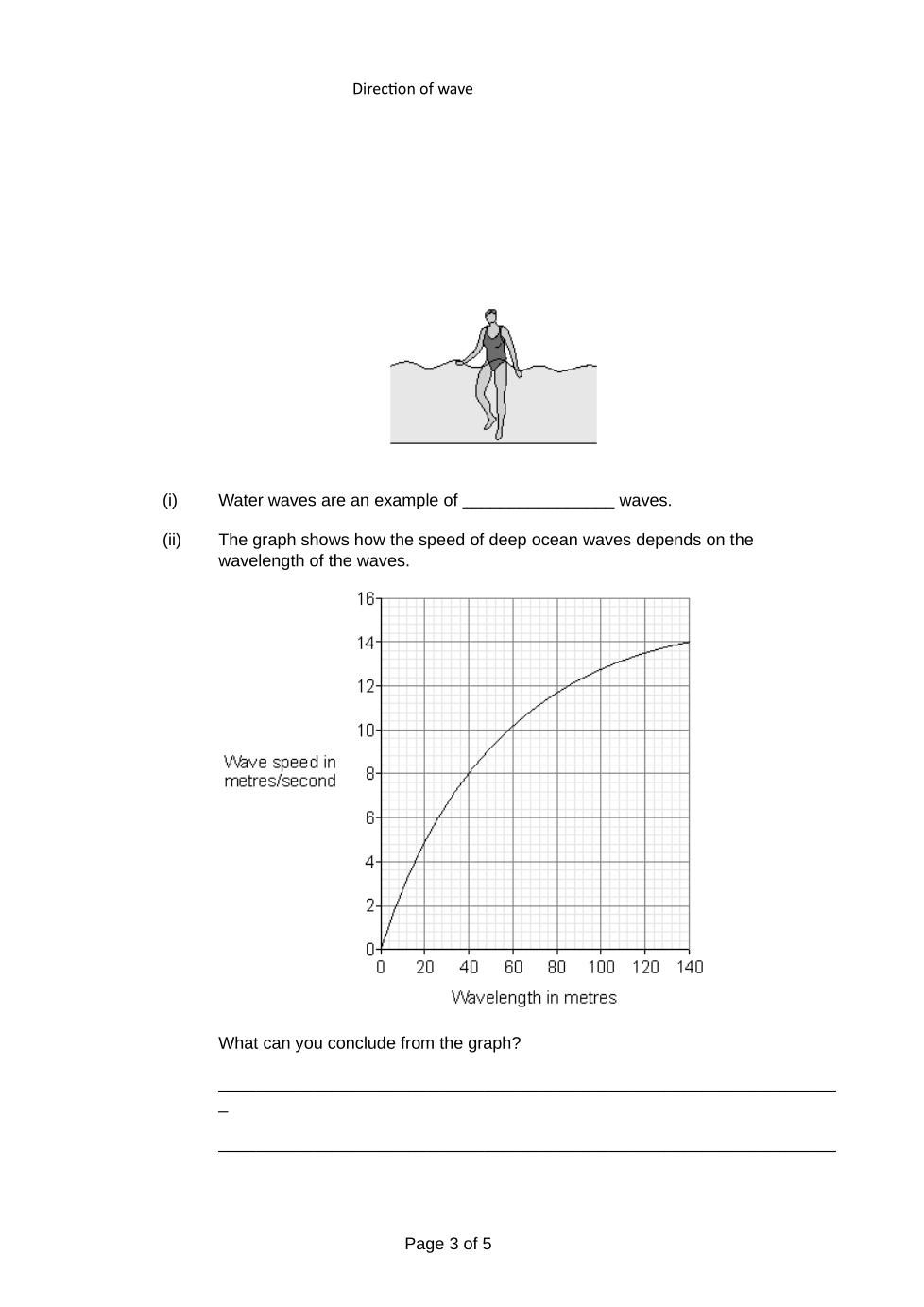
As the wavelength increases so does the ______ __________
The wave speed increases __________between 0-40 m than between _______________ m
Kinetic energy is stored in hot objectsA water wave is a transverse wave
A sound wave is a transverse wave
The frequency tells us the distance between two corresponding waves
Energy can be created but not destroyedThe oscillations in a transverse wave are perpendicular to the direction of energy transfer
Perpendicular means at a right angle to.