1
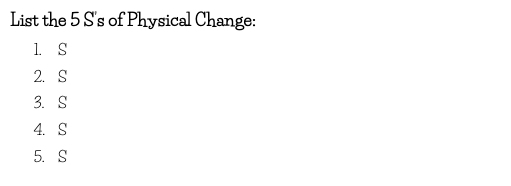
1. S
1. S
1
2. S
2. S
1
3. S
3. S
1
1
1. S
2. S
3. S
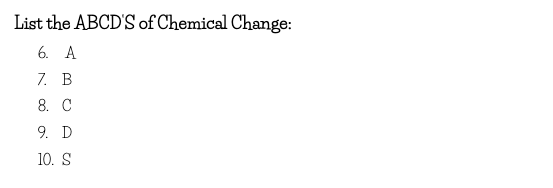
6. A
7. B
8. C
Any characteristic we can observe or measure without changing the chemical composition of the substance
These affect a substance's appearance/form but not its chemical composition
A characteristic that can only be seen by changing the chemical composition of a substance
These affect a substance's chemical composition, causing a new substance to be created
Which of the following is NOT an example of a physical change?
Which of the following is NOT an example of a chemical change?
One example of physical change is
One example of chemical change is

Deposition is caused by a rapid in thermal energy.
Which is the most dense state of matter (density refers to how tightly the particles are packed.
Put the state of matter in order from greatest to least based on the Kinetic Energy Levels.
HINT: Put the state of matter with the greatest amount of kinetic energy first, then the next highest, etc.
Gas
Solid
Liquid
Plasma
Which phase of matter has the following properties:
- Volume/Shape changes to FILL its container
- widely spaced particles that zoom around at high speed
Which phase of matter has the following properties:
- Fixed Volume
- Fixed Shape
- No space between the particles
- Particles vibrate in a fixed position
Which phase change is dew (found on the grass in the morning) an example of?

Which phase change is steam an example of?

Which phase change is dry ice an example of?

Dry Ice is frozen/super-cooled carbon dioxide that instantly turns into a gas when it comes into contact with room temperatures
Which phase change occurs when heat enters a liquid and the particles start to move quickly until they are spaced far apart and moving freely,
This phase change occurs when a solid is exposed to enough heat and/or the pressure is decreased so that the particles spread out enough to begin to slide past each other at a moderate speed.
Which phase change is frost an example of?

Write out the Kinetic Molecular Theory
Hint: It starts with "All matter is made up of ....."
If you brought water bottles for the Kinetic Molecular Theory poster project, please type how many you brought .
If you didn't bring any, type "0"
Extra Credit: Explain why chemical and physical change indicators are present during a chemical change.
3. S
5. S
9. D
10. S
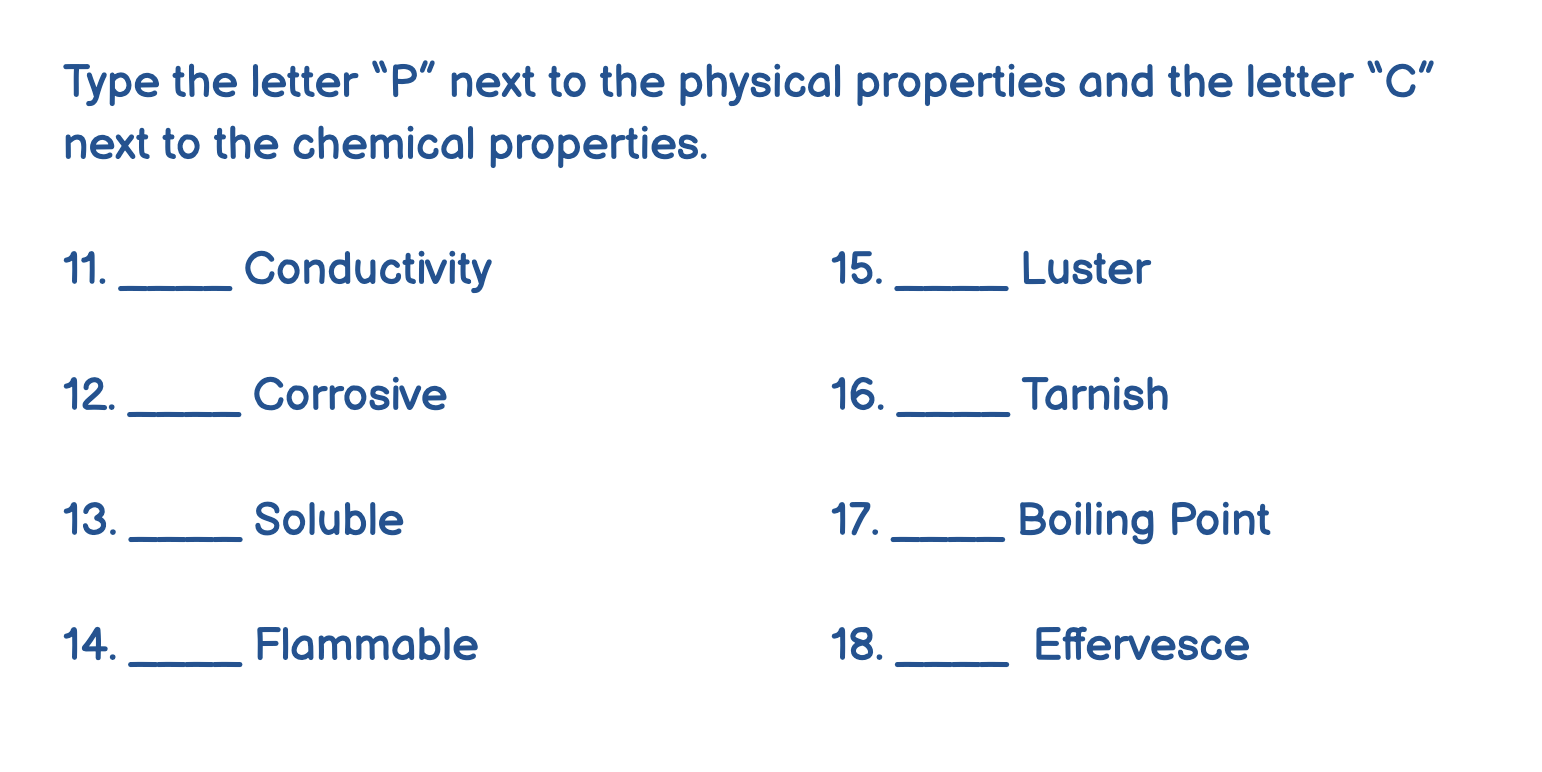
Type the letter P or C to indicate the type of property
Type the letter P or C to indicate the type of property
Type the letter P or C to indicate the type of property
Type the letter P or C to indicate the type of property
Type the letter P or C to indicate the type of property
Type the letter P or C to indicate the type of property
Type the letter P or C to indicate the type of property
Type the letter P or C to indicate the type of property
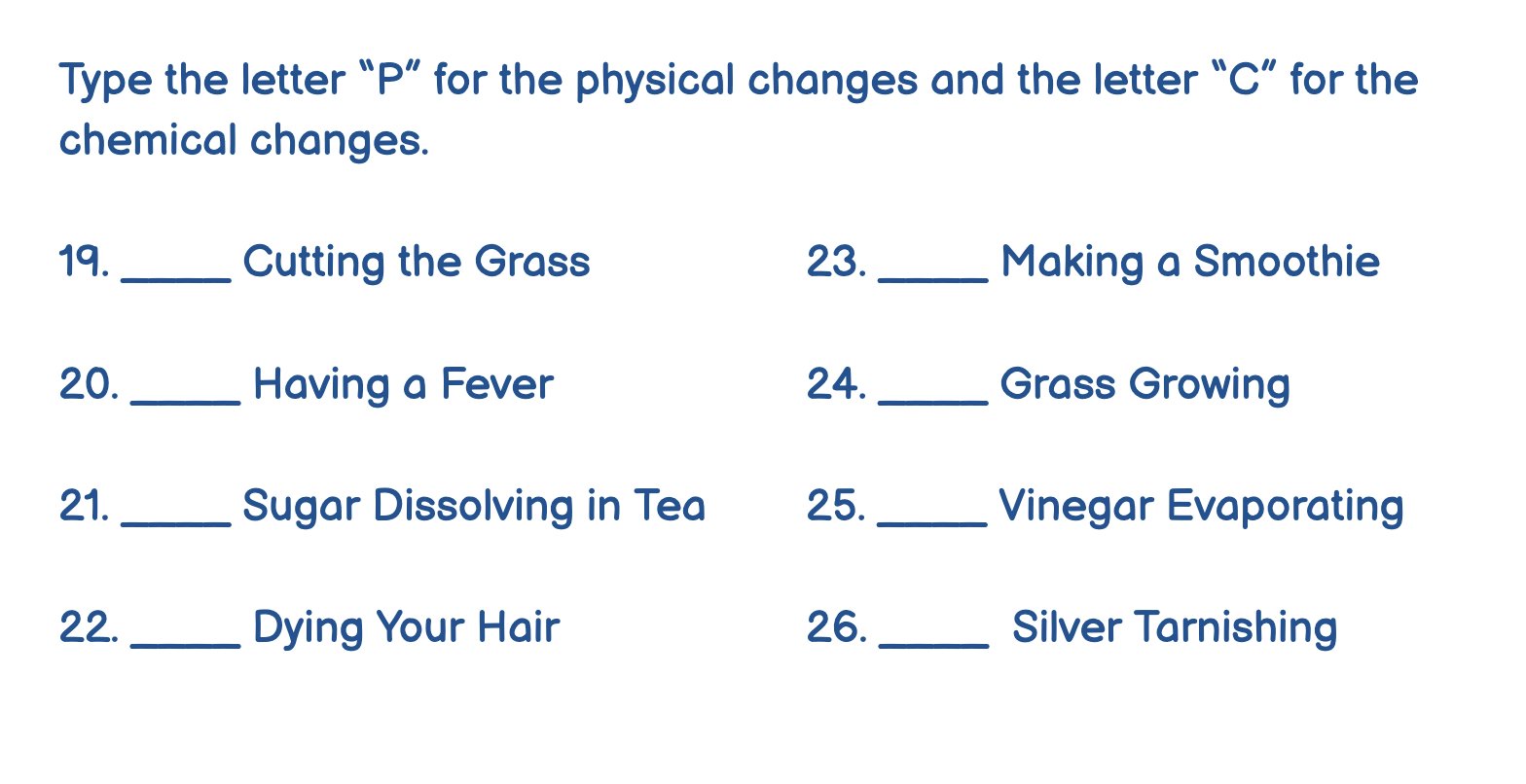
Type the letter P or C to indicate the type of change
Type the letter P or C to indicate the type of change
Type the letter P or C to indicate the type of change
ANSWER FOR BLEACHING YOUR HAIR INSTEAD OF DYING
Type the letter P or C to indicate the type of change
Type the letter P or C to indicate the type of change
Type the letter P or C to indicate the type of change
Type the letter P or C to indicate the type of change
Type the letter P or C to indicate the type of change
Arrow #35 - Solid to liquid phase change _________
Arrow #36 - liquid to gas phase change
Arrow #37 - solid to gas phase change
Arrow #38 - gas to liquid phase change
Arrow #39 - liquid to solid phase change
Arrow #40 - gas to solid phase change