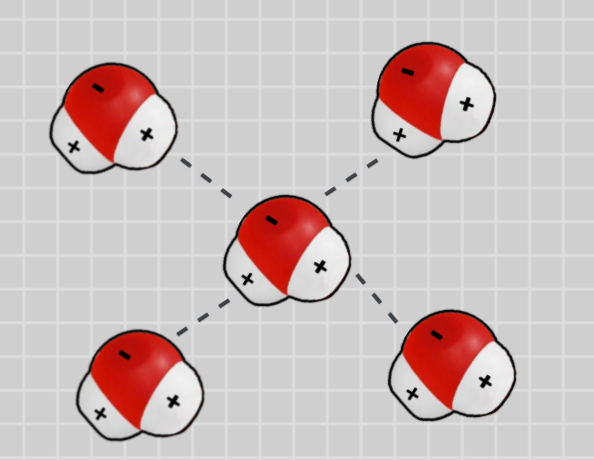
A water molecule is polar because ..........
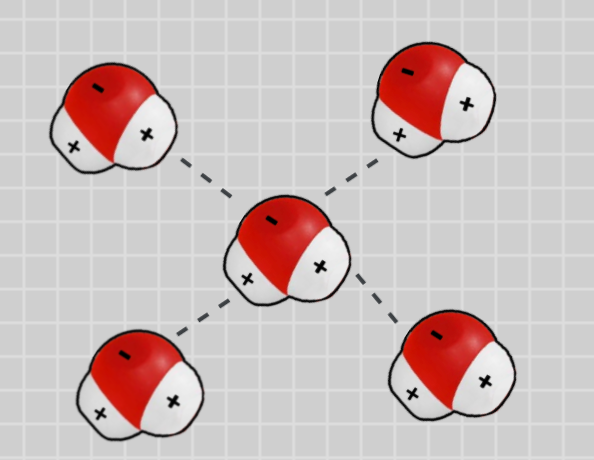
A water molecule is polar because ..........
A water molecule is polar because ..........
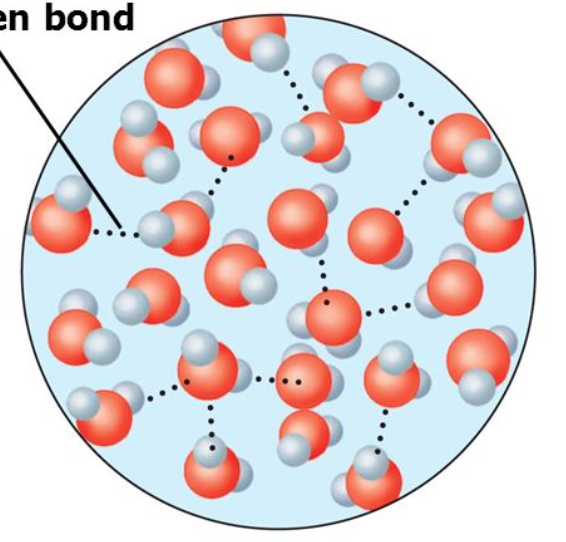
The weak and temporary bond between the positive hydrogen side of a water molecule and the negative side of another molecule (maybe water) is called ...
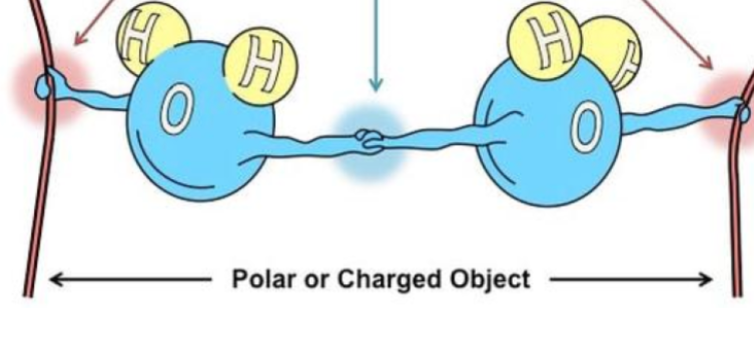
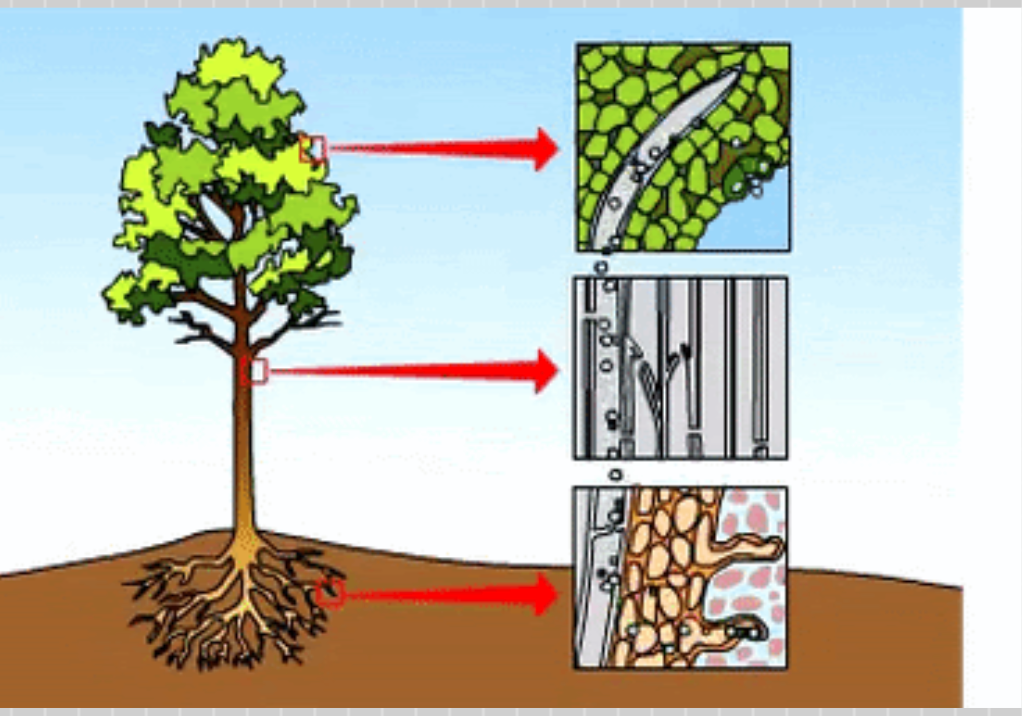
The hydrogen bond between the 2 water molecules is an example of _________________, while the hydrogen bond between a water and another molecules (like the sides of the tube shown in the diagram) is an example of _____________
capillary action
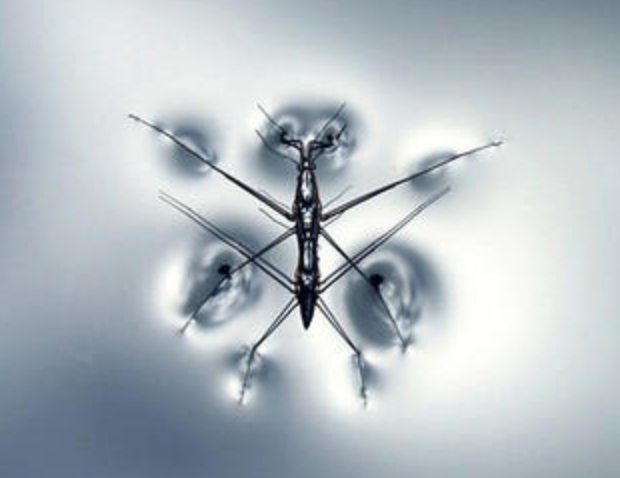
surface tension
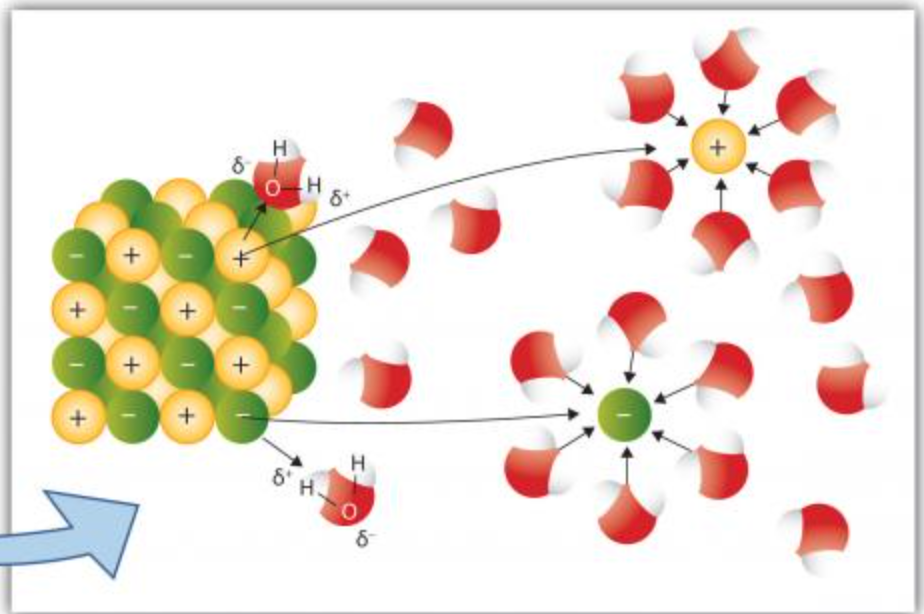
water is a good solvent
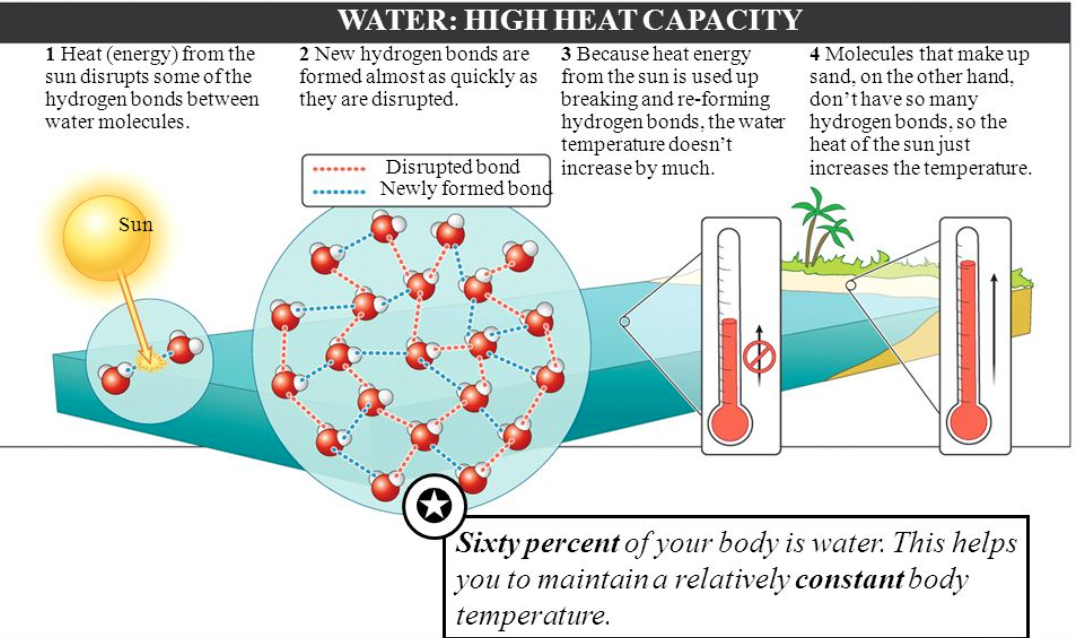
water moderate temperatures (slows down changes in temperature)
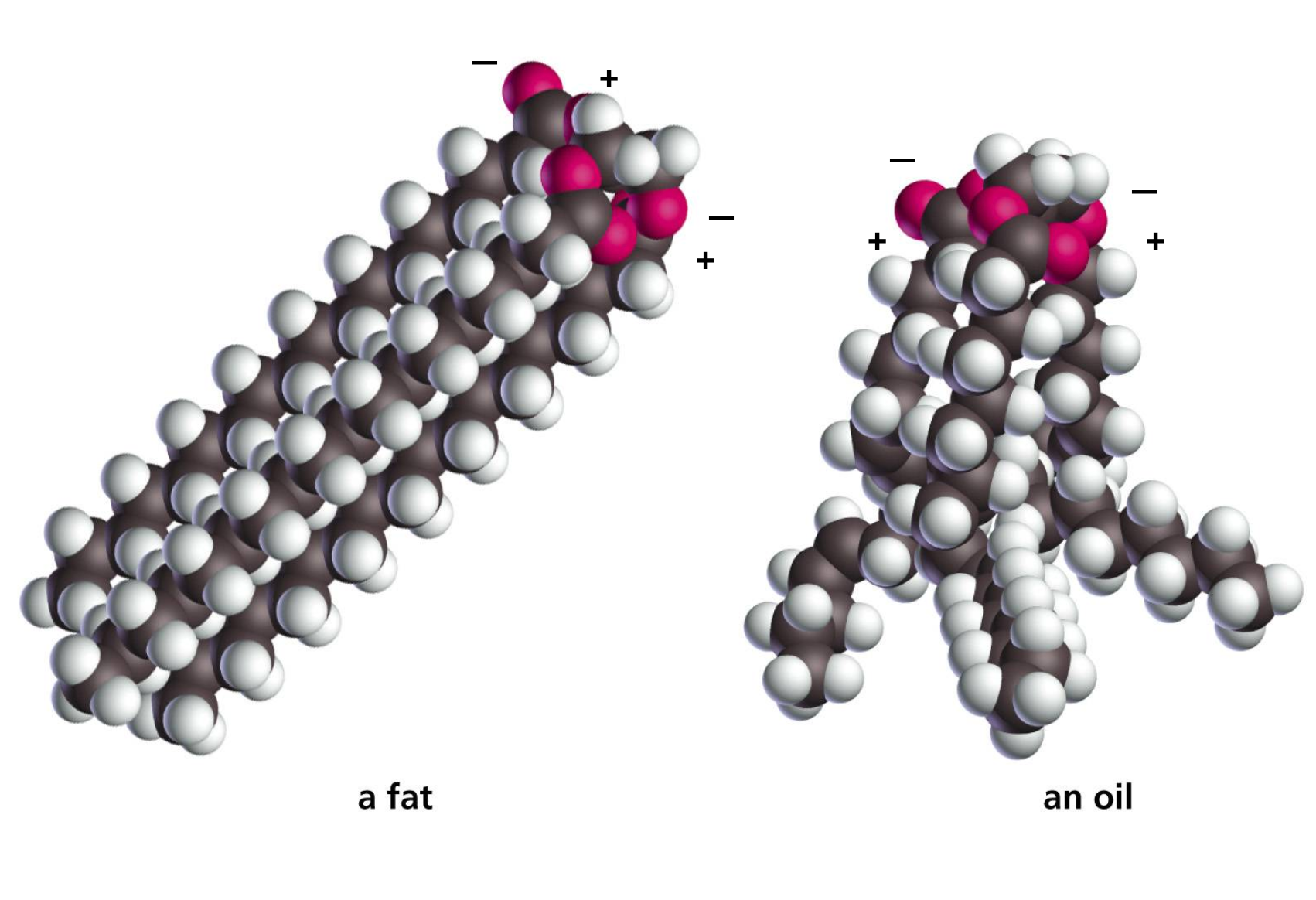
This image shows 2 common types of lipids (fats/oil) which do NO dissolve in water (they are hydrophobic!). The black spheres are carbon, white is hydrogen and red is oxygen. Notice both molecules are mostly 3 long chains of carbons and hydrogen only (no oxygen) with a few positive and negative charges at one end (because of the oxygen)
Pick the best explanation for why lipids do NOT dissolve in water.
Item 1
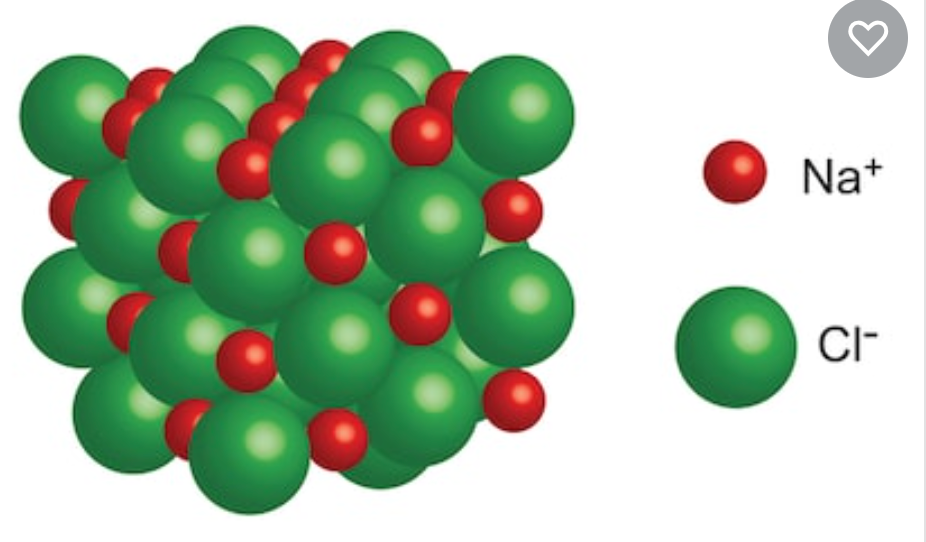
salt
Item 2
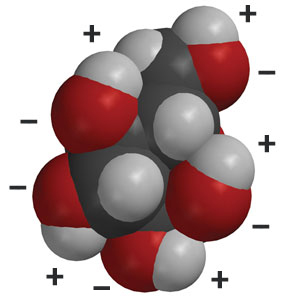
glucose (a sugar)
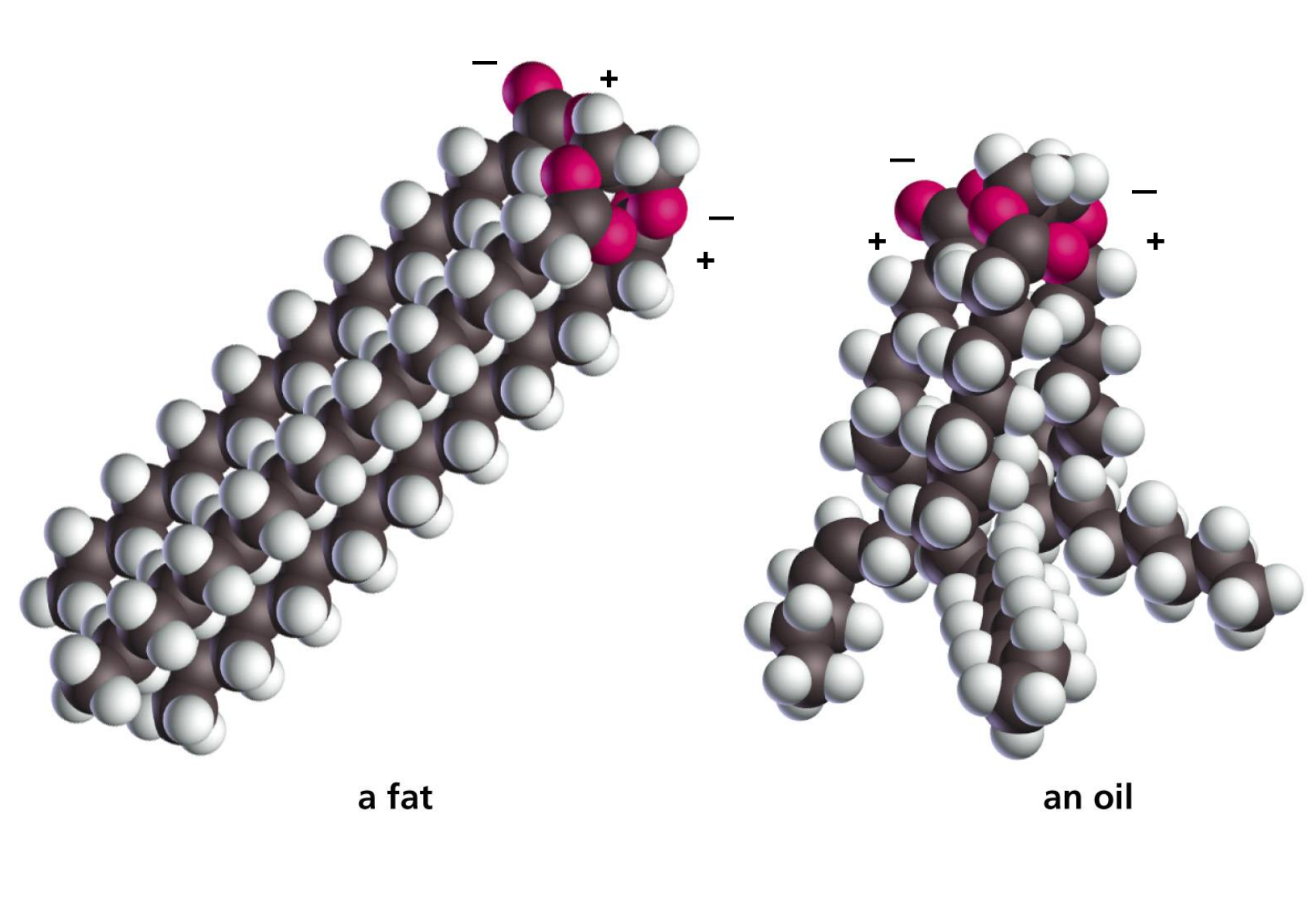
lipids (fats/oils)
Will dissolve in water
Will not dissolve in water
Item 1
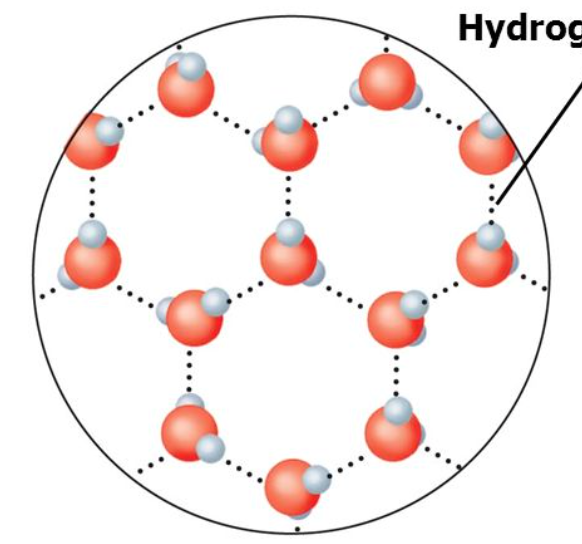
Item 2
ice
liquid water
1. Explain why water is a polar molecule.
2. Explain what a hydrogen bond is and how water being a polar molecule causes hydrogen bonds.