Log in
Sign up for FREE
arrow_back
Library

Climate Feedback Loops (Graded: Crit C)

star
star
star
star
star
Last updated almost 5 years ago
21 questions
0
1
1
1
1
1
1
2
2
1
1
1
1
1
2
1
1
2
1
1
2
Question 1
1.

Feedback loops are amazing science - and they are what make scientists really worried when it comes to global warming. I'm going to ask you to explore two feedback loops connected to climate change by looking at a series of graphs.

As you go, I want you to practice making sense of graphs. Here are some tips to do this quickly:
* Notice: what are axis labels? The x-axis for all these graphs is time. The y-axis (up&down) is different for each.
* Almost of all the data fluctuate up & down. That's normal. So, focus on the overall shape of the line, or the trend Is the data going up or down?
Question 2
2.

Question 3
3.

Question 4
4.

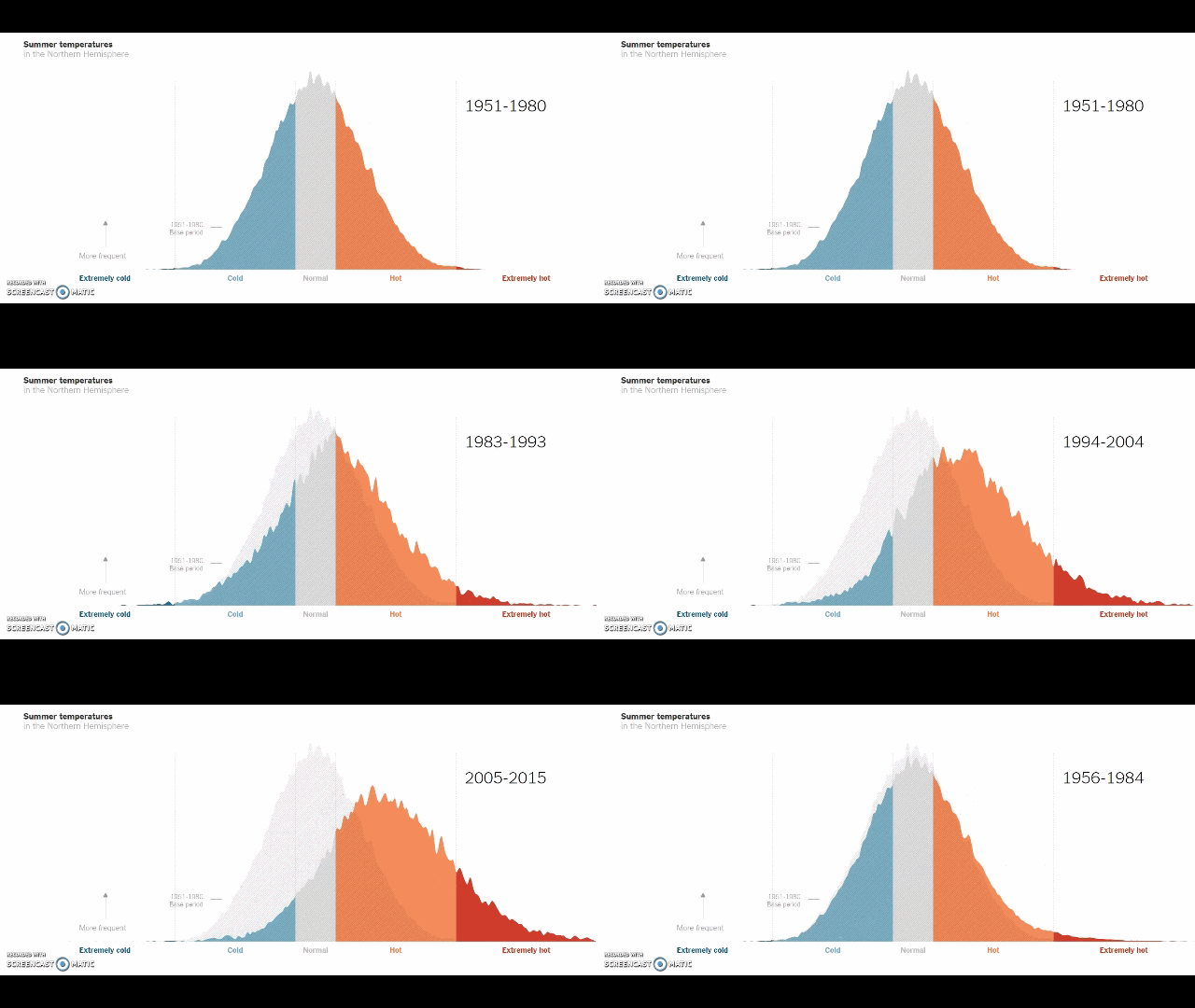
Graph 2. This maps summer temperatures throughout the northern hemisphere over the last 65 years. The y-axis says "more frequent." View it at this link if you need a clearer image.
Source: nytimes.com
Question 5
5.

Question 6
6.

Question 7
7.

Question 8
8.

So, snowpack is getting lower where we live. How might lower snowpack in the mountains affect the number of wildfires in the western US? Why?

Complete this hypothesis: If there is lower snowpack, then....because...

Question 9
9.

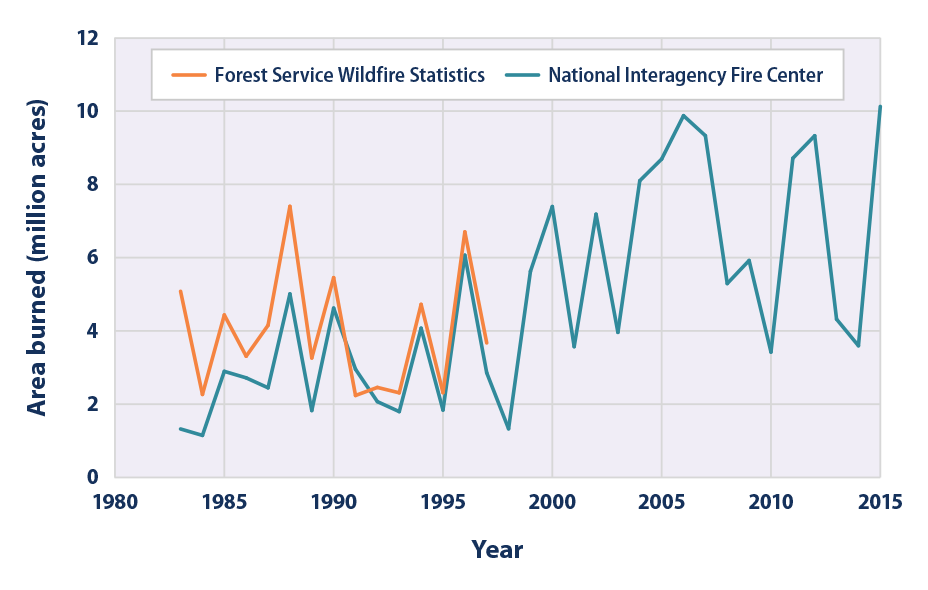
Graph 4. This shows the land area burned each year by wildfires in the western U.S.
Source: https://www.epa.gov/climate-indicators/climate-change-indicators-wildfires

If wildfires are, on average, burning a greater number of trees each year, how will that affect carbon emissions? (Hint: what do trees do for the atmosphere?)

Hypothesis: If wildfires are burning a greater number of acres of forest each year, then....because...

Question 10
10.

Question 11
11.

Question 12
12.

Question 13
13.

Question: How will the rising arctic temperatures impact the amount of sea ice and glaciers in the arctic?

Complete the hypothesis: If arctic temperatures...

Question 14
14.

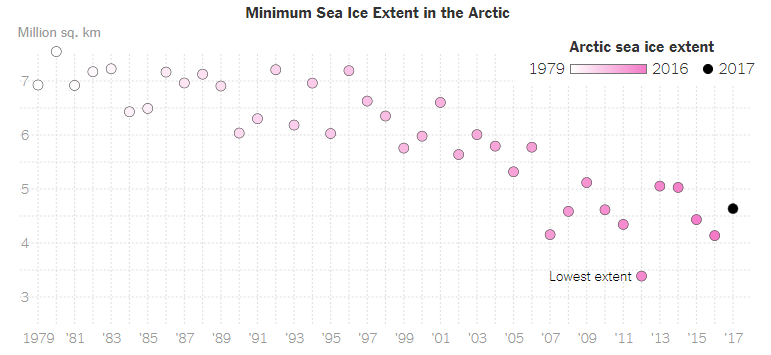
Graph 6. This graph shows the amount of arctic land covered by sea ice over time. (Were you right?)
From 1979-2017, you can see the trend going down. Which year had the lowest amount of sea ice?

Question 15
15.

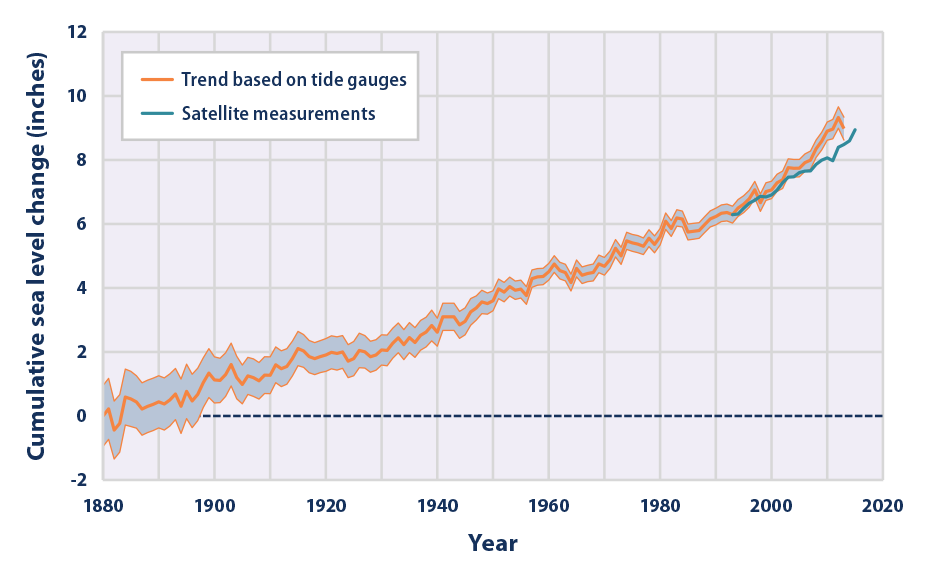
Graph 7. This graph shows the sea level over time. What do you notice?

https://www.epa.gov/climate-indicators/climate-change-indicators-sea-level

Write a hypothesis to explain how this graph might be connected to the the one above (Graph 6). That is, how might the amount of sea ice relate to the sea level? (If...then...because...)

Question 16
16.

Fact: Ice reflects most radiation from the sun back into space. However, ocean water absorbs most of the solar radiation hitting earth.

Question: So, If the ice is melting, how will that impact the temperature of the ocean?

Write your hypothesis. If....

Question 17
17.

Question 18
18.

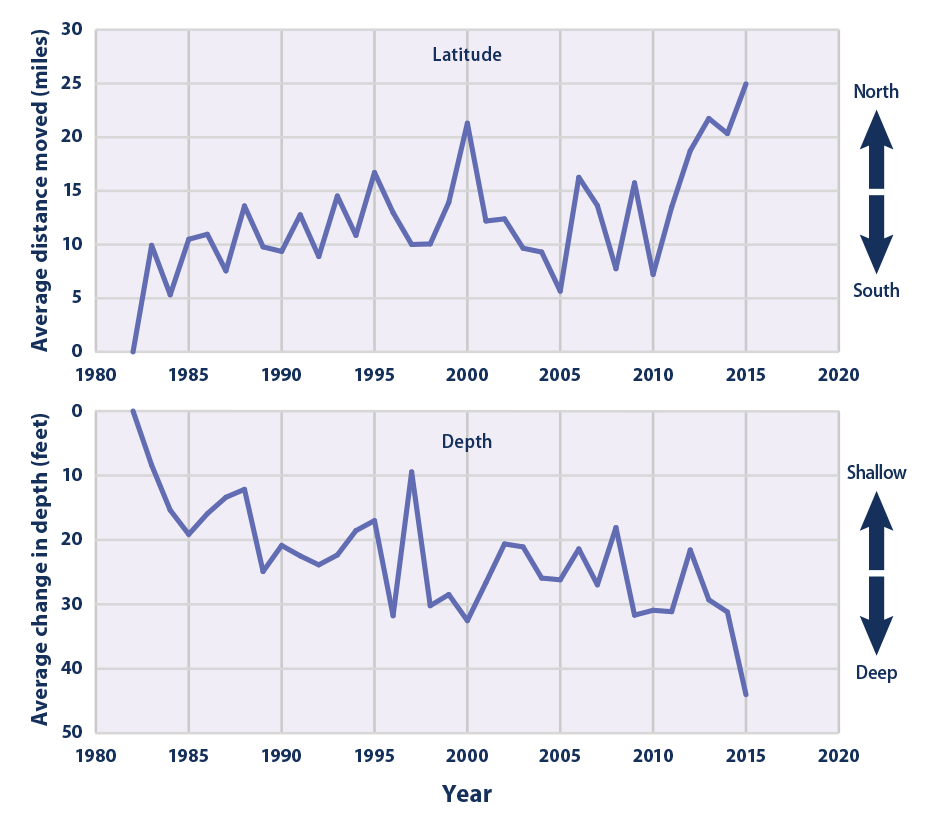
Graph 8. This graph shows where ocean life, like the beluga whale, is spending its time.
Source: https://www.epa.gov/climate-indicators/climate-change-indicators-marine-species-distribution

Make a hypothesis to connect this graph to the last one. If...then...because...

Question 19
19.

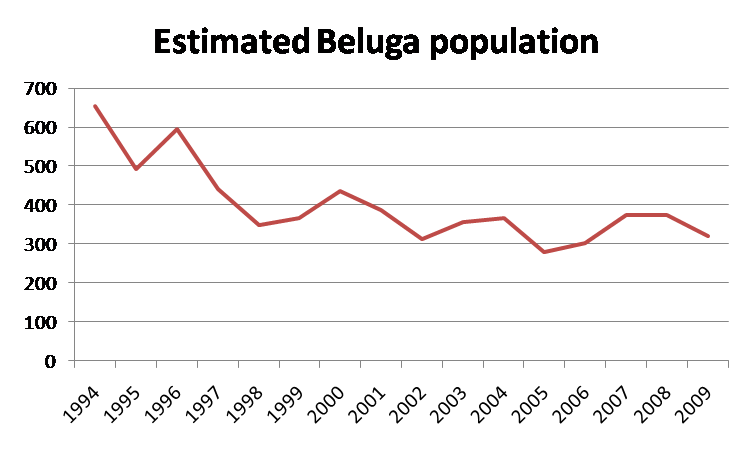
Final graph! Belugas are a species of whale.
Write a specific question you could ask to learn more about how this graph might be connected to climate change. I wonder if...

Question 20
20.

And it's so much more complicated then that! (Optional): Learn more from Bill Nye, the Science Guy...
Question 21
21.

Final conclusion. In 2 sentences, explain: How are feedback loops contributing to climate change?

Systems thinkers look for feedback loops. What's a feedback loop, you ask? Watch the first 2:46 (up until you hear the example about pesticides), then identify if the examples provided were positive or negative.

Plants grow, die, and feed soil for more plants to grow
Removing forests causes erosion, harder to grow new trees, more erosion
Lynx & hares balance each other out
Positive feedback loop (amplifying loops)
Negative feedback loop (balancing loops)
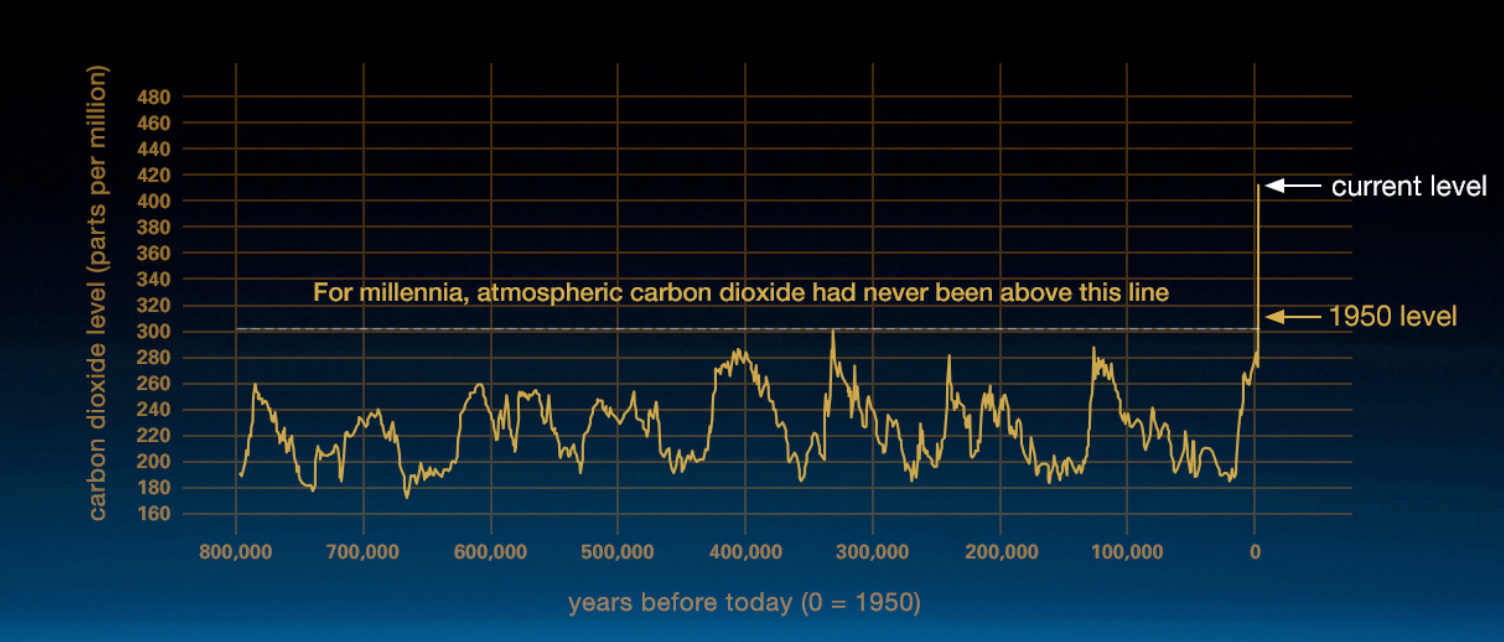
Graph 1. This graph shows carbon emission over the last 800,000 years.
https://climate.nasa.gov/evidence/

Which best describes what's going on?
Carbon dioxide concentration fluctuated up and down for thousands of years before rising sharply around 1950
Carbon dioxide concentration has always fluctuated up and down
Carbon dioxide concentration rises about every 100,000 years, but cannot pass 300 parts per million
Based on the Graph 1, what is our current level of C02 in the atmosphere?
About 410 parts per million
About 300 parts per million
It isn't clear
As we go from one link to the next, I'd like you to make a hypothesis. Remember, that's a scientifically-based guess about how one variable will relate to another variable. It can sound like if this happens to one variable, then this will happen to the other variable.

Question: If carbon dioxide (CO2) emissions continue to rise, what will happen to global temperatures?

Use what you know about the greenhouse effect to select a logical hypothesis for this question.
If C02 emissions continue to rise, then C02 molecules will block solar radiation from entering the atmosphere, causing lower and lower temperatures on Earth.
If C02 emissions continue to rise, then polar bears and other animals may go extinct.
If C02 emissions continue to rise, then C02 molecules will trap more solar radiation in the atmosphere, causing higher and higher temperatures on Earth.
If C02 emissions continue to rise, then the greenhouse effect will protect earth and temperatures will not change.
What does this graph show?
Since 1951, some places are getting significantly colder while others are getting much warmer in the northern hemisphere.
Since 1951, it is becoming more common to experience hot summer weather in the northern hemisphere.
From 1951-2015, glaciers have melted and flattened out significantly in the north.
Okay, it's getting hotter!

Question: If global temperatures are rising, how will that impact the amount of precipitation that falls as snow?

Choose a logical hypothesis: If global temperatures are rising, then...
less precipitation will fall as snow, and the snow will melt more quickly.
less precipitation will fall as rain, causing drought.
more precipitation will fall as snow, increasing the snowpack in the mountains.
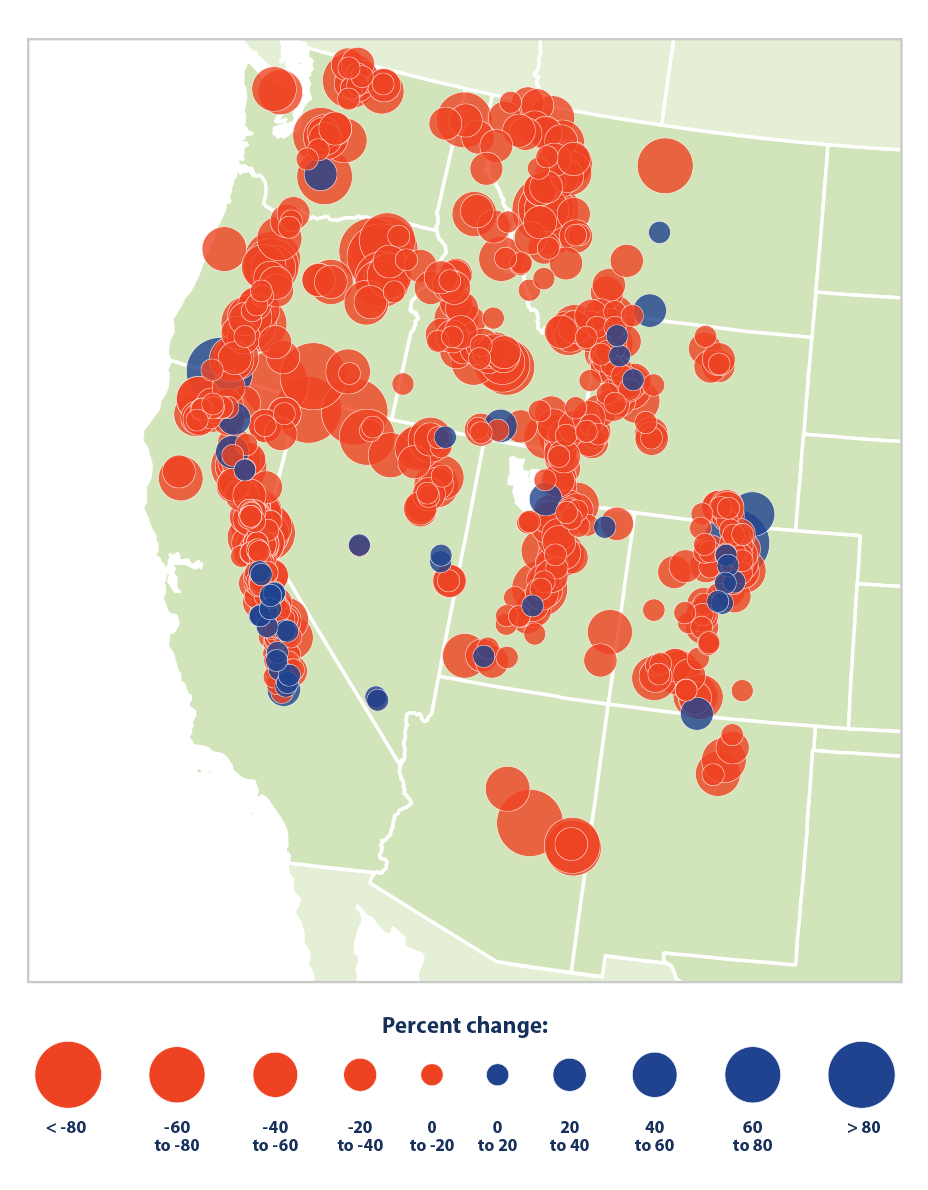
Graph 3. Trends in April Snowpack in the Western United States, 1955–2016
*Snowpack is the built up snow in mountainous areas. It then melts in the spring, providing water to ecosystems through the spring and summer.
Source: https://www.epa.gov/climate-indicators/climate-change-indicators-snowpack

I notice the graph shows a lot more red circles than blue. What does that mean?
The red circles indicate places it is getting drier, and the blue circles are places that are getting wetter
This shows that more places in the west are experiencing lower snowpack than in the past
This shows that global warming may not be happening, because snowpack is rising in some areas
Whew! That's feedback loop #1. Summarize how are wildfires are connected to climate change by filling in the blanks.

As carbon emissions ____ this causes temperatures to ____ which reduces ____ which results in more _____ which leads to ___ carbon emissions!
Rise, rise, snowpack, wildfires, more
Rise, drop, rainfall, C02, more
Fluctuate, change, greenhouse gas, extreme summer weather, less
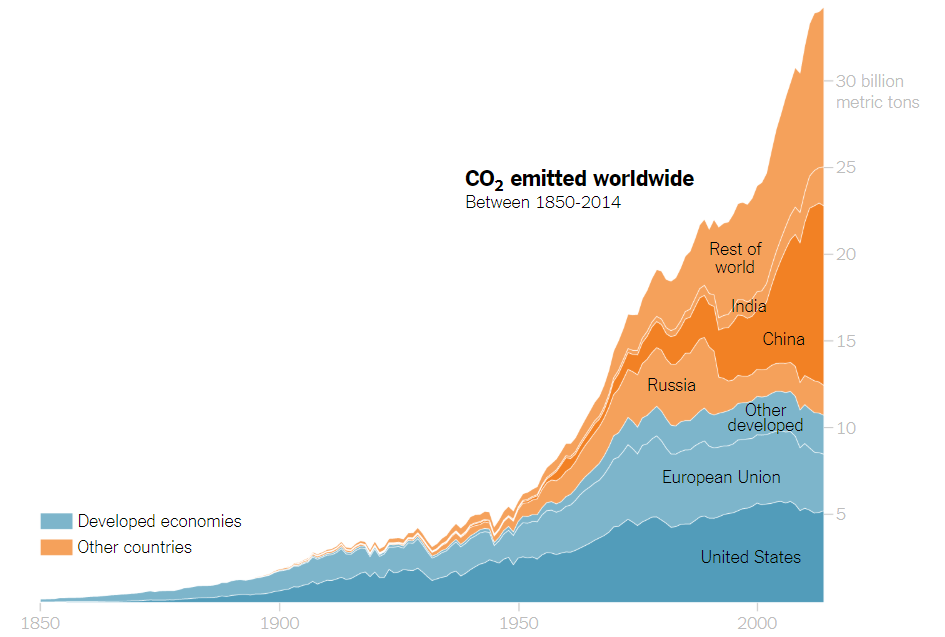
Graph 5. Let's start Feedback Loop #2. Again, this shows carbon emissions over time.

About how much more C02 was emitted by the entire world in 2014 than in 1950?
about twice as much
about 3x as much
about 5x as much
it doesn't show
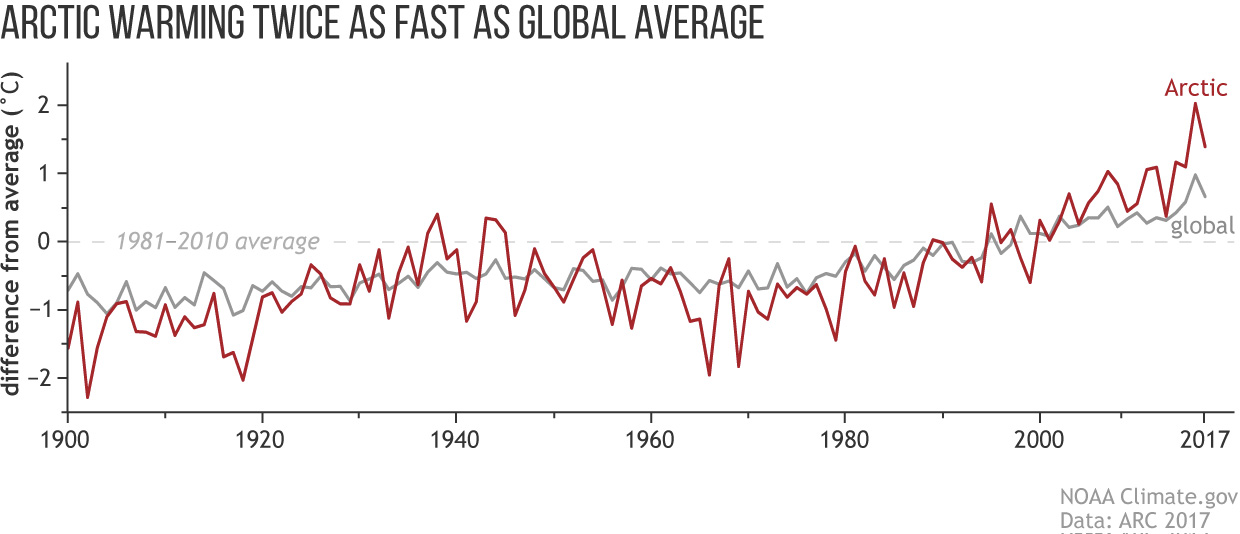
Graph 5. Temperatures in the arctic (the snowy north of the globe)

Based on this graph, how are rising C02 emissions affecting the arctic? Choose the best description:
While global temperatures are dropping since 1950, arctic temperatures are climbing rapidly.
While global temperatures have climbed about 1 degree Celcius since 1900, arctic temperatures have climbed over 2 degrees Celcius.
When it comes to global warming, the arctic is doing better than the global average.
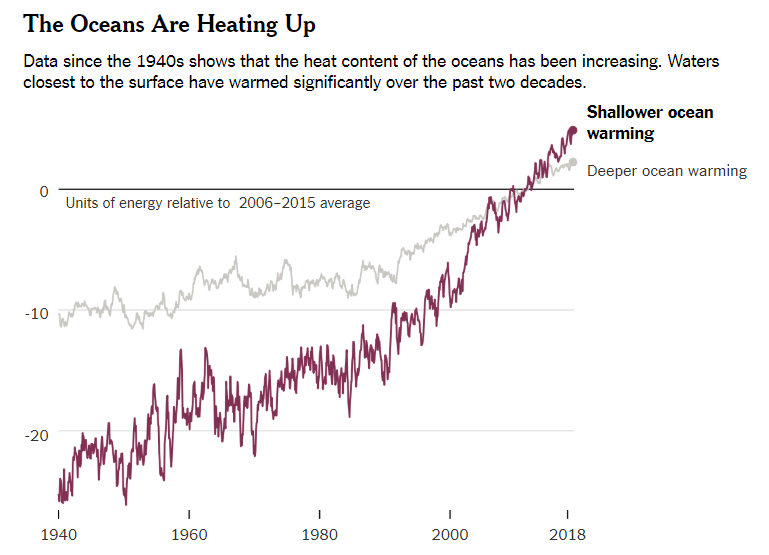
Graph 8. This shows the changes in ocean temperature at 2 depths.
https://www.nytimes.com/2019/02/28/learning/teach-about-climate-change-with-these-24-new-york-times-graphs.html

Which is warming more, the shallow ocean or deep ocean?
Shallow
Deep
That's feedback loop #2. Summarize how carbon emissions are connected to sea life.
When carbon emissions rise, temperatures ___, which causes sea ice to ___, which ___ the ocean level and further ___ the ocean's temperature. (P.S. This _____ ocean animal populations.)
drop, increase, lowers, changes, eliminates
rise, melt, decreases, lowers, feeds
rise, melt, raises, raises, disrupts