11.17_6thSci_TR 3.1
star
star
star
star
star
Last updated over 3 years ago
19 Nsɛmmisa
Objectives and Slides
Part 1
0
Part 2
0
0
1
1
1
Part 3
Part 4
1
Finished Early?
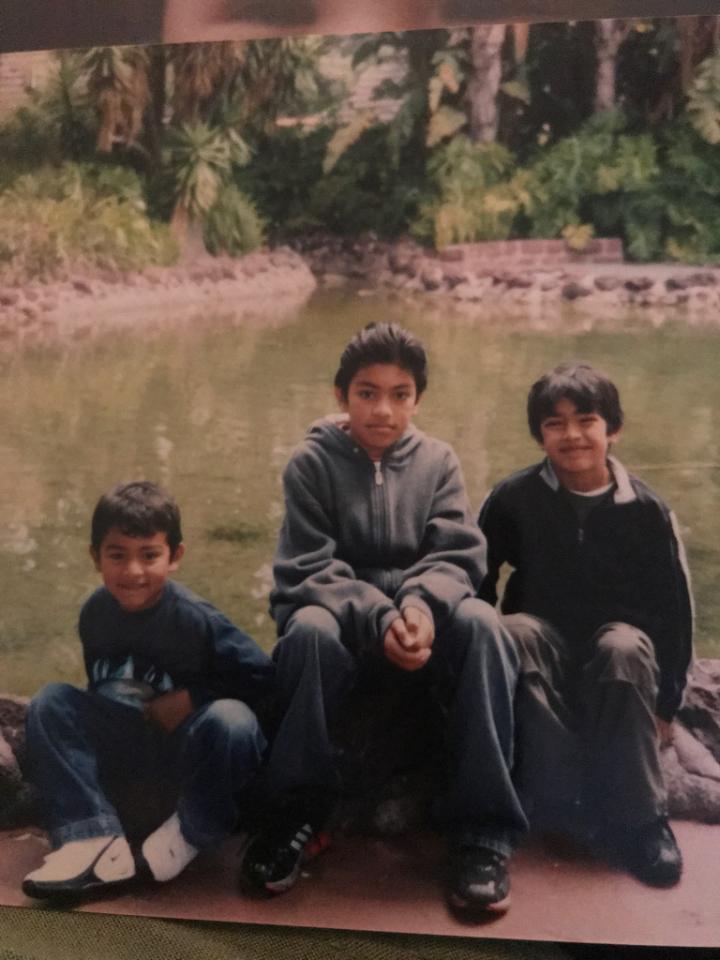
The picture above shows three brothers. They share the same genes but they have different traits.
Predict: how is it possible that they have different traits even if they have the same parents?
Welcome back! As a reminder, we are trying to help Bay Medical Company determine how to breed spiders that will produce offspring with the trait for medium silk flexibility to use for medical purposes. We need to determine why Darwin’s bark spiders’ offspring have different traits for silk flexibility.
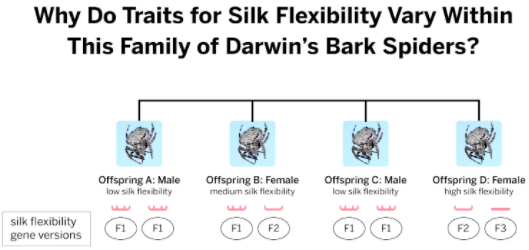
Here is the updated model that you worked on in the last lesson; as you can see, we now know the correct gene versions for each of the offspring:
Predict:
Why do the Darwin’s bark spider offspring have different gene combinations even though they have the same parents?
Explain your answer choice for question #2.
Sentence Starter:
I think claim _ answers the Chapter 3 question because...
Review: A spider was found to have the F1F2 gene version. Based on what you know about gene versions and their numbers answer the following question:
Which of the following is true about the F1 and F2 gene versions?
Review: From the image above, which of the following gene versions are homozygous?
Review: From the image above, which of the following gene versions are heterozygous?
Find a quote that answers this question:
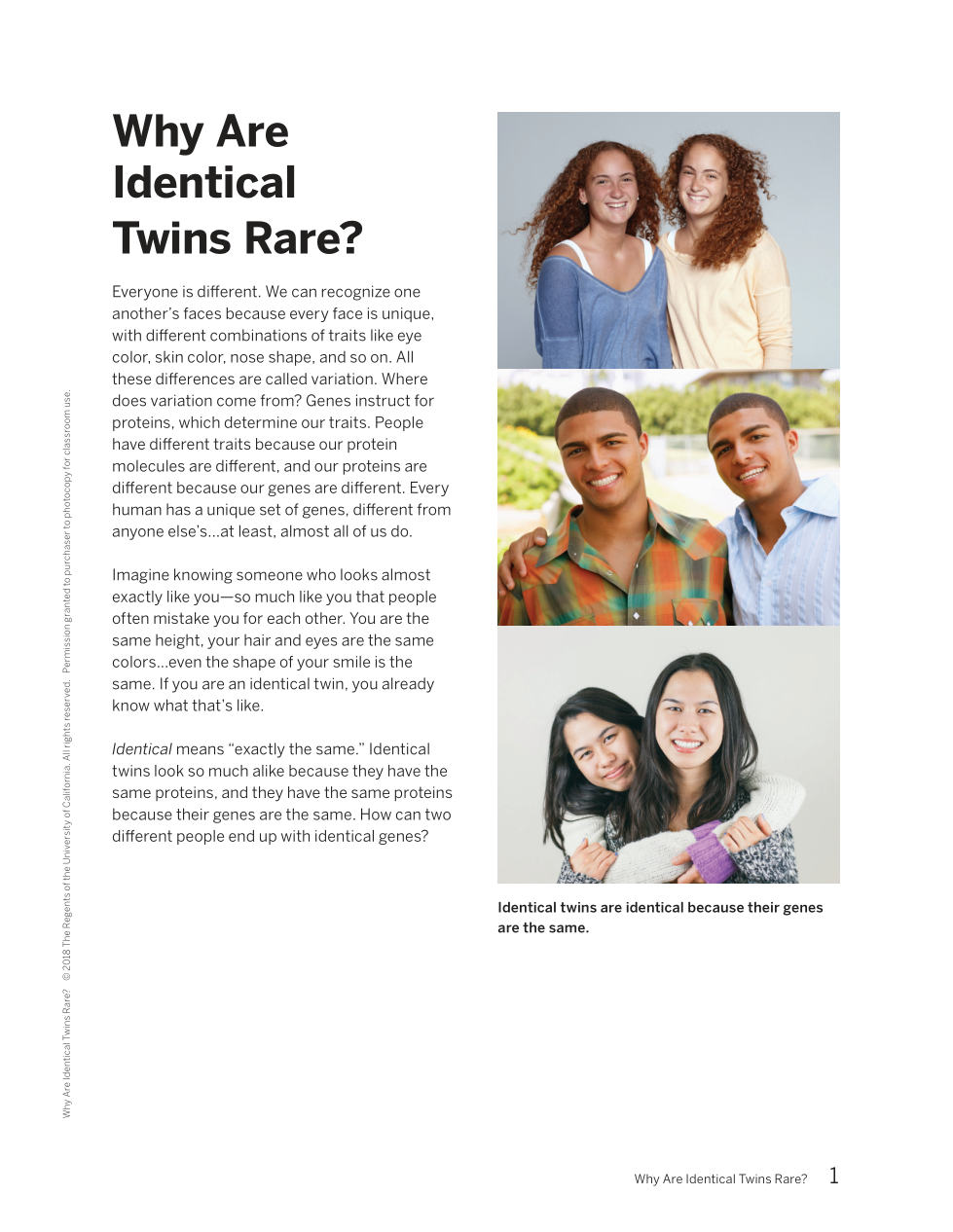
Why do people have different traits?
Why do identical twins look alike?
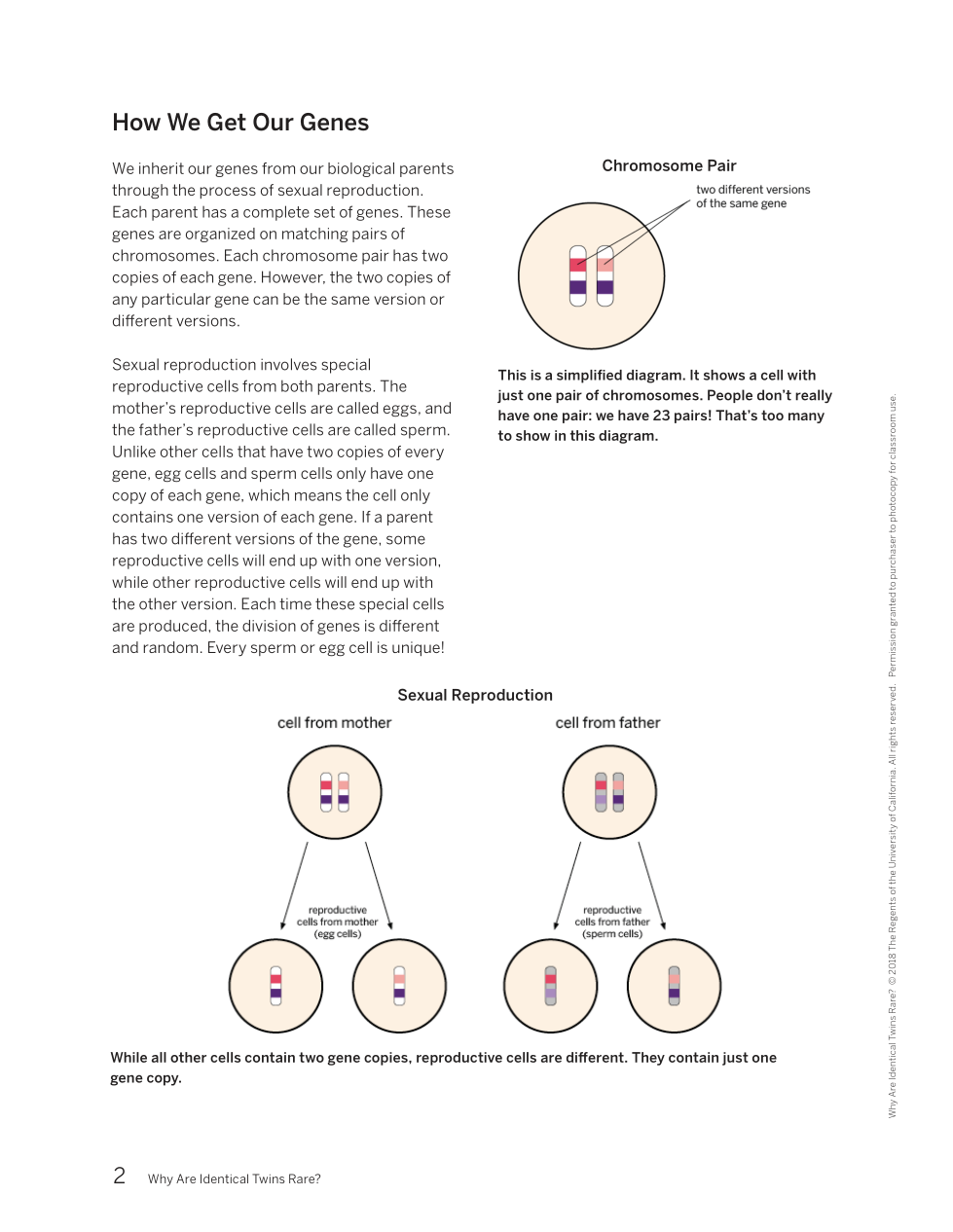
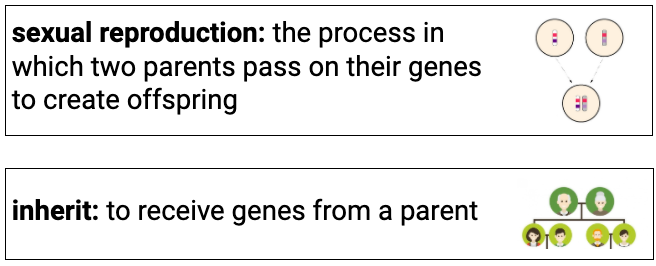
We inherit our genes from our biological parents through the process of
Match the type of reproductive cells that are from the mother and from the father.
| Draggable item | arrow_right_alt | Corresponding Item |
|---|---|---|
From mother | arrow_right_alt | sperm cells |
From father | arrow_right_alt | egg cells |

Find a quote that answers this question:
What is fertilization?
True or false:
Fertilization happens when sperm and egg cells come together.

How many times does fertilization happen in fraternal twins?
Identify:
What is the difference between fraternal twins and identical twins?
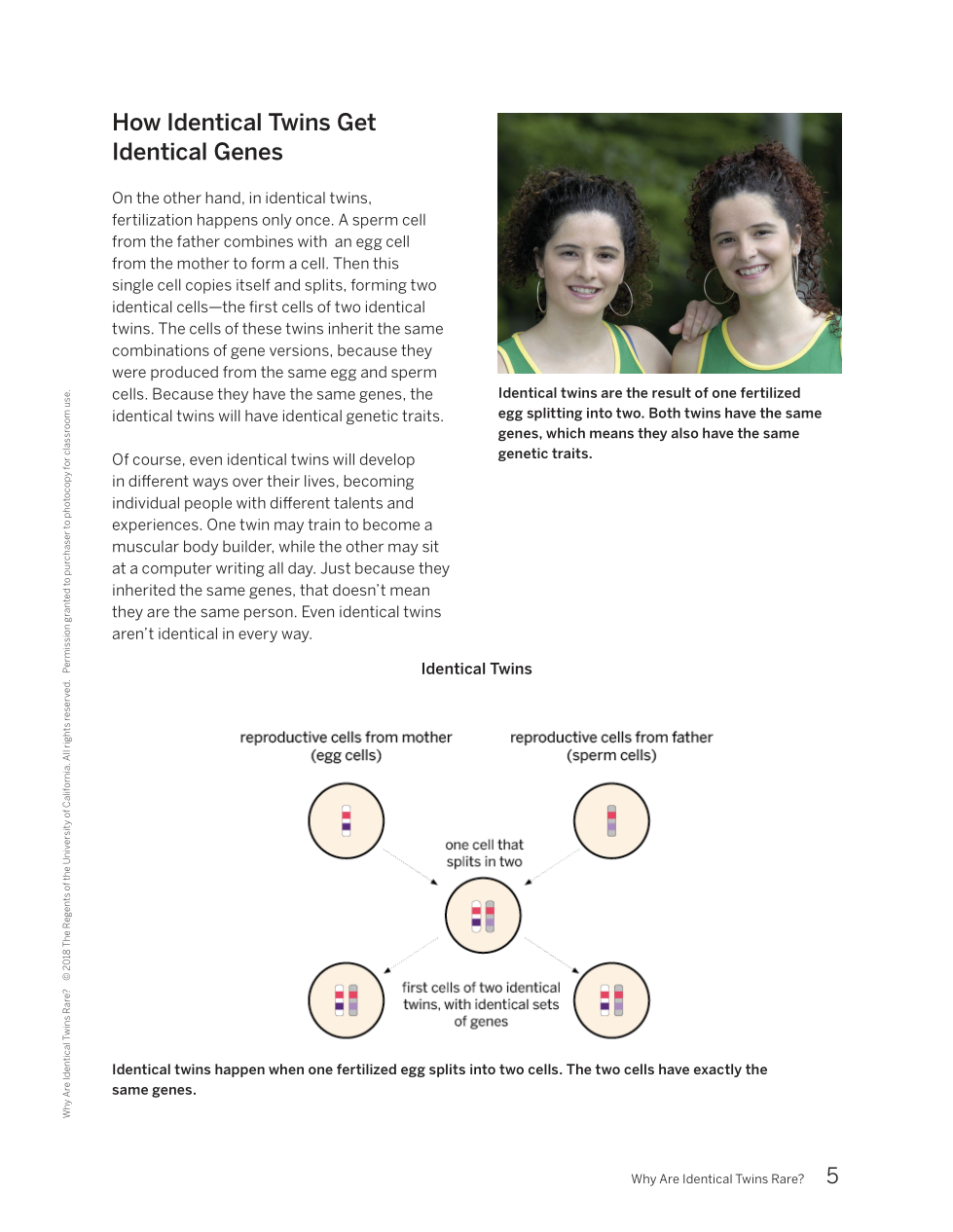
How many times does fertilization happen in identical twins?
Most cells have ____ copies of each gene, but reproductive cells like sperm or eggs have ____.

Reflect:
Angel looks very similar to his other 2 siblings. They all have the same parents.
Why do they look similar, but not identical?
Identical means EXACTLY the same.
True or False:
While most cells have two copies of every gene, sperm cells and egg cells only have one copy of each gene.
How does genetic variation happen?