#11 Matching and Analysis
star
star
star
star
star
Last updated about 5 years ago
9 Nsɛmmisa

4

1
1
1
1
1
1
1
10
Please MATCH the photo with the correct caption
| Draggable item | arrow_right_alt | Corresponding Item |
|---|---|---|
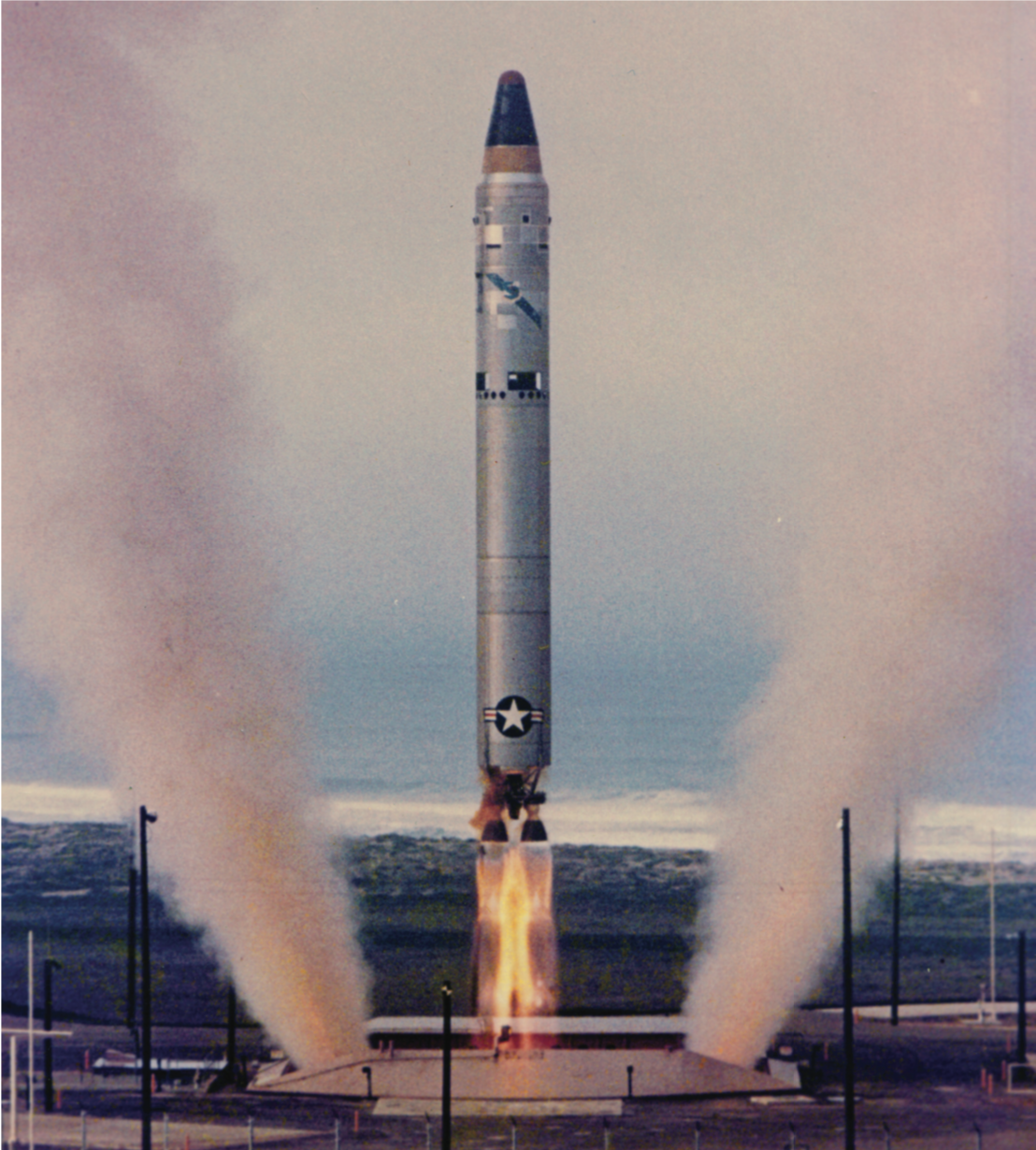
Besides a Space Race, the Cold War also involved an arms race, during which the United States and the USSR worked to develop the most advanced weapons. By 1953, both countries had created intercontinental ballistic missiles that could attack each other from great distances. | arrow_right_alt |
|
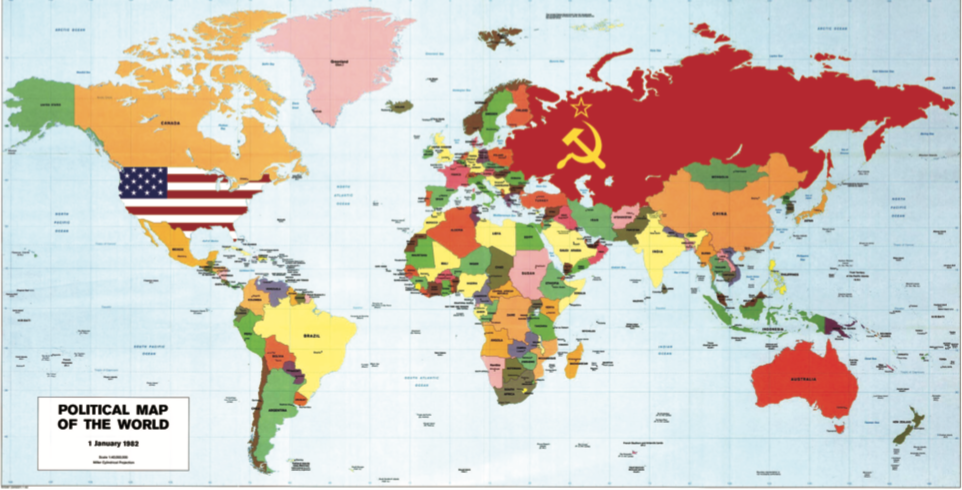
After World War II, former allies the United States and the Soviet Union entered into a Cold War. Tension between the two countries was caused by a number of issues: Americans feared that Russia’s Communist political system would allow another dictator to come to power, and Russia was resentful that the USA delayed in entering WWII while millions of Russians died. | arrow_right_alt |
|
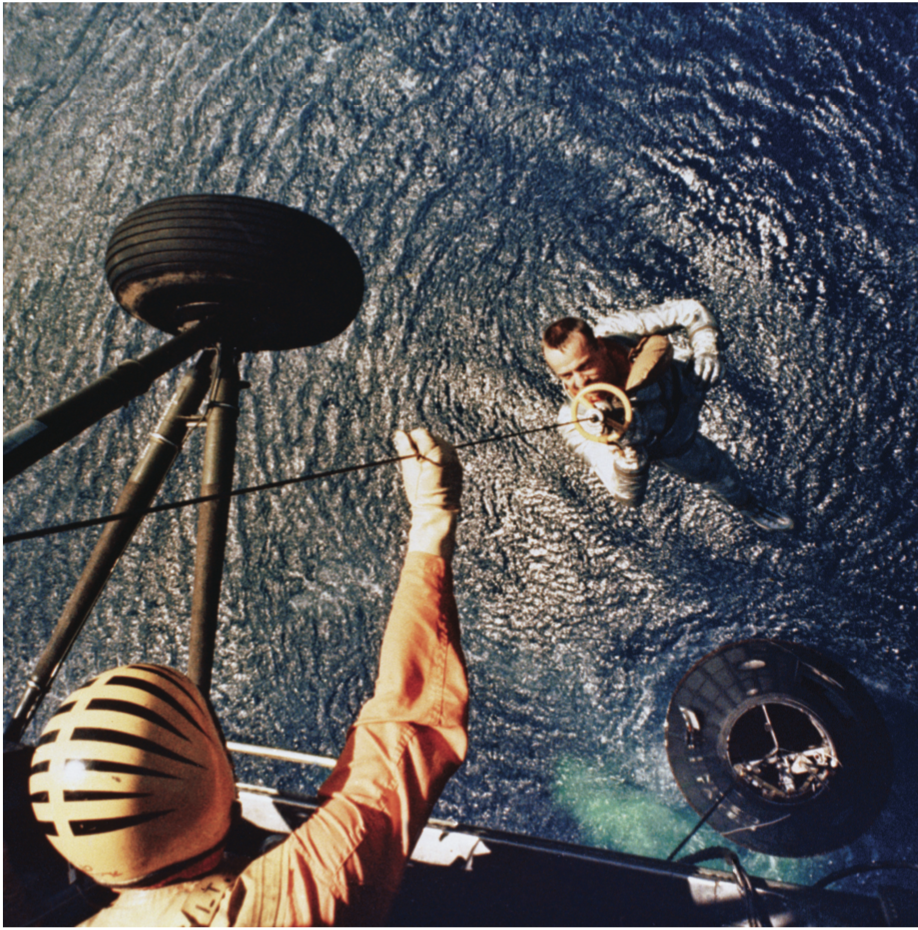
Alan Shepard, the first American to enter outer space, is recovered from his space capsule, Freedom 7, on May 5, 1961. | arrow_right_alt |
|
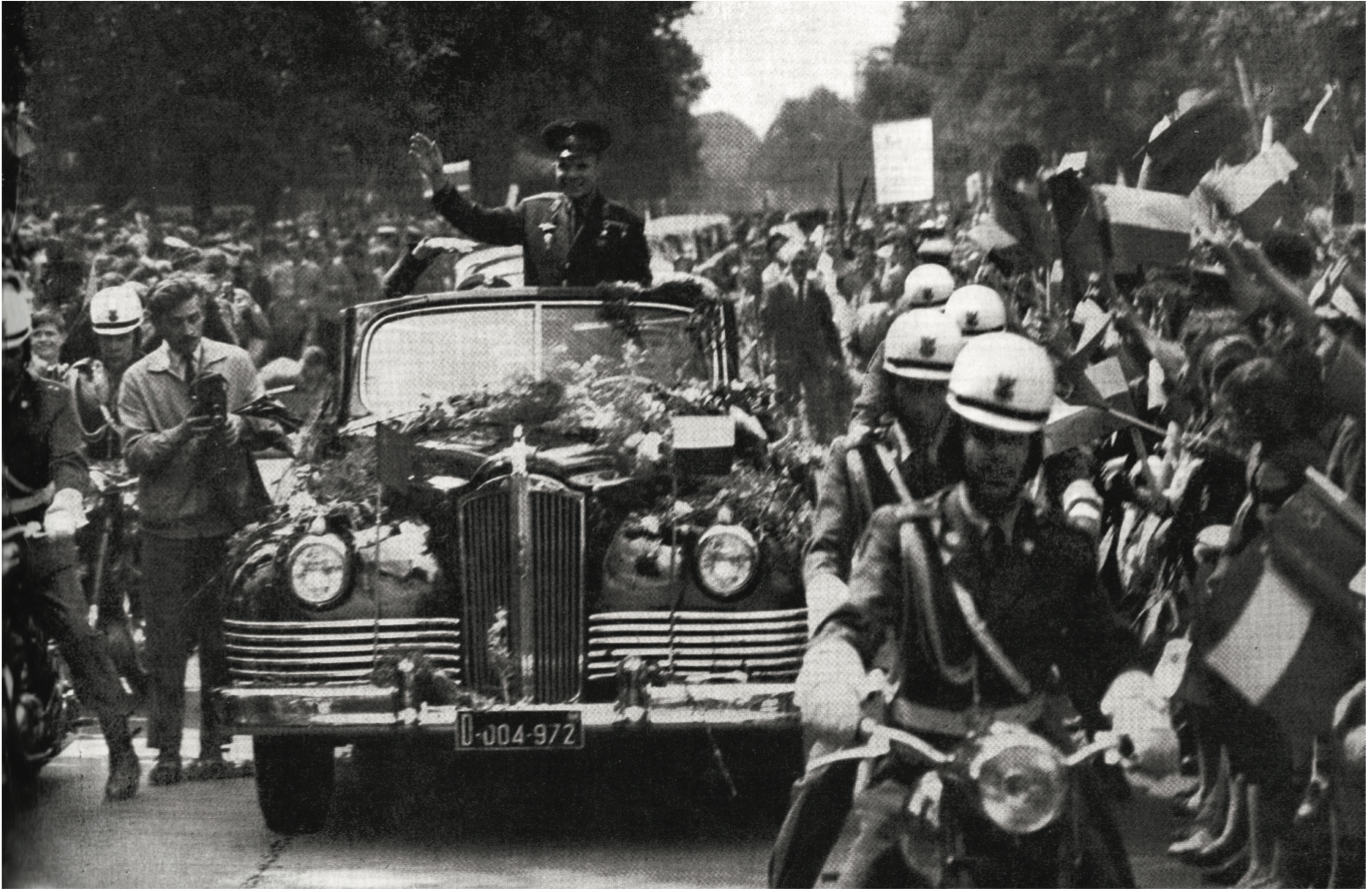
Soviet cosmonaut Yuri Gargarin became an international celebrity for being the first human being to successfully travel to outer space on April 12, 1961. | arrow_right_alt |
|
Background information:
In the 1950s and 1960s, Russia was part of a large and powerful country called the Union of Soviet Socialist Republics. The USSR had a communist government, with only one party in power. The United States, on the other hand, had a democratic government where people could vote for different parties.The United States and the USSR were known as the world’s superpowers.
Just a few years before, in 1945, the world had emerged from World War II, which claimed the lives of millions of people—both in the military and civilians. Though they were allies during WWII, the United States and USSR grew suspicious of each other after the war, and tensions quickly arose between the two superpowers.
Text: "This Is How the Space Race Changed the Great Power Rivalry Forever"
The Space Race between the United States and the Union of Soviet Socialist Republics post World War II was a tipping point in the history of mankind. This superpower race intensified the Cold War rivalry because for the first time mankind was looking to compete in the arena of space. Dominance over space and the race to outdo one another became a matter of pride for both the United States and USSR.
The competition to conquer space was so huge that a new benchmark was set by one of the two superpowers almost every year throughout 1950s and 1960s. There were many “firsts” during the Space Race. The first intercontinental ballistic missile in 1957, the first artificial satellite (Sputnik 1) in 1957, the first dog in orbit (sent by Sputnik 2) in 1957, the first solar-powered satellite, the first communication satellite, etc.
The Space Race didn’t just leave an impact on the area of space research, it left a wider impact in the field of technology. The technological superiority required for the dominance of space was deemed a necessity for national security, and it was symbolic of ideological superiority. The Space Race spawned pioneering efforts to launch artificial satellites. It prompted competitive countries to send unmanned space probes to the Moon, Venus and Mars. It also made possible human spaceflight in low Earth orbit and to the Moon.
The zeal the United States and USSR had to outperform one another proved quite beneficial to the progress of science. The work culture of the two superpowers was poles apart yet both were trying to be better than the other in order to become the best in the world. While the USSR had a highly centralized setup that had an impact on the source of investments in their space program, the United States, on the other hand, got private players to invest in their space program. NASA, the premiere space research agency, was also built in 1958 during the Space Race to counter the early success in USSR in outer space.
The Space Race started with the USSR launching Sputnik 1 in 1957, which created a furor worldwide. The governments and masses were excited to see mankind taking another leap towards progress. When the human race ventured into space, it was a “paradigm shift” moment. Neil Armstrong landing on the Moon is still regarded as one of the breakpoints in history and his words, “That’s one small step for man, one giant leap for mankind,” are now one of the most quoted phrases in literature.
In a May 1961 speech to Congress, President John F. Kennedy presented his views on the Space Race when he said, “These are extraordinary times and we face an extraordinary challenge. Our strength as well as our convictions have imposed upon this nation the role of leader in freedom’s cause.”
“If we are to win the battle that is now going on around the world between freedom and tyranny, the dramatic achievements in space which occurred in recent weeks should have made clear to us all, as did the Sputnik in 1957, the impact of this adventure on the minds of men everywhere, who are attempting to make a determination of which road they should take. . . . Now it is time to take longer strides—time for a great new American enterprise— time for this nation to take a clearly leading role in space achievement, which in many ways may hold the key to our future on Earth,” he added.
The space programs of both the superpowers were not just for civilian purposes; it was as much about the military- space program. Through this, the idea was to fight the battle with the rival by displaying power without actually having to fight an actual war. At that point, the United Nations had to step in to ensure that outer space didn’t become a battleground for the superpowers.
That is when the Outer Space Treaty came into the picture. The Outer Space Treaty represents the basic legal framework of international-space law. Formally known as the Treaty on Principles Governing the Activities of States in the Exploration and Use of Outer Space, including the Moon and Other Celestial Bodies, the treaty bars states party to the treaty from placing weapons of mass destruction in orbit of Earth, installing them on the Moon or any other celestial body, or otherwise stationing them in outer space.
It exclusively limits the use of the Moon and other celestial bodies to peaceful purposes and expressly prohibits their use for testing weapons of any kind, conducting military maneuvers, or establishing military bases, installations and fortifications. Soviets were reluctant to sign this treaty because, in their opinion, the treaty would restrict their dominance over the United States in the Space Race. They later signed the treaty in 1967 when it was opened for signatures. To date, more than one hundred nations have become signatories to the treaty.
The Space Race didn’t have an end date and in many ways the race still continues. But the “space rivalry” ended between the United States and USSR in 1975, when the first multinational human-crewed mission went to space under the Apollo-Soyuz joint-test mission. In that mission, three U.S. astronauts and two Soviet cosmonauts became part of the first joint U.S.-Soviet space flight.
TheSpaceRaceleftalegacyinthefieldofspaceresearch worldwide. As the pioneers of space missions, both the United States and USSR helped their allies build theirspace missions through the training of scientists and engineers, the transferring of technology, and by allowing other researchers to visit their space laboratories. That way, both superpowers could learn and improve their knowledge and skills related to space research.
The Indian space mission was in its very nascent stage when the Space Race was at its peak. The Indian space program owes its development and expansion to the aid and assistance of both the United States and the USSR because Indian space scientists and engineers were sent to train in both those countries. As a nonaligned country, India maintained a delicate balance between keeping good relations with both the superpowers, especially in the arena of space cooperation. As a result, the Indian Space Research Organization went on to become one of the best space research institutions in the world.
In conclusion, the Space Race is one of the most iconic moments in the history of mankind. It is quite difficult to assess its full impact in the area of space research and technology. One thing is for sure though—if there had been no Space Race, then surely the world of space research and space missions would be quite different from what it is today.
Paragraph 1:
The Space Race between the United States and the Union of Soviet Socialist Republics post World War II was a tipping point in the history of mankind. This superpower race intensified the Cold War rivalry because for the first time mankind was looking to compete in the arena of space. Dominance over space and the race to outdo one another became a matter of pride for both the United States and USSR.
Key Vocabulary - write the definition for...
tipping point:
Key Vocabulary - write the definition for...
Cold War:
What does this final sentence of the paragraph tell the reader about space and the Cold War?
Final sentence = "Dominance over space and the race to outdo one another became a matter of pride for both the United States and USSR."
Paragraphs 2 and 3:
2. The competition to conquer space was so huge that a new benchmark was set by one of the two superpowers almost every year throughout 1950s and 1960s. There were many “firsts” during the Space Race. The first intercontinental ballistic missile in 1957, the first artificial satellite (Sputnik 1) in 1957, the first dog in orbit (sent by Sputnik 2) in 1957, the first solar-powered satellite, the first communication satellite, etc.
3. The Space Race didn’t just leave an impact on the area of space research, it left a wider impact in the field of technology. The technological superiority required for the dominance of space was deemed a necessity for national security, and it was symbolic of ideological superiority. The Space Race spawned pioneering efforts to launchartificial satellites. It prompted competitive countries to send unmanned space probes to the Moon, Venus and Mars. It also made possible human spaceflight in low Earth orbit and to the Moon.
Key Vocabulary - write the definition for...
intercontinental:
Key Vocabulary - write the definition for...
national security:
What connection do these paragraphs make between the Space Race, technology, and national security?
Paragraph 4:
The zeal the United States and USSR had to outperform one another proved quite beneficial to the progress of science. The work culture of the two superpowers was poles apart yet both were trying to be better than the other in order to become the best in the world. While the USSR had a highly centralized setup that had an impact on the source of investments in their space program, the United States, on the other hand, got private players to invest in their space program. NASA, the premiere space research agency, was also built in 1958 during the Space Race to counter the early success in USSR in outer space.
Key Vocabulary - write the definition for...
zeal:
Directions:
Please complete this task ON YOUR OWN.
Answer in complete sentences.
Answers should be NO shorter than 5 sentences
What is the author’s purpose for writing this article?
What words or phrases indicate that purpose?