1
1
1
1
1
1
Read the article below. You can also watch the videos of Mrs. Berryman reading the seven article pages and follow along with her for the answers to those pages on the video. If you would like to print the article out you can using this link.
Click on the video below if you would like to read the first page of the article with me, and follow along as I answer the questions 1-6 from page 1.
Click on the video below if you would like to read the second page of the article with me, and follow along as I answer the questions 7-12 from page 2.
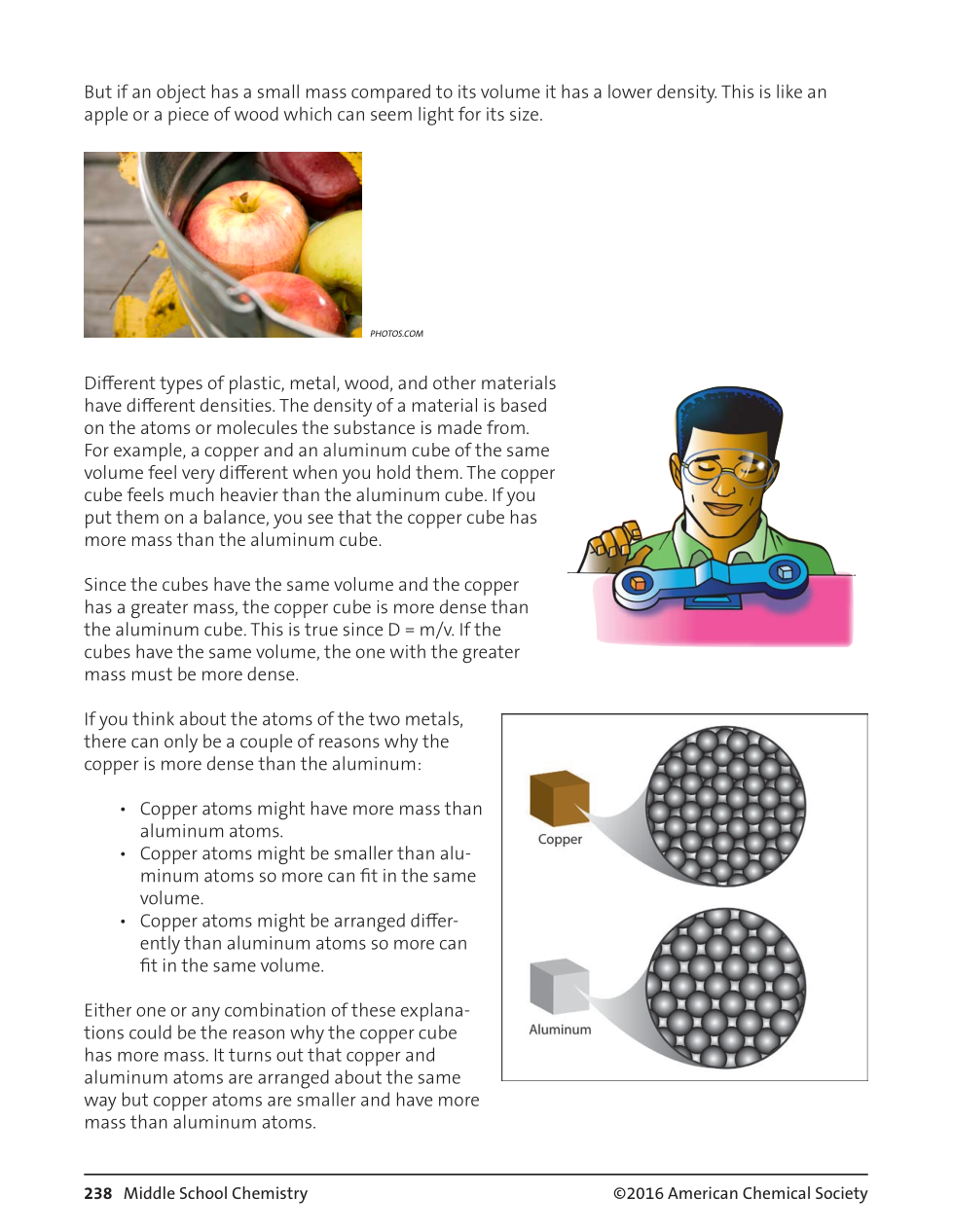
Click on the video below if you would like to read the third page of the article with me, and follow along as I answer the questions 13-15 from page 3.
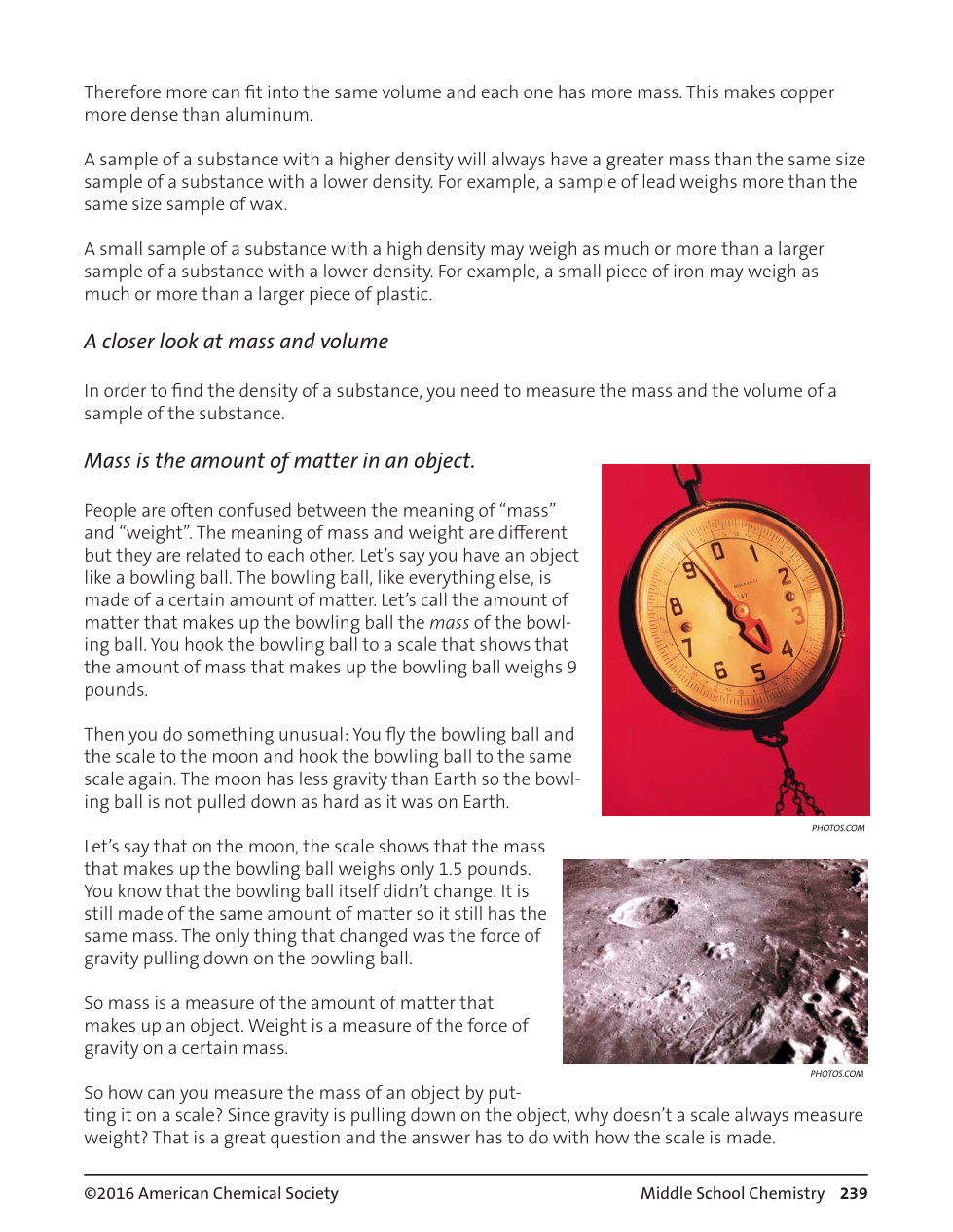
A sample of a substance with a higher density will always have a _______ mass than the same size sample of a substance with a lower density.
Click on the video below if you would like to read the fourth page of the article with me, and follow along as I answer the questions 16-19 from page 4.
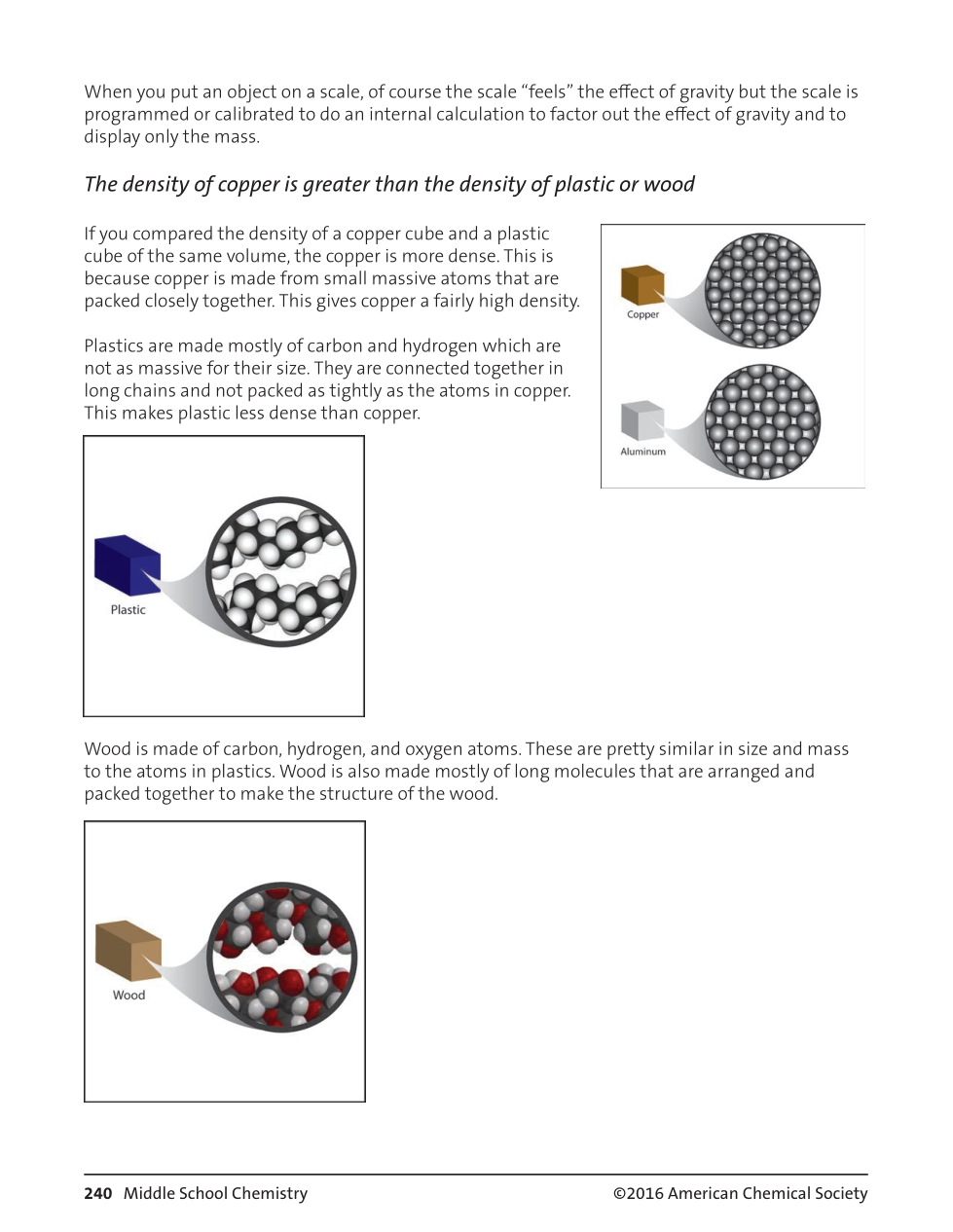
Why doesn't scale always measure weight, how is it that a scale is able to measure mass (the amount of matter in an object)?
Click on the video below if you would like to read the fifth page of the article with me, and follow along as I answer the questions 20-22 from page 5.
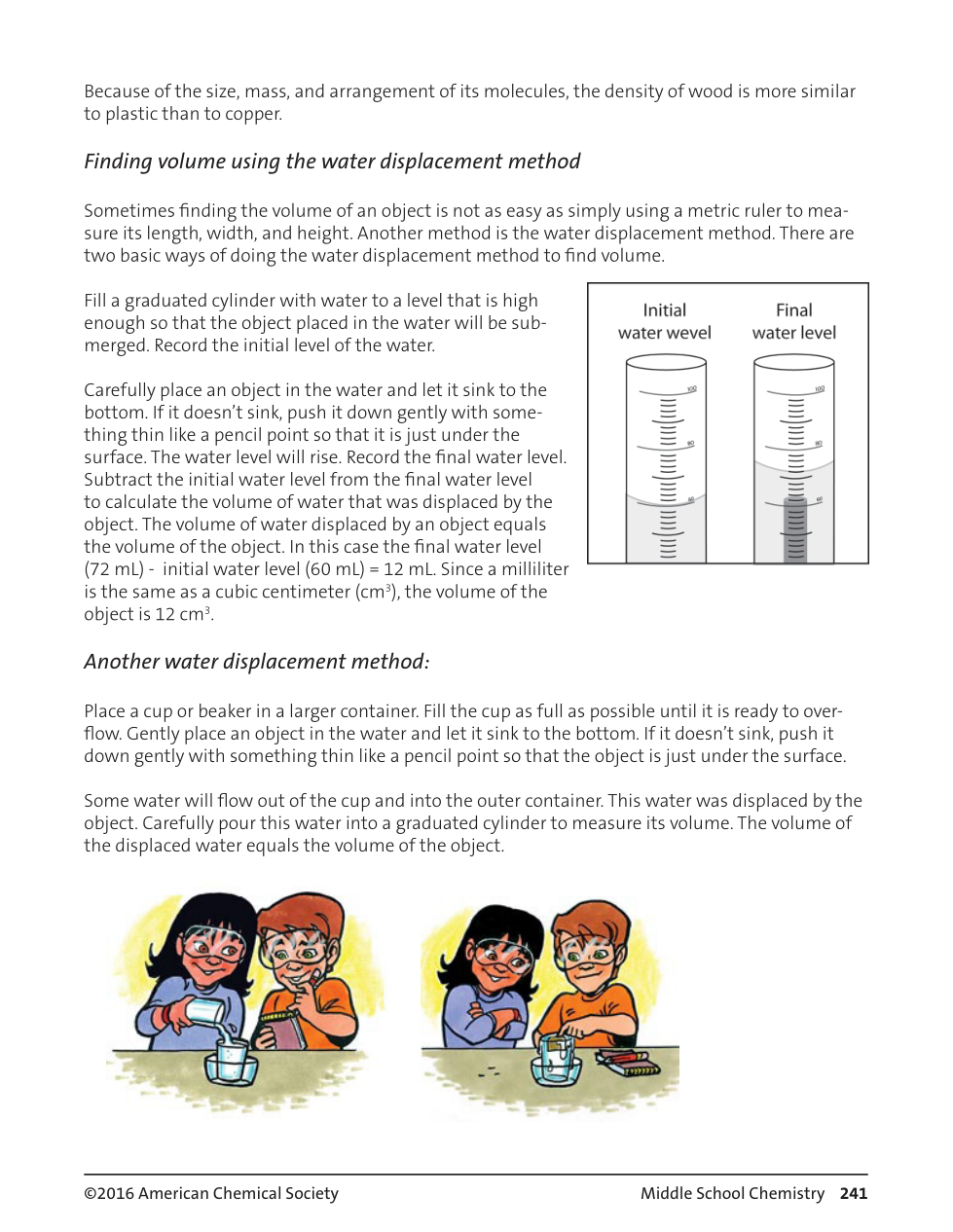
What is a method that we can use to find the volume of an irregular shaped object that is not easily measured with a ruler or other device?
Click on the video below if you would like to read the sixth page of the article with me, and follow along as I answer the questions 23-26 from page 6.
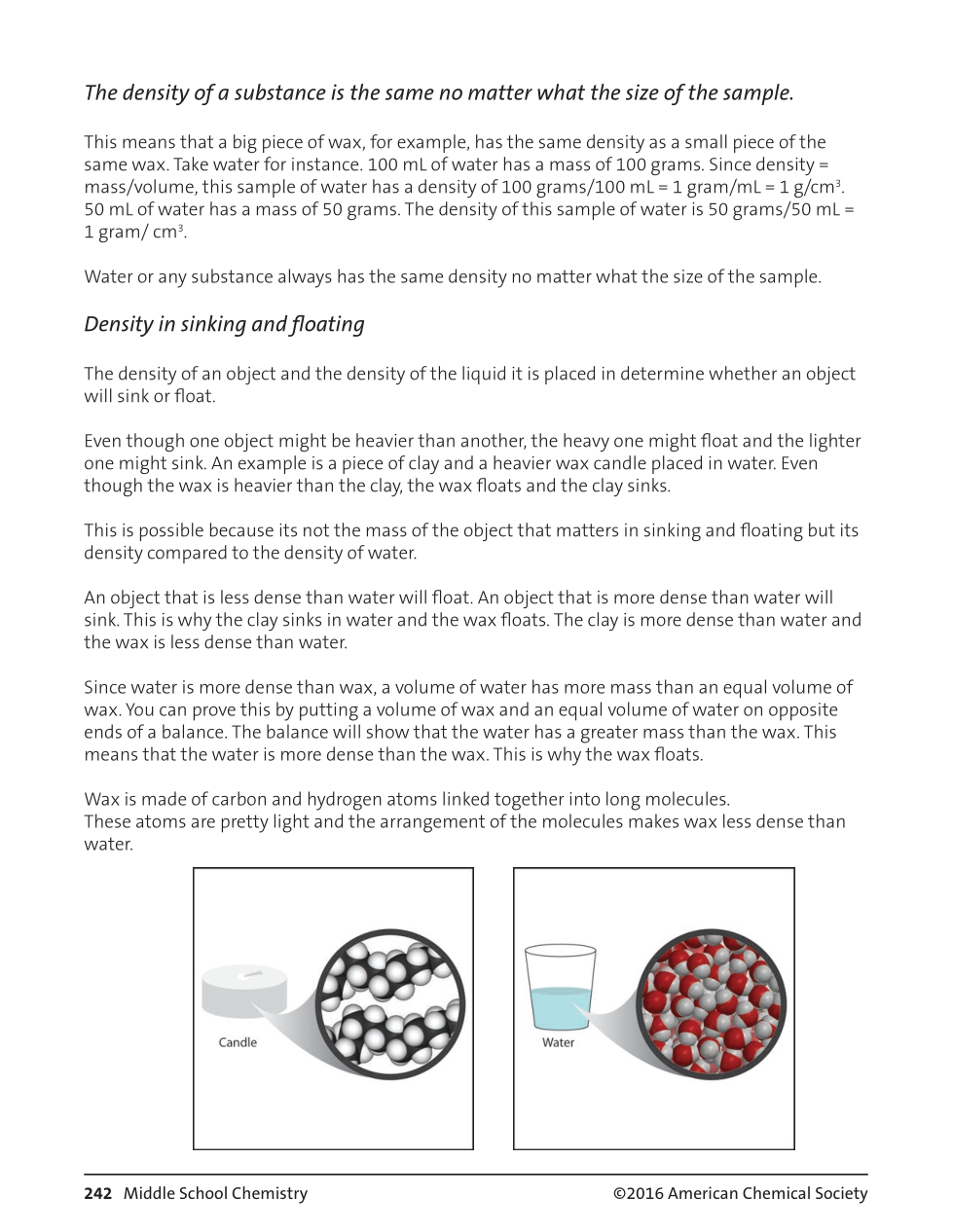
The density of a substance is the __________ no matter what the size of the sample.
Click on the video below if you would like to read the seventh page of the article with me, and follow along as I answer the questions 27-30 from page 7.
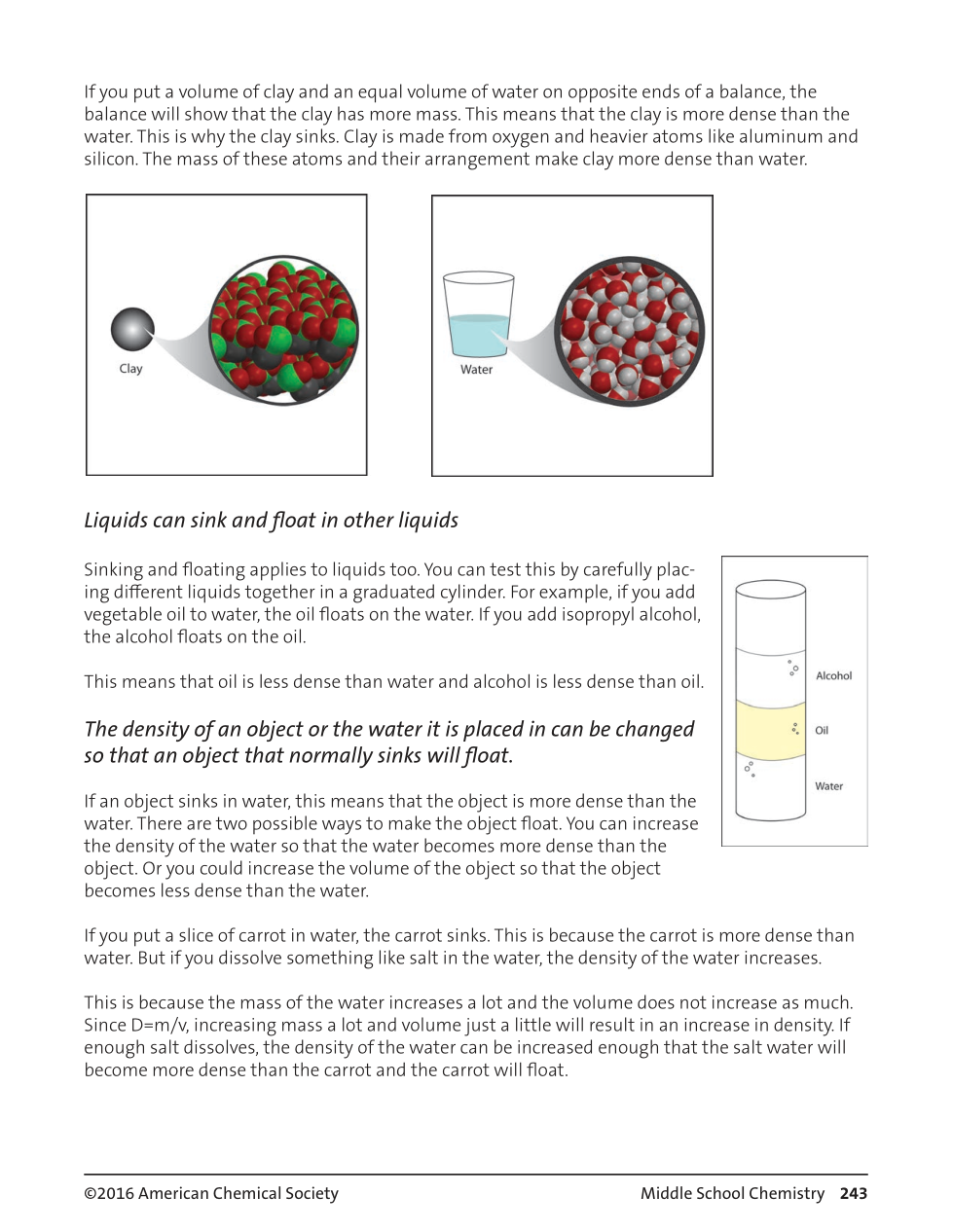
Clay is more dense than water because....
The density of an object depends on its _______ and _______.
The mass of an object is the amount of ___________ in the object.
The volume is the amount of _______ that the object takes up in three dimensions.
Density = ????
If something has a large mass compared to its volume it would have a ______________ density.
What example do they give of an object with high density?
If an object has a small mass compared to its volume it has a _____________ density.
What example did they give of an object with a lower density?
The density of a material is based on________________________________?
The copper and aluminum cubes are the same size (volume), but different masses. Which cube is more dense?
What are some possible reasons why the copper cube is more dense?
As it turns out, which of the above options is true for copper and aluminum atoms?
A small sample of a substance with a high density may weigh as much or more than a larger substance with a ________ density.
Select all statements below that are true:
A copper cube the same size as a plastic and wood cube is _________ dense than those cubes.
True or False: Atoms in a copper cube are more tightly packed together than the carbon and hydrogen atoms that make up the plastic cube. This makes the copper cube more dense than the plastic cube.
Wood is made of the following elements/atoms?
What is the formula you use for volume displacement?
The initial volume of the water in a graduated cylinder is 60 mL. If you put an irregular shaped solid object in a graduated cylinder to find its volume, and the final volume of the water + the solid is 72 mL, that means the volume of the object is _______.
(volume of the solid= final volume- initial volume)
The example they gave to explain that the density of an object is the same no matter its size is:
Why is it possible for the heavier wax candle to float and the lighter clay to sink?
An object that is ________ dense than water will float in the water.
In a density column, the liquids that settle on the bottom of the density column are ___________ than the liquids on the top.
Increasing mass a lot, and the volume just a little, will result in an _________ in density.
In the example given, if enough salt dissolves in the water, then the density of the water will ________________ enough to be more dense than the carrot.