
| Draggable item | arrow_right_alt | Corresponding Item |
|---|---|---|
New Kingdom | arrow_right_alt | a period of order and stability which lasted about 1750 BC. |
Trade routes | arrow_right_alt | the period during which Egypt reached the height of its power and glory. |
Middle Kingdom | arrow_right_alt | Ruler who worked to increase Egyptian trade. |
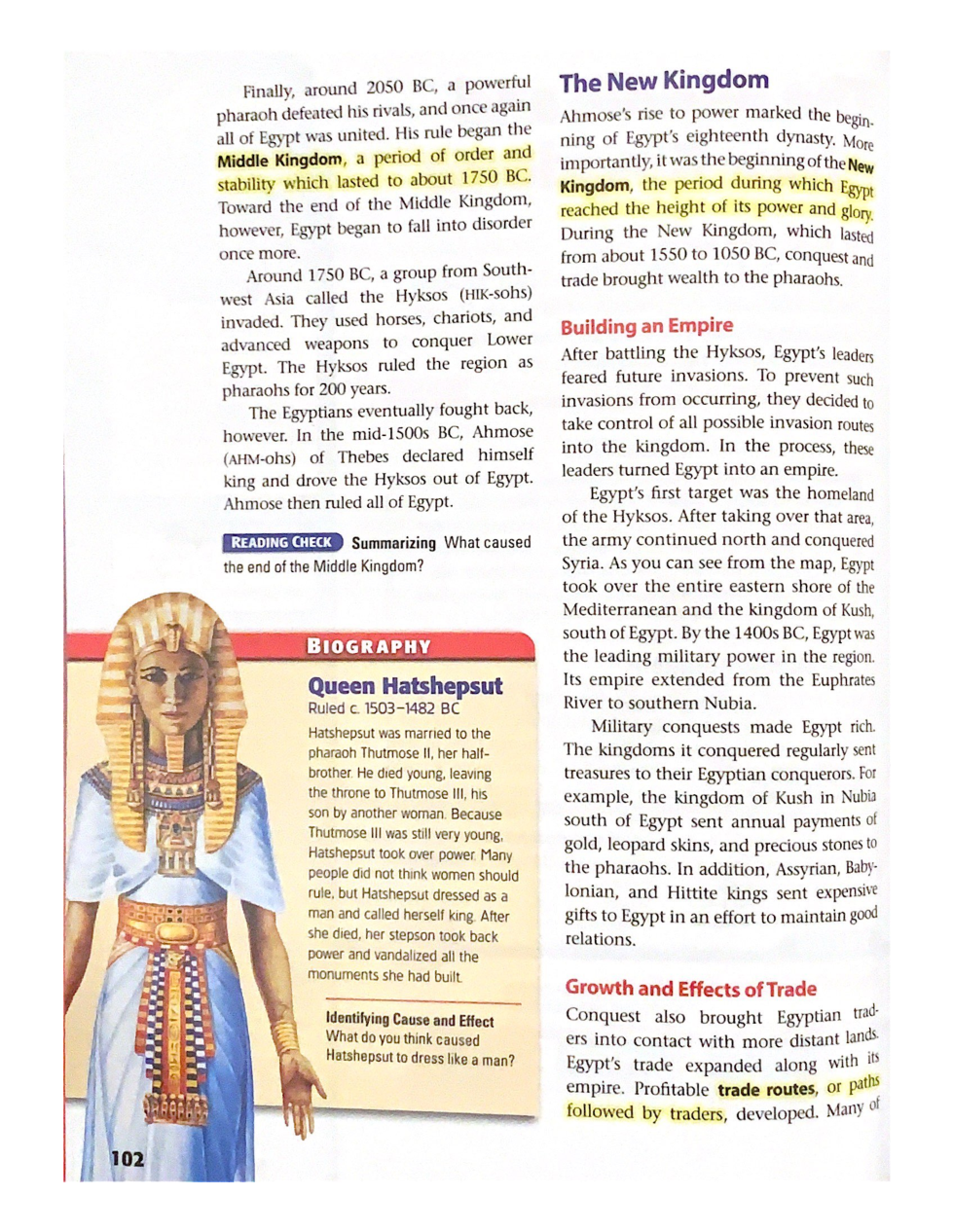
Queen Hatshepsut | arrow_right_alt | the Pharaoh who fought the Hittites, a group from Asia Minor. |
Ramses the Great | arrow_right_alt | paths followed by traders |
Fill in the blank.
The period of order and stability that lasted from 2050 BC until about 1750 BC was called the ________________.
Fill in the blank.
Although it did not last, the ___________ was the period during which Egypt reached the peak of its military might, power and glory, and trade successes.
In order to increase trade, ____________ sent Egyptian traders south to trade with people along the Red Sea and north to trade with people in Asia Minor and Greece.
_____________ were well-respected members of the Egyptian middle class who worked for the government and the temples; they kept records and accounts and copied religious and literary texts.
______________ were able to climb the social ladder in Egypt by gaining land as payment; they could also keep any treasure they captured in war.
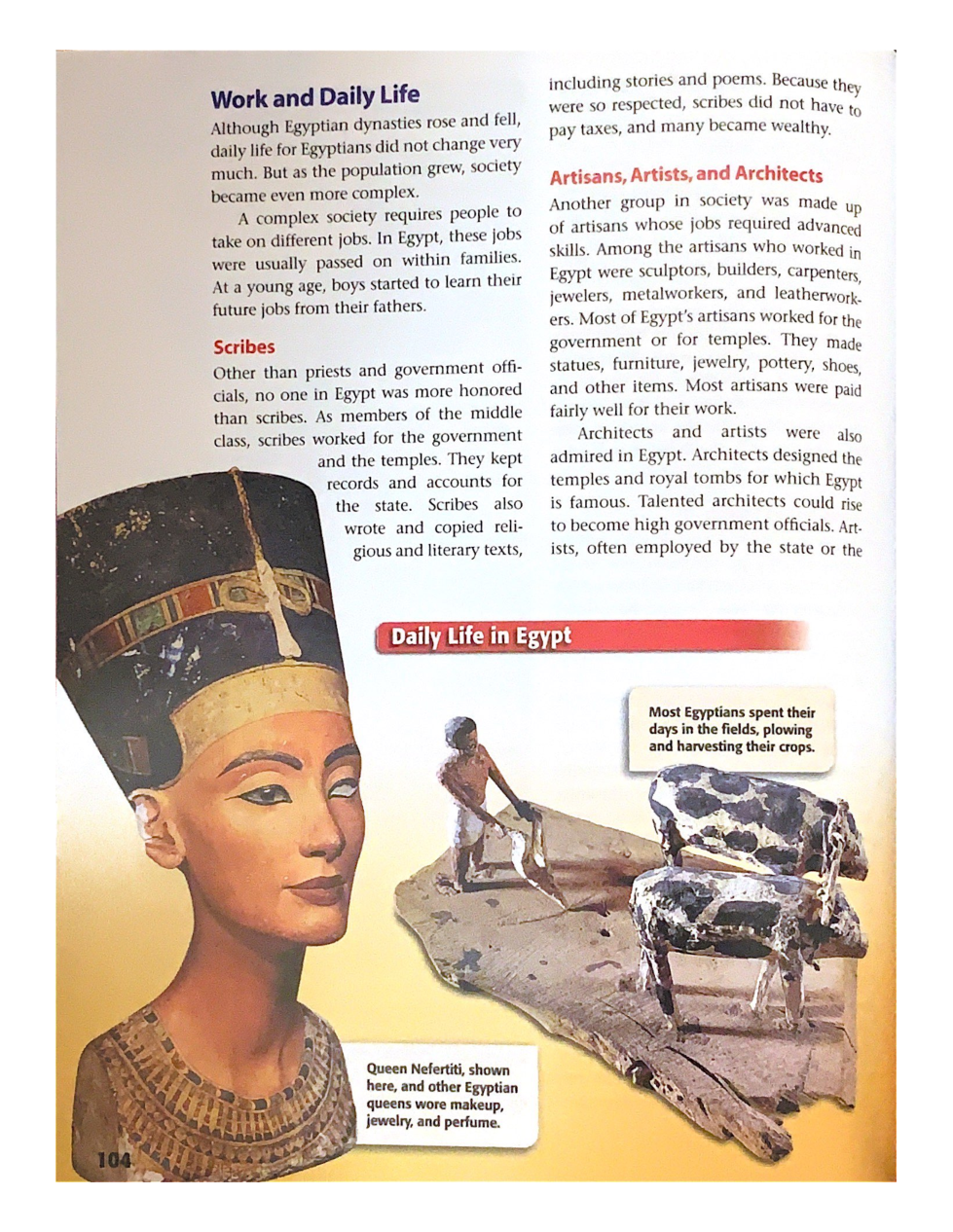
Egyptian women had a number of _____________ ; for example, they could own property, make contracts, and divorce their husbands.