Author's Perspective

Last updated almost 5 years ago
7 questions
Note from the author:
Determine author's purpose and identify supporting evidence.
Directions: Carefully read each passage and then answer the multpile choice questions that follow. Make sure to go back to the text to find evidence to detemine your answer selection is correct.
1

Adapted from Slave Narratives From an interview with Dr. John W. Fields by the Federal Writers' Project We were never allowed to go to town, and it was not until after I ran away that I knew that they sold anything else besides slaves and tobacco. Our ignorance was the greatest hold the South had on us. We knew we could run away, but what then? An offender guilty of this crime was subjected to very harsh punishment.

What is the author's point of view?

1

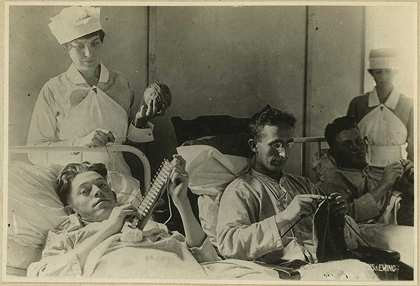
I thought things were difficult in the hospitals at Le Mans owing to lack of equipment, but that was child's play compared to the structural difficulties of working a hospital on a train, especially when it stands still for several days. One man will have to die on the train if we don't move soon, but we are not full up yet. Imagine a hospital as big as King's College Hospital all packed into a train, and having to be self-provisioned, watered, sanitated, lit, cleaned, doctored and nursed and staffed and officered, all within its own limits. No outside person can realize the difficulties except those who try to work it. The patients are extraordinarily good and take everything as it comes (or as it doesn't come!) without any grumbling. Your day is taken up in rapidly deciding which of all the things that want doing you must let go undone; shall they be washed or fed, or beds made, or have their medicines, or their dressings done? You end in doing some of each in each carriage, or in washing them after dinner instead of before breakfast.

Which statement most closely describes the author's viewpoint on the hospital where she is working during World War I?

1


From My Diary in Serbia Written By Monica M. Stanley

Thursday, July 29, 1915

I went with another nurse across to the hotel where we had tea. It was such a nice change. Another person from our unit came over from the camp to stay a few days. I had a letter from Dr. Atkinson telling me that Dr. May had arrived from England. Two groups of Serbian soldiers passed last evening. They were the best-drilled Serbs we have seen since we arrived. There were 80 in each group. Then, a lot of horses and donkeys passed by, carrying wood. I am proud to say that I have not seen any soldiers march better than our men in England since I left. Sunday, August 1, 1915 This is a lovely hospital, it will hold over 500 beds; it was a university before the war; the art rooms on the top floor are splendid.

Which statement most closely describes the author's viewpoint on the hospital where she is working during World War I?

1

What evidence does the author present to support her point of view in question number 3?

1

From Field Hospital and Flying Column Written by Violetta Thurstan

The building we were in had been a day-school. The top floor was made up of large, airy schoolrooms that were quite suitable for wards. But the shooting returned so violently that the wounded all had to be moved down into the cellars. The place was an absolute inferno. I could never have imagined anything worse. It was fearfully cold, and the hospital was not heated at all, for there was no wood or coal. There was no clean linen, and the poor fellows were lying there still in their blood-soaked shirts, shivering with cold, as we had only one small blanket each for them. They were lucky if they had a bed at all, for many were lying with only a little straw between them and the cold stone floor. There were no basins or towels or anything to wash up with, and no spittoons, so the men were spitting all over the already filthy floor. In the largest ward where there were 70 or 80 men lying, there was a toilet nearby that had gotten stopped up.
This was the state in which the hospital had been handed over to us. It was a military hospital whose staff had had orders to leave at four o'clock that morning, and they handed the whole hospital with its 270 patients over to us just as it was. We could do very little towards making it more comfortable for them. The stench of the whole place was horrible, but it was too cold to do more than open the window for a minute or two every now and then. It was no one's fault that things were in such a horrible condition—it was just the force of circumstances and the fortune of war that the place had been taxed far beyond its possible capacities.

Which statement most closely describes the author's viewpoint on the hospital where she is working during World War I?

1

What evidence does the author present to support her point of view that the hospital where she works is not sanitary?

1

The authors of all three diaries are nurses. How does this background influence their opinions of the hospitals in which they work?