Phet DC Circuits (Conductor and Insulator) lab
star
star
star
star
star
Last updated over 5 years ago
4 Nsɛmmisa
Today you will be testing a variety of items to see if they are conductors or insulators. You will be doing this by placing them into the testing area of a circuit; if the light bulb lights up, it is a conductor!
Conductors are objects that allow electrons and electricity to move freely and easily through them.
Insulators inhibit, impeded, or slow down the movement of electrons and electricity.
2
Go to: https://phet.colorado.edu/sims/html/circuit-construction-kit-dc-virtual-lab/latest/circuit-construction-kit-dc-virtual-lab_en.html and construct the circuit pictured below:
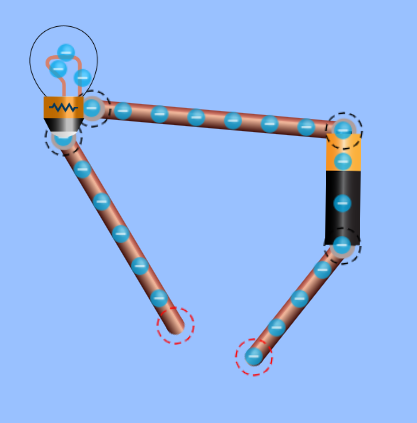
Pay attention to the way the battery is facing. You may have to rotate the battery or change its voltage by double clicking on it.
Drag objects from the list to the testing area, making sure they are connecting in the red circles and answer the questions below.
8
30
15