LT 1.10 The Sun
star
star
star
star
star
Last updated 6 months ago
11 Nsɛmmisa
Ɛhia
1
Ɛhia
1
Ɛhia
1
Ɛhia
1
Ɛhia
1
Ɛhia
1
Ɛhia
1
Ɛhia
1
Ɛhia
1
Ɛhia
1
Ɛhia
1
What is nucleosynthesis?
Nucleosyntheis is the production of new atomic nuclei from pre-existing ones. Nucleosynthesis most occurs in nature by nuclear fusion in the core of stars. Nuclear fusion requires enormous energy as the nuclei must be accelerated to extremely high speeds in order to overcome the repulsive forces that normally keep them apart.
Elements up to iron (26 protons) are formed in the core of stars. Elements heavier than iron are formed during a supernova.
The process that makes the sun shine is
Every time hydrogen atoms fuse into helium atoms a small amount of
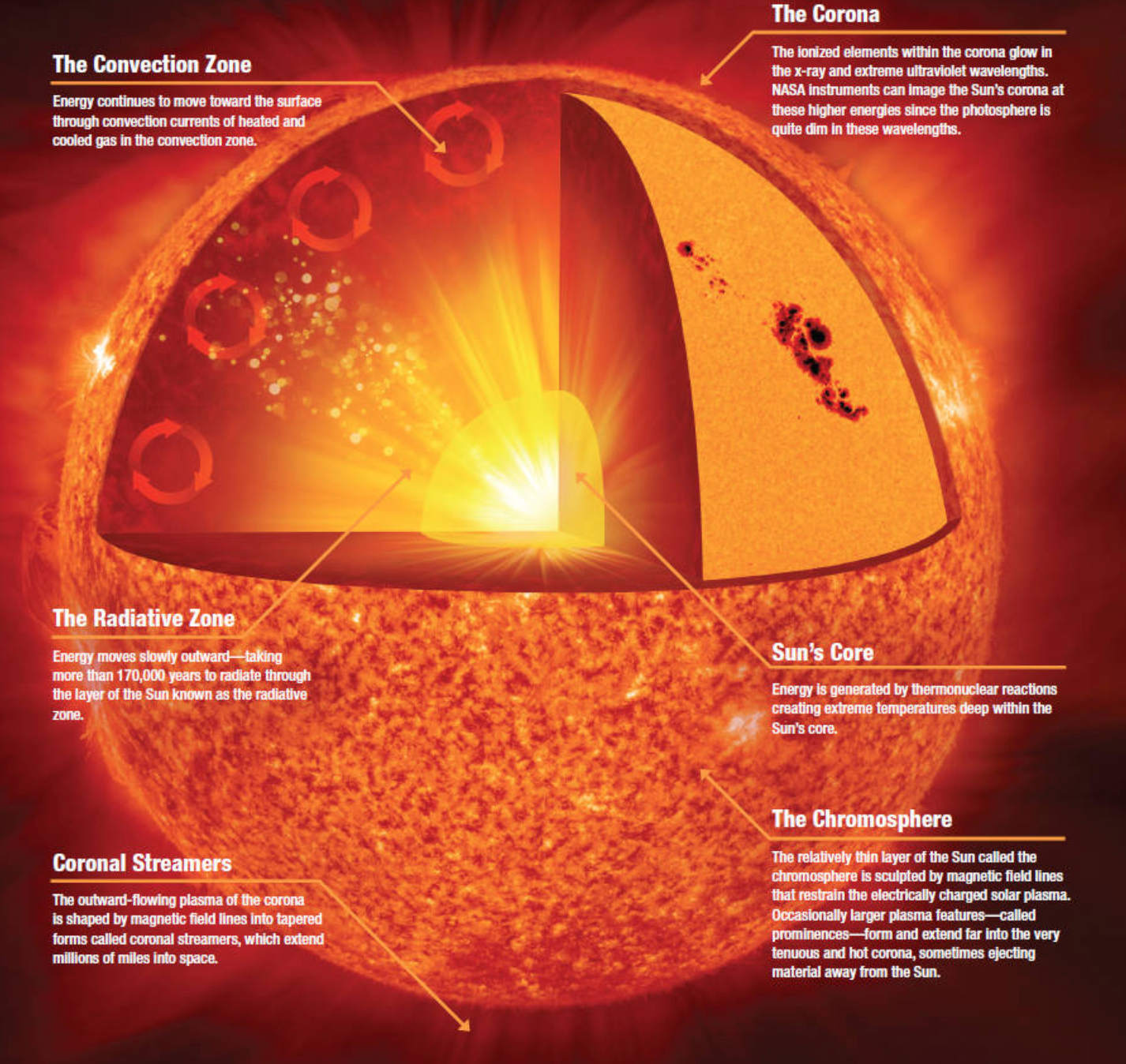
The structure of the Sun
The sun contains 99.8% of all the mass in the solar system. It has a diameter of 1,392,000 km and is more than 330,000 times more massive than Earth. The Sun formed about about 4.5 billion years ago and will continue to shine with little change for at least 4 billion years.
When the Sun reaches about 10 billion years, the hydrogen in its core will be exhausted. The core will shrink and the Sun will swell to form a red giant.
In what part of the sun is the energy of the sun created?
The light that is hitting you today from the sun took about how long to reach the suns surface?
The movement of so much plasma in the Sun combined with its rotation can cause the Sun's magnetic field to distort and affect the movement of material in the photosphere.
Sunspots are temporary phenomena on the Sun's photosphere where intense magnetic activity can inhibit convection. This causes a darker, cooler spot on the surface as hot material is prevented from rising up.
The magnetic field line near sunspots often tangle and reorganize, causing explosions of energy associated with secondary phenomena such as solar flares, solar prominences, and coronal mass ejections. These add to the material constantly streaming from the Sun (the solar wind) sometimes disrupting the Earth's own magnetic field.
Sunspots are markers where powerful ________ have emerged from the sun's interior.
Which year has the highest number of sunspots?
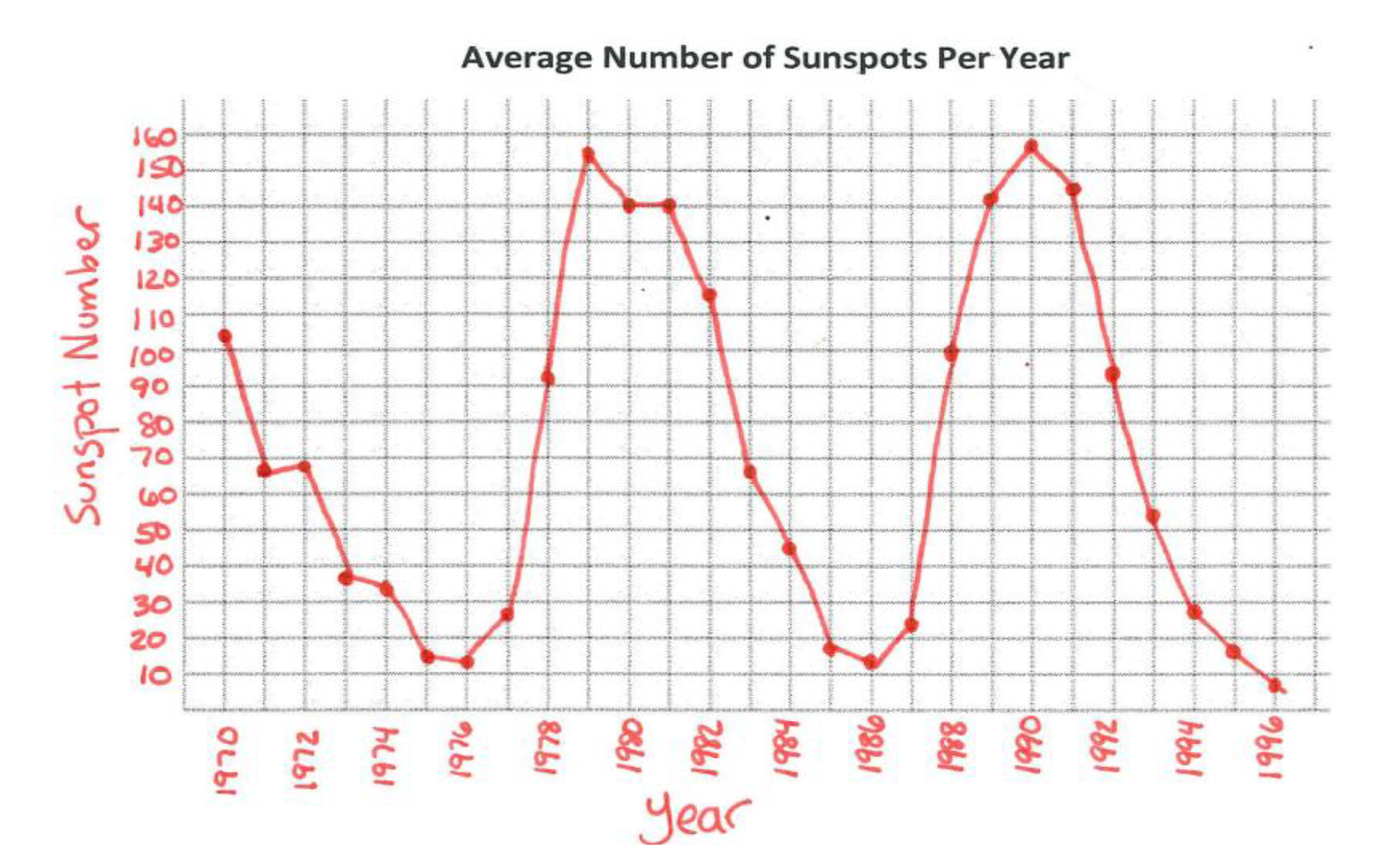
Circle the PEAKS with the maximum number of sunspots.
How often does the cycle of maximum activity of sunspots repeat?
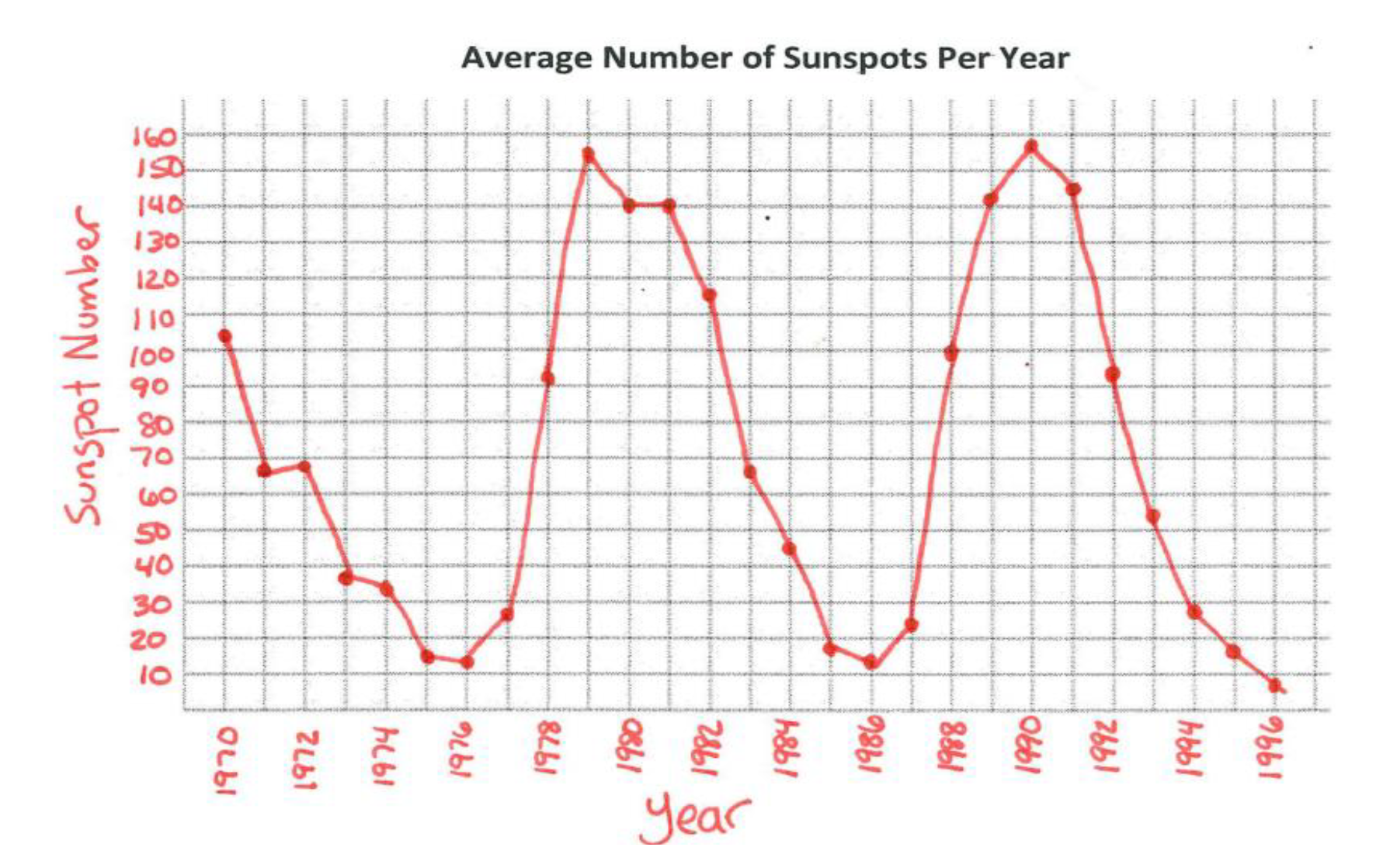
According to the data, the sun should reach solar MINIMUM in the year
Is there a predictable cycle of sun spots?
What evidence do you have that there is a sunspot cycle?