Log in
Sign up for FREE
arrow_back
Library

APUSH Chapter 15, Part 1 - The Ferment of Reform and Culture (1790-1860)

star
star
star
star
star
Last updated almost 2 years ago
10 questions
Welcome to your Chapter 15 reading! Here is the first half.

As always, "Focus Questions" should guide your reading and notes, but you do not necessarily have to explicitly answer them.
1
IICI.01
1
Question 2
2.

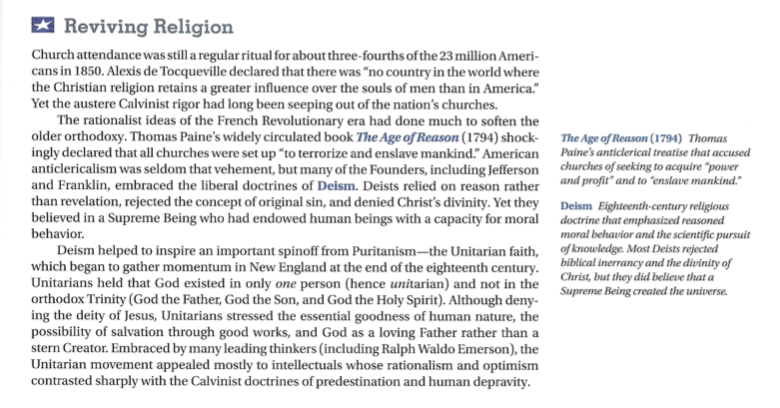
Do you believe in a God or the Deist's belief that a Supreme Being created the universe?

Please explain as you are comfortable in complete sentences. Your responses will be kept confidential unless you indicate otherwise.

1
IIWD.01
1
IIRC.02
1
IITE.01
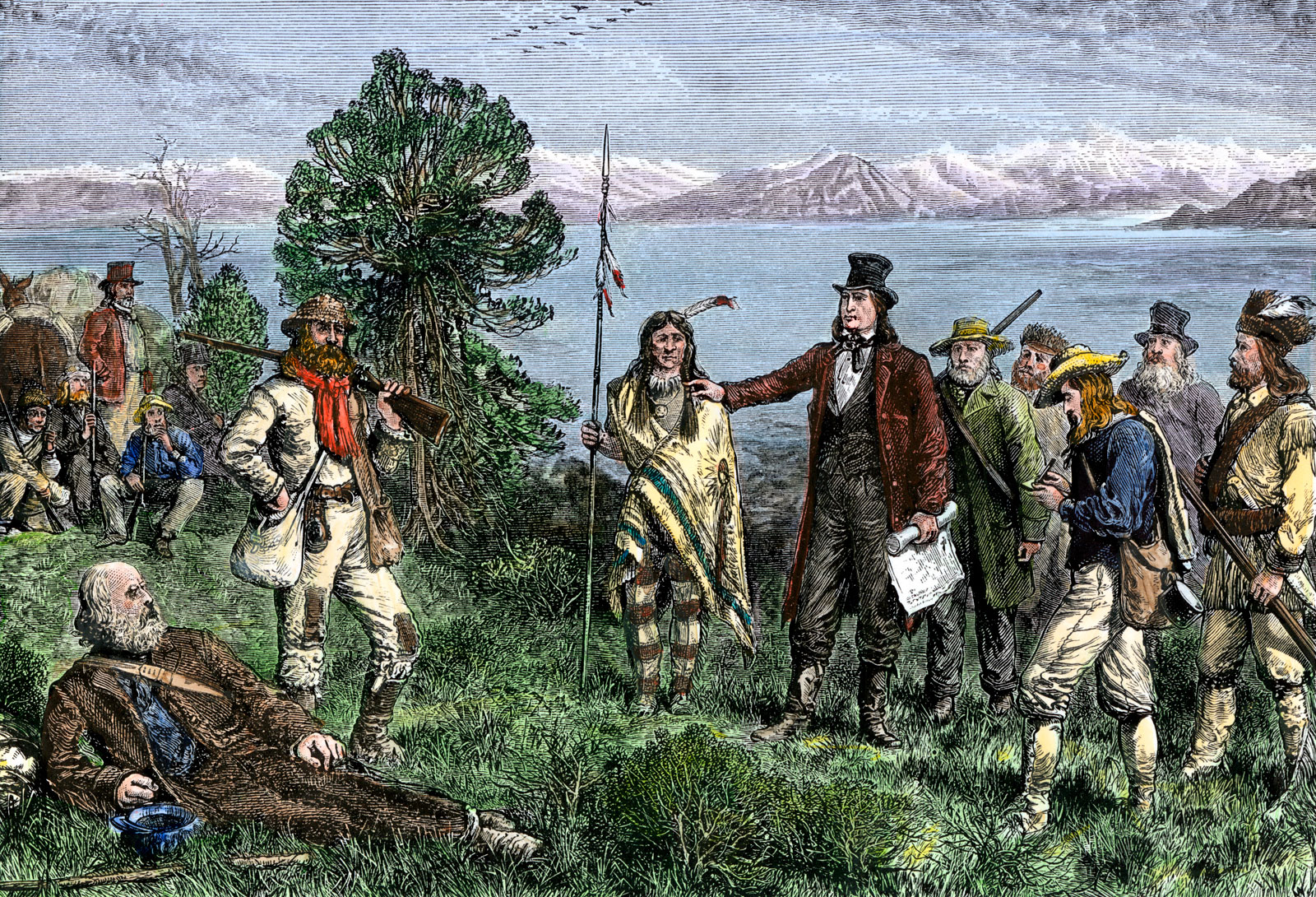
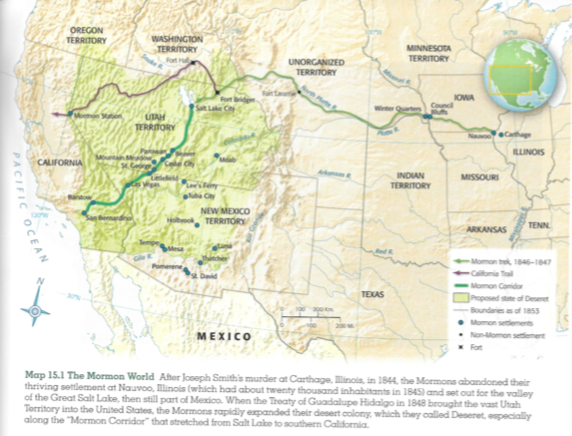
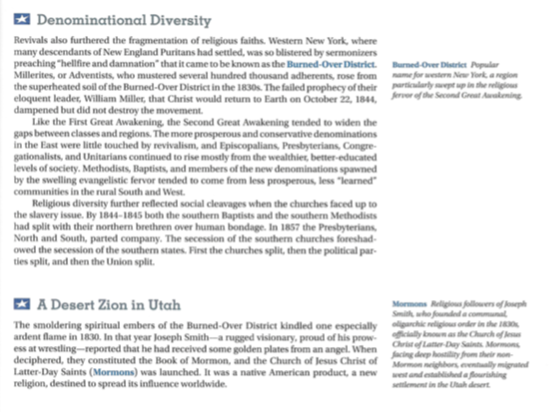
Brigham Young leading Mormons to Salt Lake City, Utah
1
IIRC.02
1
IIUR.01
Yes! This is Noah Webster of Webster's Dictionary.

Do you remember the funky misspelling in John Winthrop's City Upon a Hill sermon? Standardization of the American language also created standards for spelling words.
1
IIRC.01
1
IIWD.01
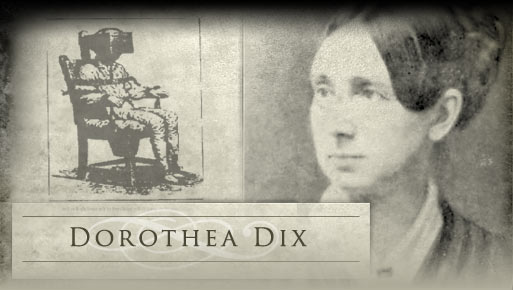
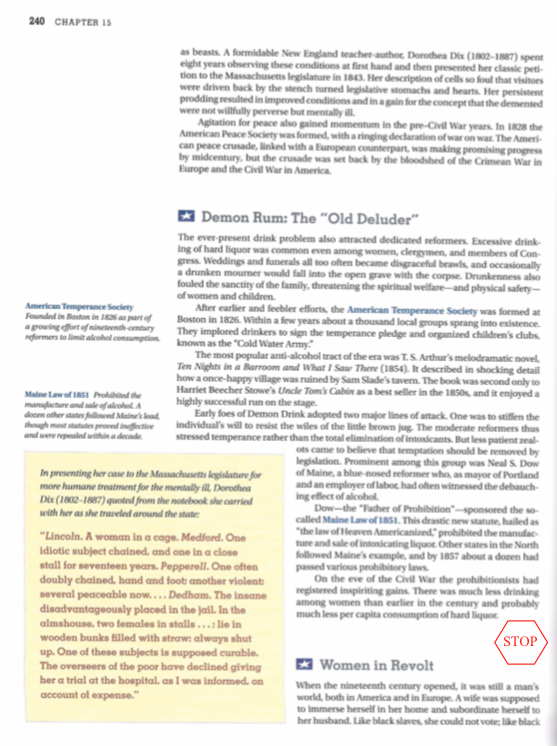
Dorothea Dix is known for her work in prison and asylum reform. If you're interersted in the history of mental health and its treatment, check out this interactive timeline!
1
IIRC.02
Question 1
1.

Question 3
3.

Question 4
4.

Question 5
5.

Question 6
6.

Question 7
7.

Question 8
8.

Question 9
9.

Question 10
10.

The main idea of the final paragraph is that
Reformers poured their energies into treligious revivals and reform movement in an effort to improve American society.
American people in the mid-nineteenth century were hyper-focused on upholding and preserving the traditions of the founding fathers.
Protestant churches rallied to turn the United States into a more upstanding and god-fearing theocracy.
American women became increasingly aware that they did not have a voice in their society due to a lack of suffrage.
As used in line 5, "episodes" most nearly means
incidents
circumstances
events
installments
The passage indicates that the Second Great Awakening partly reshaped American religion by making it
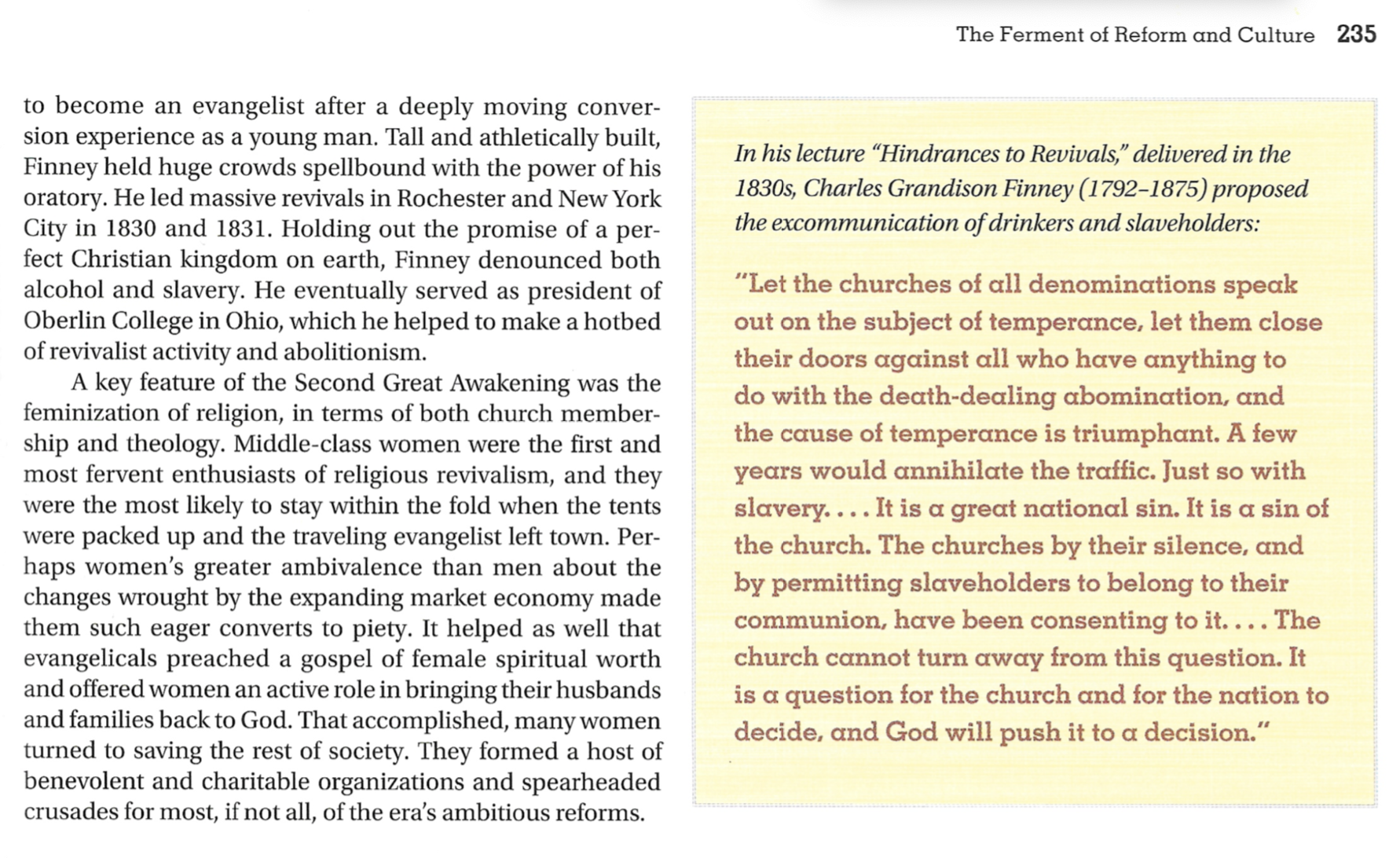
more reliant on women as members and social reformers.
more dependent on a college-educated clergy.
more sympathetic to hierarchical churches like Catholicism.
less socially and theologically diverse.
Which choice provides the best evidence for the answer to the previous question?
Lines 7-9 ("He eventually...and abolitionism")
Lines 10-12 ("A key...and theology"
Lines 12-15 ("Middle-class women...left town")
Finney, 1830s ("Let the...is triumphant")
It can be reasonably inferred that polygamy is the practice of
voting for more than one political party.
having more than one spouse.
hierarchical structures within a church.
moving to multiple parts of the country.
Which statement best describes the relationship between education and democracy in this section?
Wealthy Americans opposed the idea of free public education because their children did not need it.
Southern slave owners advocated for free public education for all children, regardless of servitude.
In order to have a truly free democracy, all citizens need access to a free public education.
Poor Americans threatened to launch a violent rebellion unless free education was made available.
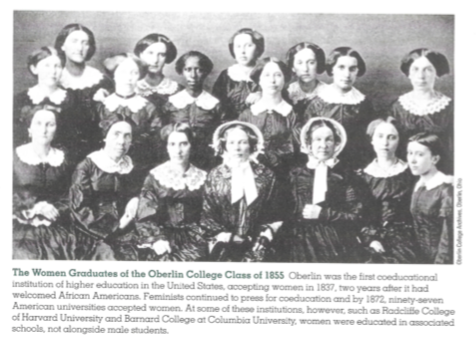
A strong prejudice inhibiting women from obtaining higher education in the early nineteenth century was the belief that
too much learning would injure women's brains and ruin their health.
women would be unable to participate in college athletics.
no one would donate funds to support women in colleges.
the presence of women would distract men from learning.
As used in line 2 of the first full paragraph, "place" most nearly means
residence
position
abode
location
It can be reasonably inferred that the exessive consumption of alcohol by Americans in the 1800s
stemmed from the hard, struggling, and monotonous life of many American men and women.
had little impact of the efficiency of the labor force and the productivity of the American economy.
held little threat for the family because drinking was so commonplace in American society.
was addressed by the wide availability of government-sponsored programs for alcoholics.