Log in
Sign up for FREE
arrow_back
Library

APUSH Chapter 16 - The South and the Slavery Controversy (1793-1860)

star
star
star
star
star
Last updated almost 2 years ago
13 questions
Welcome to Period 5 (1844-1877). This Unit covers the causes and effects of the Civil War and the resulting Reconstruction period.

In the interest of time, we are only covering the first half of Chapter 16. This reading covers the Antebellum Era, which is a fancy word for the time period leading up to the Civil War (so think causation).

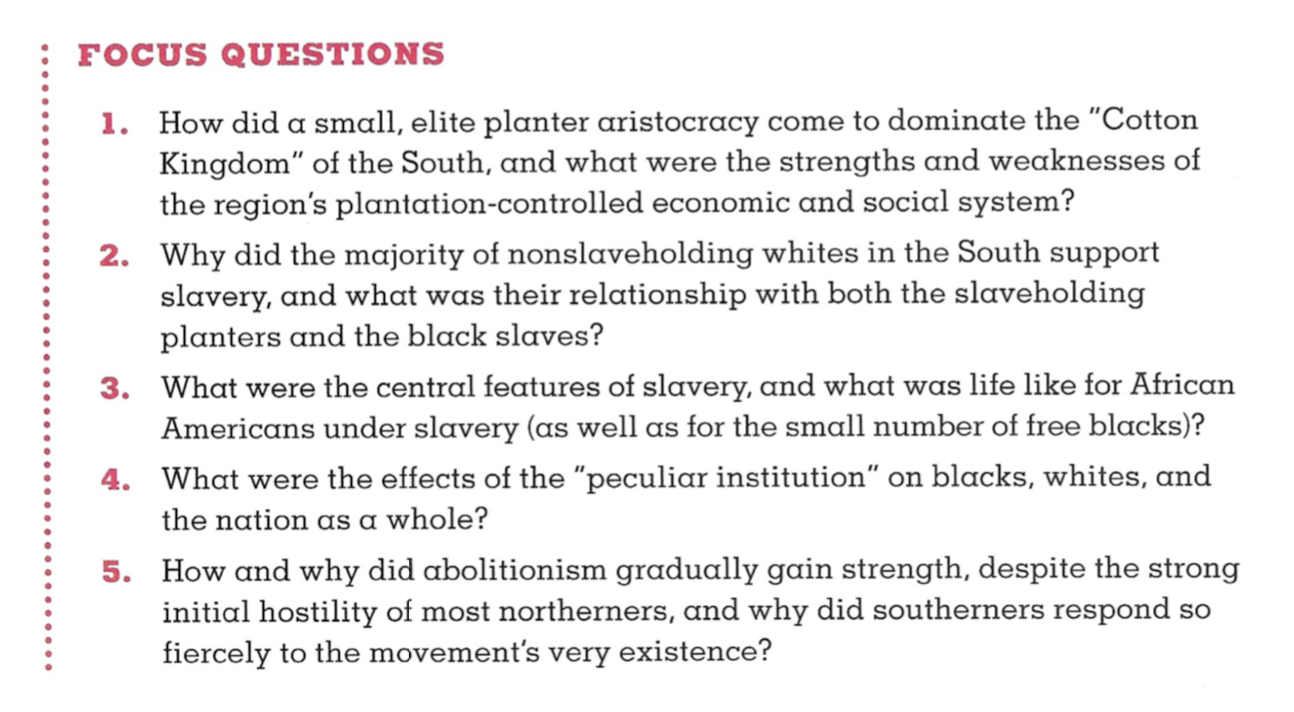
As always, "Focus Questions" should guide your reading and notes, but you do not necessarily have to explicitly answer them.
1
IIUR.01
1
IIWD.01
1
IIRC.02
1
IITE.01
1
IIRC.02
1
IIRC.01
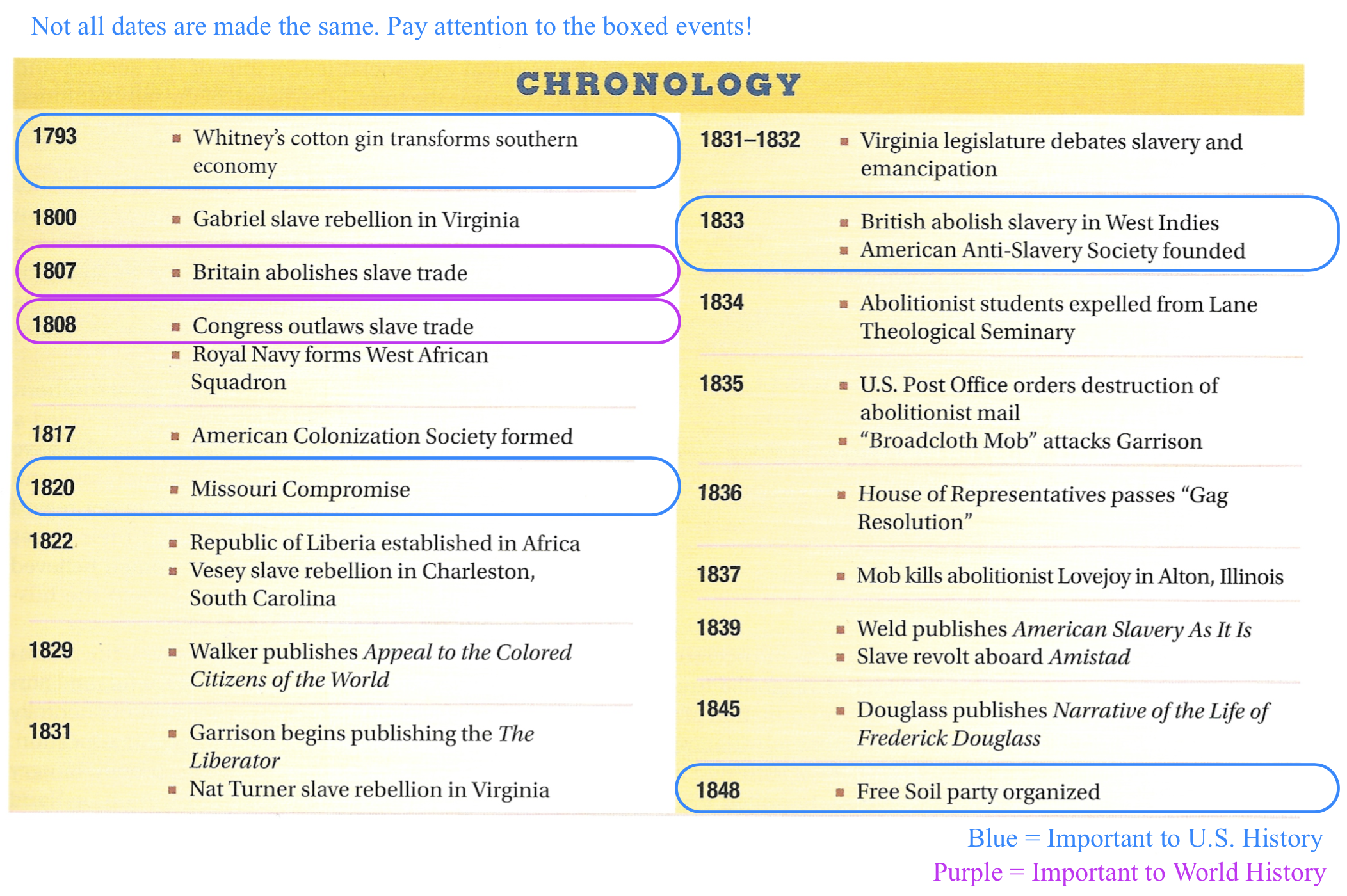
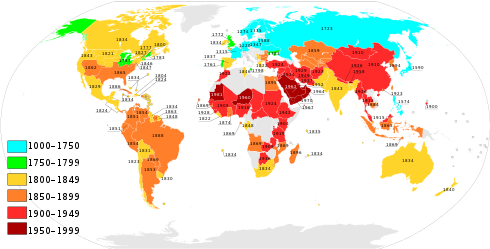
Notice how Great Britain abolished slavery in 1834, but the United States would not abolish slavery until 1865.

The road to equality is long and difficult, and going on even today!
1
IIRC.01
0
Question 8
8.

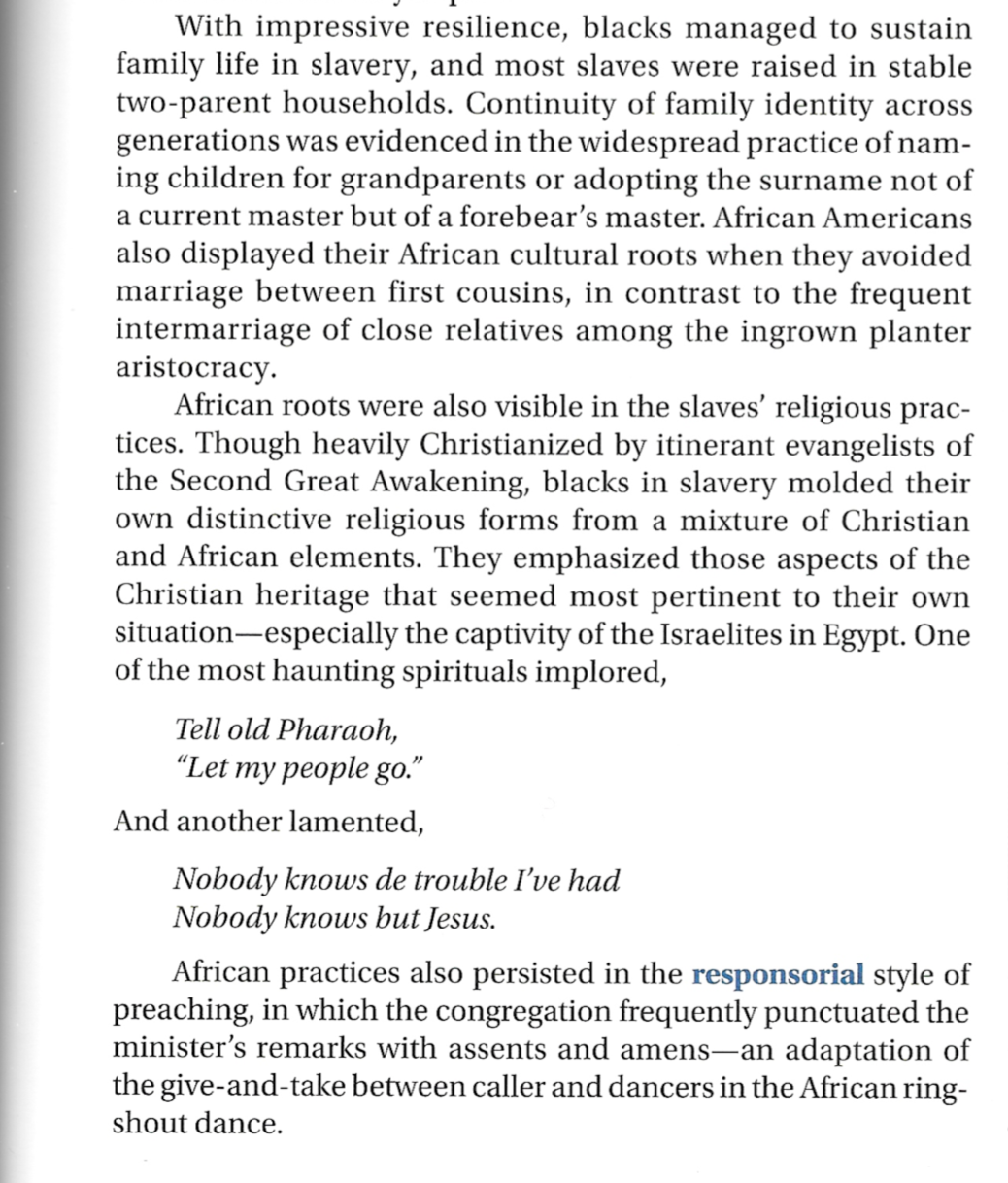
Compare and contrast the historical experience of freed Blacks and enslaved Backs.

Bullet point responses are sufficient so long as you reference specific facts and details from the reading as examples. Your response should identify at least one similarity and one difference in preparation for our class discussion.

1
IIRC.01
1
Question 10
10.

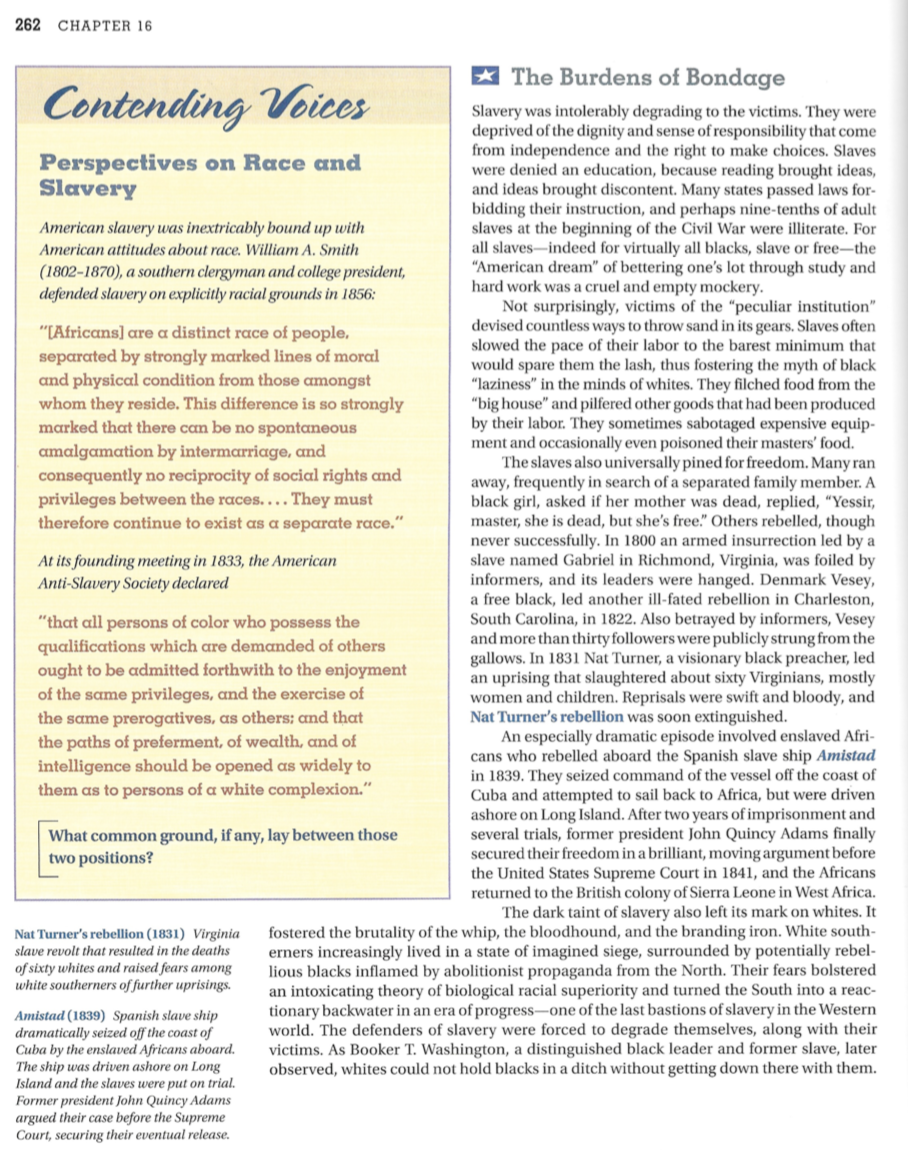
What common ground, if any, lay between these two positions?

In order to earn full credit on this assignment, your response should be in 2-3 complete sentences and reference specific words or phrases from both primary source as examples.

1
IIWD.01
0
Question 12
12.

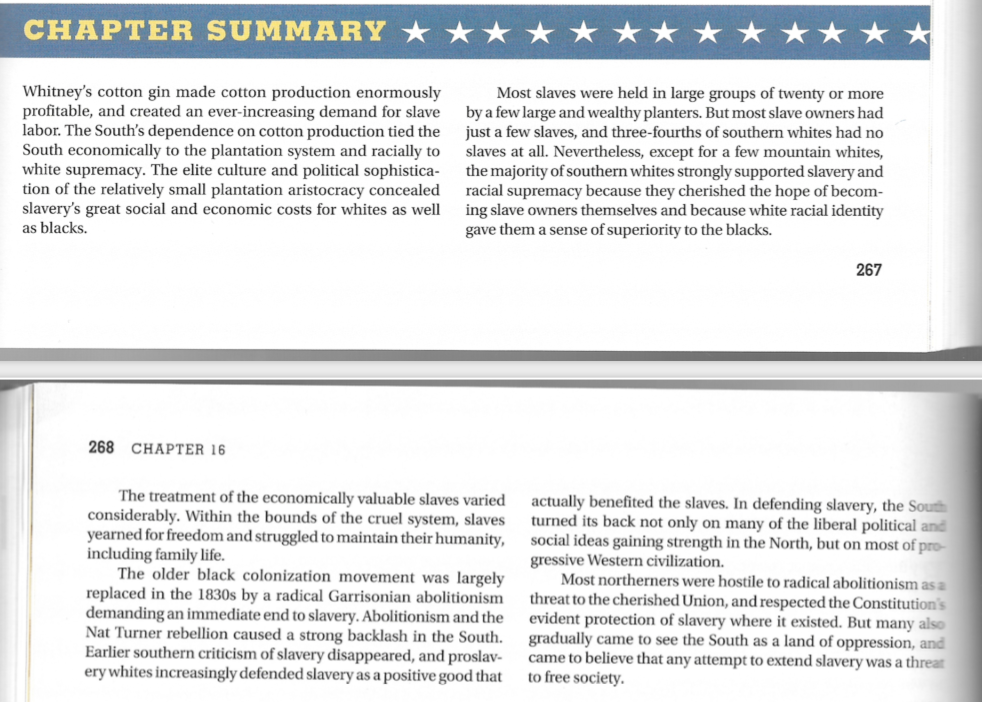
Excellent reading! Close out this Chapter by reviewing the "Chapter Summary" and boxing the 5 most important key terms in the space provided.

0
Question 1
1.

Question 2
2.

Question 3
3.

Question 4
4.

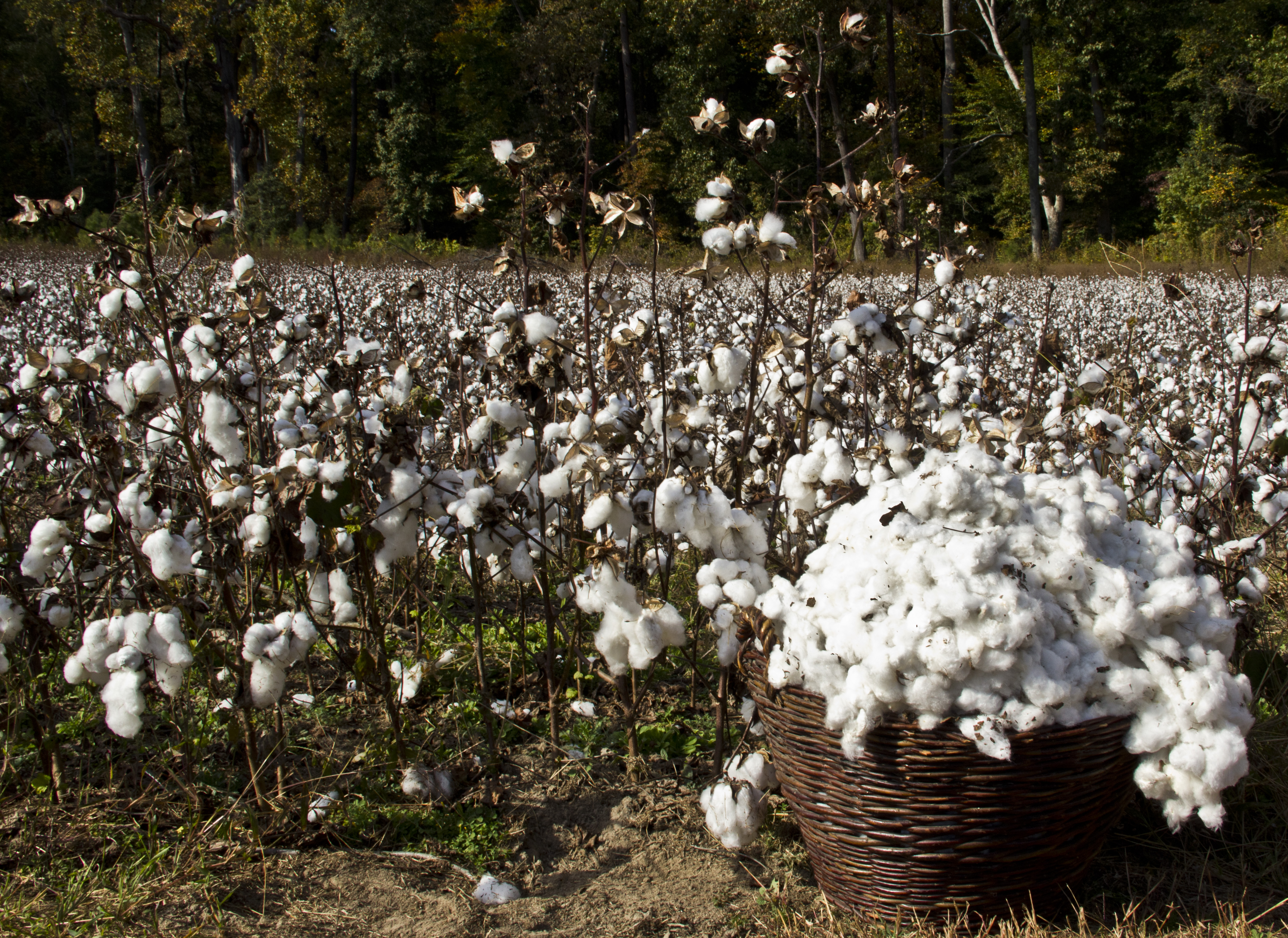
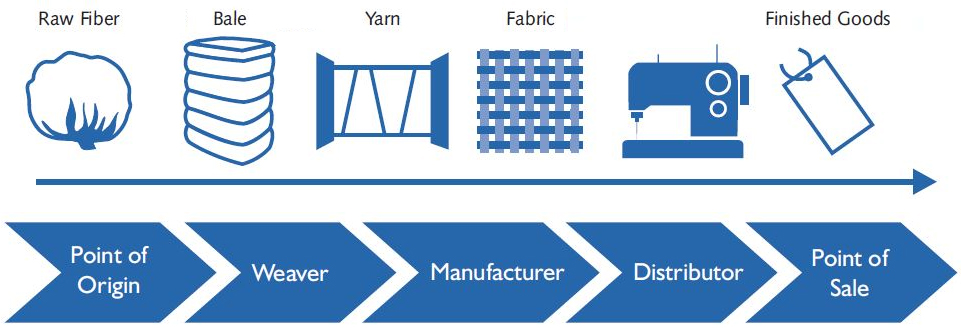
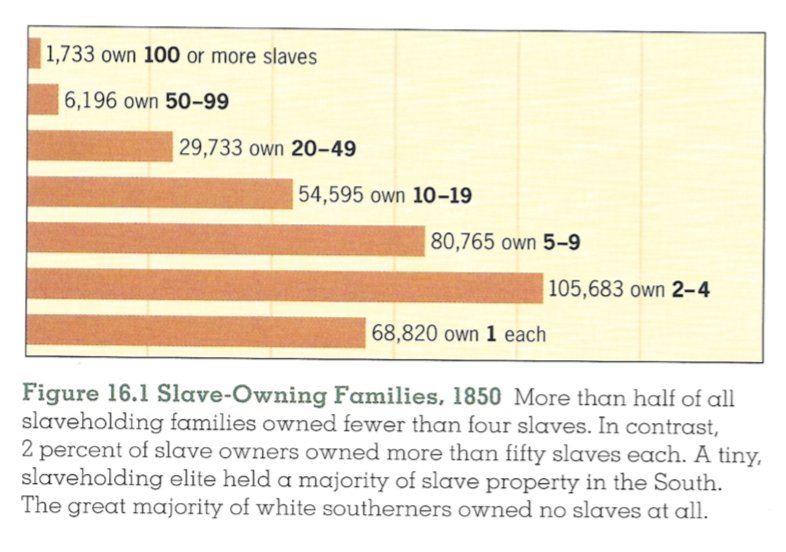
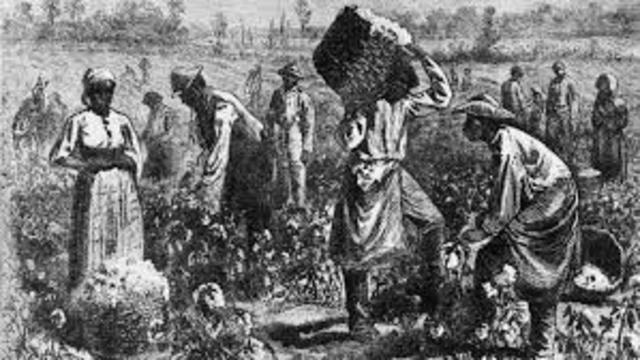
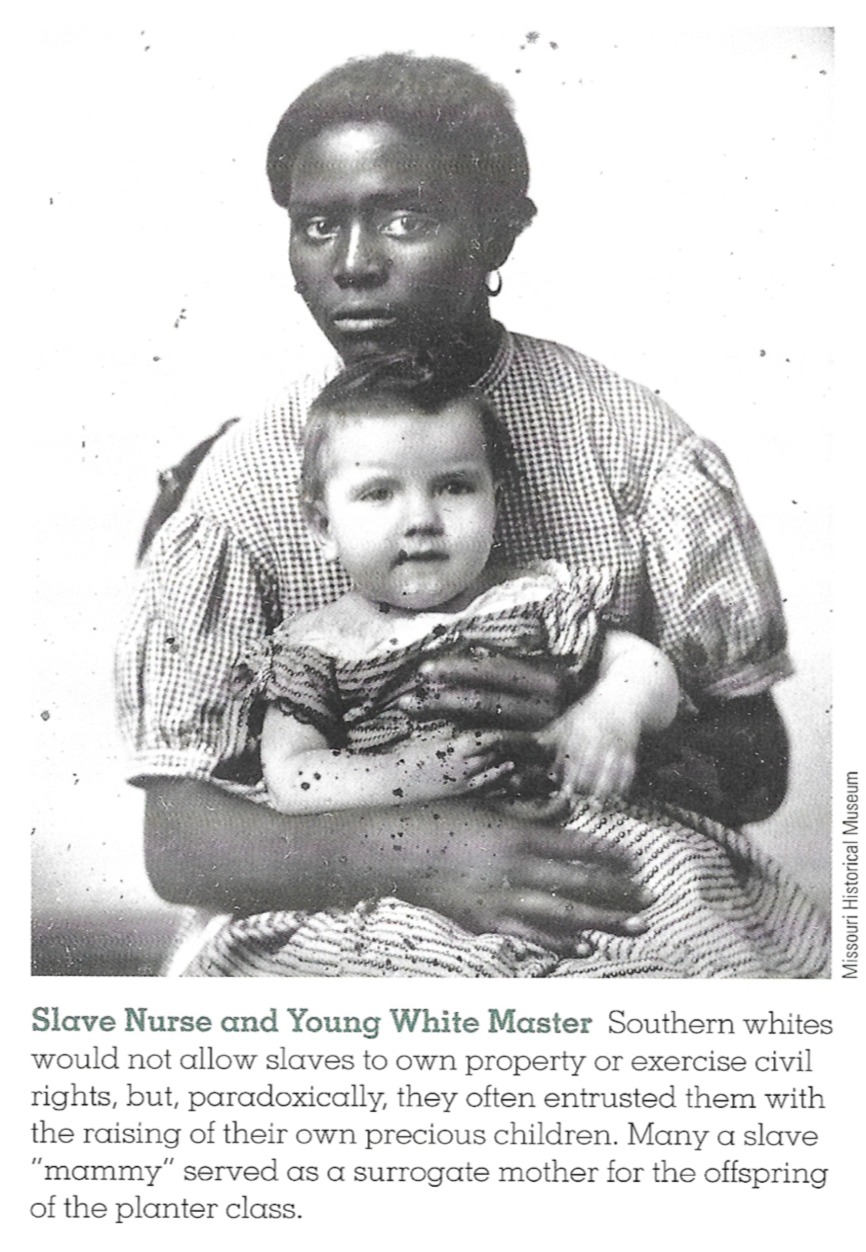
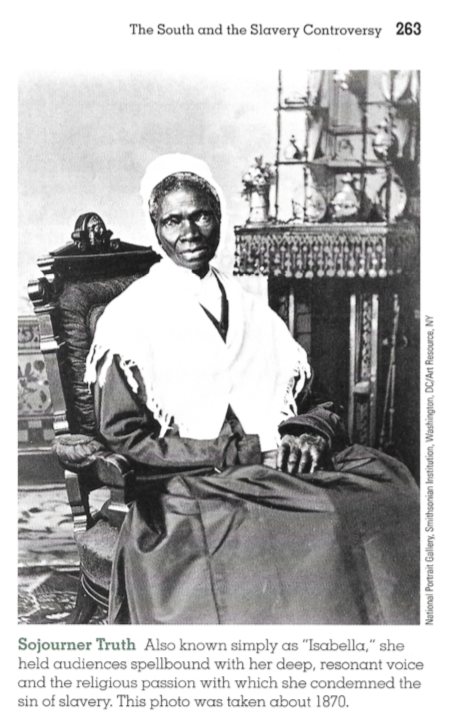
Let's take a moment to visualize the cotton industry in the United States at the time.

From this:
to this:
requires this:
Question 5
5.

Question 6
6.

Question 7
7.

Question 9
9.

Question 11
11.

Question 13
13.

Do you have any feedback or questions about the Formative reading or comprehension questions that you want to go over in class?

As a result of the introduction of the cotton gin,
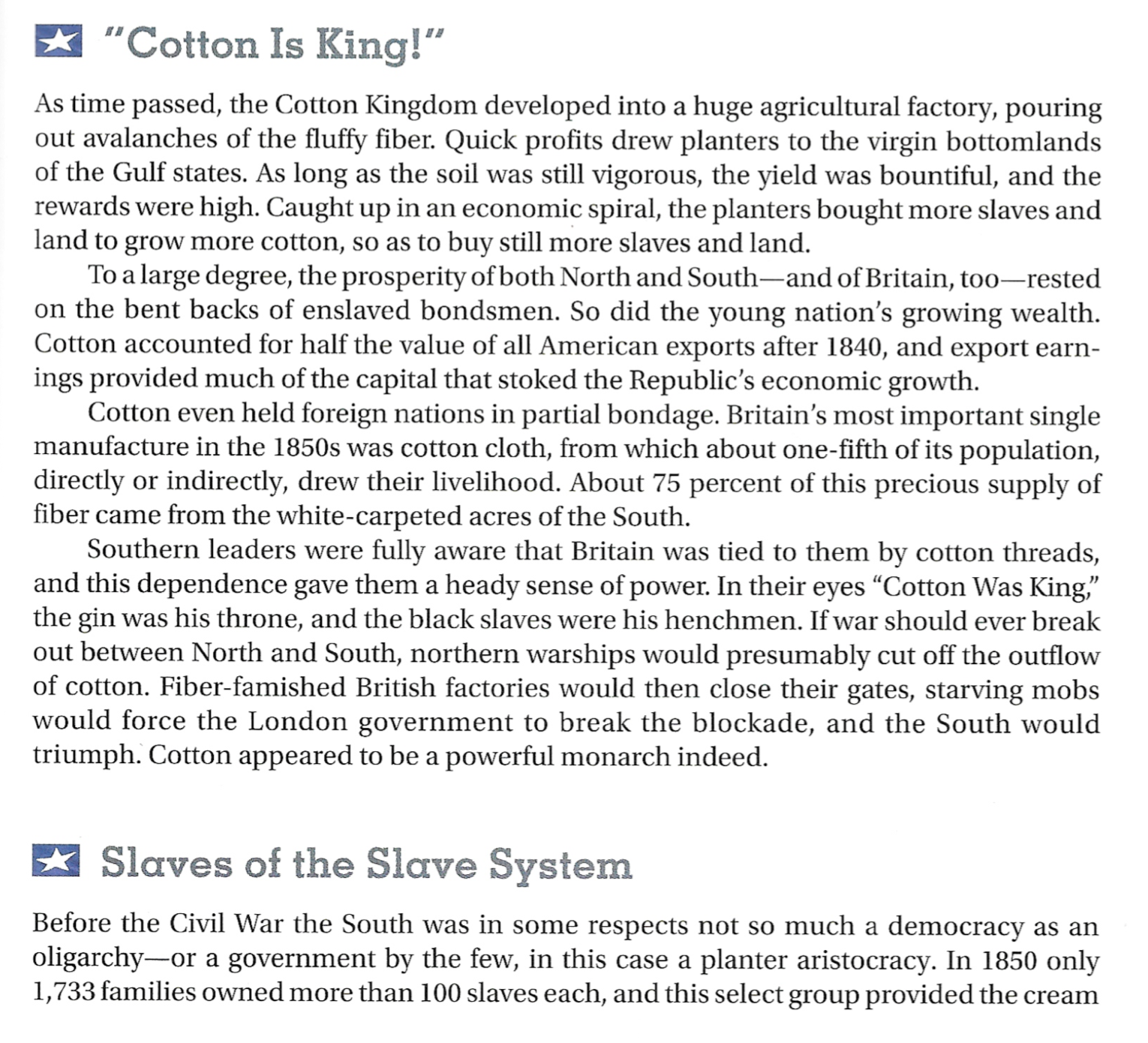
slavery was reinvigorated.
the textile industry expanded in the South.
the African slave trade was legalized.
fewer slaves were needed on the plantations.
As used in line 6 of this section, "rested" most nearly means
diminished
relaxed
depended
revived
It can be reasonably inferred that members of the planter aristocracy
provided democratic rule in the South.
focused on cultural gentility rather than politics.
promoted tax-supported public education.
dominated society and politics in the South.
Which choice provides the best evidence for the answer to the previous question?
Paragraph 1, Lines 2-4 ("Here was...the 'cottonocracy'")
Paragraph 2, Lines 8-11 ("Their money...Point graduate")
Paragraph 4, Lines 23-24 "The domination...public education"
Paragraph 4, Lines 25-26 ("Plantation agriculture...good earth")
Most of the large majority of Southern whites who did not own slaves nonetheless supported the slave system partly because they
were fiercely loyal to the planter aristocracy.
generally hated the individual black people they knew.
wanted Northern textile manufacturing to continue to
flourish.
dreamed of one day owning slaves themselves.
The passage indicates that, before the Civil War, Northern attitudes towards free blacks were
advocating for Black migration into new territories.
disliking individual blacks, but professing admiration for the Black race.
politically sympathetic, but socially segregationist.
supportive of the right to full citizenship and higher education for Blacks.
The passage indicates that the increase of the enslaved population in early nineteenth century United States was largely due to
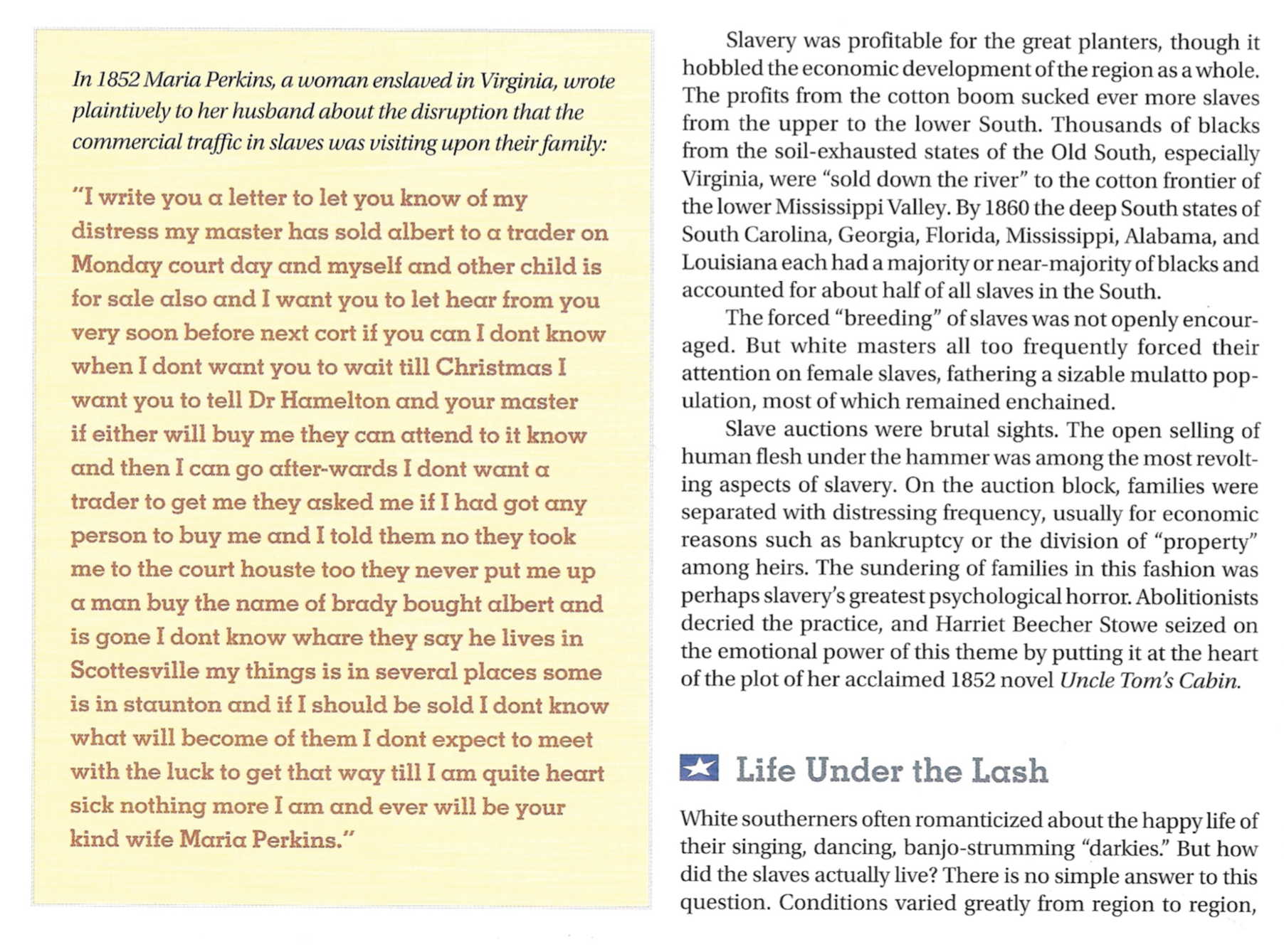
the re-enslavement of free blacks.
larger imports of slaves from the West Indies.
the reopening of the African slave trade in 1808.
natural reproduction.
Slaves were denied an education because
masters believed that reading brought new ideas that might lead to their discontent.
the cost of education was far more than masters would want to spend on slaves.
it would take time away from their work in the fields and households of white masters.
their labor did not require literacy or math skills.
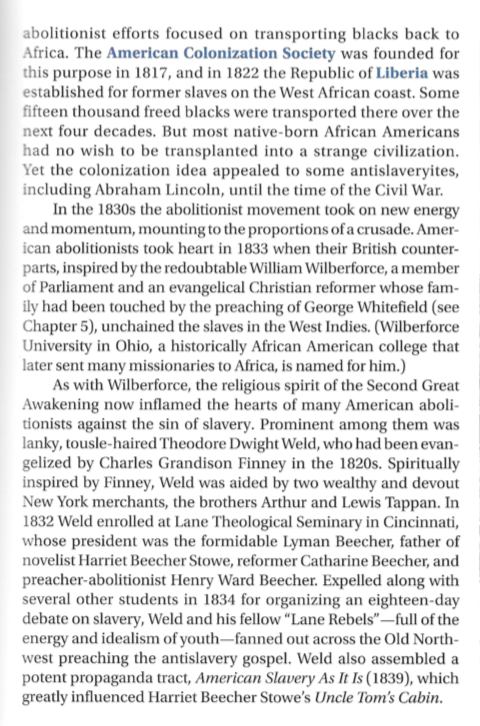
As used in line 2 of paragraph 3, "inflamed" most nearly means
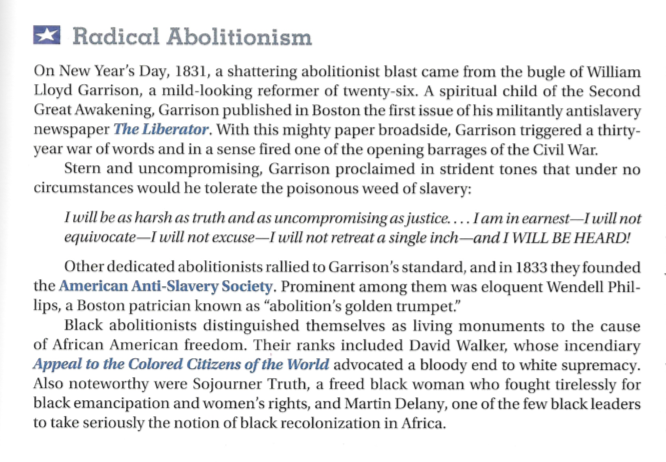
enraged
burned
disturbed
exacerbated