APUSH Chapter 21 - The Furnace of Civil War (1861-1865)
star
star
star
star
star
Last updated almost 2 years ago
12 questions
1
IIRC.01
1
IIWD.01
Welcome to the Chapter 21 reading! We are finally at the Civil War.
As always, when we study wars in history, we care the most about its causes and effects, so be sure to think about the legacy of this monumental historical event.
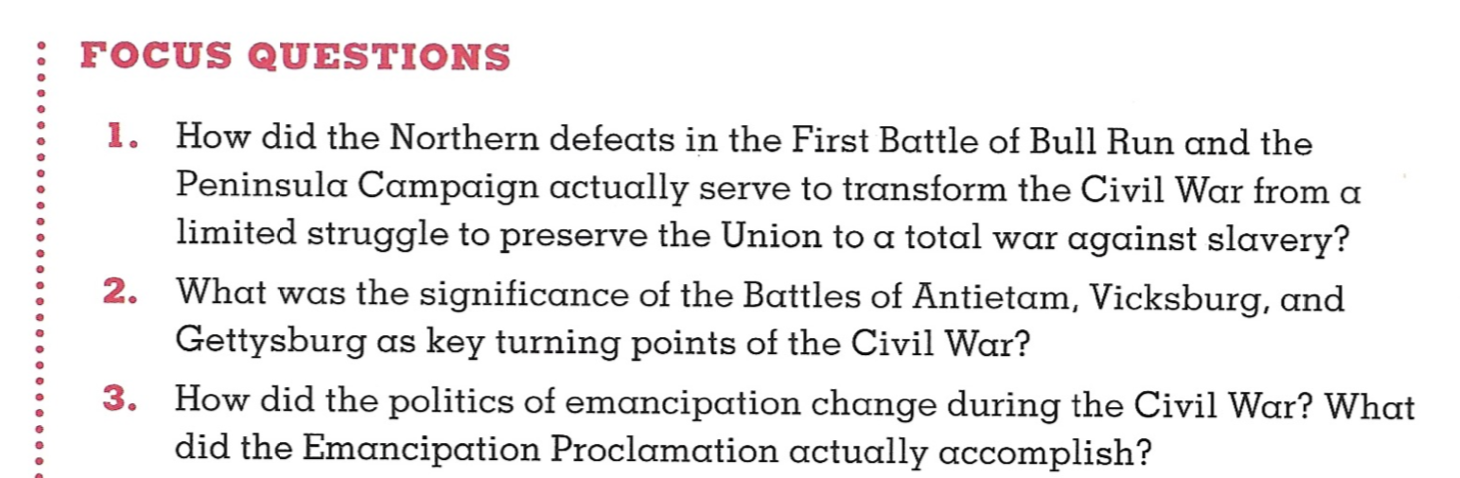
"Focus Questions" to guide your reading and notes. You do not have to explicitly answer them.
Secession is the act of separating from a nation or state and becoming independent. This word can also be used as a verb.
For example: South Carolina was the first state to secede from the Union in 1860.
Question 1
1.
1
SQN.01
Confused? There's a very small text block right below question #2.
Question 3
3.
1
IIRC.02
1
IITE.01
1
IIRC.01
1
IIRC.01
1
IITE.01
1
IIWD.01
1
IICI.01
0
Question 11
11.
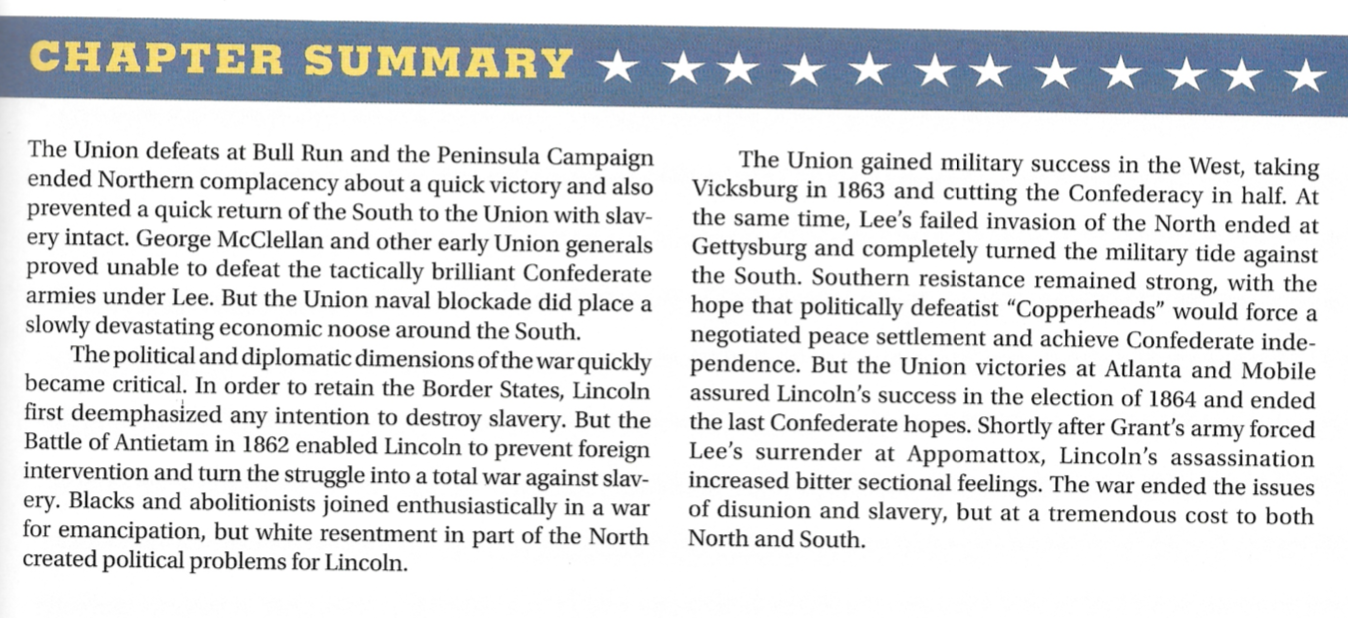
Great reading! Close out this Chapter by reviewing the "Chapter Summary" and using the "rectangle" tool to box the 5 most important key terms in the space provided.
0
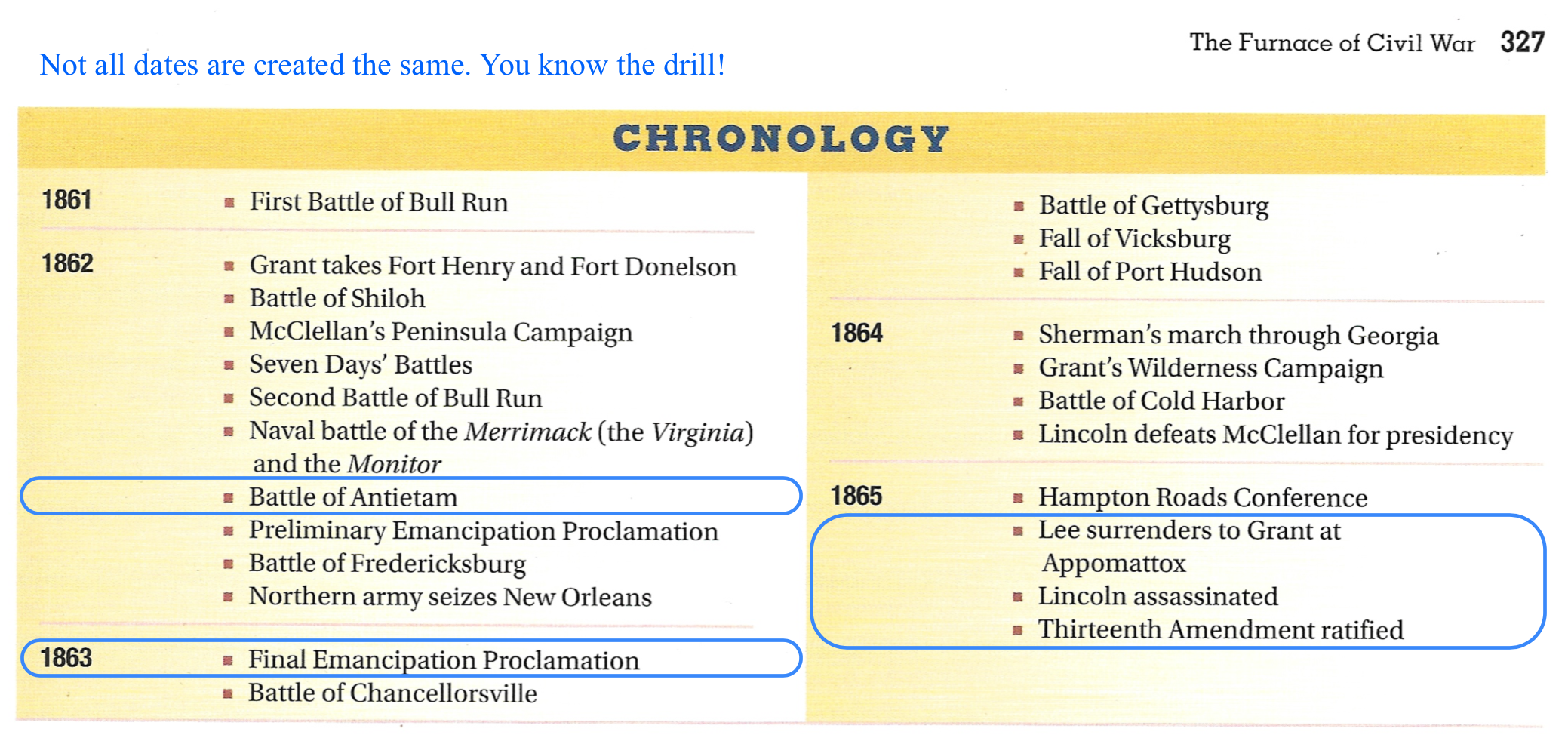
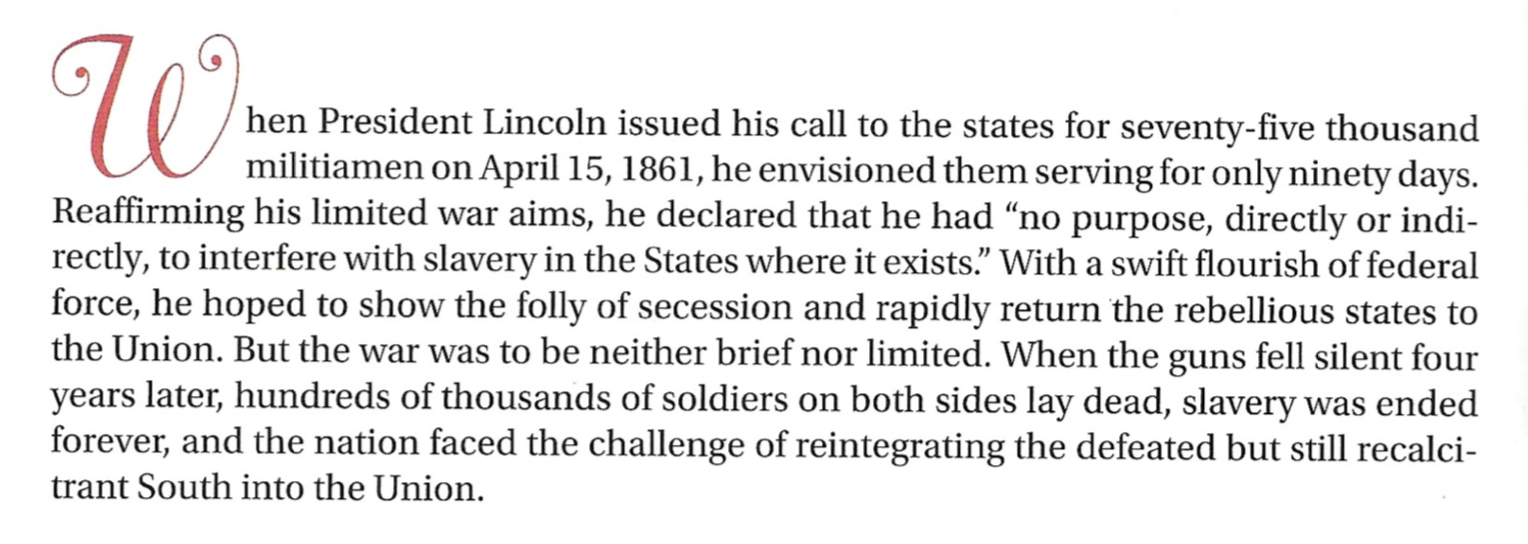
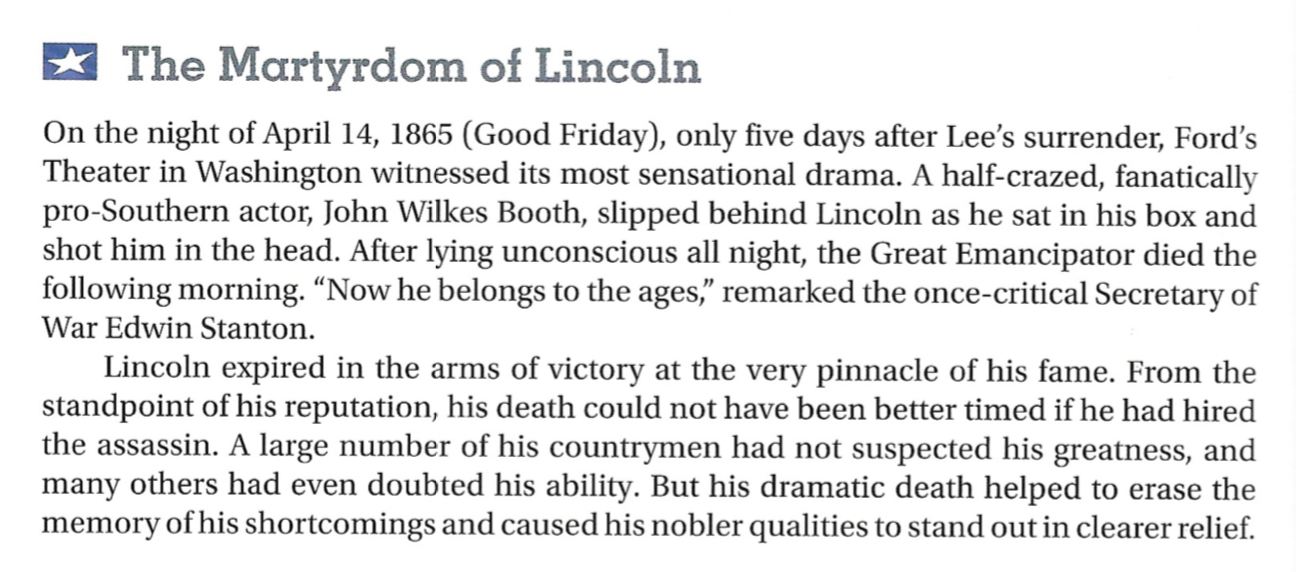
The passage indicates above that, at the start of the Civil War, President Lincoln favored
postponing military action as long as possible.
long-term enlistments for Union soldiers.
quick military action to show the folly of secession.
making the Civil War about ending slavery.
Question 2
2.
As used in paragraph 4, line 1, "engagements" most nearly means
alliances
commitments
obligations
conflicts
Question 4
4.
Question 5
5.
Question 6
6.
Question 7
7.
Question 8
8.
Question 9
9.
Question 10
10.
Question 12
12.
Do you have any feedback or questions about the Formative reading or comprehension questions that you want to go over in class?
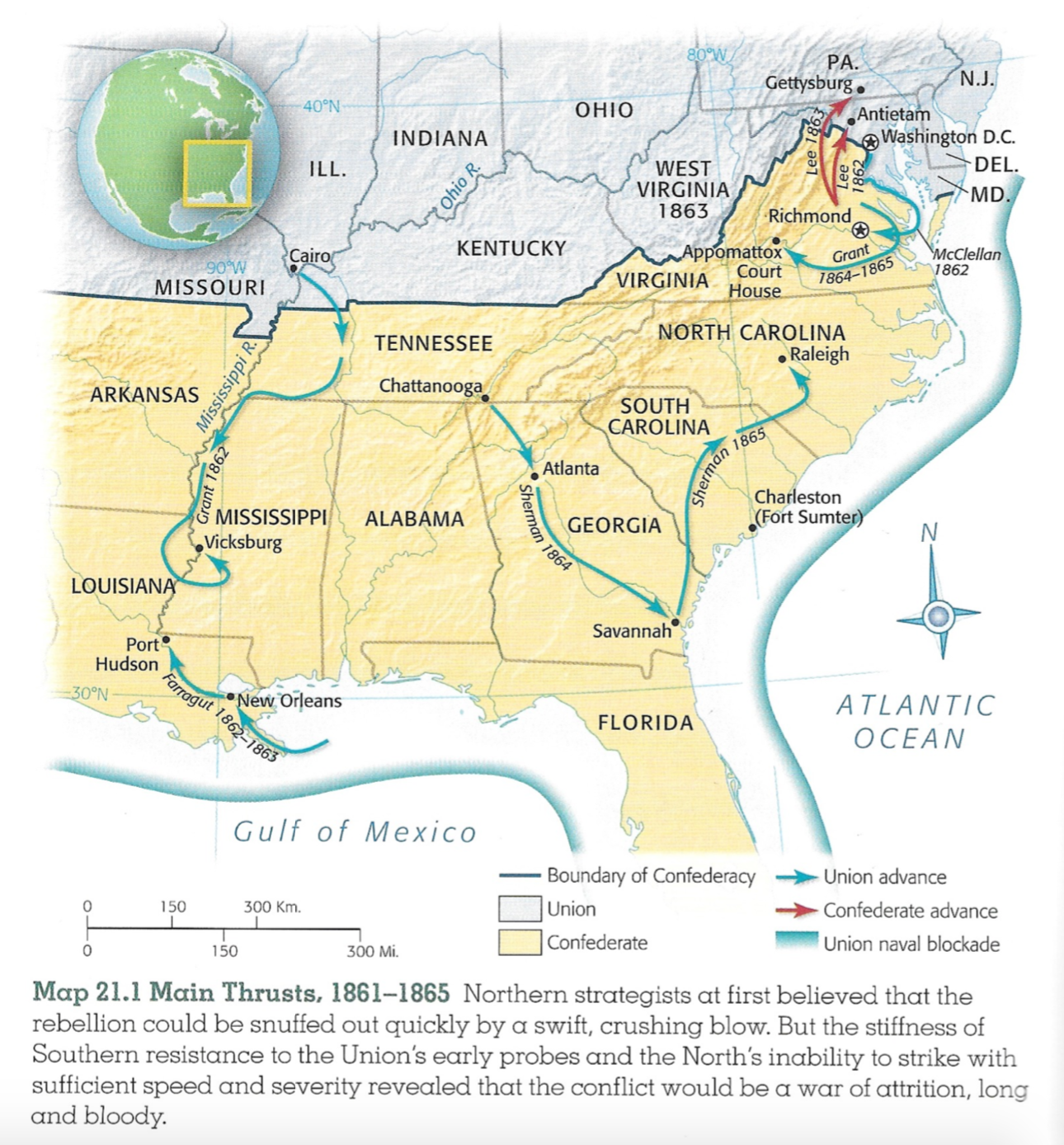
According to the figure, the bulk of the Civil War was fought
in slave states.
in the South.
in the border states.
in the North.
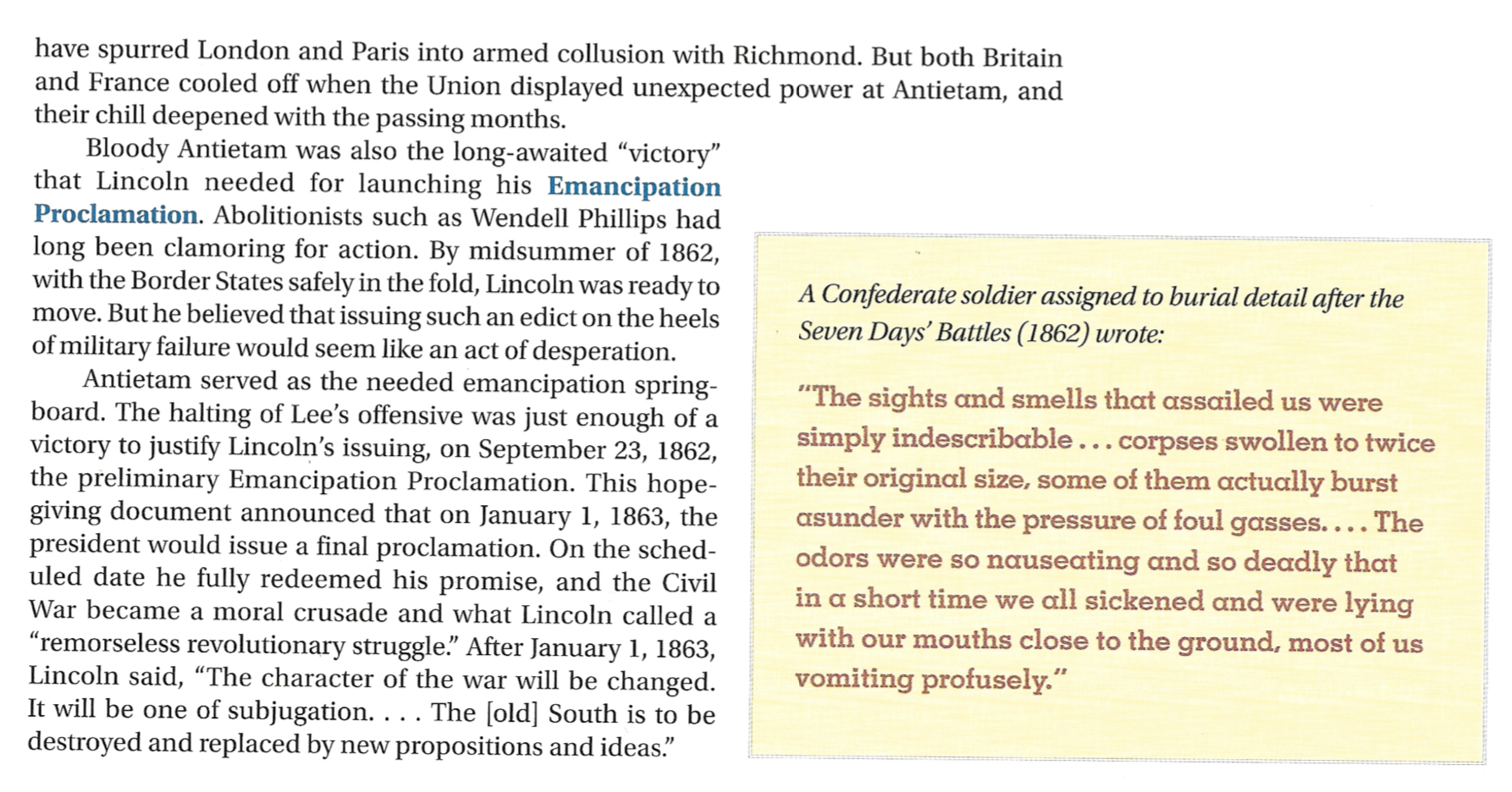
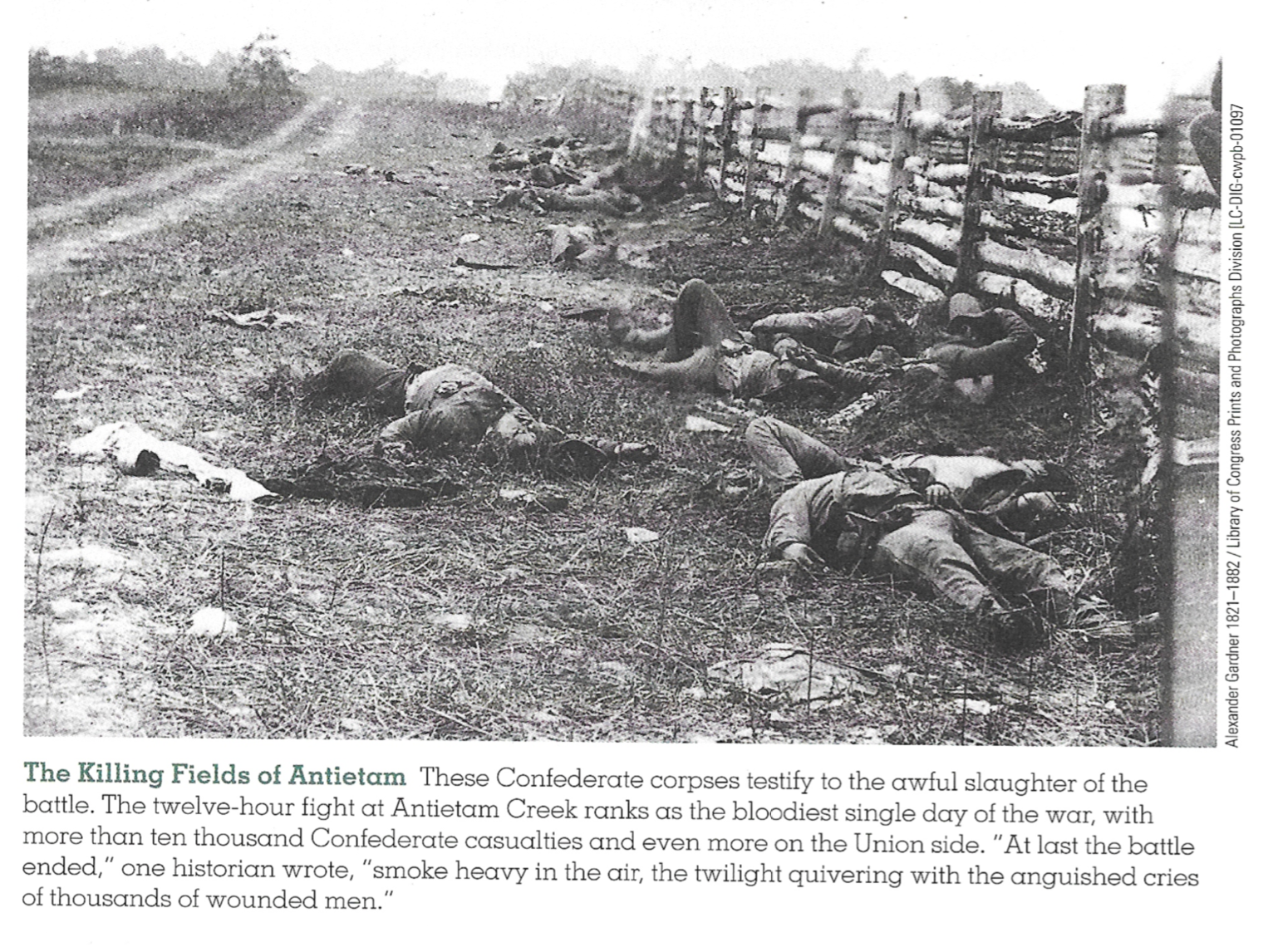
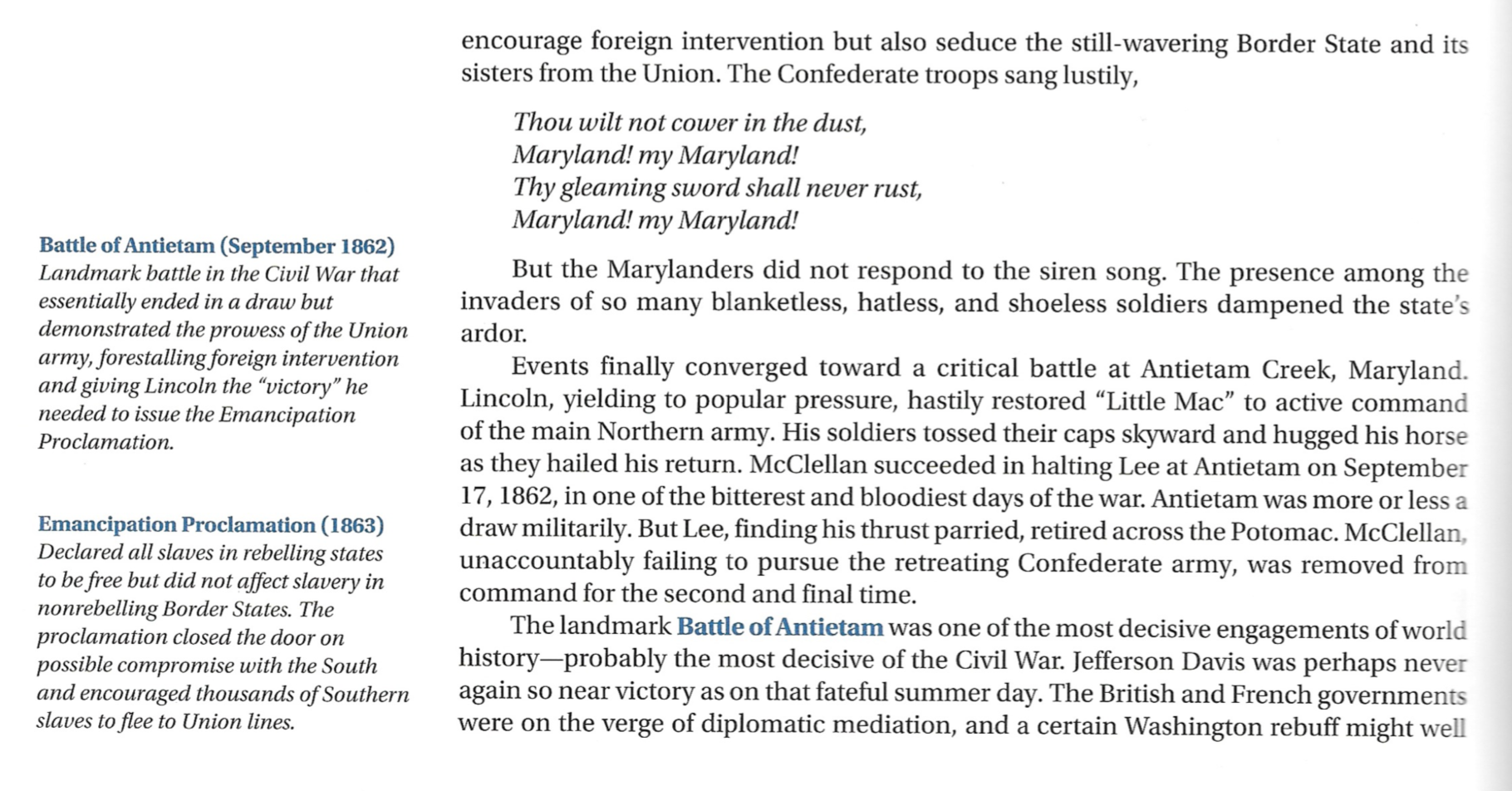
The passage suggests that the Battle of Antietam was particularly critical because it
inflated an already dangerous overconfidence among southerners.
disrupted General Robert E. Lee's plan of invading the North.
delayed Lincoln's plan to formally announce the Emanicipation Proclamation.
likely prevented the British and French from intervening to support the South.
What choice provides the best evidence for the answer to the previous question?
Line 9-10 ("The landmark... Civil War"
Line 13-15 ("But both... passing months")
Line 16-18 ("Bloody Antietam... Emancipation Proclamation")
Line 6-8 ("But Lee... final time")
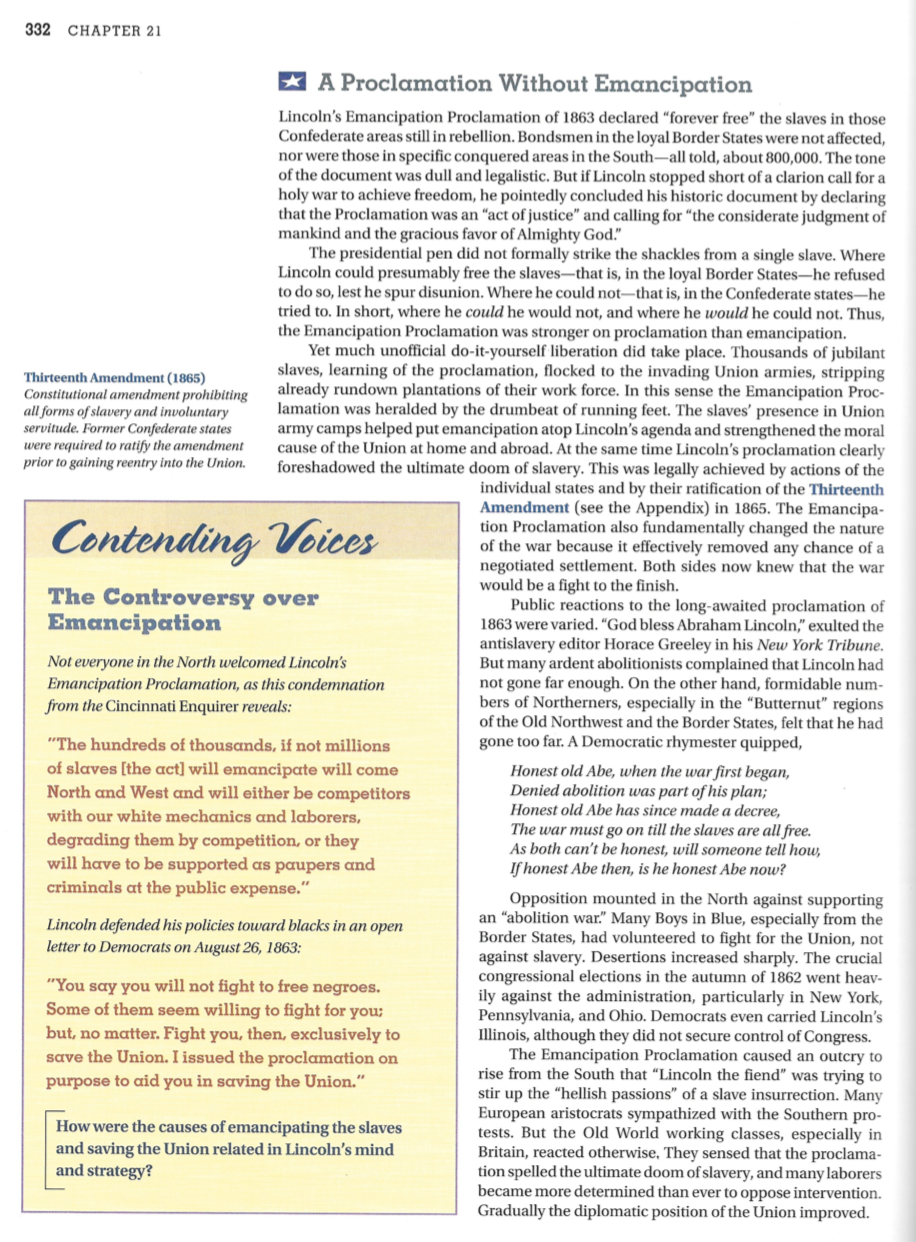
The passage indicates that the Emancipation Proclamation
drastically weakened the morale of Confederate soldiers and politicians.
wisely freed slaves in the Border States so more soldiers could fight in the Civil War.
only freed slaves in the Confederate states rebelling agains the Union.
weakened the moral cause and diplomatic position of the Union.
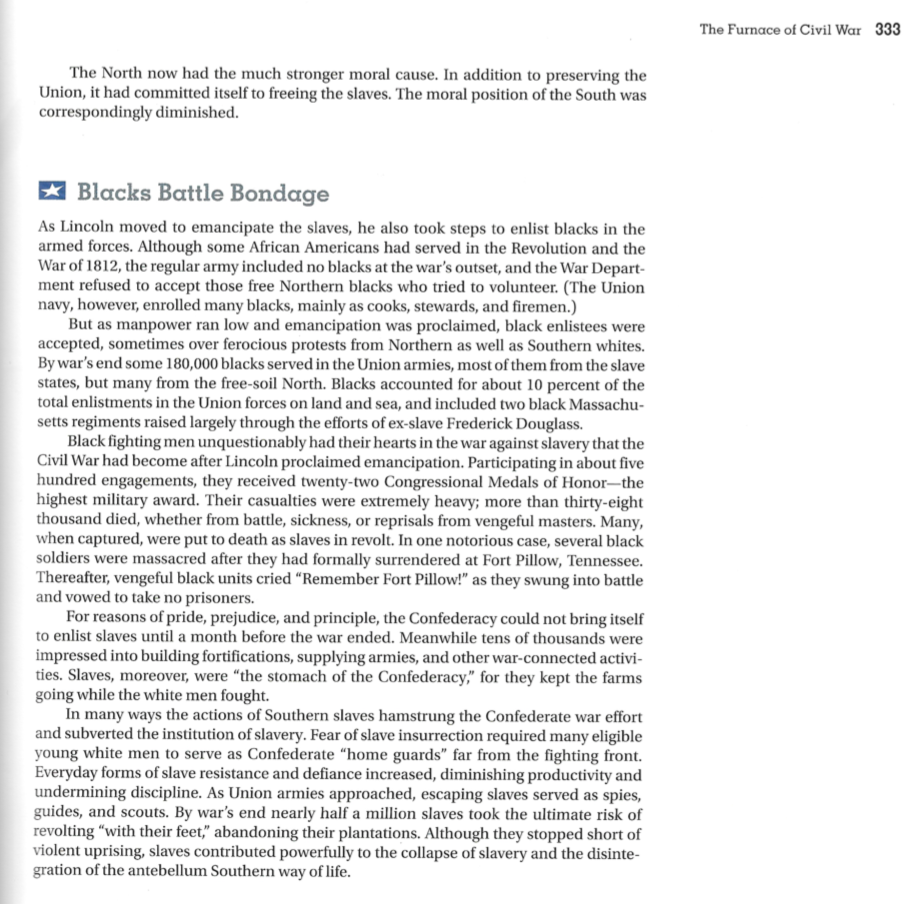
According to the passage, African Americans who fought for the Union Army in the Civil War
refused to serve under white officers.
served bravely and suffered extremely heavy casualties.
served mainly in military support units.
accounted for less than 1 percent of total Union enlistments.
What choice provides the best evidence for the answer to the previous question?
Line 2-4 ("Although some... to volunteer")
Line 9-11 ("Blacks accounted... Frederick Douglass")
Line 13-16 ("Participating in... vengeful masters")
Line 26-28 ("In many... fighting front")
As used in line 7, "expired" most nearly means
perished
commenced
concluded
ceased
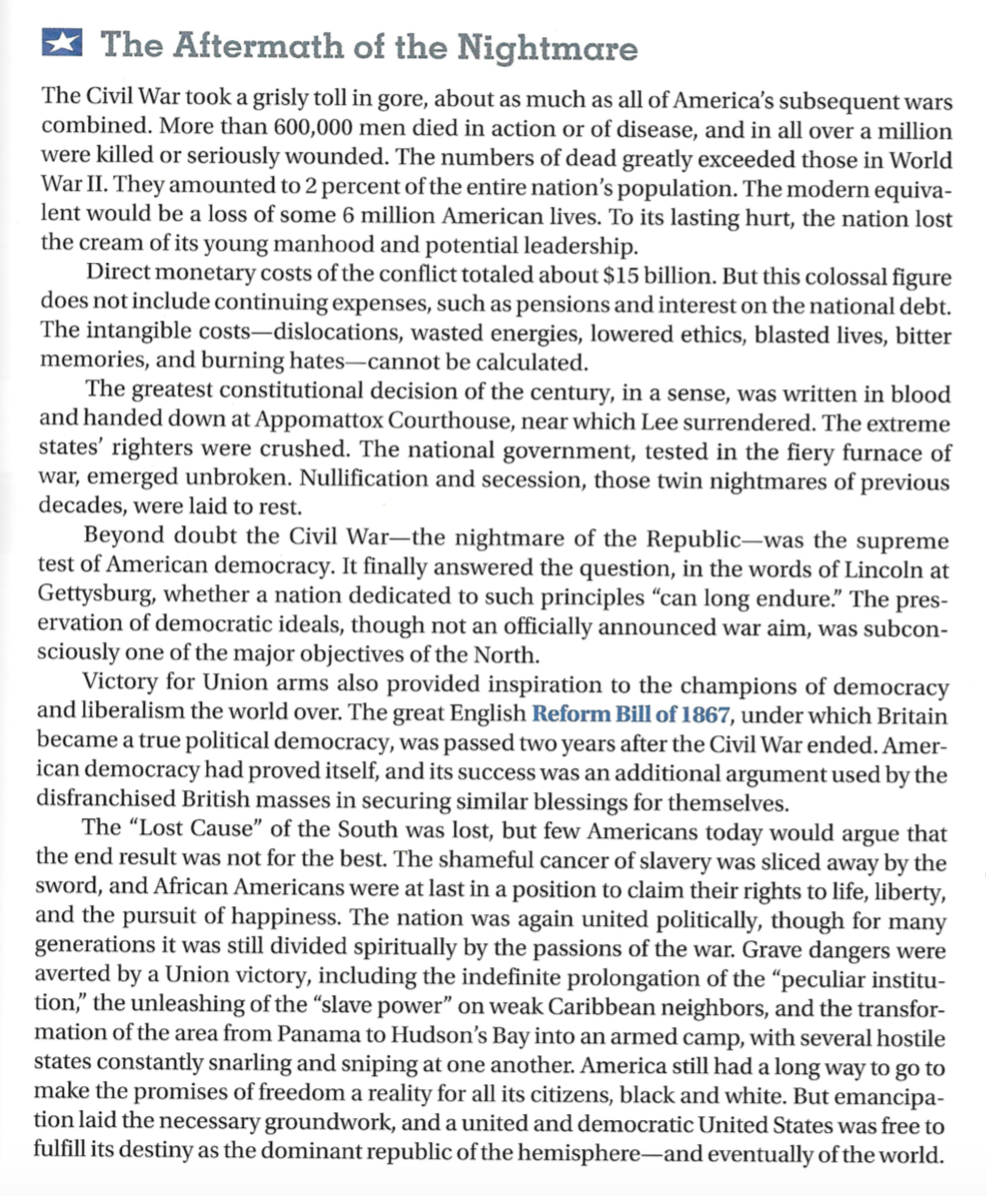
The passage is primarily focused on explaining how _______________________ was the supreme test of American democracy in the nineteenth century.