MM 3.6-3.7
star
star
star
star
star
Last updated about 1 month ago
20 Nsɛmmisa
1
1
1

1
1
1
1

1
1
1
1

1
1
1
0
0
0
0
0
0
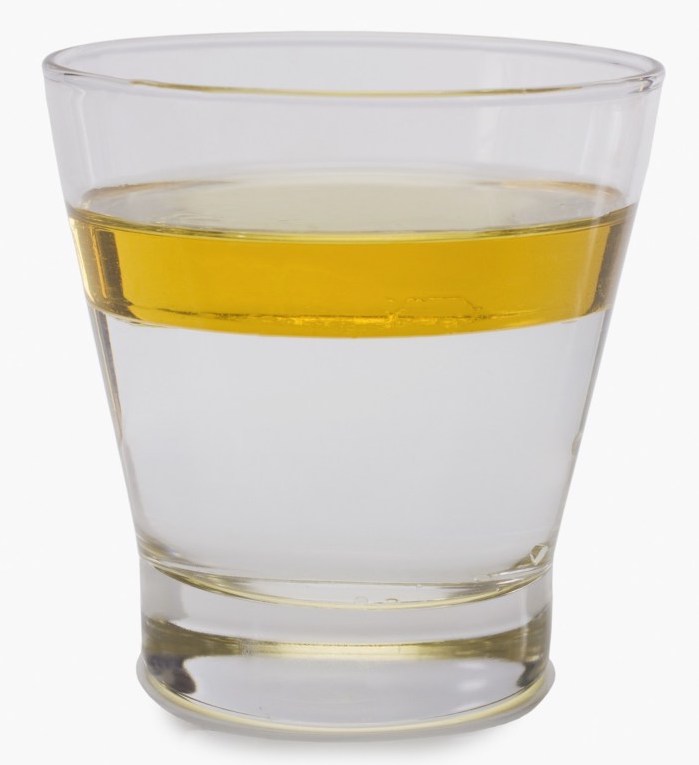
Do you observe (see) layers?
Does this mean the oil and water mix or not mix (separate)?
Are the oil molecules and water molecules attracted to each other?
Do you observe (see) layers?
Does this mean the oil and water mix or not mix (separate)?
Does this mean the oil molecules are attracted to the lecithin (emulisifier) molecules?
Does this mean the water molecules are attracted to the lecithin (emulisifier) molecules?
Oil and water (vinegar) BEFORE adding Lecithin
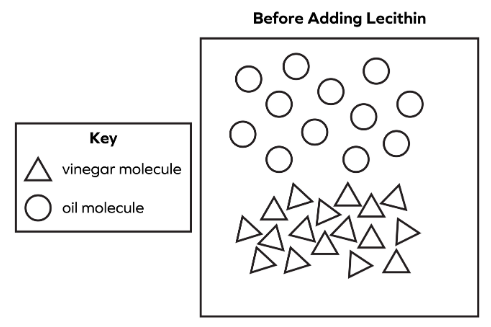
Does this model show vinegar molecules and oil molecules attracted (combined, connected) to each other?
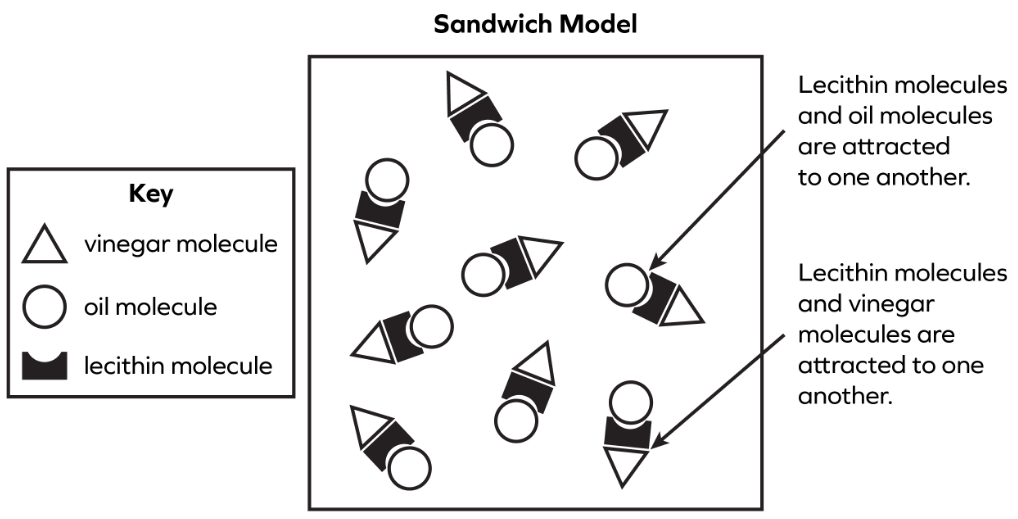
Does this model show the oil and vinegar (water) molecule mixing or not mixing (staying separate)?
Is the lecithin (emulsifier) molecule attracted to the oil molecule?
Is the lecithin (emulsifier) molecule attracted to the vinegar molecule?
Is the lecithin (emulsifier) molecule attracted to the oil molecule?
Is the lecithin (emulsifier) molecule attracted to the vinegar molecule?
Which model is more correct?
Modeling
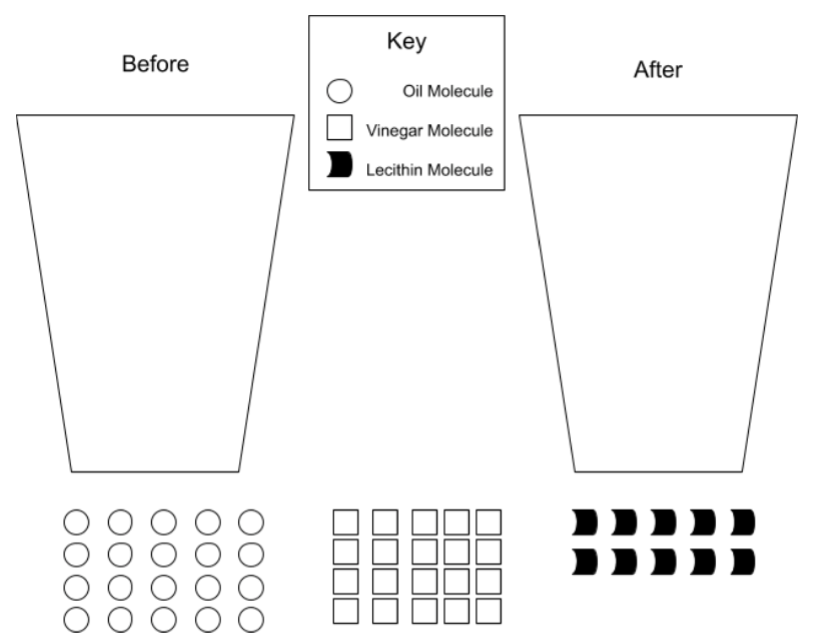
Create a model that shows the location and arrangement of the vinegar and oil molecules before and after lecithin is added to the mixture. The picture below shows what the mixtures look like with our eyes.
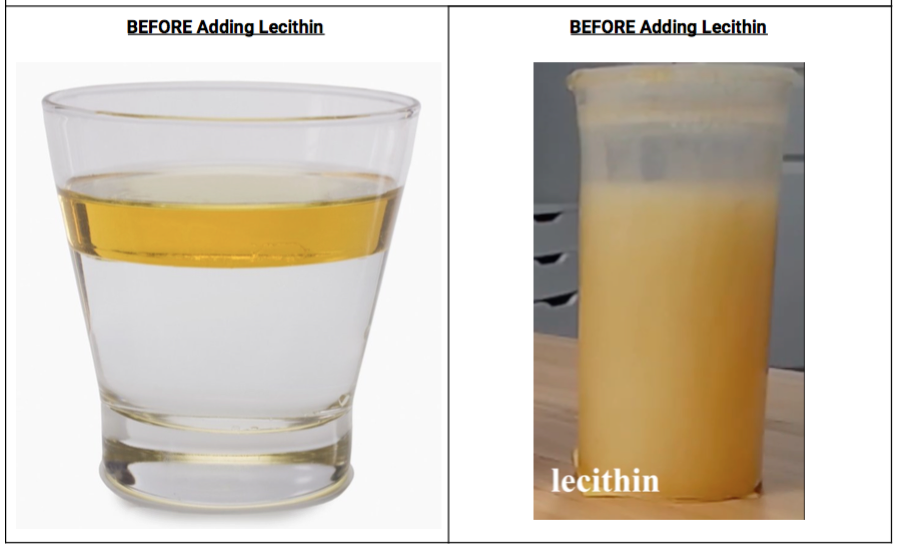
Now go to google classroom, science, classwork, and find MM 3.7 Model. Use the model to show what the molecules look like for the oil and vinegar mixture BEFORE and AFTER adding lecithin.
CER (Claim / Evidence / Reasoning) Paragraph
Question: What is an Emulsifier?
Use the words in the word bank to answer this question

Claim (Answer to the question): What is an Emulsifier?
Sentence starter: An emulsifier is ______________
Type your answer below
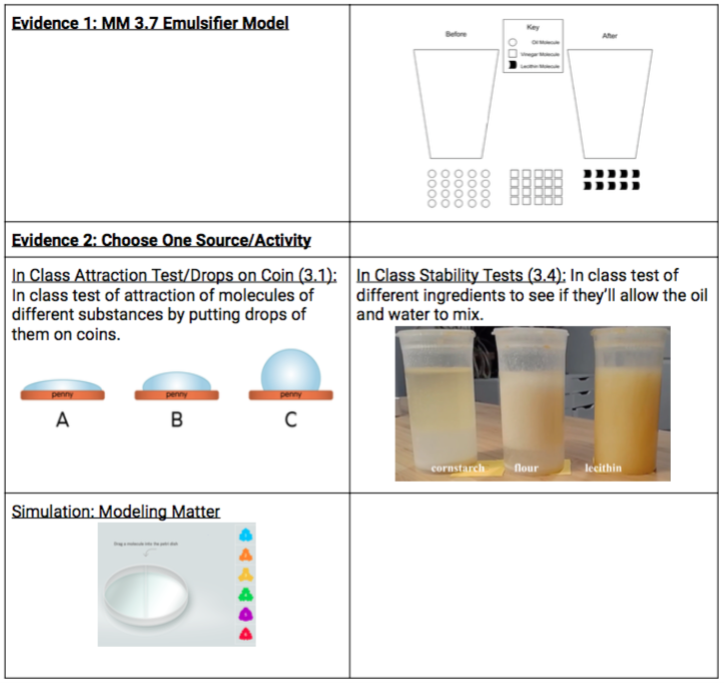
Evidence: Information that shows your answer is correct. Use evidence from the MM 3.7 Emulsifier Model
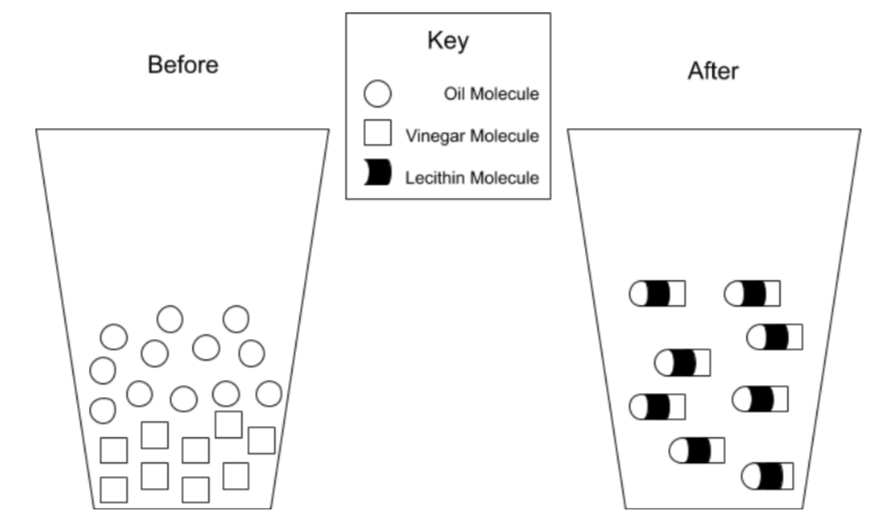
Sentence starter: In the MM 3.7 model, the before picture shows ____________ and the after picture shows ____________ .
Type your answer below
Evidence: Information that shows your answer is correct. Use evidence from the emulsifier test in MM 3.4
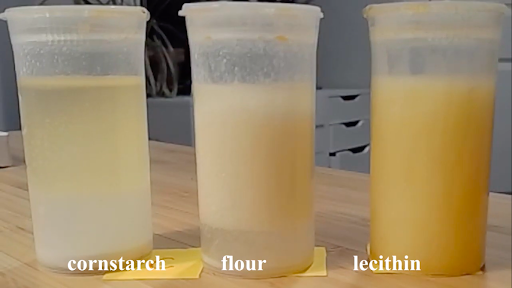
Sentence starter: In the emulsifier test, it showed ____________ .
Type your answer below
Evidence: Information that shows your answer is correct. Use evidence from the simulation when we used the emulsifier molecule in MM 3.5
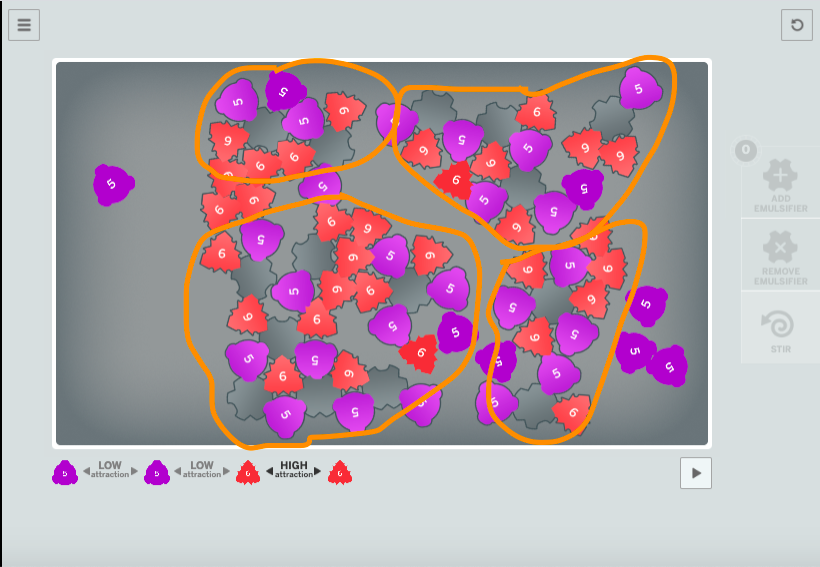
Sentence starter: In the MM simulation, it showed ____________ .
Type your answer below
Reasoning (Explanation): Explain what is an emulsifier?
Explain what happened when lecithin is added to the oil and vinegar mixture.
Sentence starters:
- Oil and vinegar are separate and do not mix because ___________
- When lecithin is added to the oil and vinegar, the oil and vinegar ___________ because the lecithin molecules are ___________
Type your answer below
Independent Practice: Now it is your turn. Write a CER paragraph answering the question below. Use the MM 3.7 Model and one piece of evidence from the activities we did in class to support your answer.
Question: What is an Emulsifier?
Use the words in the word bank to answer this question
Type your answer below