7.2 Fight or Flight

Last updated over 3 years ago
17 questions
1

Do Now:

a) List at least four things or situations that trigger your fear response.
b) List at least four changes that occur in your body when you respond to a frightening situation.
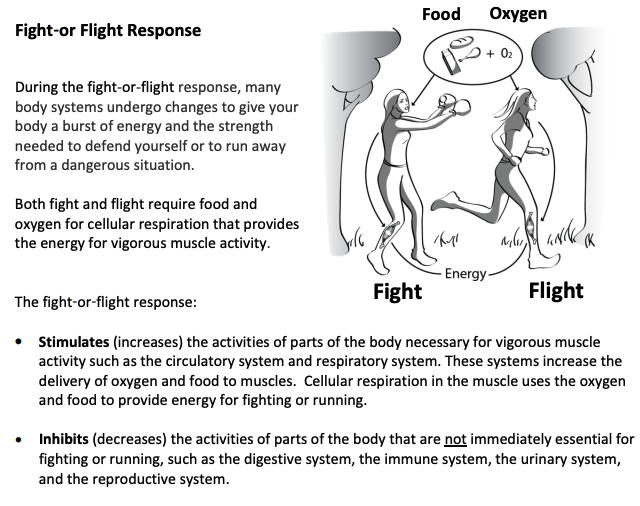
Activity 1: Fight or flight reaction video. You will become a test subject for question 2-4. You will record our normal state, then state after the video, and then reflect upon how you reacted.
1

Before watching this video,how do you feel right now ( i.e relaxed, tired, normal)?

1

Now watch this video and record how you feel now.

1

Would you fight or flight?

Activity 2: Read the following and answer questions 5-8.


1

What is the purpose of fear and the fight-or-flight response?

1

Explain why people do not need to be taught to make a fight-or-flight response.

1

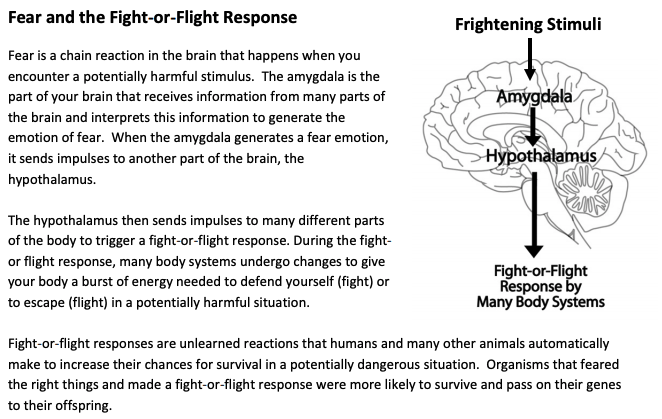
What part of the brain would best be called the “fear emotion center"?

1

What part of the brain sends signals to many different parts of the body to make the fight-orflight response?

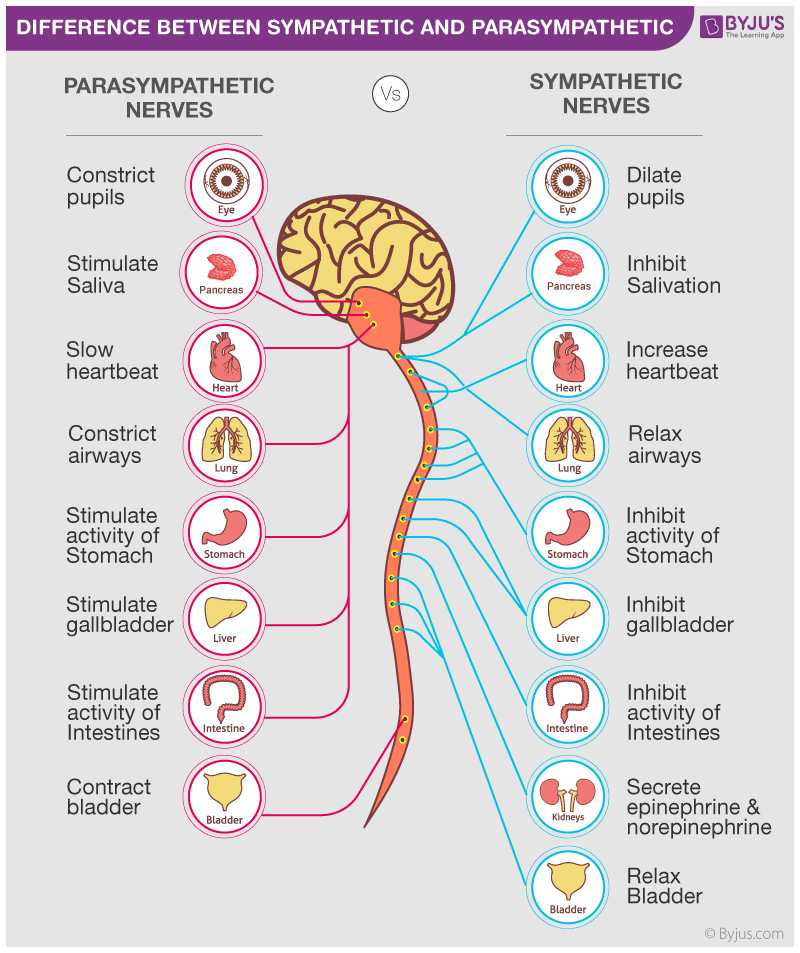
Use this information to sort the situations into the 2 categories for question 9.
1

Categorize the bodily responses to fight/flight or relaxation.

  • Pupils of eyes dilate (open) to increase the amount of light entering the eye
  • Blood vessels to brain, skin, and digestive system dilate (open)
  • Sweat glands release more perspiration
  • Heart rate decreases
  • Muscles relax
  • Blood vessels to muscles and lungs constrict (close)
  • Breathing rate increases
  • Airway tubes to lungs dilate (open)
  • Blood vessels to skin, brain, and digestive system constrict (close)
  • Pupils of eyes constrict (close) to decrease the amount of light entering the eye
  • Breathing rate decreases
  • Muscles tense
  • Airway tubes to lungs constrict (close)
  • Blood vessels to muscles and lungs dilate (open)
  • Heart rate increases
  • Sweat glands release less perspiration
  • Fight/ Flight
  • Relax
For each of the situations below ( questions 10 and 11), explain if the parasympathetic or sympathetic nervous system will be working.


1

After you are finished eating a meal. Parasympathetic or sympathetic nervous system and why?

1

Warming up before a game. Parasympathetic or sympathetic nervous system and why?

Activity 3: Fear Hormones

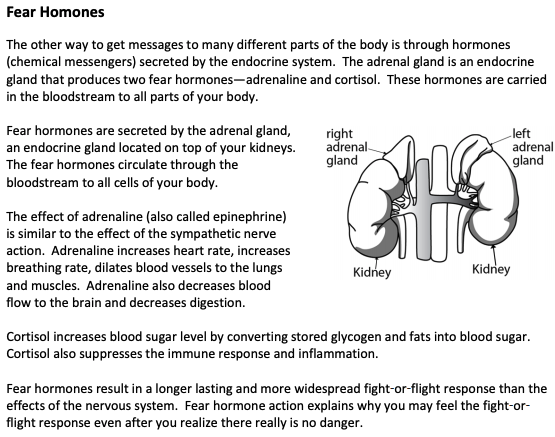
Read the following and answer questions 12- 17
1

What endocrine glands produces and secretes fear hormones—adrenaline and cortisol?

1

Identify if adrenaline (also called epinephrine) would increase or decrease each of the following:

-Heart Rate
-Breathing Rate
-Airways leading to lungs
-Digestion

1

Adrenaline increases breathing rate and opens the airways to the lungs. Explain why this is important for the vigorous muscle activity needed for a fight-or-flight response.

1

Cortisol elevates blood glucose (sugar) level. Explain why this is important in a frightening situation.

1

Adrenaline increases heartbeat rate and dilates (opens) blood vessels to the muscles. Explain why this is important for the vigorous muscle activity needed for a fight-or-flight response.

1

Sort the hormone that is most closely associated with each of the following statements.

  • This hormone may be used as a medication to reduce inflammation, allergic reactions, and diseases in which the immune system attacks the body.
  • During periods of prolonged starvation, this hormone is secreted to maintain blood sugar levels.
  • This hormone may be used as a medication when the heart stops beating or when an allergic reaction closes of airways.
  • Cortisol
  • Adrenaline