12.7_6thSci_TR 3.6
star
star
star
star
star
Last updated over 3 years ago
3 Nsɛmmisa
Slides and Objective
Part 1
0
1
0
Part 2
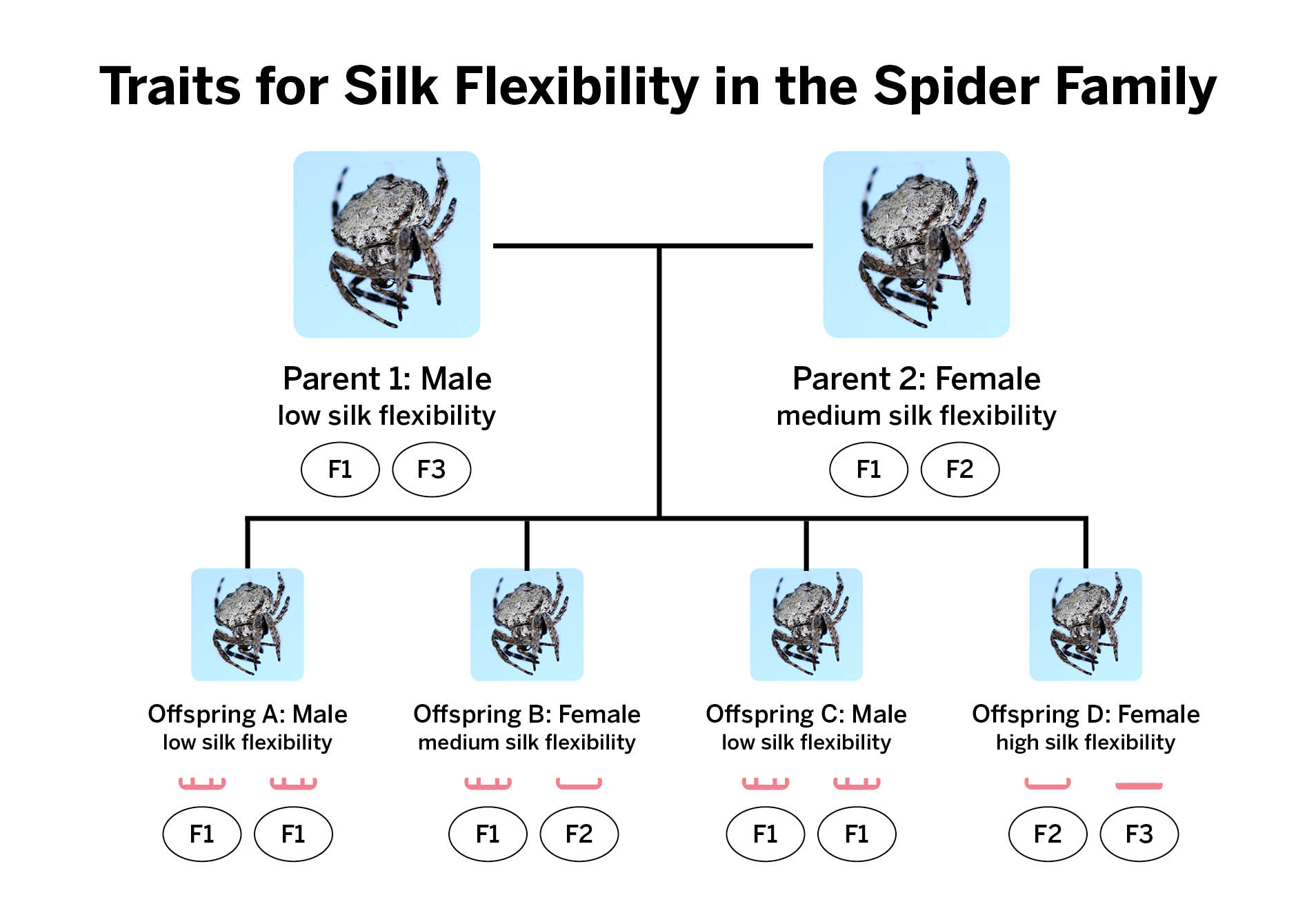
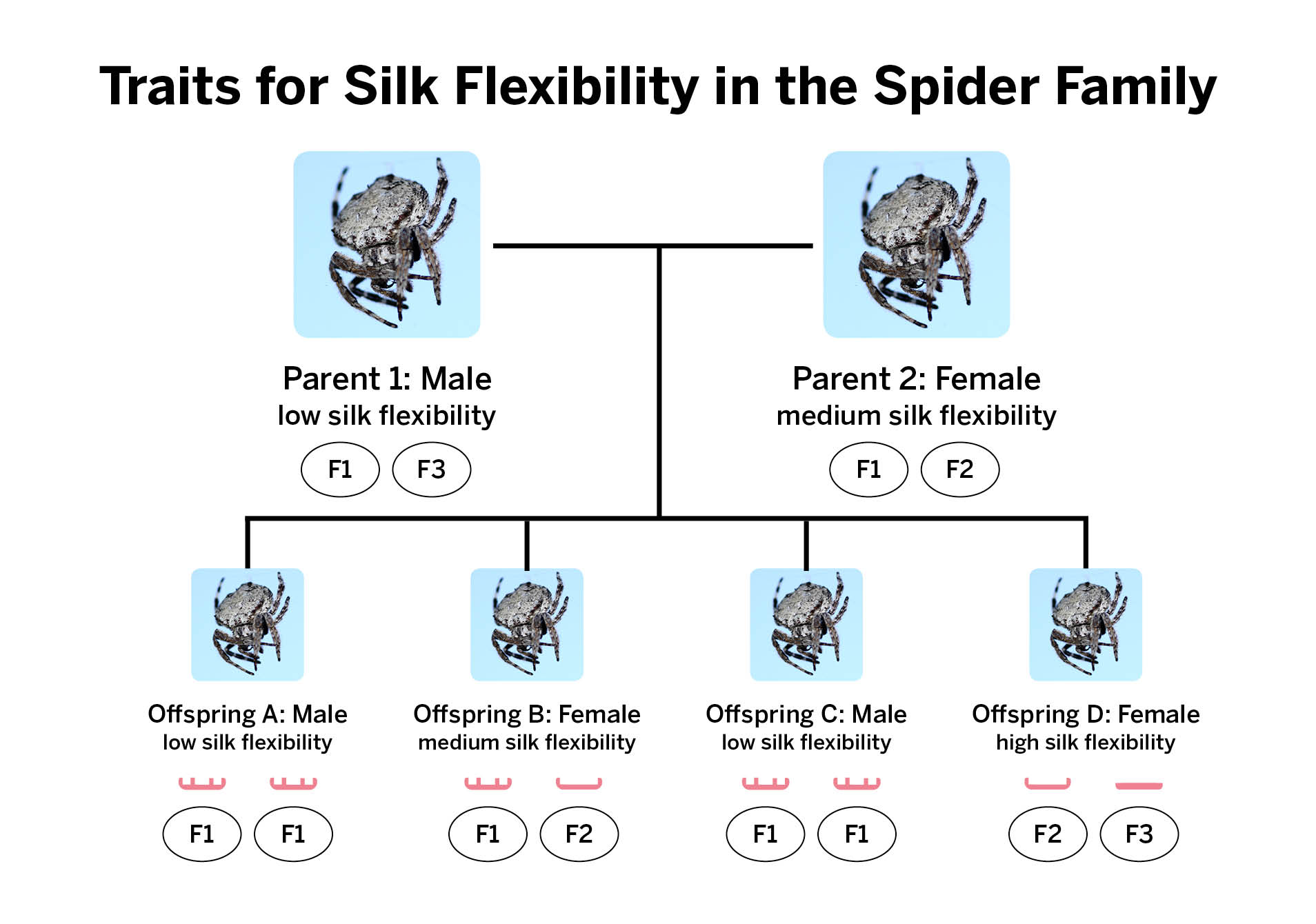
Where did Offspring B get her F2 gene?
Why does Offspring B have a different gene version (F1F2) than her brother (F1F1)?
Why is Offspring D the only spider with High Silk Flexibility?
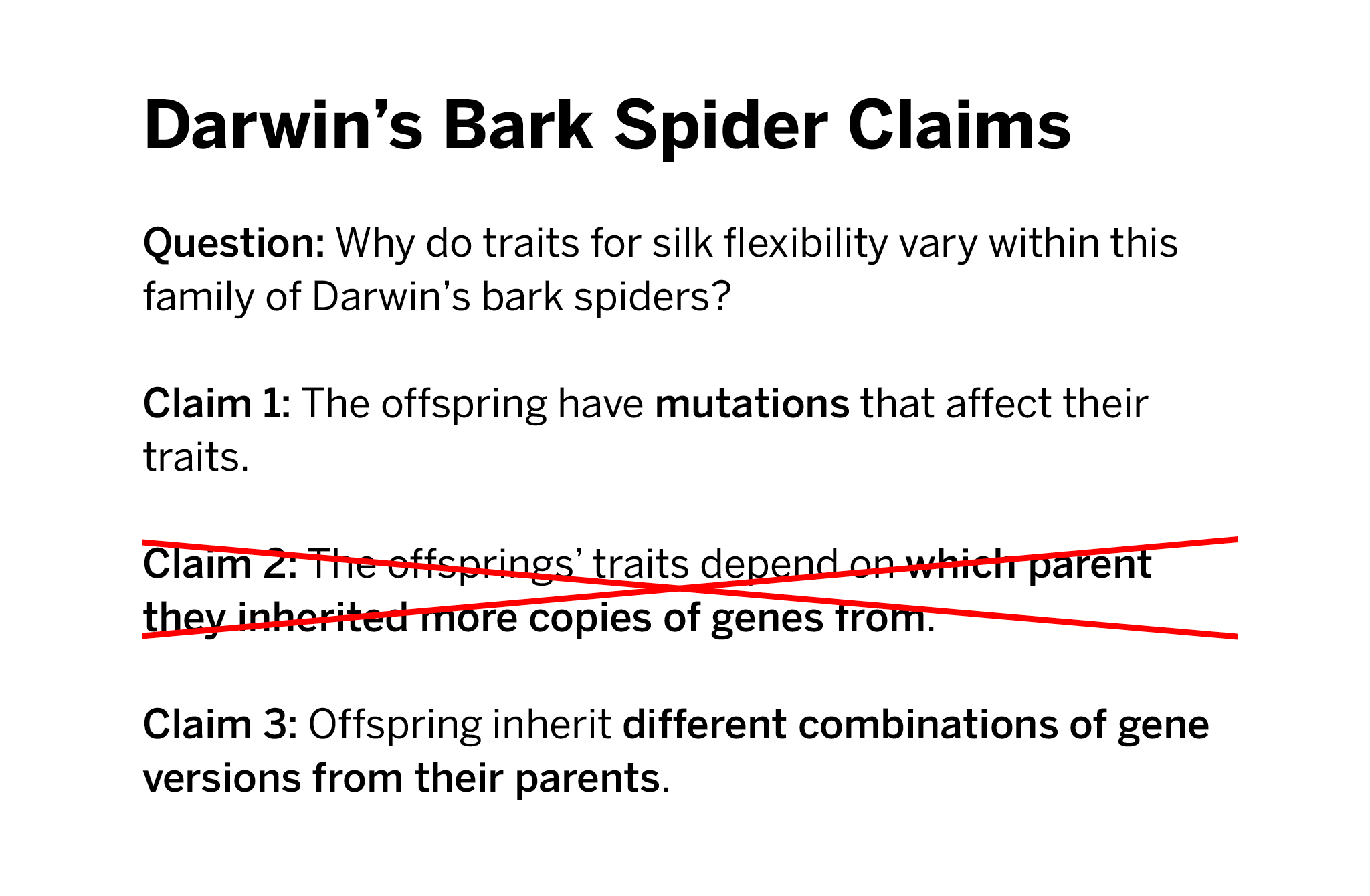
As you can see, we eliminated Claim 2 because we saw that each offspring gets an equal number of genes from each parent. We’ll use the reasoning tool below to decide between Claim 1 and Claim 3.
Review the Family Tree diagram carefully, paying special attention to the spiders’ combinations of gene versions. Use the diagram to help you complete the reasoning tool below.
Based on what we just read, we can safely eliminate claim 1 (none of the spiders have a “new” gene version). If the offspring were having mutations, we would expect to see new gene versions that neither parent had. (Also, mutations *rarely* have an impact on traits).
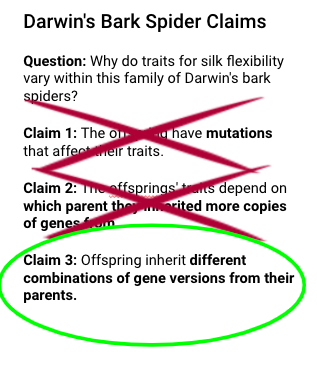
To conclude our study of these spiders, we’ll write a summary of how we know Claim 3 is correct.