Audio- Moth and Natural Selection
star
star
star
star
star
Last updated over 2 years ago
27 Nsɛmmisa

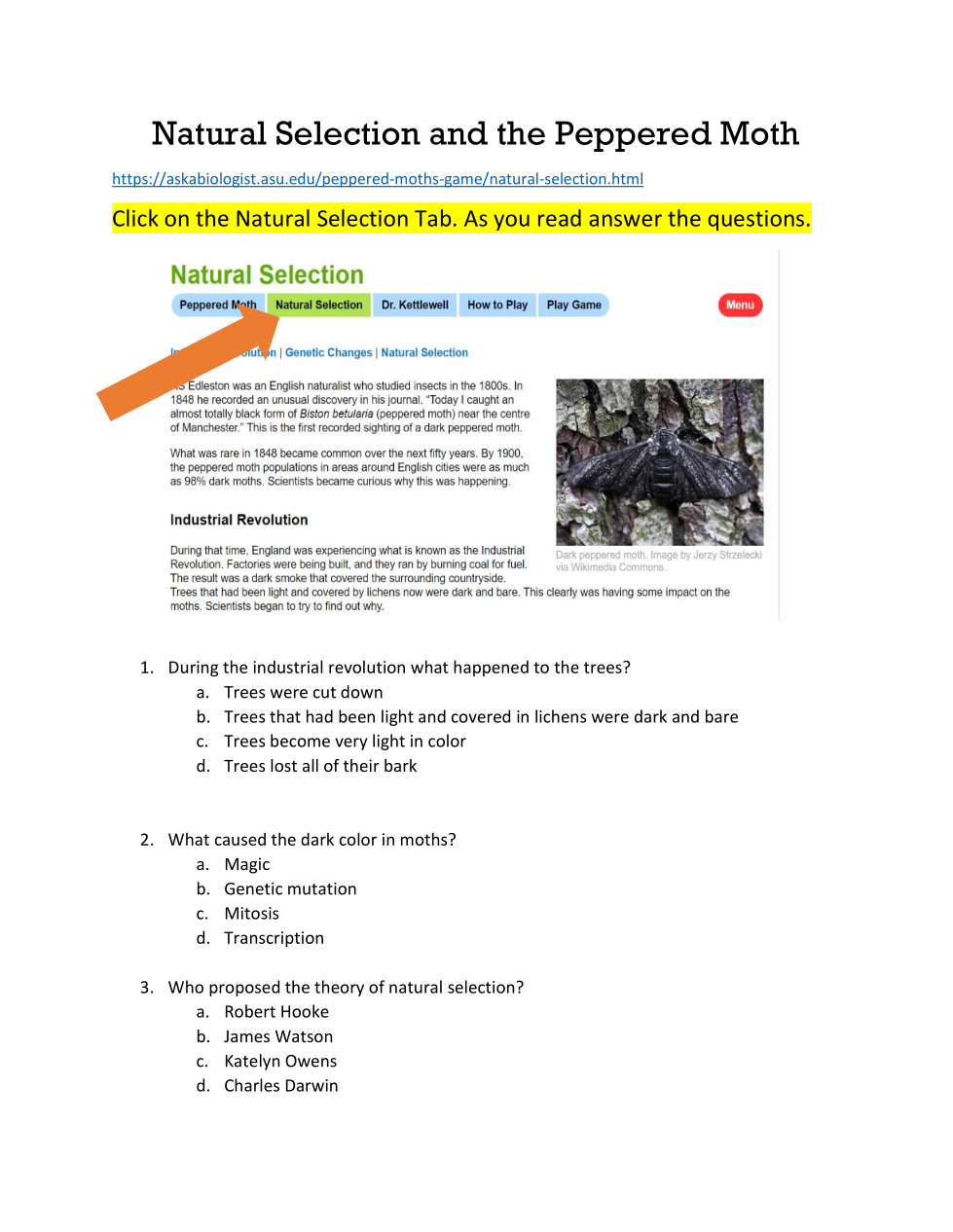
During the industrial revolution what happened to the trees?
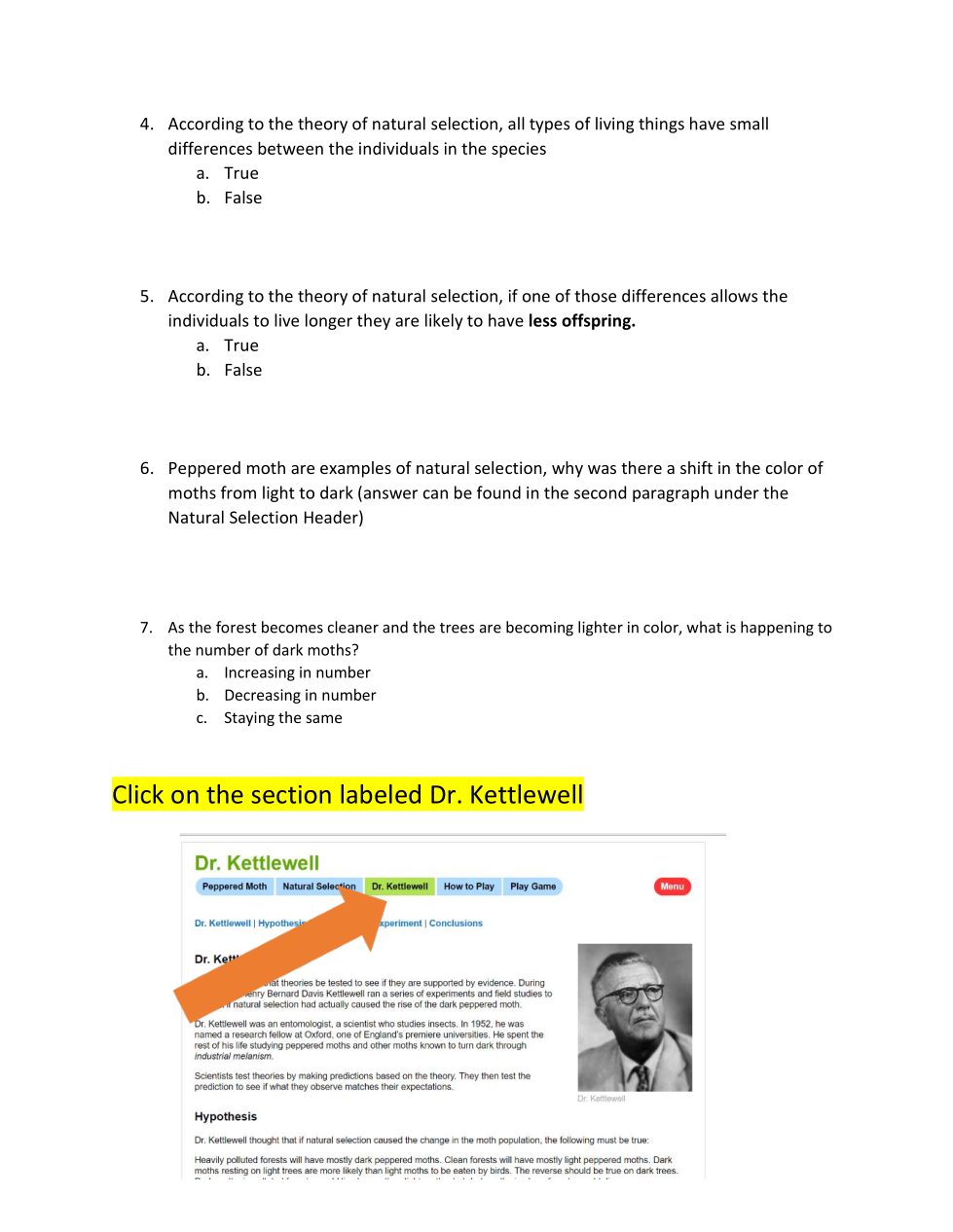
According to the theory of natural selection, all types of living things have small differences between the individuals in the species
Peppered moth are examples of natural selection, why was there a shift in the color of moths from light to dark (answer can be found in the second paragraph under the Natural Selection Header)
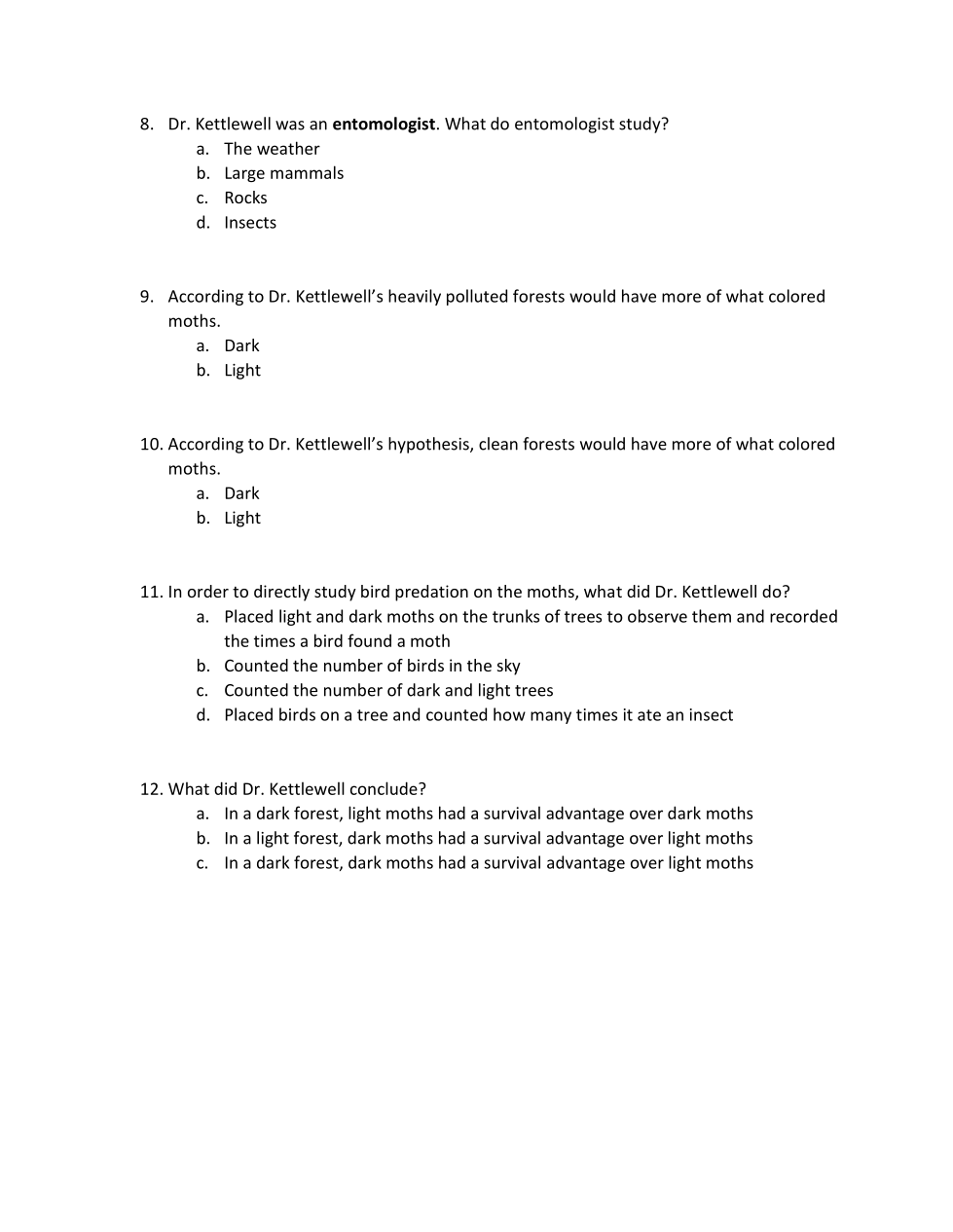
According to Dr. Kettlewell’s heavily polluted forests would have more of what colored moths.

How many total moths did you eat total after the 1 minute?
At the end of the game, what percent of the moths were light?
How many total moths did you eat total after the 1 minute?
At the end of the game, what percent of the moths were light?
At the end of the game, what percent of the moths were dark?
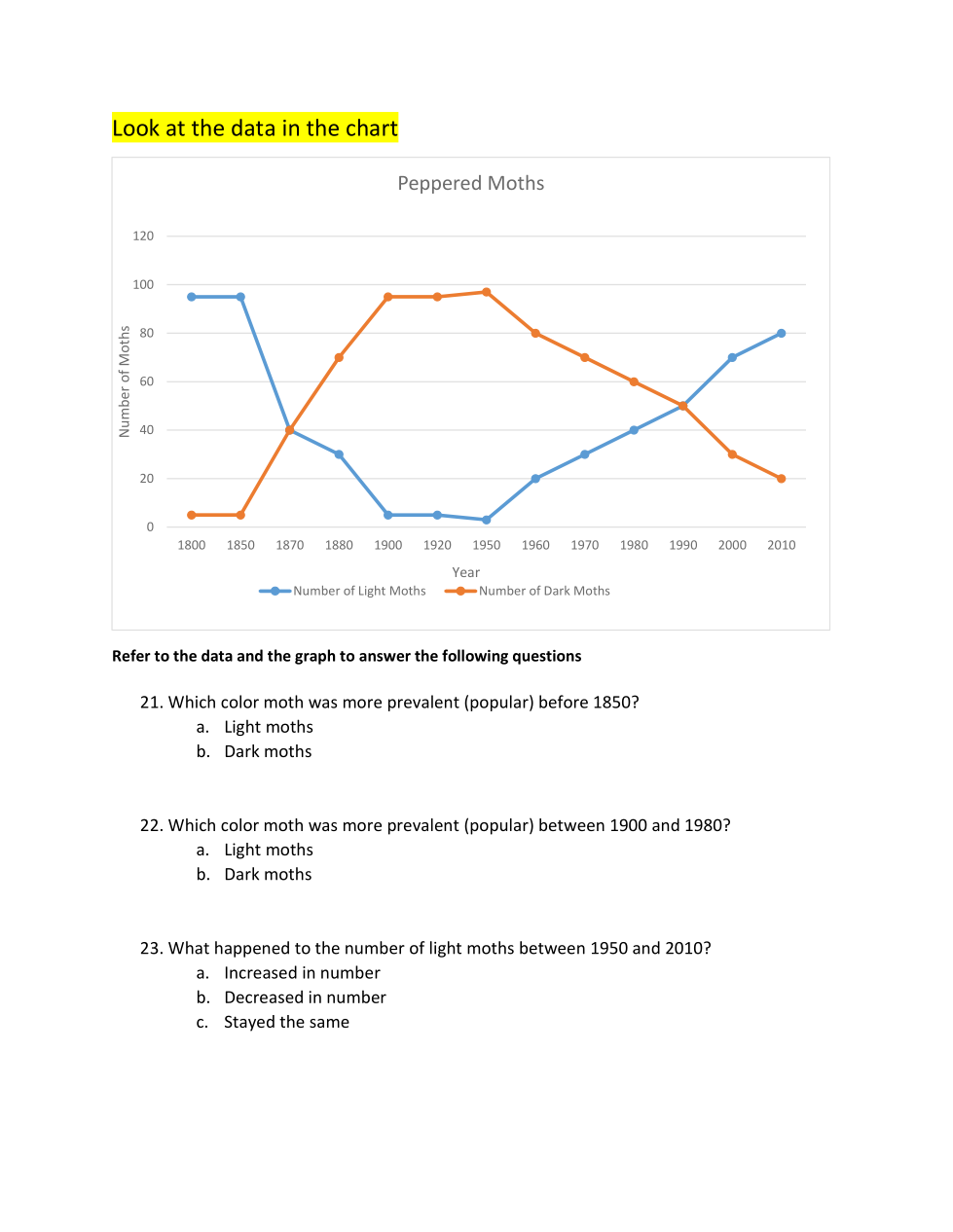
Which color moth was more prevalent (popular) between 1850?
Which color moth was more prevalent (popular) between 1900 and 1980?
During the Industrial Revolution from 1850 to 1950, factory’s and power plants produced large quantities of soot and smog. Near industrial areas, black powder covered the surfaces including moth habitat causing the trees to tree black. Using the concept of natural selection, explain why the number of dark moths increased in number from 1850 to 1950.
Clean Air Acts were passed by the governments of industrialized nation’s beginning in the mid-1950s. The clean air act reduced the amount of pollution made by factories. This reduced the amount of soot on trees. Using the concept of natural selection, explain why the number of light moths increased after 1980.
What caused the dark color in moths?
Who proposed the theory of natural selection?
According to the theory of natural selection, if one of those differences allows the individuals to live longer they are likely to have less offspring.
As the forest becomes cleaner and the trees are becoming lighter in color, what is happening to the number of dark moths?
Dr. Kettlewell was an entomologist. What do entomologist study?
According to Dr. Kettlewell’s hypothesis, clean forests would have more of what colored moths.
In order to directly study bird predation on the moths, what did Dr. Kettlewell do?
What did Dr. Kettlewell conclude?
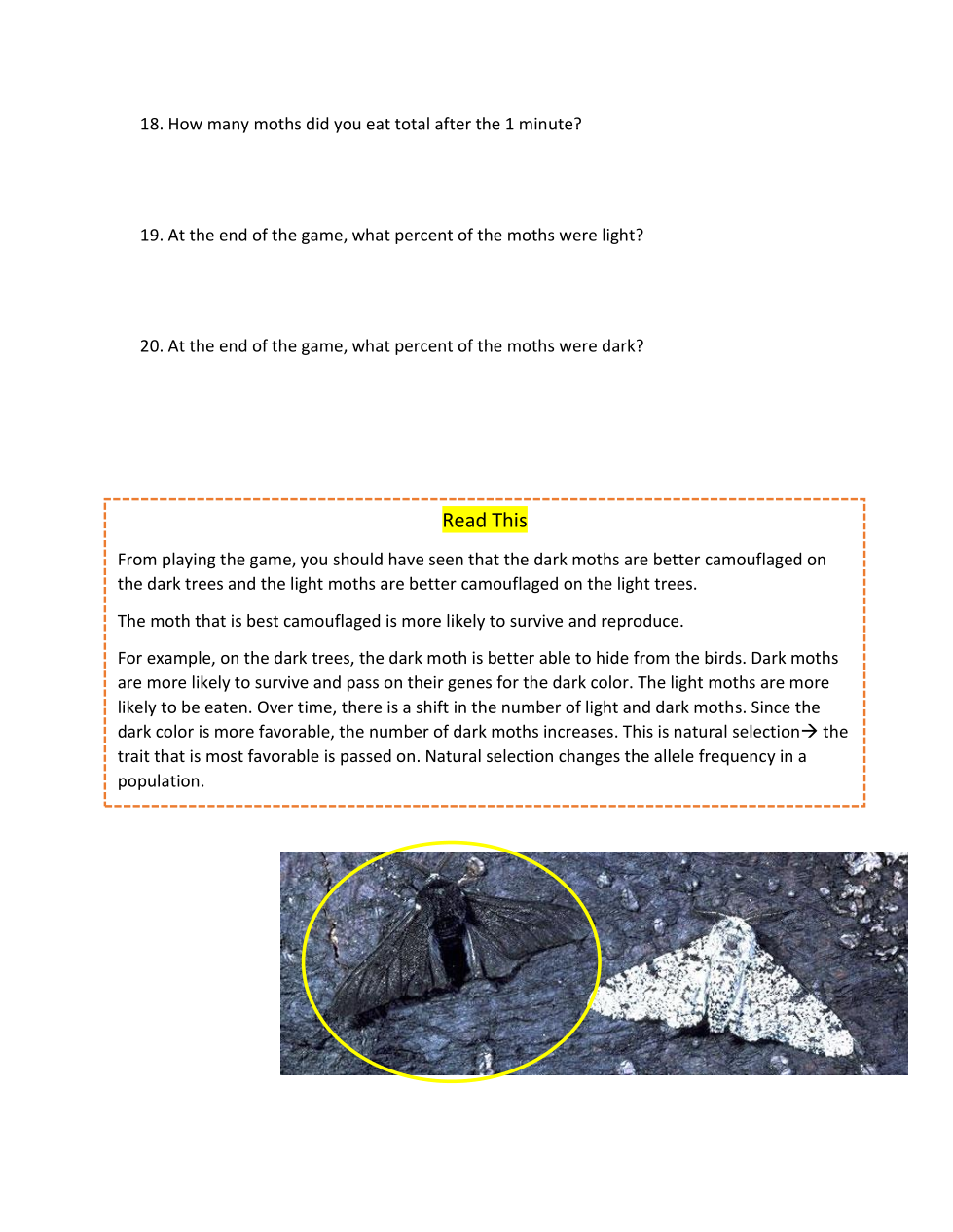
In the light forest which moth was easier to see?
At the end of the game, what percent of the moths were dark?
In the dark forest which moth was easier to see?
What happened to the number of light moths between 1950 and 2010?