Kelso Math: Algebra 2A - Unit 1 Practice Test
star
star
star
star
star
Last updated over 5 years ago
20 Nsɛmmisa
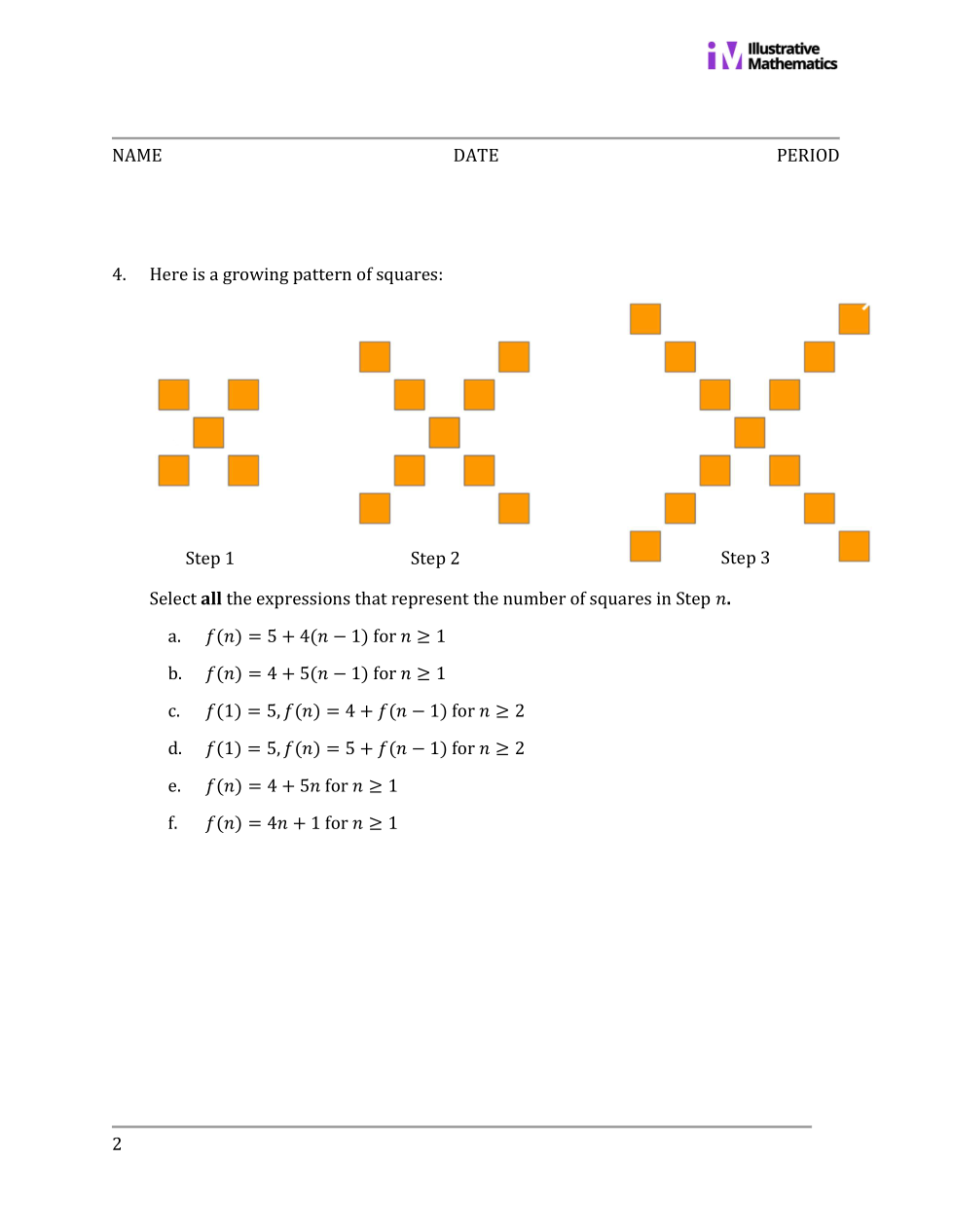
1
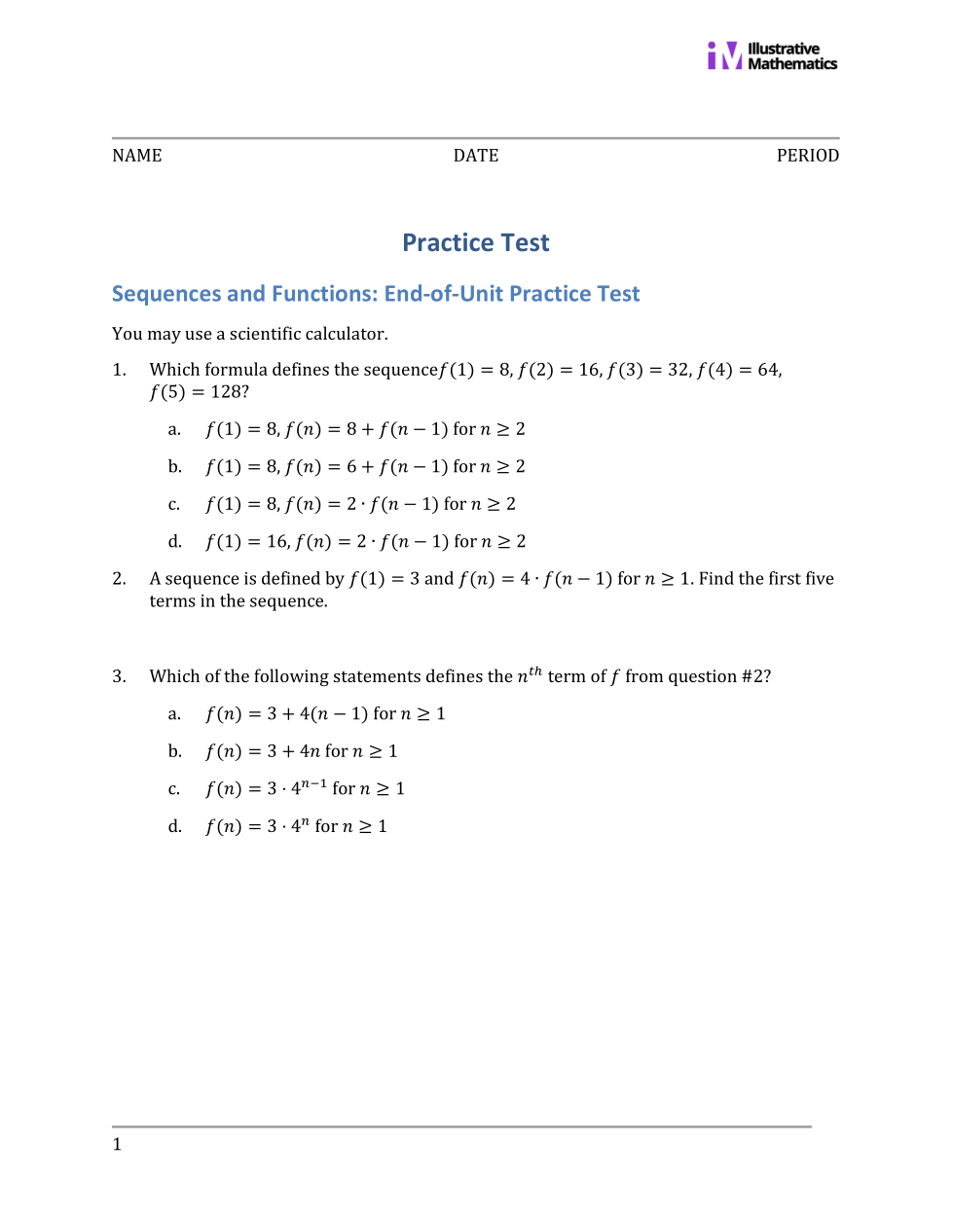
f(2)=
f(3)=
f(4)=
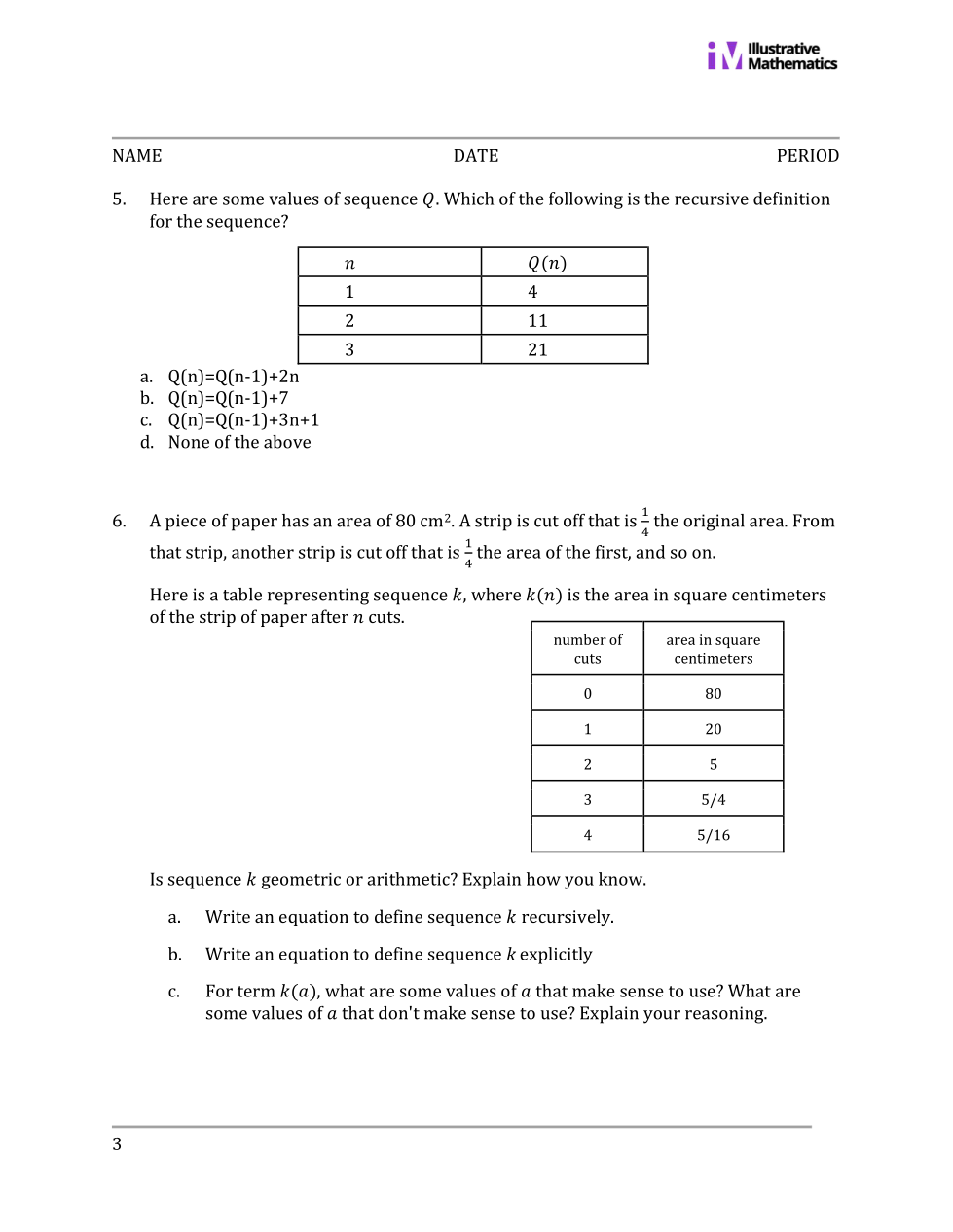
k(3)=
k(4)=
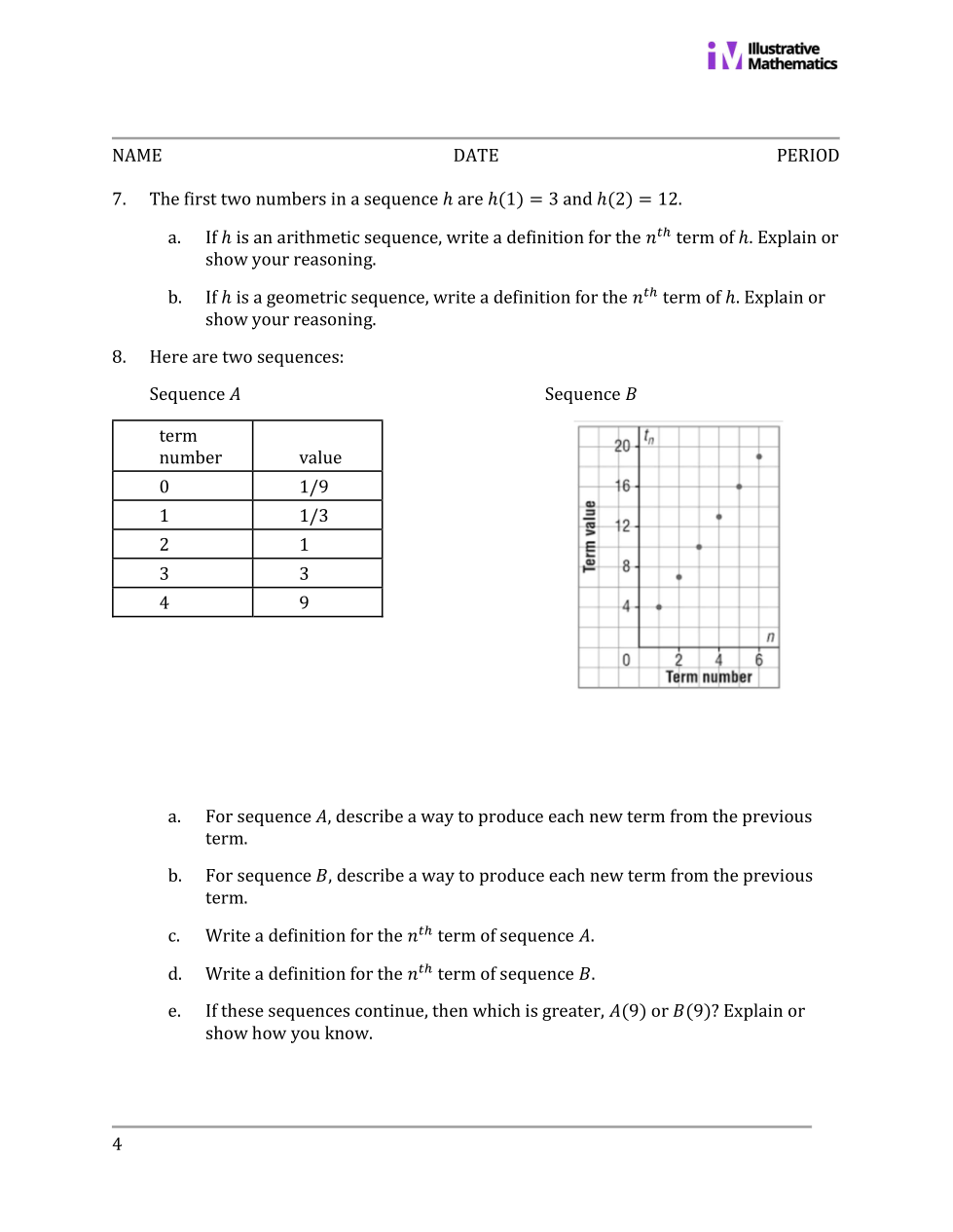
If the sequence is arithmetic, write the explicit rule. Start with h(n)=
f(5)=
Given that Q(1)=4, which of the following is the recursive definition for the sequence?
Is sequence k arithmetic or geometric?
Given k(0)=80, which of the following defines sequence k recursively?
Given k(0)=80, which of the following defines sequence k for the nth term?
If the sequence is geometric, write the explicit rule. Start with h(n)=
For sequence A, describe a way to produce each new term from the previous term. I will have to grade this one!
For sequence B, describe a way to produce each new term from the previous term. I will have to grade this one!
Write an explicit rule for sequence A. Start with A(n)=
Write an explicit rule for sequence B. Start with B(n)=
If the sequences continue, then which is greater, A(9) or B(9)? Explain how you know.