Log in
Sign up for FREE
arrow_back
Library
The Sixties Briggeman
By Garth Briggeman
star
star
star
star
star
Share
share
Last updated about 5 years ago
25 questions
Add this activity
1
1
1
1
zoom_in
zoom_in
zoom_in
1
2
zoom_in
1
Question 1
1.
What does the quote "ask not what your country can do but what you can do for your country mean"? Does this quote still have relevance today?
1
Question 3
3.
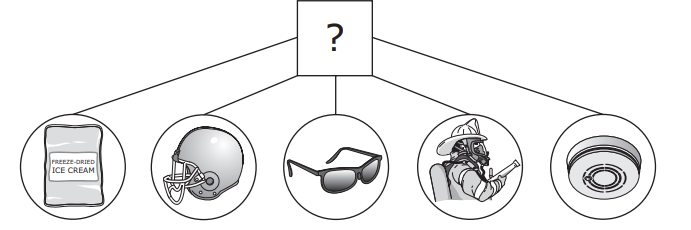
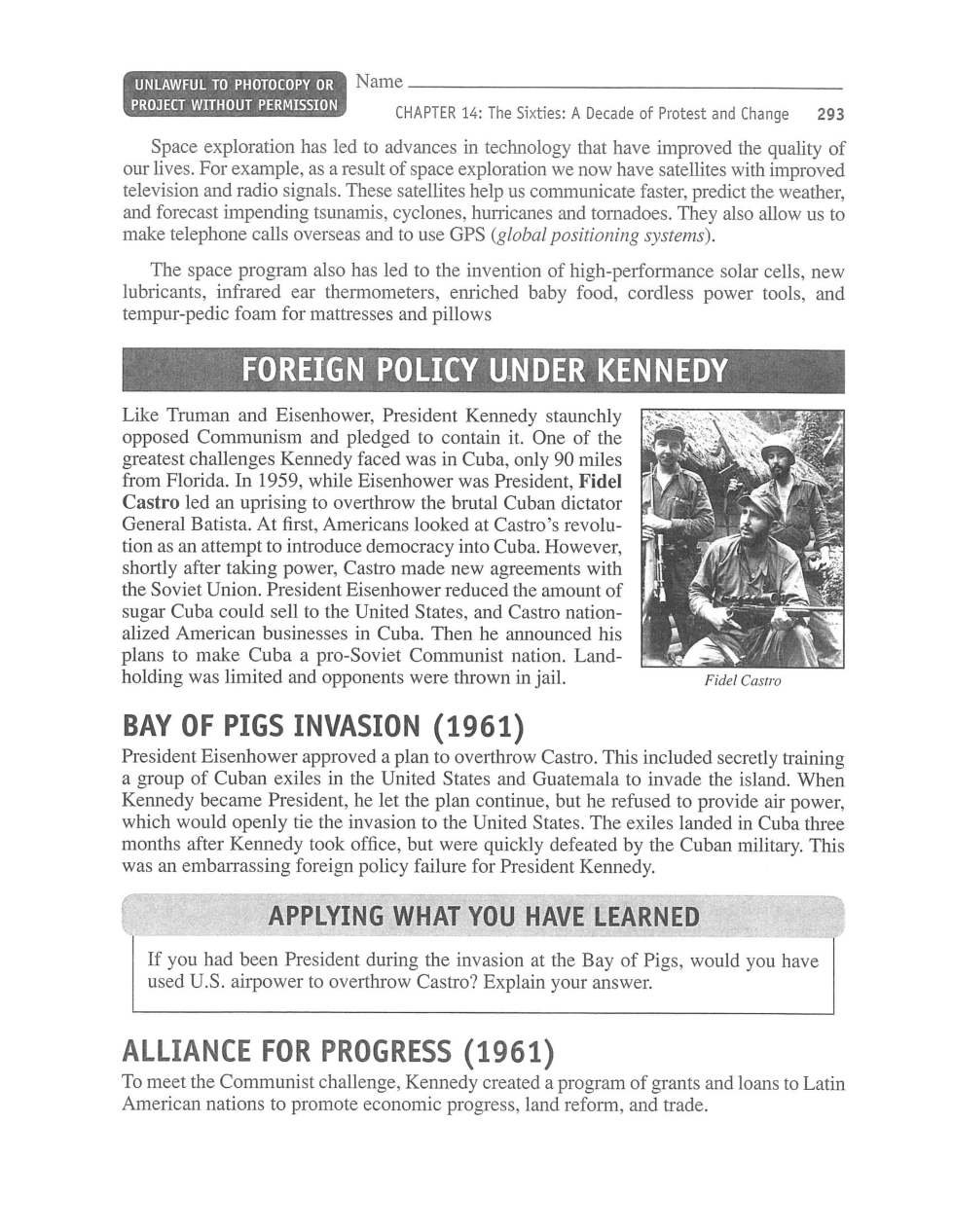
Which factor links all of these modern innovations?
A They are all products initially created for use in the U.S. communications industry.
B They each include material that was first grown on U.S. experimental farms in the late nineteenth century.
C They each include technology that was originally developed for use in the U.S. space exploration program.
D They are all special tools first created for U.S. transportation workers in the early twentieth century.
4
zoom_in
1
Question 4
4.
Summarize the Bay of Pigs Invasion.
5
zoom_in
1
Question 5
5.
What was President John F. Kennedy's response to Soviet plans to install nuclear missiles in Cuba in 1962?
A He attacked the missle silos with strategic air strikes.
B He had the army sieze control of of Cuba.
C He placed a blockade around Cuba and threatened war.
D He negotiated an agreement with Fidel Castro.
Question 6
6.
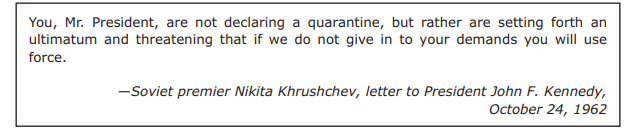
Which U.S. action is Khrushchev challenging in this excerpt?
Preventing Soviet advisors from meeting with revolutionaries in South America
Establishing a naval blockade to stop the shipment of missiles to Cuba
Enforcing a ban on military aid to communist forces in North Vietnam
Conducting air shipments of vital supplies to East Berlin
Question 7
7.
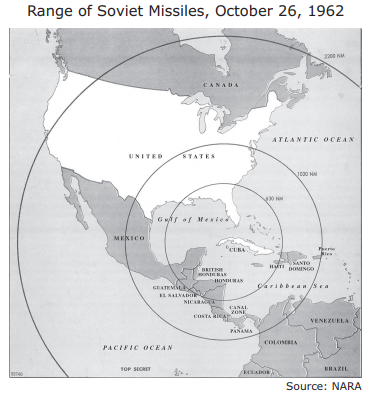
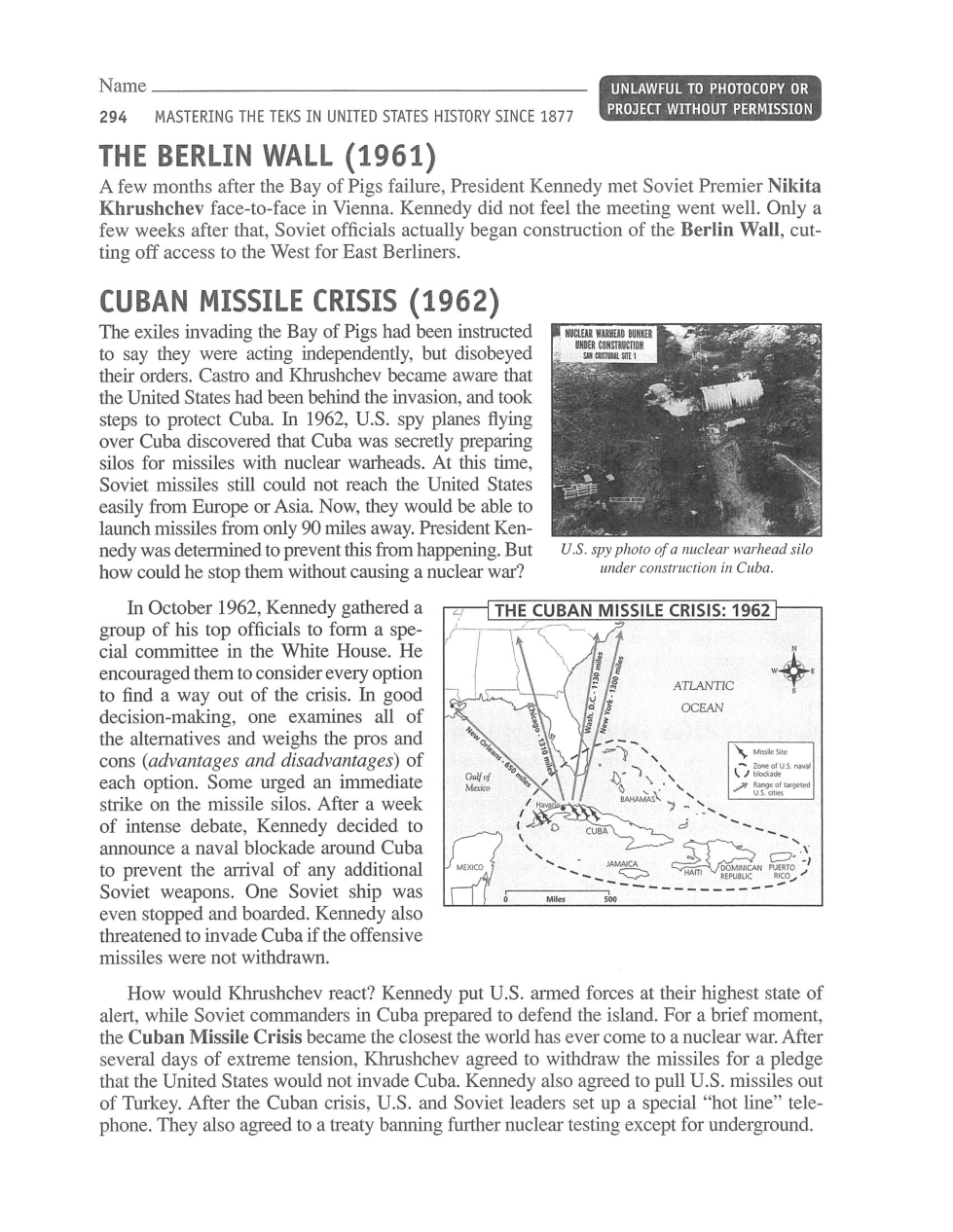
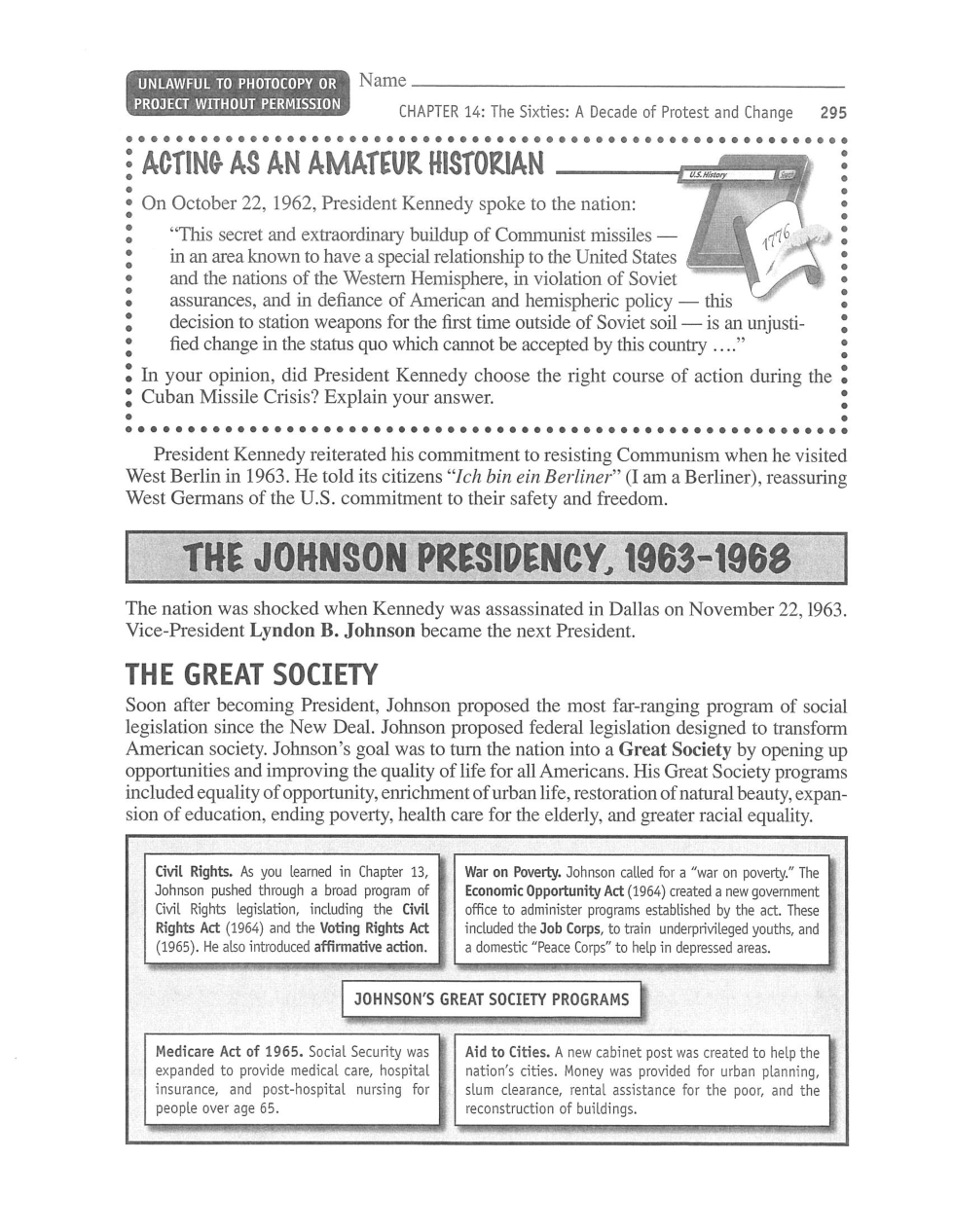
Which Soviet action led to the threat illustrated on this map?
A The signing of an arms limitations treaty
B Blockading foreign supply ships from entering the Caribbean
C Closing the border between East and West Berlin
D The placement of nuclear weapons installations in Cuba
8
zoom_in
1
Question 8
8.
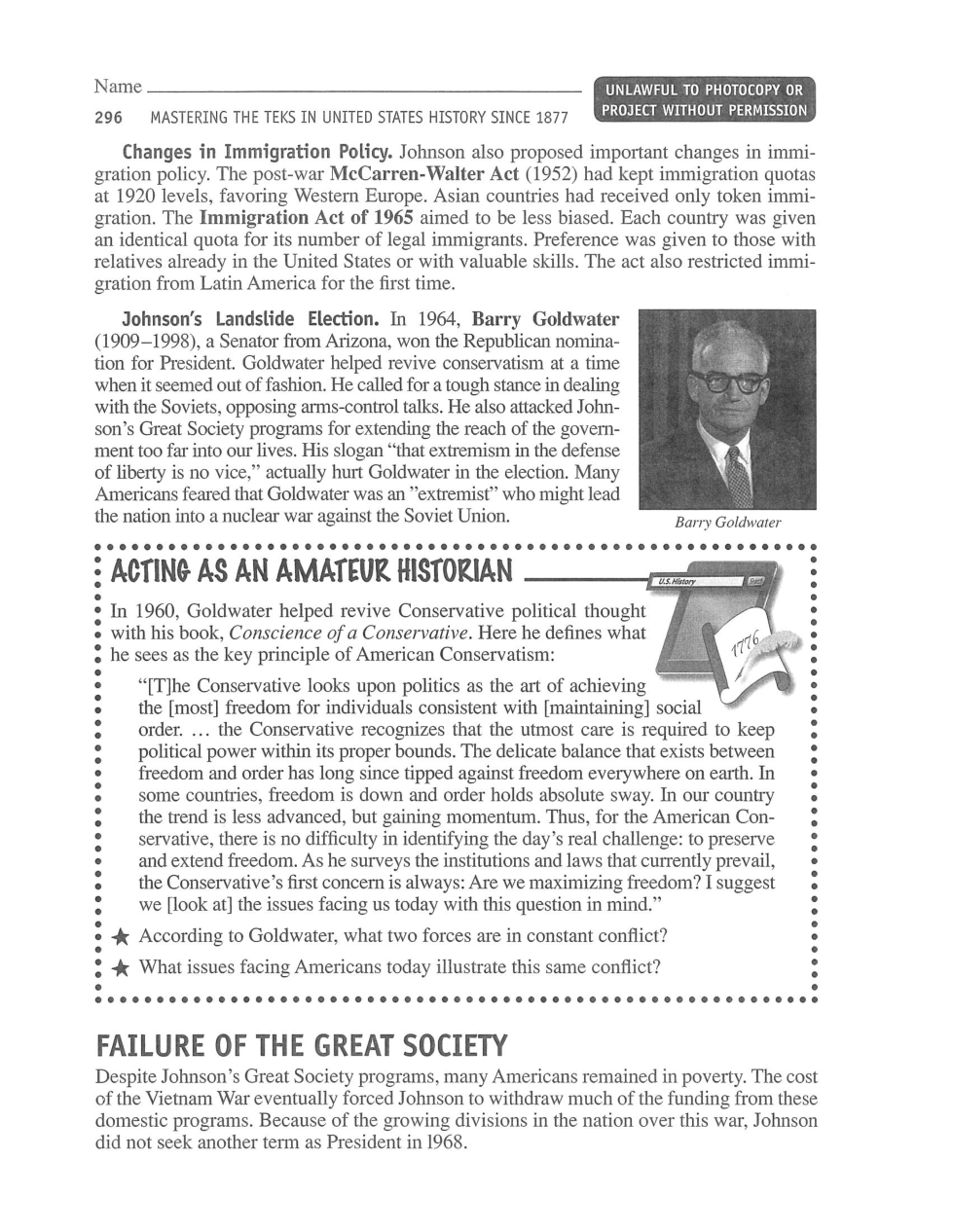
What constitutional issue was raised by President Johnson's Great Society?
A Should taxes be raised to stimulate consumer spending?
B What foriegn imports should be allowed into the United States?
C How far can the federal government extend itself in helping the less fortunate?
D Should certain key industries be taken over by the federal government?
zoom_in
9
10
zoom_in
1
1
zoom_in
11
zoom_in
1
Question 11
11.
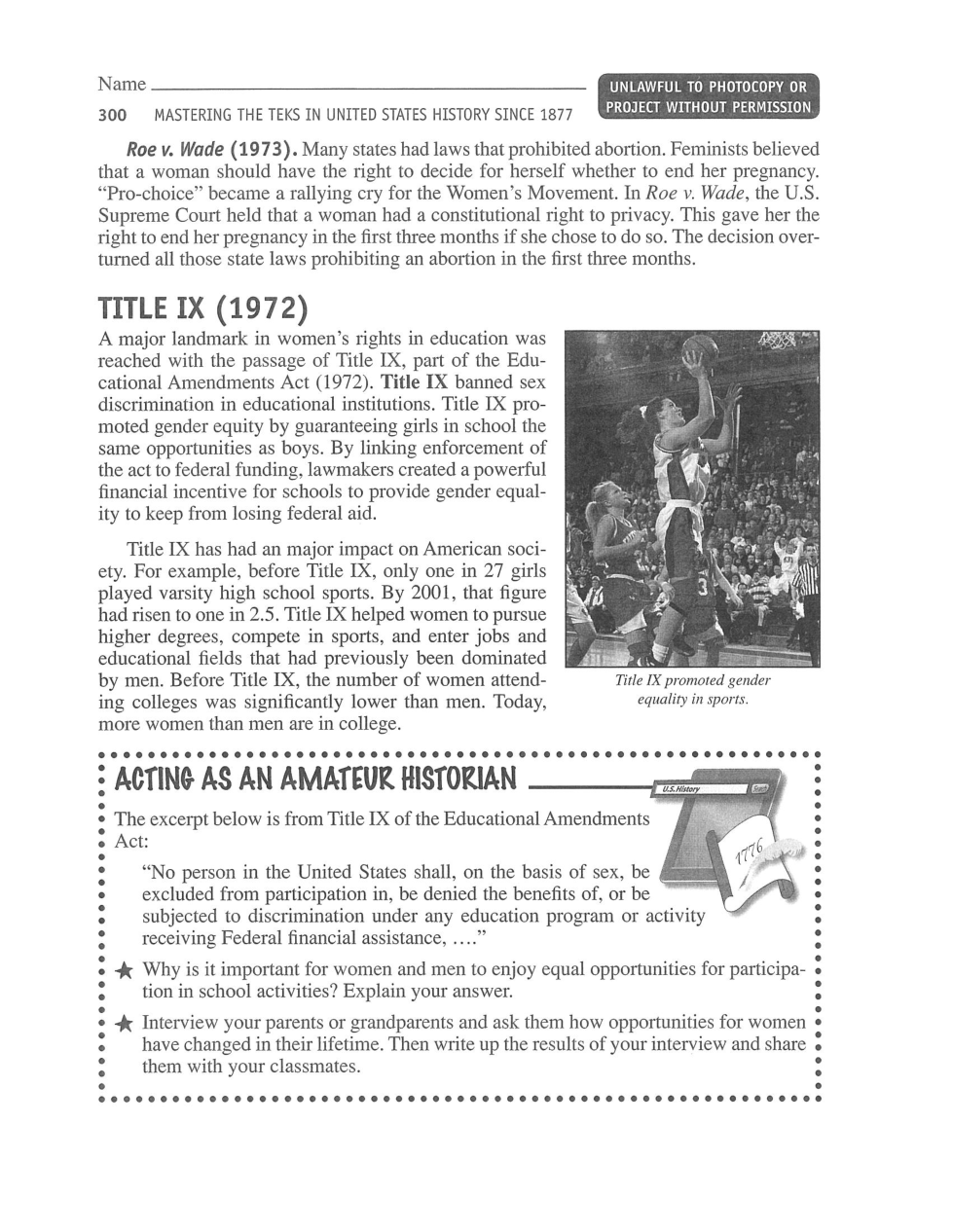
Which law helped women athletes obtain greater support in American high schools and universities?
A Civil Rights Act of 1964
B Title IX of the Educational Amendments Act
C Twenty-sixth Amendment
D Voting Rights Act of 1964
12
13
zoom_in
1
1
14
zoom_in
1
Question 14
14.
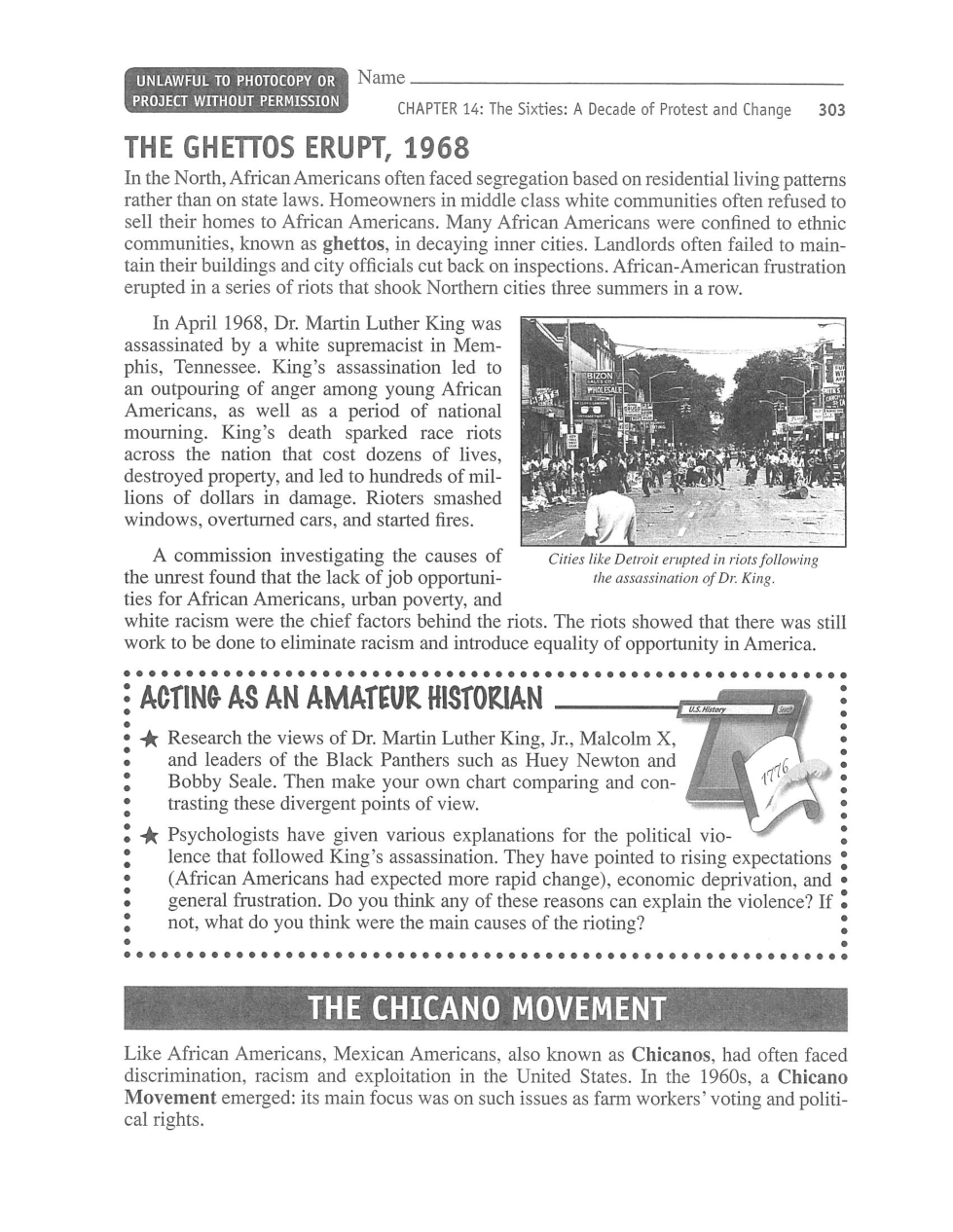
What was the impact of the assasination of Martin Luther King Jr.?
15
16
zoom_in
1
1
Question 17
17.
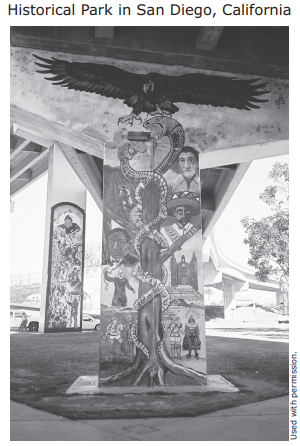
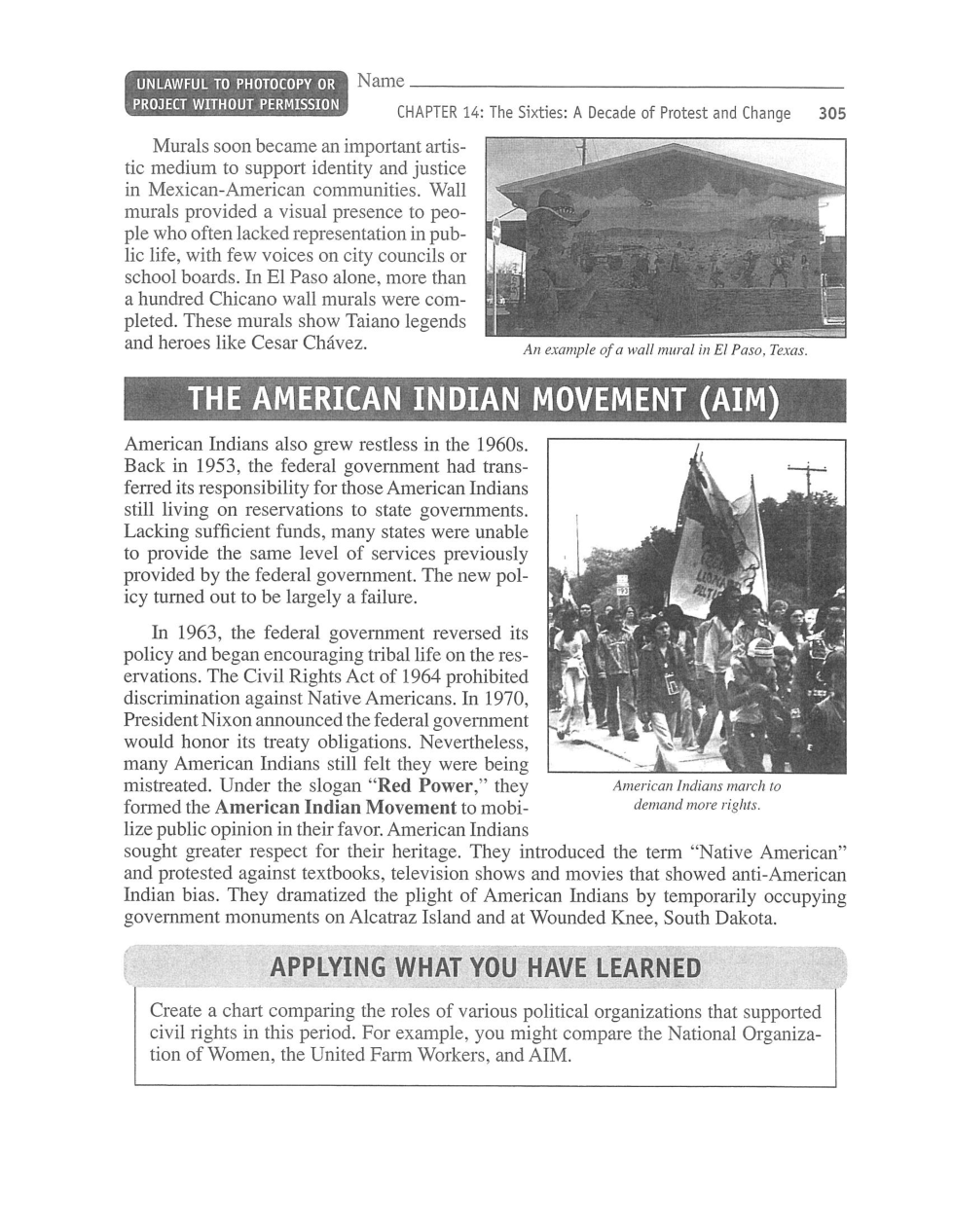
What is the significance of this 1978 mural?
A It is representative of artistic expressions of the Beat Generation.
B It was commissioned by the federal government through the National Endowment for the Arts (NEA).
C It is an example of cultural pride among Mexican Americans.
D It was painted by artists employed under the Works Progress Administration (WPA).
19
20
18
zoom_in
1
1
1
21
22
23
zoom_in
1
Question 21
21.
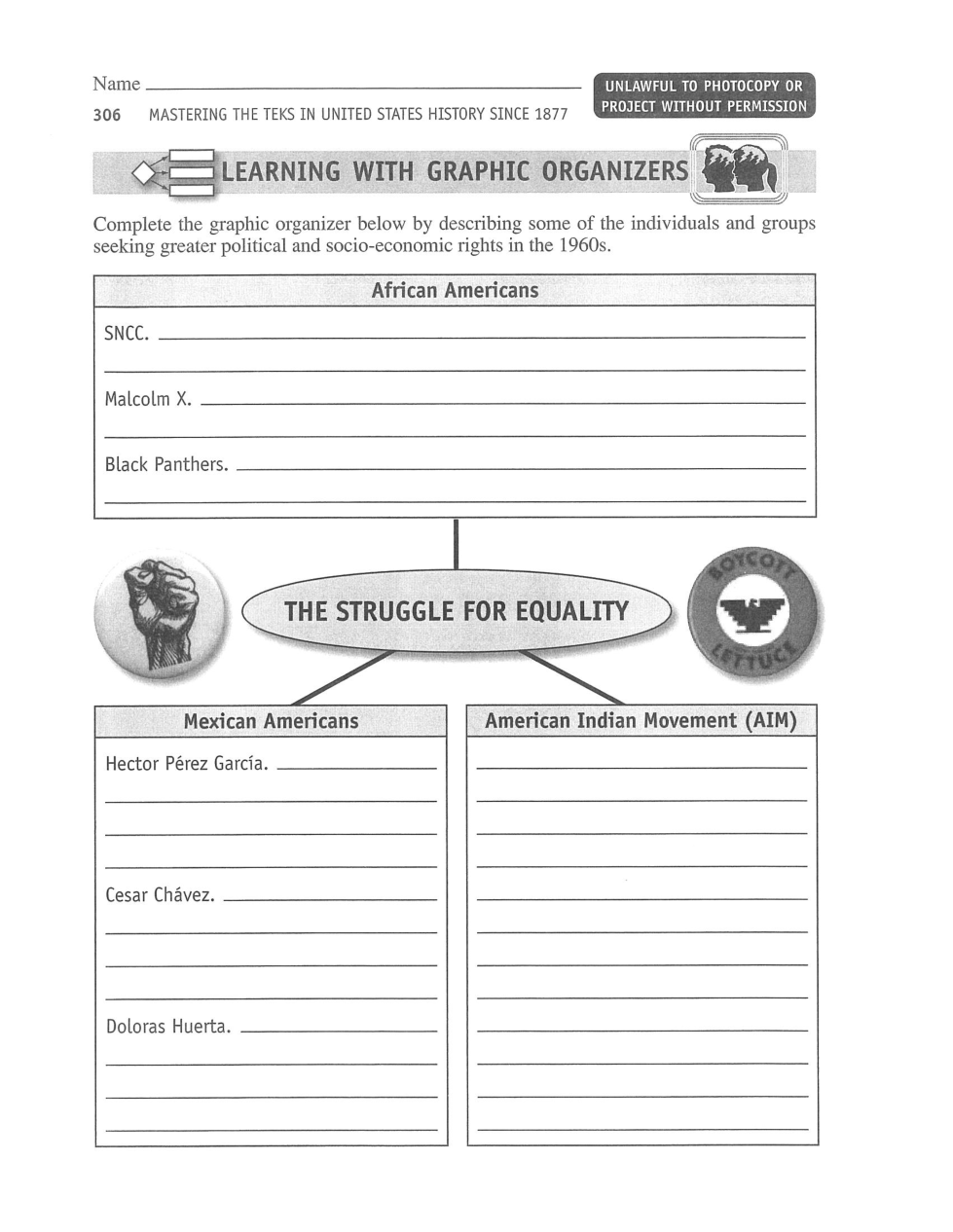
Define the term SNCC
1
Question 22
22.
How was Malcom X different than Martin Luther King, Jr.? What group was he a member of?
1
Question 23
23.
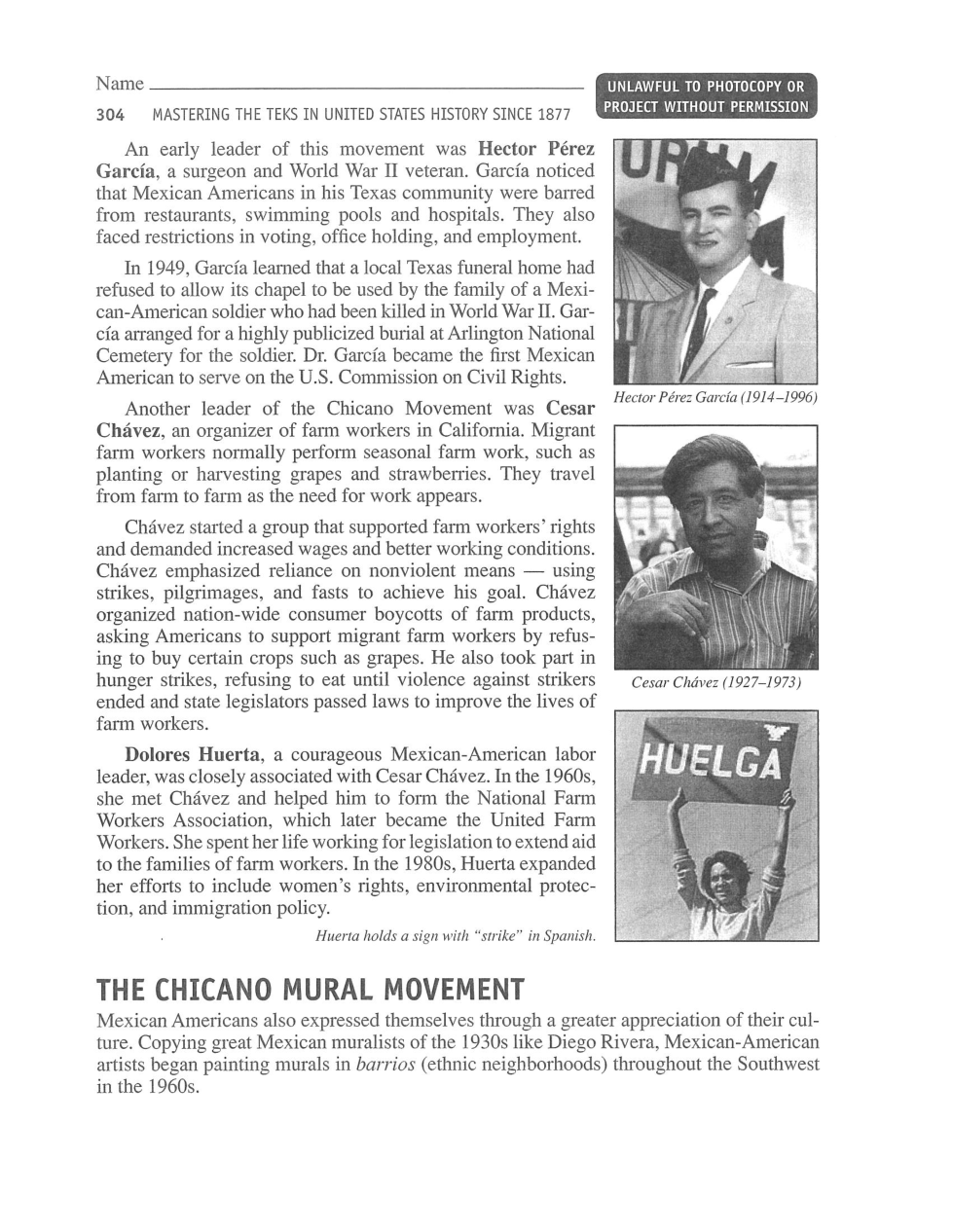
Who was Dolores Huerta?
zoom_in
24
25
zoom_in
1
1
Question 2
2.
What has been an effect of space technology and exploration on the people of the United States?
A It has forced them to find alternative sources of fuel.
B It led to advances in quality of life for most Americans.
C It focused attention on the need to deregulate the uses of outer space.
D It reduced tensions in the space race as a from of Cold War competition.
Question 9
9.
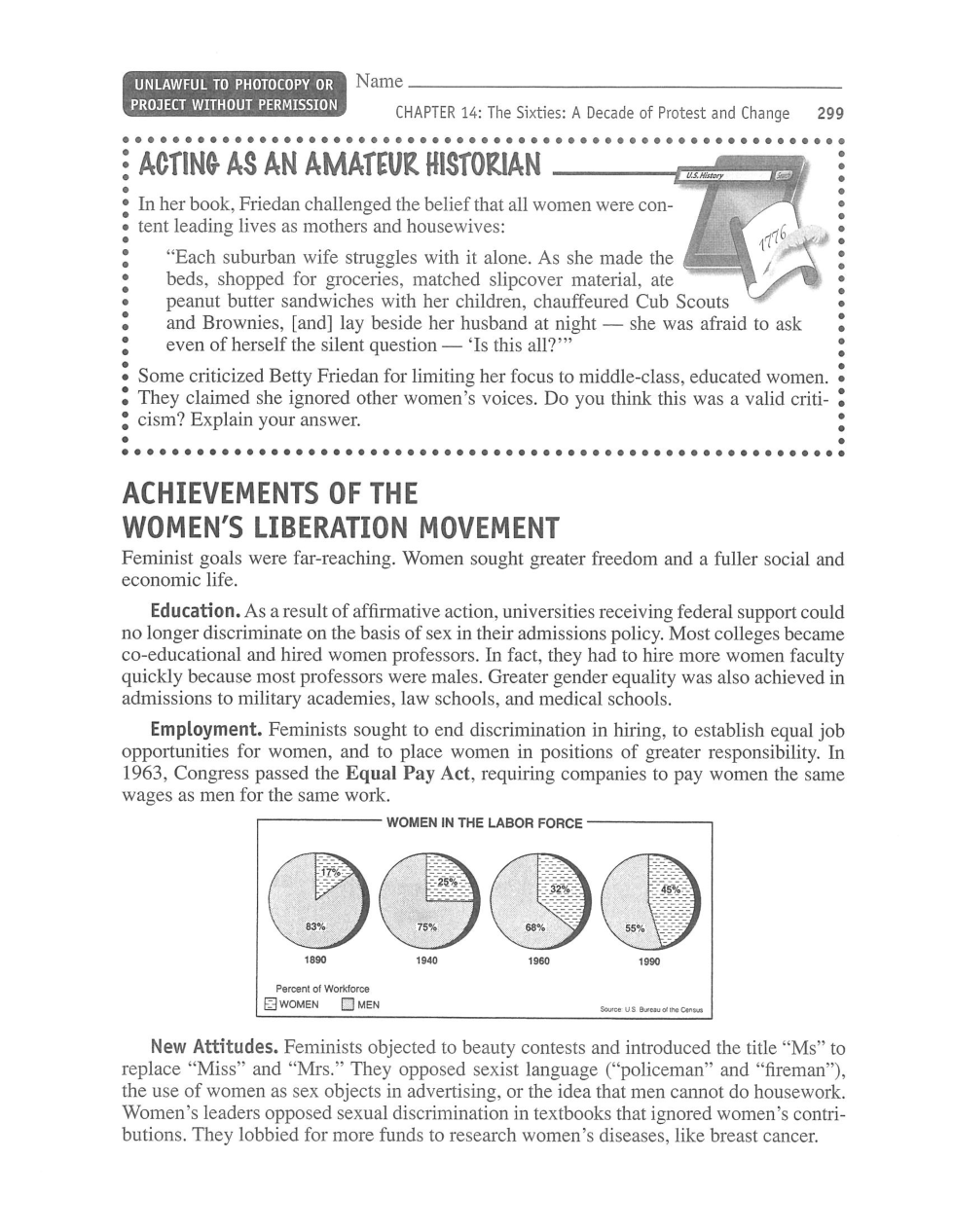
Which book played a role in changing attitudes about traditional gender roles in American society?
A Common Sense
B How the Other Half Lives
C The Feminine Mystique
D The Jungle
Question 10
10.
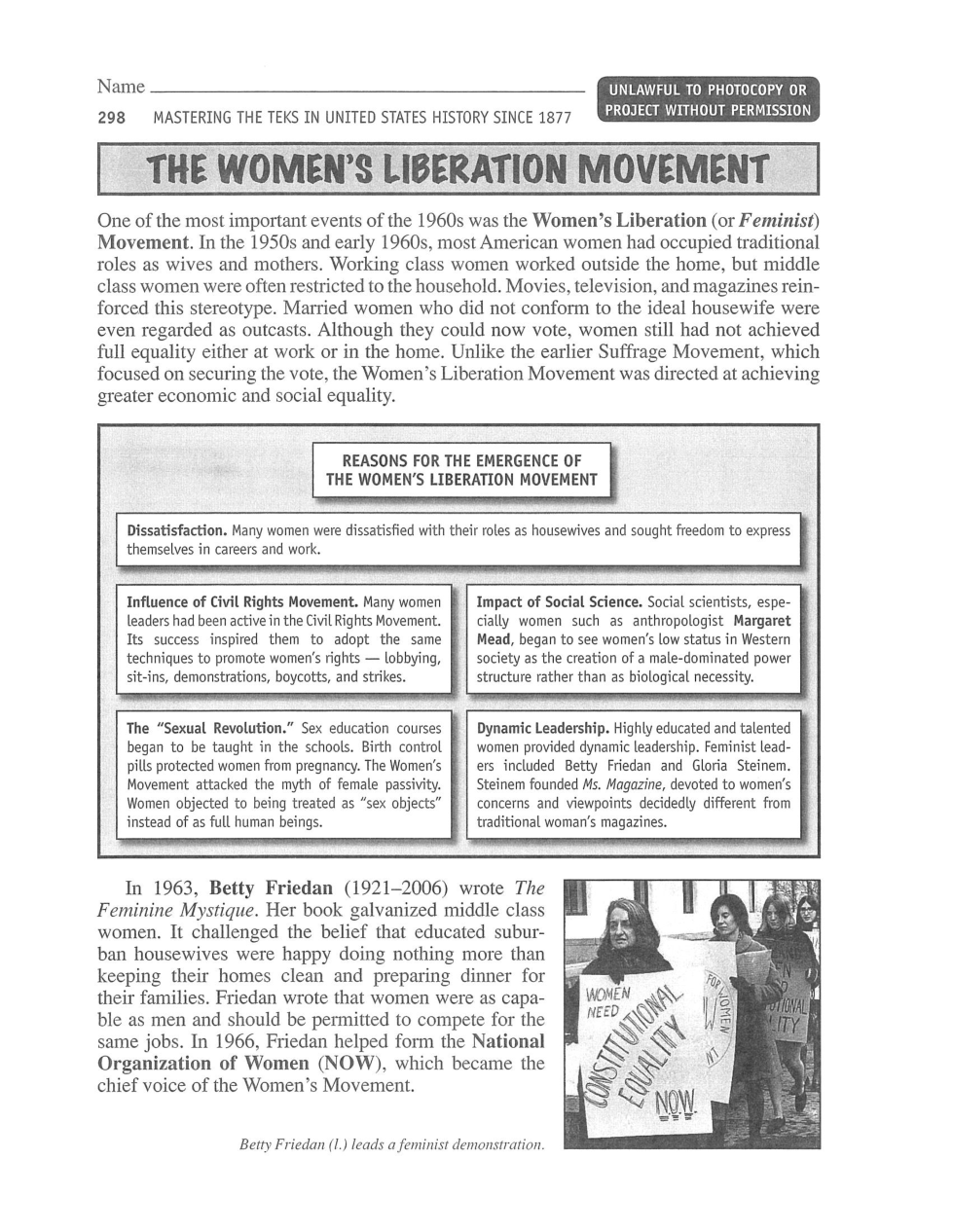
What contribution did Betty Friedan make to the movement for women's rights?
A She campaigned for women's suffrage.
B She championed the rights of poor women.
C She demanded greater career opportunities for middle class women.
D She agitated for the rights of African-American women.
Question 12
12.
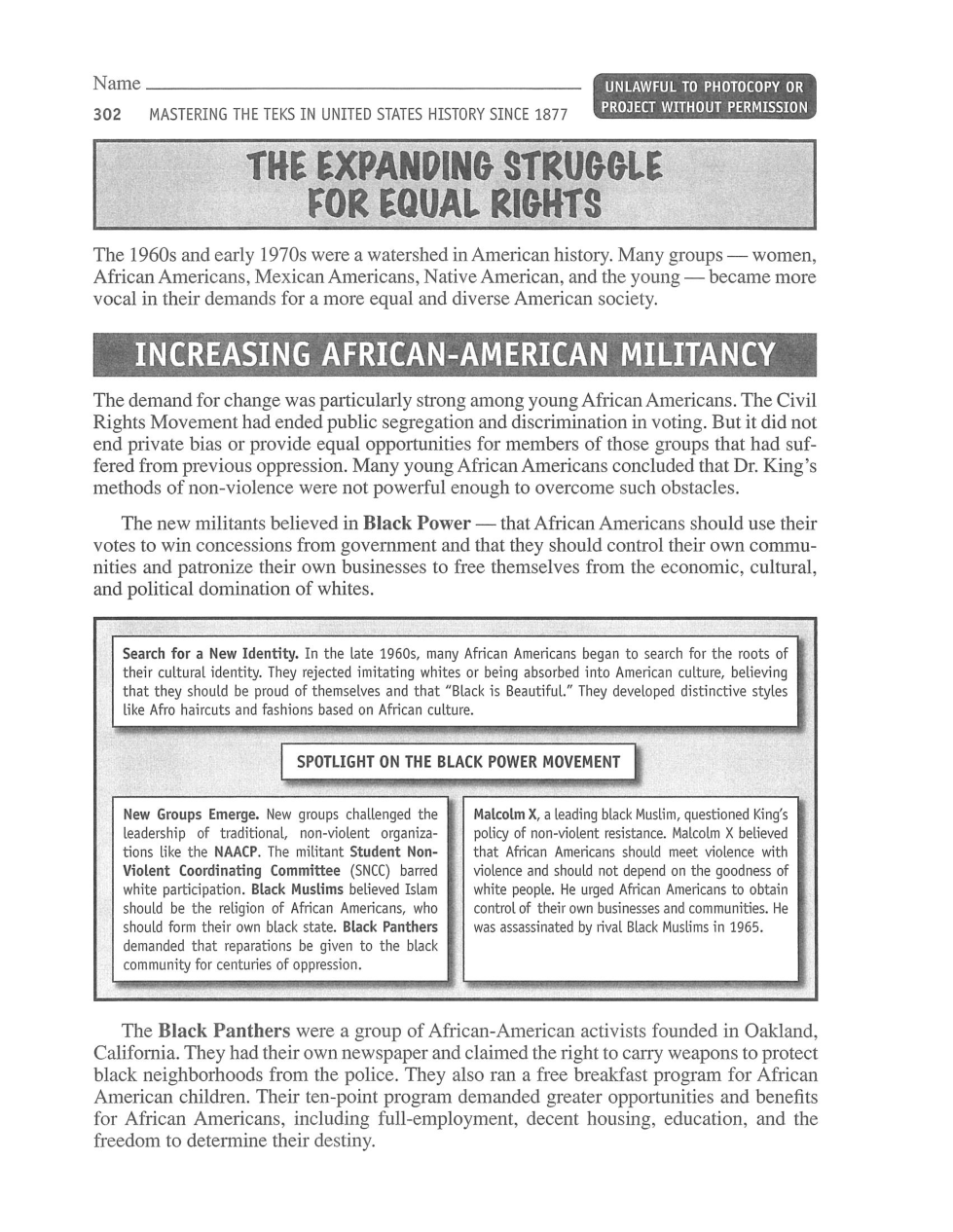
How did the methods advocated by the Black Panther to achieve their goals differ from those of Dr. Martin Luther King Jr.?
A They formed a third political party.
B They were passionately communist.
C They restricted their actions to the use of passive resistance.
D They considered the use of violence to protect their own communities.
Question 13
13.
How did the approach of the Black Panthers differ from the methods used by Dr. Martin Luther King, Jr?
A Black Panthers were willing to use violence; while Dr. King used only nonviolence.
B Black Panthers believed in nonviolence, while Dr. King favored civil disobedience.
C Black Panthers sought to use the court system, while Dr. King preferred passive resistance.
D Black Panthers employed peaceful demonstrations, while Dr. King favored sit-ins and freedom rides.
Question 15
15.
During the 1940's and 1950's, the primary goal of Mexican-American litigation was to-
A eliminate the legal segregation of Mexican Americans
B form a new nation for Mexican Americans
C create seperate Mexican-American economic and social institutions
D establish affirmative action programs to compensate for past wrongs
Question 16
16.
The movements led by Dr. Martine Luther King Jr. and Ceasar Chavez were similar in that both-
A supported attempts to overthrow the establised government
B used civil disobedience to bring about social change
C boycotted agricultural crops
D were elected to national political office
Question 18
18.
What has been an impact of the Chicano Mural Movement on American society?
A It has raised fears of increased bias against Mexican Americans.
B It brought about alarm of another culture influencing the United States.
C It led people to a heightened appreciation of Mexican-American culture.
D It expanded the constitutional rights of most Mexican Americans.
Question 19
19.
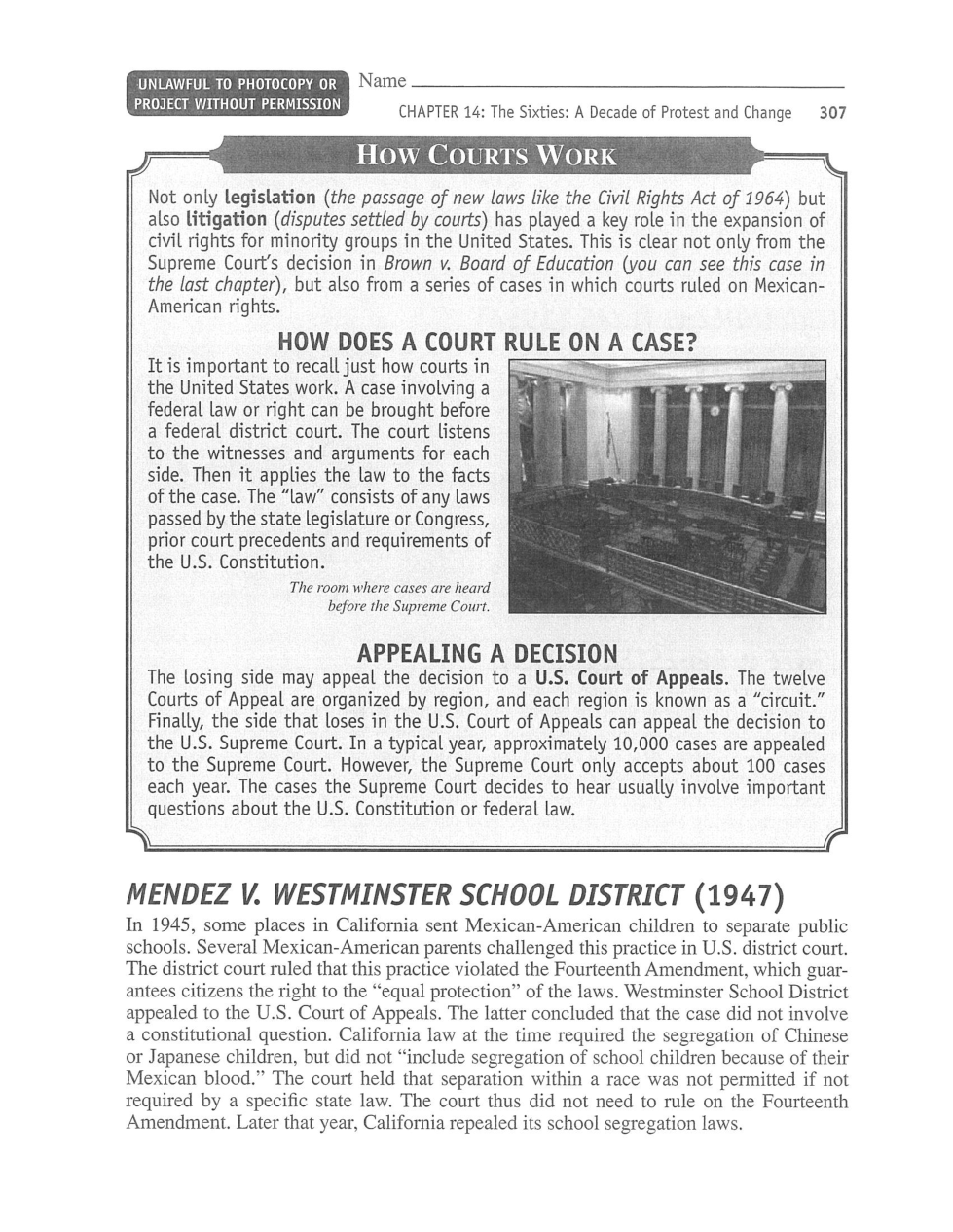
What was a major goal of the American Indian Movement (AIM)?
A to gain citizenship and representation in Congress
B to relocate American Indians to urban areas
C to obtain greater understanding of the American-Indian point of view
D to end segregation of American Indians in public places
Question 20
20.
What was the main objective of the American Indian Movement's occupation of Alcatraz Island and Wounded Knee?
A to draw attention to their conditions
B to obtain the right to vote
C to reclaim lost lands
D to protest the Vietnam war
Question 24
24.
The court decision in Delgado v. Bastrop ISD and Hernandez v. Texas held that-
A racially segregated schools are inherently unequal
B a student has no gauranteed rights while in a public school
C a student's right to privacy is limited under certian conditions
D Mexican Americans were entitled to protection from discrimmination under the Fourteenth Amendment
Question 25
25.
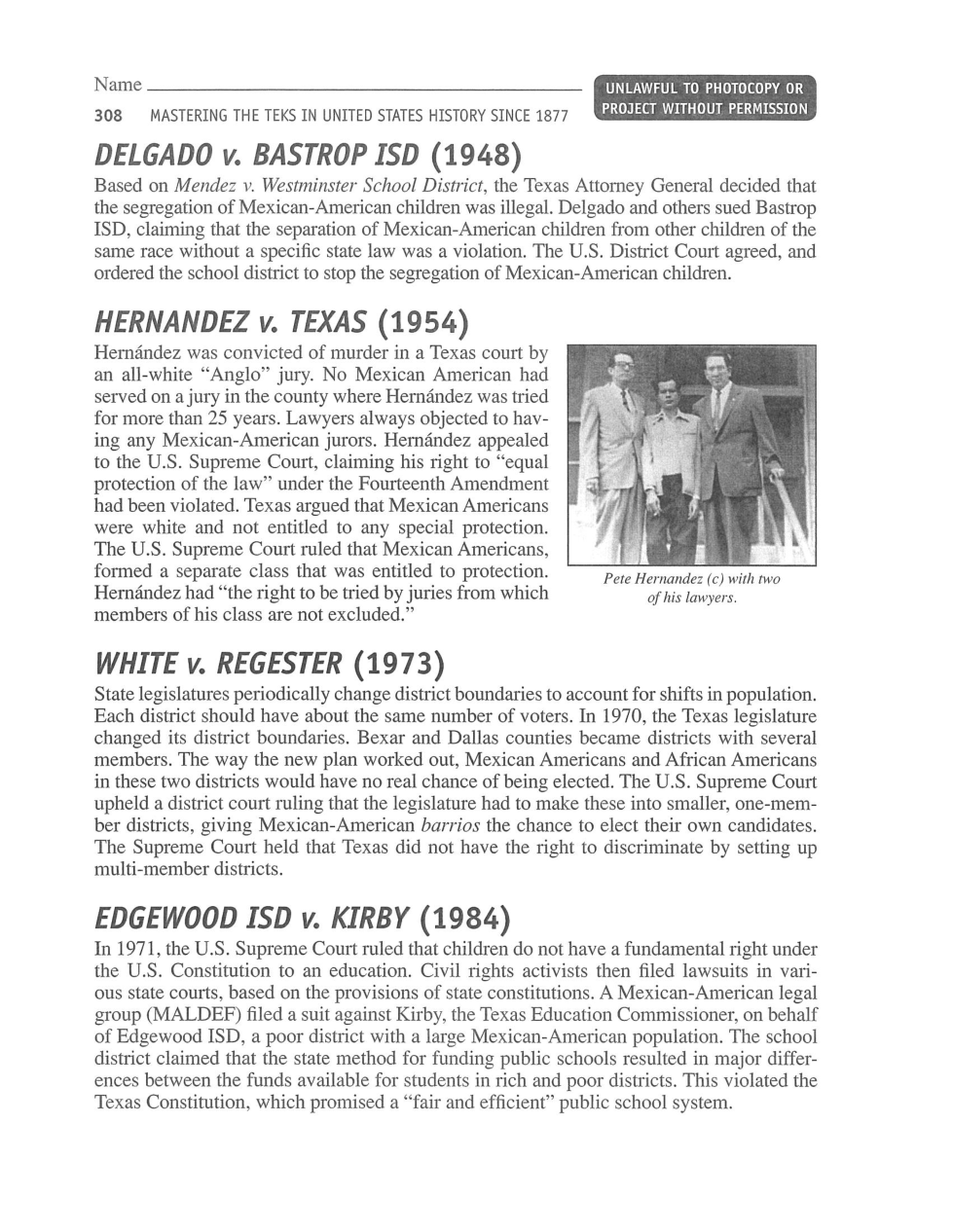
As a result of the U.S. Supreme Court decision in Hernandez v. Texas (1954), a Mexican American could not be-
A stopped from voting in a Presidential election
B made to pay an unreasonable bail to be released from jail
C denied an education in an all white school
D tried by a jury from which Mexican Americans had been systematically excluded