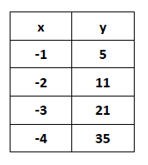
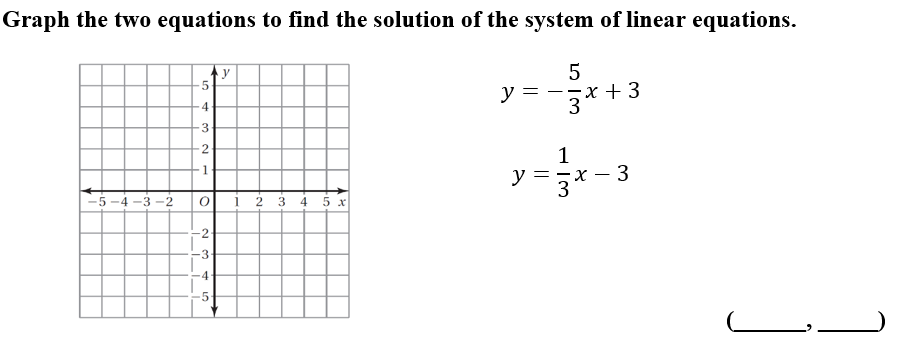
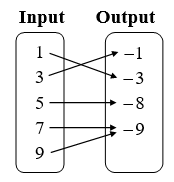
Determine whether the relation is a function. Explain your reasoning.
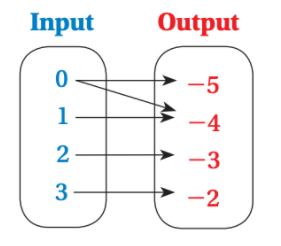
Determine whether the relation is a function. Explain your reasoning.
Determine whether the relation in the mapping diagram from question number 1 is a function.
Determine whether the relation is a function. Explain your reasoning.
Write a function rule for the statement:
"The output is one third the input."
Write a function rule for the statement:
"The output is 4 more than the input."
Write a function rule for the statement:
"The output is 2 less than 5 times the input."
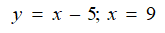
Find the value of y for the given value of x.
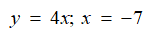
Find the value of y for the given value of x.
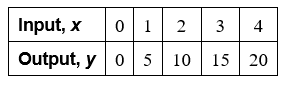
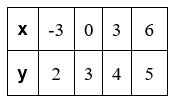
Write an equation that describes the function shown by the table.
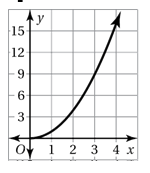
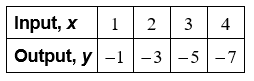
Does the table or graph represent a linear or nonlinear function? Explain.
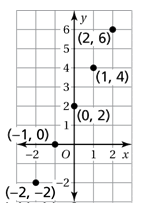
Does the table or graph represent a linear or nonlinear function? Explain.
Use the graph or table to write a linear function that relates y to x.
Use the graph or table to write a linear function that relates y to x.
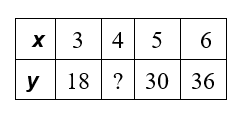
Identify the missing output.
Do these ordered pairs represent a function? Explain.
(1,2) (2,4) (3,6) (4,7) (3,7) (-2,5)
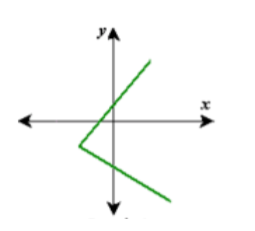
Does the graph represent a function?
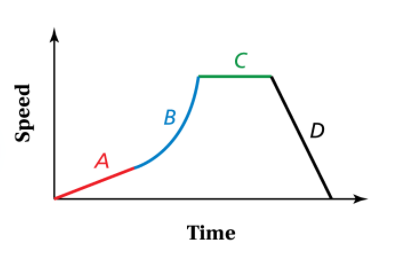
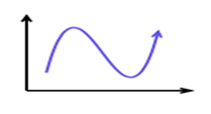
Match
| Draggable item | arrow_right_alt | Corresponding Item |
|---|---|---|
C | arrow_right_alt | Increasing at a constant rate |
D | arrow_right_alt | Increasing at an increasting rate |
| arrow_right_alt | Remains constant | |
| arrow_right_alt | Decreasing quickly at a constant rate | |
A | arrow_right_alt | Decreasing at a decreasing rate |
B | arrow_right_alt | Increasing at a decreasing rate |
| arrow_right_alt |
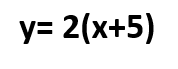
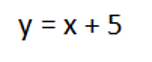
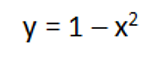
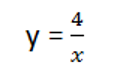
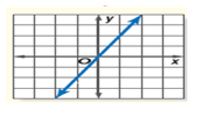
Matching. Linear or non linear?
| Draggable item | arrow_right_alt | Corresponding Item |
|---|---|---|
| arrow_right_alt | NON LINEAR | |
| arrow_right_alt | NON LINEAR | |
| arrow_right_alt | NON LINEAR | |
| arrow_right_alt | LINEAR | |
| arrow_right_alt | LINEAR |
| arrow_right_alt | LINEAR |
Identify whether the table is linear or non linear. Explain.
Graph the following linear equation.
BONUS:
Select the ordered pairs shown in the mapping diagram.