Fossils are preserved remains or traces of organisms that lived in the past. They provide extremely rare but vivid windows into the past. Because most parts of organisms decompose rapidly following death, fossilization is an exceptionally uncommon occurrence and usually preserves only hard body parts such as bones.
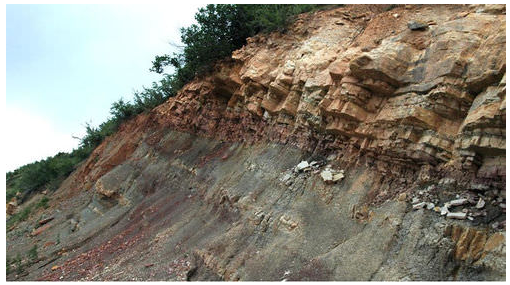
If the rock layers are undisturbed, the deepest layers are the oldest and layers near the surface are the youngest, shown in Figure below. Widespread, short-lived index fossils can help identify rock layers of the same age spread around the Earth. By combining worldwide observations of relative position and composition, a Geologic Time Scale for the Earth can be seen – a column of rock layers which reflects the history of sedimentary rock formation and changing life, stretching back to a time which apparently held no life. The fossil record showed patterns which, combined with his observations of living species, led Charles Darwin to conclude that all life on Earth descended from a single, simple common ancestor.