Station #6: Comparative Anatomy (Vestigil Structures)
Structures which are reduced and are perhaps even nonfunctional, such as the human tail and the human appendix, are considered vestigial structures. The tail, of course, functions for balance in many mammals, and the human appendix may have served
digestive functions in herbivorous ancestors. Whales, which evolved from land mammals, do not have legs or hair as adults; both begin to develop in embryos, but then recede. Vestigial leg bones remain, buried deep in their bodies, shown in the figure below.

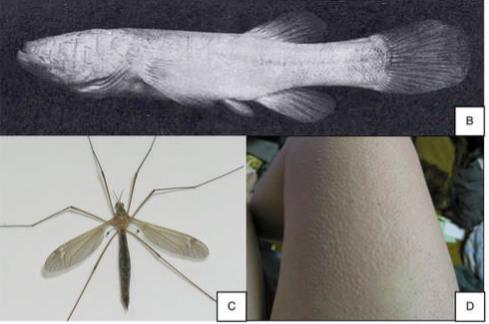
True flies have reduced the second pair of wings found in most insects to halteres for balance shown in Figure C below. Cavefish lose both eyes and pigment, because both would require energy to create, and they are useless in the lightless habitats of caves, as shown in Figure B below. You are probably very familiar with this fine example of a vestigial behavior: goosebumps raise the sparse hairs on your arms even though they are no longer sufficiently dense to insulate you from the cold by trapping warm air next to your skin; in most mammals, this reflex is still quite functional, as shown in Figure D below. Most vestigial structures are homologous to similar, functioning structures in closely related species and, as such, support both common ancestry and natural selection.