Module 3, End-of-Unit 1 Assessment - EL Curriculum, 6th Grade ELA
star
star
star
star
star
Last updated over 5 years ago
10 Nsɛmmisa
Hyɛ no nsow a efi ɔkyerɛwfo no hɔ:
Module 3, End-of-Unit 1 Assessment, EL Curriculum, 6th Grade ELA
1
1
Module 3, End-of-Unit 1 Assessment, EL Curriculum, 6th Grade ELA
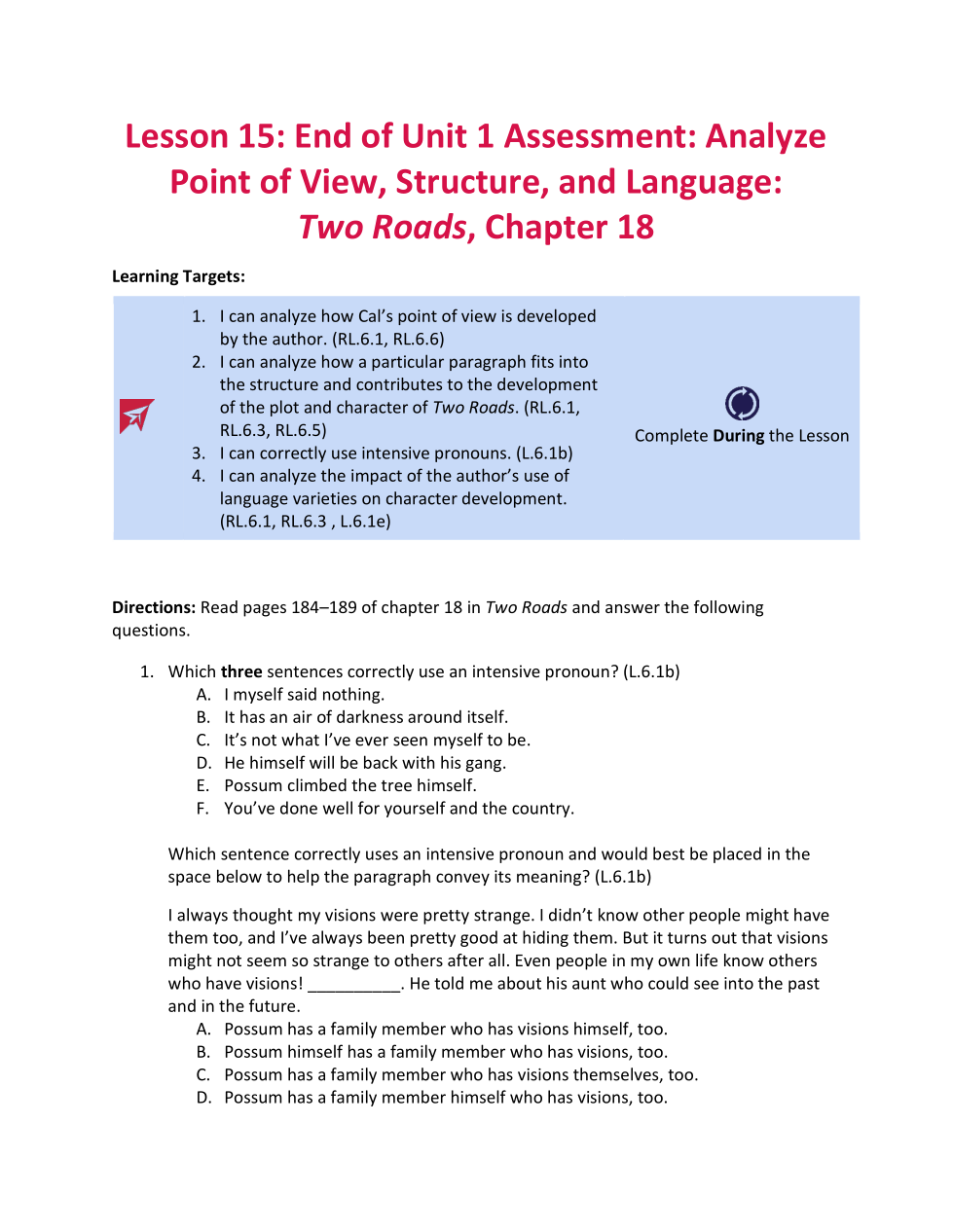
Which THREE sentences correctly use an intensive pronoun?
Which sentence correctly uses an intensive pronoun and would be best placed in the space below to help the paragraph convey its meaning?
"I always thought my visions were pretty strange. I didn't know other people might have them, too, and I've always been pretty good at hiding them. But, it turns out that visions might not seem so strange to others at all. Even people in my own life know others who have visions! ______________. He told me about his aunt who could see into the past and in the future."
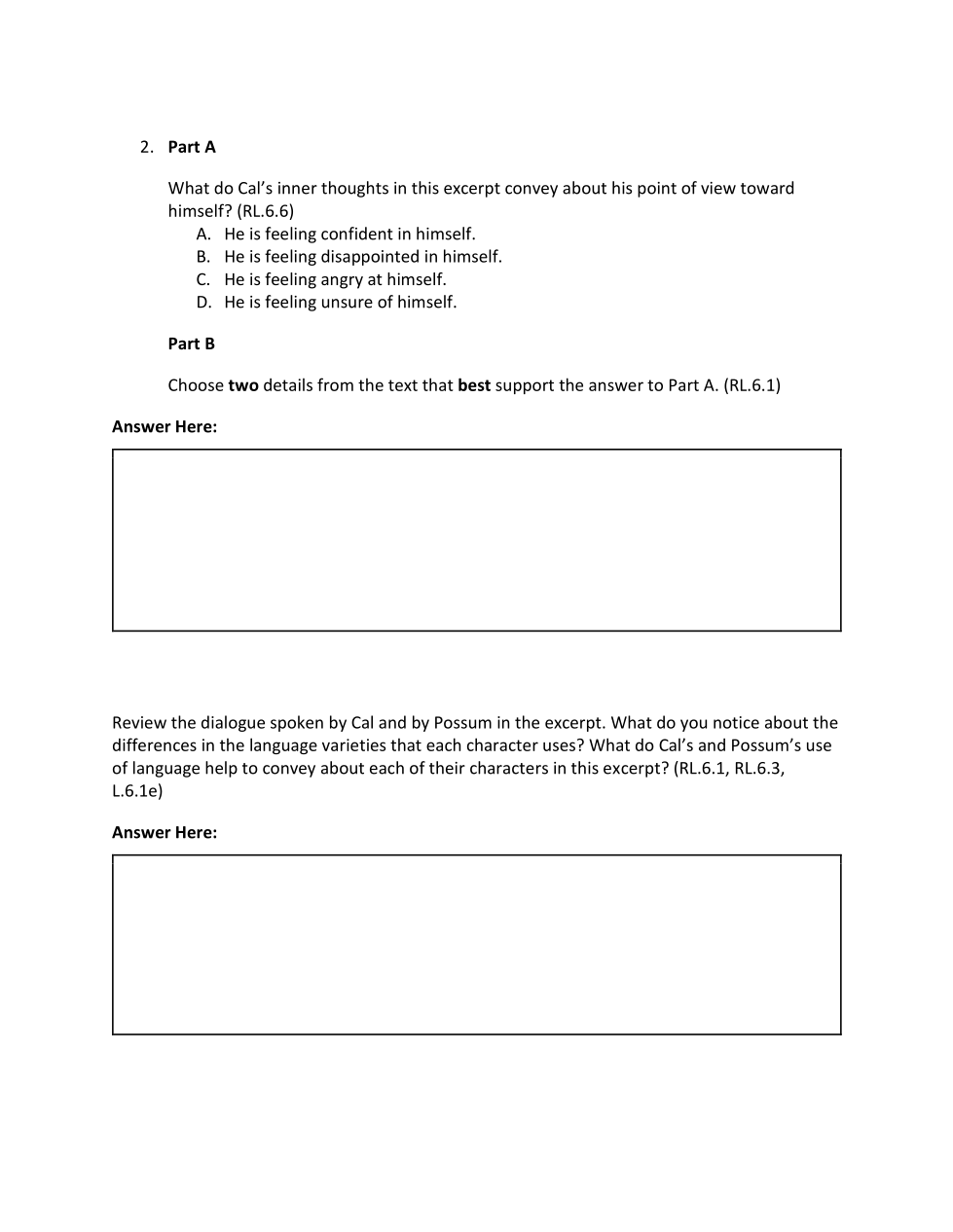
What do Cal's inner thoughts in this excerpt convey about his point-of-view toward himself?
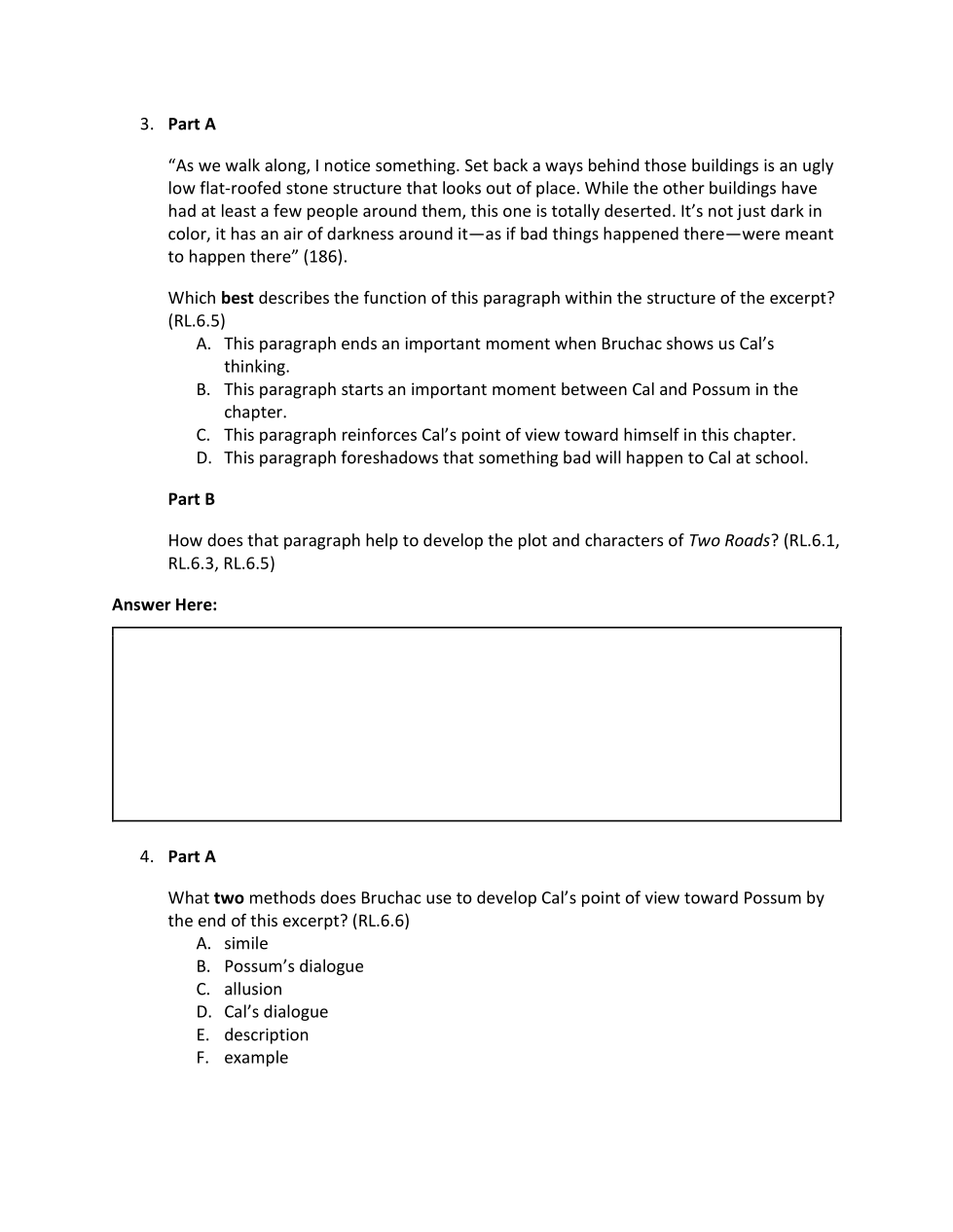
Part A:
"As we walk along, I notice something. Set back a ways behind those buildings is an ugly, low, flat-roofed stone structure that looks out of place. While the other buildings have had at least a few people around them, this one is totally deserted. It's not just dark in color, it has an air of darkness around it---as if bad things happened there---were meant to happen there." (186)
Which BEST describes the function of this paragraph within the structure of the excerpt?
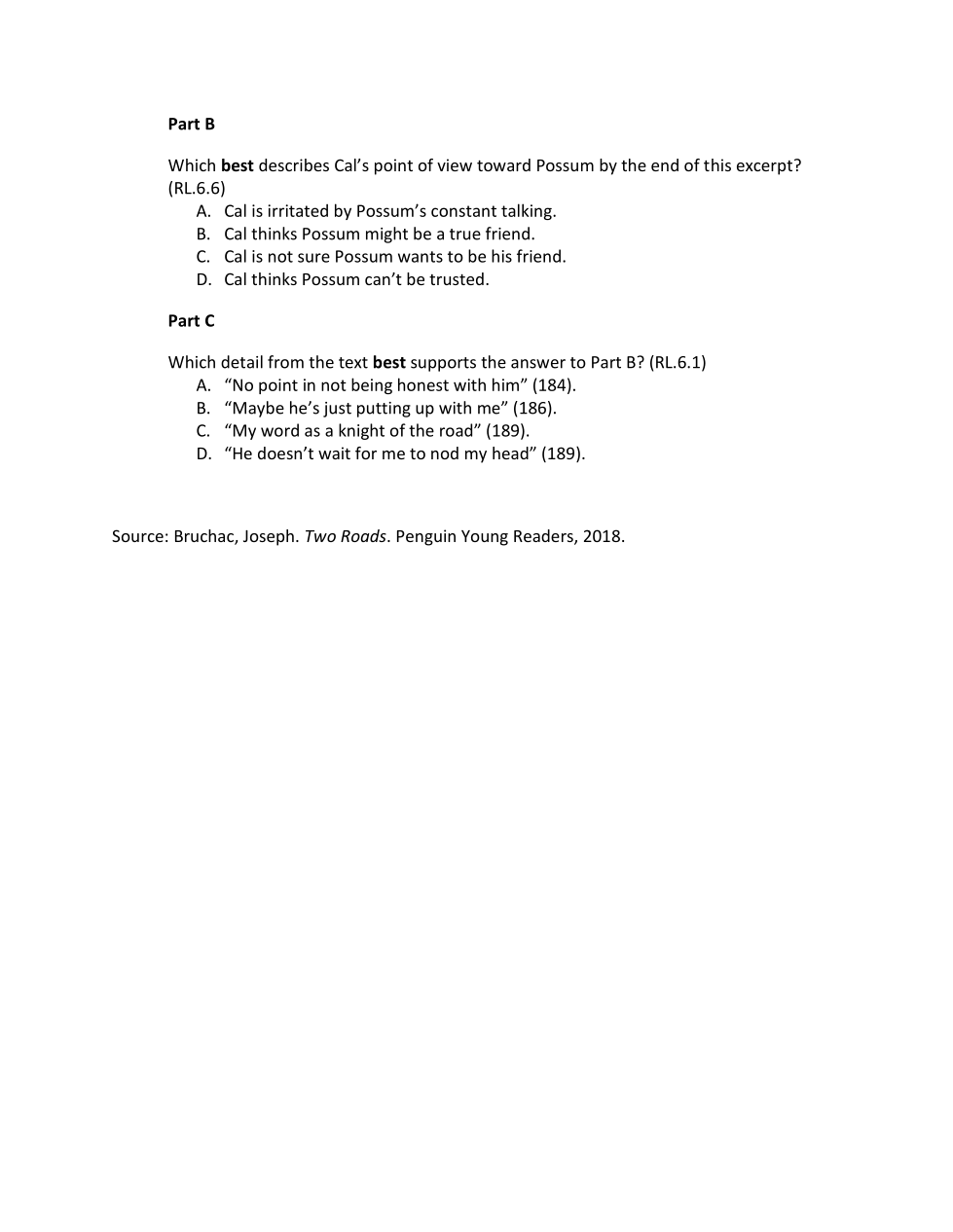
Part B.
Which BEST describes Cal's point-of-view toward Possum by the end of this excerpt?
Choose TWO details from the text that BEST support the answer to "Part A" (#3).
Answer Here:
______________________________________________
______________________________________________
______________________________________________
Review the dialogue spoken by Cal and by Possum in the excerpt. What do you notice about the differences in the language varieties that each character uses? What do Cal's and Possum's use of language help to convey about each of their characters in this excerpt?
Answer Here:
_____________________________________________
_____________________________________________
_____________________________________________
Part B:
How does that paragraph help to develop the plot and characters of Two Roads?
Answer Here:
___________________________________________
___________________________________________
___________________________________________
What TWO methods does Bruchac use to develop Cal's point-of-view toward Possum by the end of this excerpt?
Part C.
Which detail from the text BEST supports the answer to Part B?