The graphs show the percentage of electricity production by source in 2009 and 2019 for the state of
Texas.
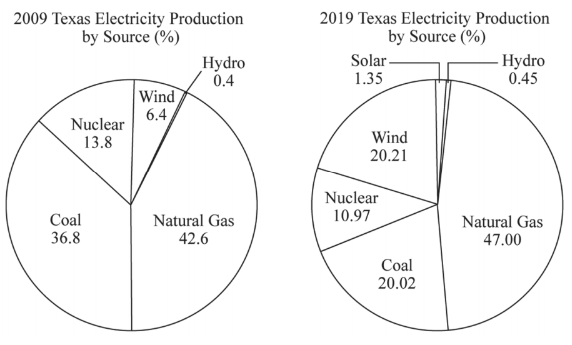
Based on the graphs, describe the trend in electricity production from coal between 2009 and
2019.
1 point
1
Question 2
2.
The graphs show the percentage of electricity production by source in 2009 and 2019 for the state of
Texas.
Describe an environmental change that is likely to have occurred in the state of Texas that
resulted from the change in wind production indicated in the graphs between 2009 and 2019.
1 point
1
Question 3
3.
The graphs show the percentage of electricity production by source in 2009 and 2019 for the state of
Texas.
Identify and describe one renewable energy source that could be used in electricity production in
the state of Texas that was not being used in 2019.
1 point
1
Question 4
4.
The graphs show the percentage of electricity production by source in 2009 and 2019 for the state of
Texas.
The Texas state government decided to offer subsidies in 2020 for energy production by solar
power in the form of a consumer tax credit. Explain how these government subsidies would
affect the energy production by coal by 2030 in Texas.
1 point
1
Question 5
5.
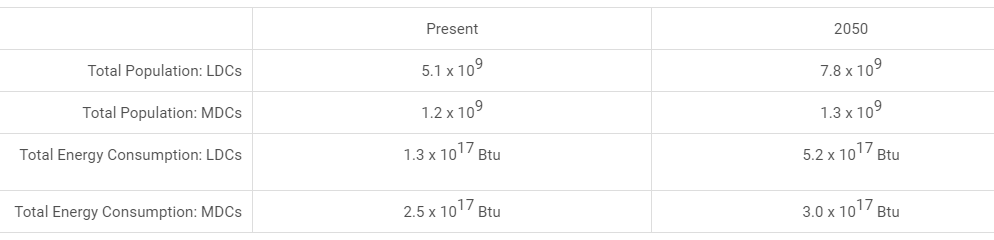
Studies indicate that between the present and 2050, substantial growth in population and energy consumption will occur both in less developed countries (LDCs) like India and China and in more developed countries (MDCs) like the United States and Japan. The table below displays these projections.
Calculate the percent increase in total energy consumption by LDCs between the present and 2050
1 point
1
Question 6
6.
Studies indicate that between the present and 2050, substantial growth in population and energy consumption will occur both in less developed countries (LDCs) like India and China and in more developed countries (MDCs) like the United States and Japan. The table below displays these projections.
Calculate the percent increase in total energy consumption by MDCs between the present and 2050
1 point
1
Question 7
7.
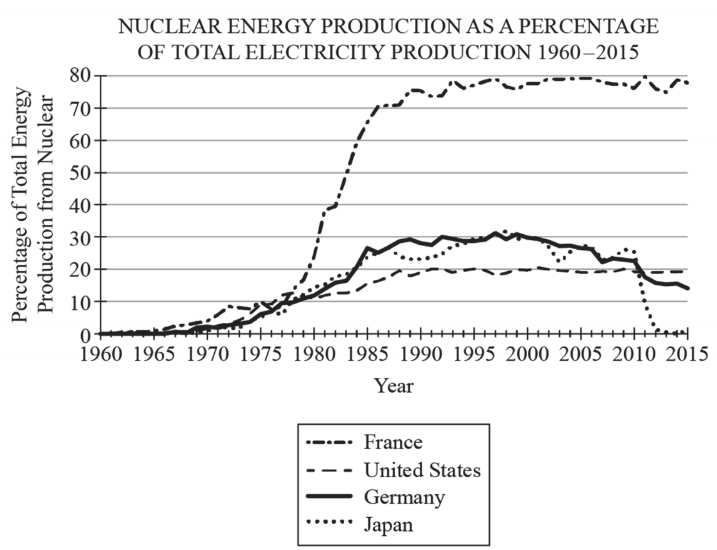
The graph shows the percentage of electricity produced by nuclear energy in various countries from 1960
to 2015.
Based on the information in the graph, describe the trend in the percentage of electricity
produced using nuclear energy in the United States between 1990 and 2015.
1 point
1
Question 8
8.
The graph shows the percentage of electricity produced by nuclear energy in various countries from 1960
to 2015.
Researchers state that the 2011 Tohoku earthquake and tsunami in Japan had a positive impact on
nuclear power generation in Japan after the event. Make a claim that supports or refutes this
statement based on evidence in the graph.
1 point
1
Question 9
9.
Electrical production in the United States is typically produced in a power plant but can also be
supplemented by renewable sources of energy as well.
Describe why pairing solar energy with energy from natural gas makes this renewable source a
more viable method of electrical production for more United States consumers.
1 point
1
Question 10
10.
Renewable sources of energy are increasingly contributing to the total energy supply in Canada.
Currently, hydroelectric power is Canada’s largest renewable energy source. Hydroelectric facilities can
have major impacts on aquatic ecosystems.
Propose a solution, other than switching to a different renewable energy source, that can reduce
the impacts of hydroelectric dams on migratory species.