Log in
Sign up for FREE
arrow_back
Library

11th Grade Assessment Feb 2021

star
star
star
star
star
Last updated over 5 years ago
25 questions
1
RL.11-12.4
1
RL.11-12.4
1
RL.11-12.1
RL.11-12.6
1
RL.11-12.1
RL.11-12.2
1
RL.11-12.4
1
RL.11-12.2
1
RL.11-12.4
1
RL.11-12.1
RL.11-12.4
1
RL.11-12.1
RL.11-12.4
1
RL.11-12.1
1
RL.11-12.1
RL.11-12.2
1
RL.11-12.4
RL.11-12.5
1
RL.11-12.1
RL.11-12.2
1
RL.11-12.1
RL.11-12.4
1
RL.11-12.1
RL.11-12.2

Question 1
1.

Question 2
2.

Question 3
3.

Question 4
4.

Question 5
5.

Question 6
6.

Question 7
7.

Question 8
8.

Question 9
9.

Question 10
10.

Question 11
11.

Question 12
12.

Question 13
13.

Question 14
14.

Question 15
15.

1
RL.11-12.1
RL.11-12.4
1
RL.11-12.2
RL.11-12.4
1
RL.11-12.1
RL.11-12.3
1
RL.11-12.4
1
RL.11-12.3
1
RL.11-12.1
1
RL.11-12.2
1
RL.11-12.1
1
RL.11-12.1
RL.11-12.2
1
RL.11-12.4
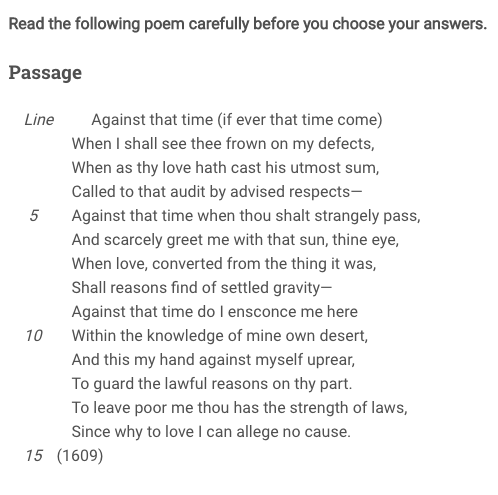
If the speaker is implying in line 10 that he is not deserving of love, which of the following most strongly supports the implication?
"defects" (line 2)
"utmost sum" (line 3)
"love converted" (line 7)
"strangely" (line 5)
The tone of the poem can best be described as
playful and lighthearted
confident and determined
self-deprecating and apprehensive
hesitant and confused
The speaker of the poem is addressing
a legal adviser
a friend of the speaker's beloved
a lover
an unspecified general audience
The speaker imagines a time in the future when he might
no longer be in love
no longer be loved
be able to explain why he is in love
be even more deeply in love
In line 5, the adverb "strangely" means:
haltingly
oddly
in a distant manner
eerily
One theme of the poem appears to be that
the value of true love cannot be calculated
reason is insufficient to explain love
time transforms lust into love
relationships should be controlled by laws
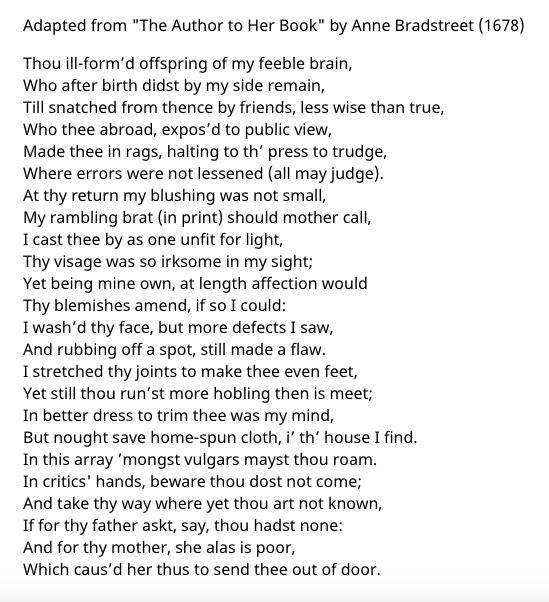
The literary technique that Bradstreet uses in addressing her book directly as her "offspring" is
apostrophe
personification
synecdoche
metonymy
All of the following emotions can be attributed to the speaker EXCEPT
justifiable pride
self-deprecation
grudging acceptance
embarassment
Lines 7-9 imply all but which of the following?
Bradstreet was embarassed by the book's publication.
Bradstreet felt the poems needed tighter editing.
None of the other answers is correct.
Bradstreet did not feel the poems should have been read by the public.
The lines "In critic's hands beware thou dost not come, / And take thy way where yet thou art not known" implies all but which of the following?
Bradstreet is concerned about the reception of her book by critics
Bradstreet wants her book to be seen by new readers
Bradstreet is concerned about what new readers will think of the book
Bradstreet is concerned about the reception of the book in an unfamiliar country
The lines "And for thy mother, she alas is poor, / Which caused her thus to send thee out of door" could be interpreted in but which of the following ways?
All of the answer choices are correct.
Bradstreet is ashamed of the appearance of her "child."
Bradstreet is only allowing publication of the book because she requires money.
Bradstreet is to be pitied for sending such a faulty example of her work into the world.
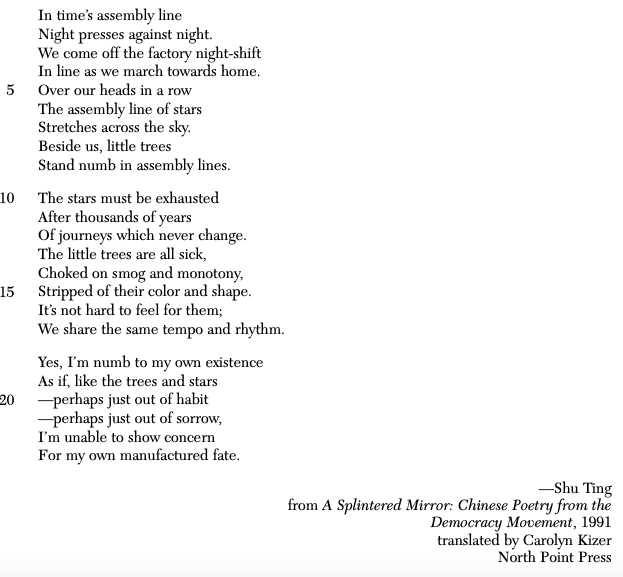
In the first stanza, a main idea is strengthened through the poet’s use of
understatement
repetition
simile
allusion
Line 17 contributes to a central idea by pointing out a parallel between
profit and industrialization
sound and motion
recreation and production
humans and nature
The structure and language of lines 20 and 21 suggests the narrator’s
uncertainty
bitterness
selfishness
determination
The phrase “manufactured fate” (line 23) emphasizes the narrator’s
hope for change
resignation to life
rejection of nature
desire for control
Question 16
16.

Question 17
17.

Question 18
18.

Question 19
19.

Question 20
20.

Question 21
21.

Question 22
22.

Question 23
23.

Question 24
24.

Question 25
25.

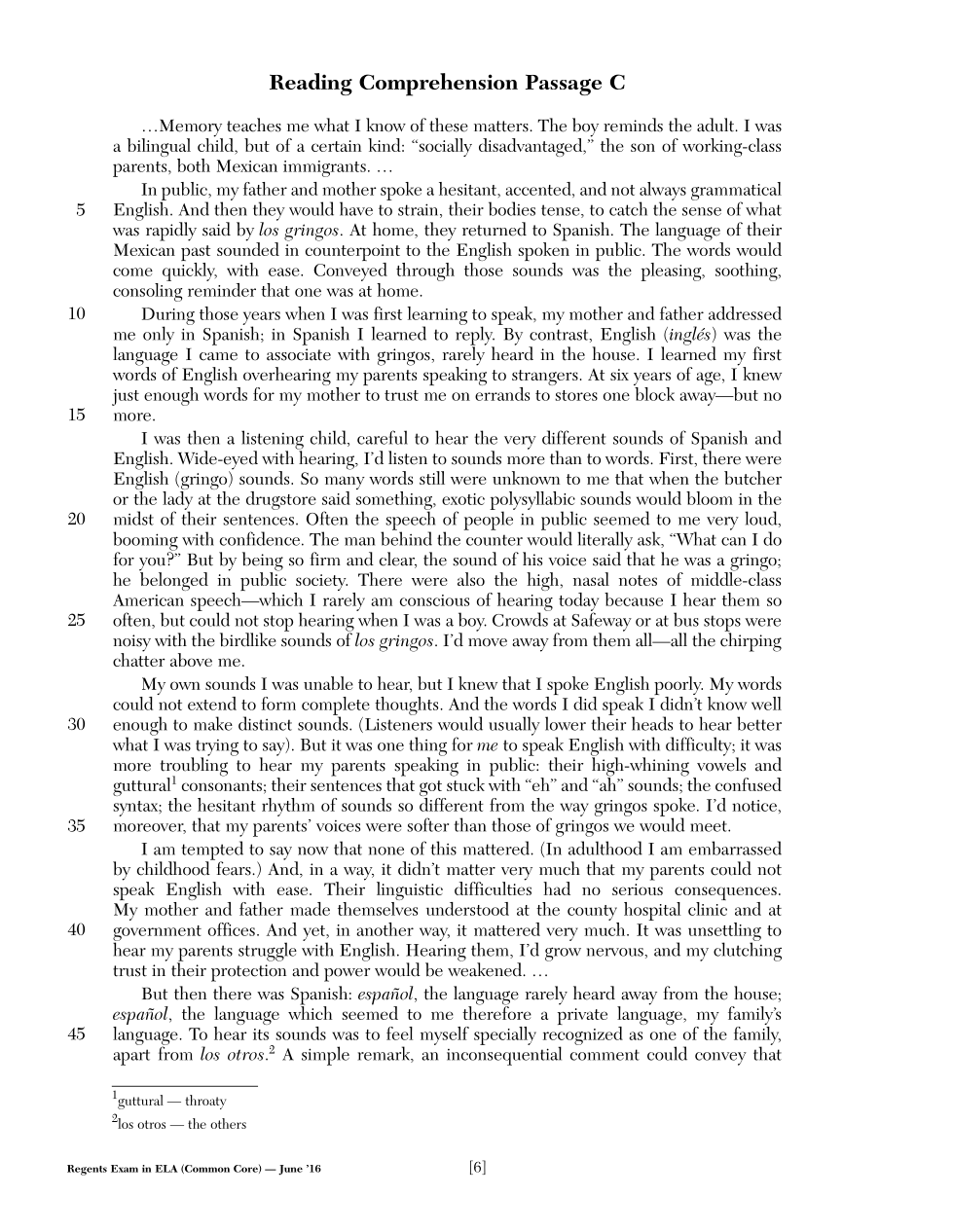
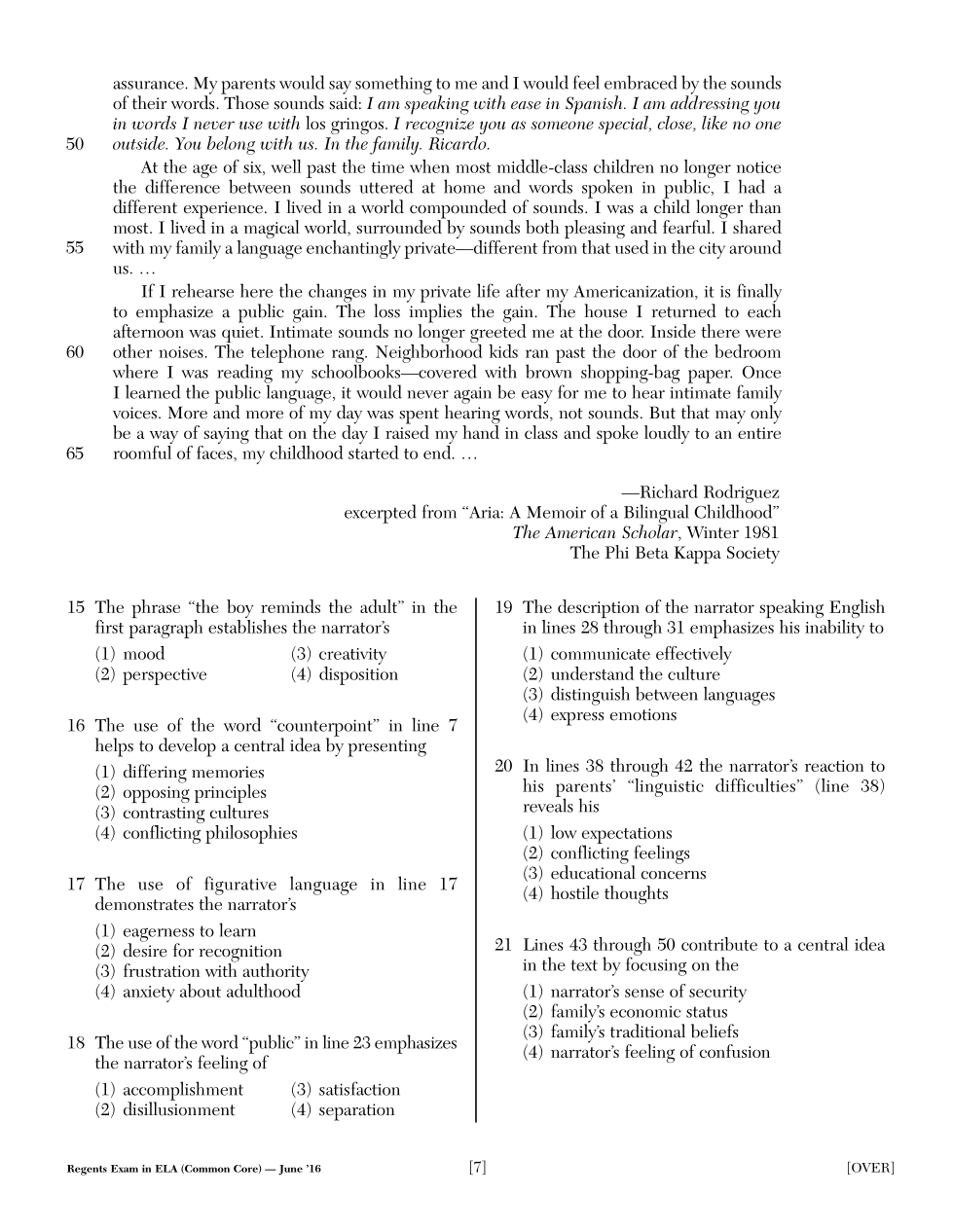
The phrase "the boy reminds the adult" in the first paragraph establishes the narrator's
perspective
mood
disposition
creativity
The use of the word "counterpoint" in line 7 helps to develop the central idea by presenting
contrasting cultures
conflicting philosophies
opposing principles
differing memories
The use of figurative language in line 17 demonstrated the narrator's
frustration with authority
eagerness to learn
anxiety about adulthood
desire for recognition
The use of the word "public" in line 23 emphasizes the narrator's feeling of
separation
satisfaction
disillusionment
accomplishment
The description of the narrator speaking English in lines 28 through 31 emphasizes his inability to
understand the culture
communicate effectively
distinguish between languages
express emotions
In lines 38 through 42 the narrator's reaction to his parents' "linguistic difficulties" (line 38) reveals his
conflicting feelings
low expectations
educational concerns
hostile thoughts
Lines 43 through 50 contribute to a central idea in the text by focusing on the
narrator's feeling of confusion
family's economic status
family's traditional beliefs
narrato's sense of security
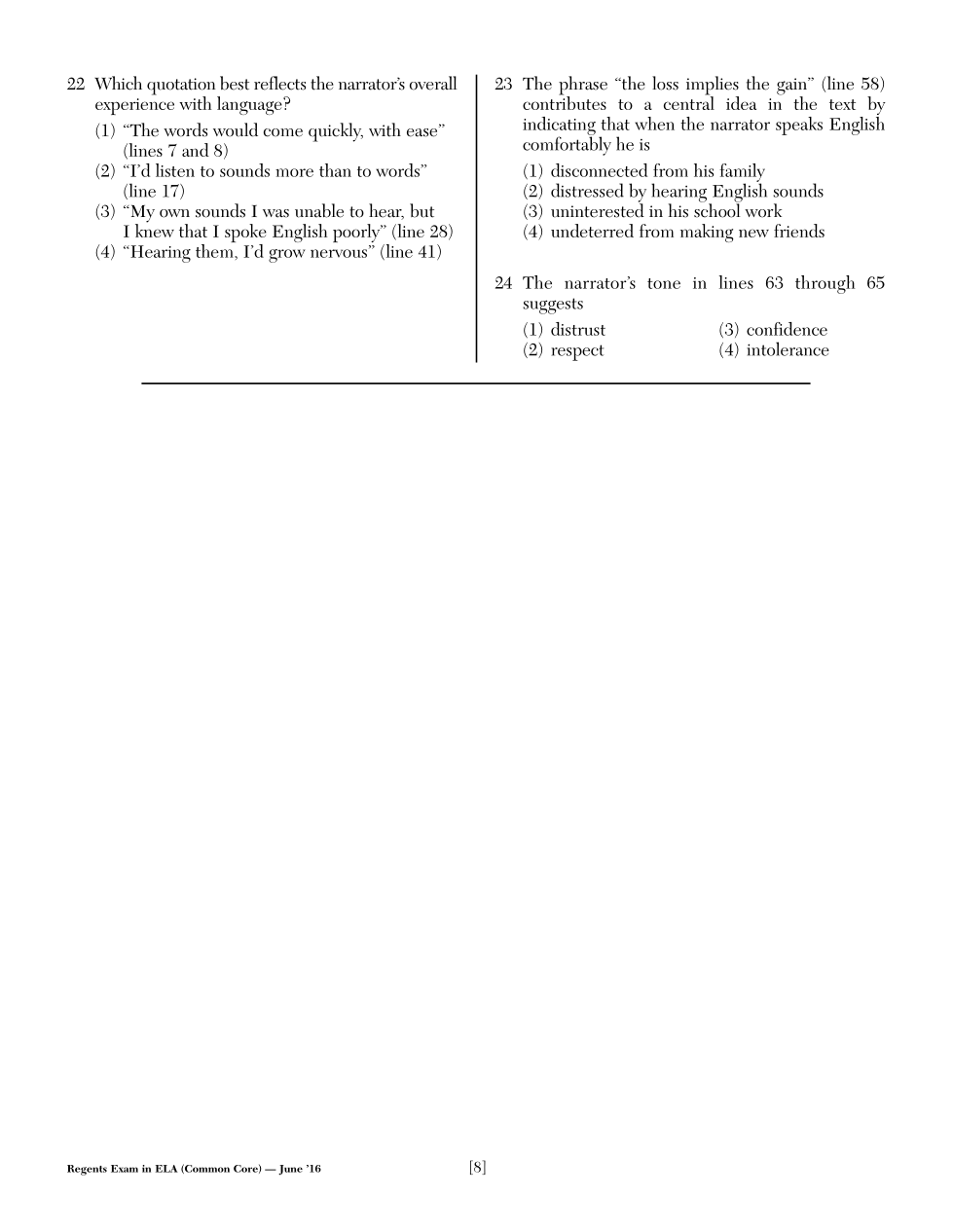
Which quotation best reflects the narrator's overall experience with language?
“The words would come quickly, with ease” (lines 7 and 8)
“My own sounds I was unable to hear, but I knew that I spoke English poorly” (line 28)
“I’d listen to sounds more than to words” (line 17)
“Hearing them, I’d grow nervous” (line 41)
The phrase “the loss implies the gain” (line 58) contributes to a central idea in the text by indicating that when the narrator speaks English comfortably he is
uninterested in his school work
distressed by hearing English sounds
disconnected from his family
undeterred from making new friends
The narrator's tone in lines 63 through 65 suggests
distrust
confidence
intolerance
respect